Season 1
12 episodes Jun 11, 2024
- 1 Episode 1
- 2 Episode 2
- 3 Episode 3
- 4 Episode 4
- 5 Episode 5
- 6 Episode 6
- 7 Episode 7
- 8 Episode 8
- 9 Episode 9
- 10 Episode 10
- 11 Episode 11
- 12 Episode 12

Dear Sa-chan, if only I'd had sex with you that time, perhaps I wouldn't have wandered down this disastrous path. A story of true love and its downfall, brought to life by an unconventional protege.
Latest episode: S1 E12 Episode 12 (Aug 27, 2024)
I kept thinking about the opening shot—the one the IMDb user called “jarring and over-used.” Kyosuke, submerged in dark water, lungs burning, fingers clawing at nothing. It’s not just a dream sequence; it’s a confession. The series Sacchan, Boku wa. (2024) begins with drowning, and for the next twelve episodes, it never quite lets its protagonist—or its audience—come up for air.
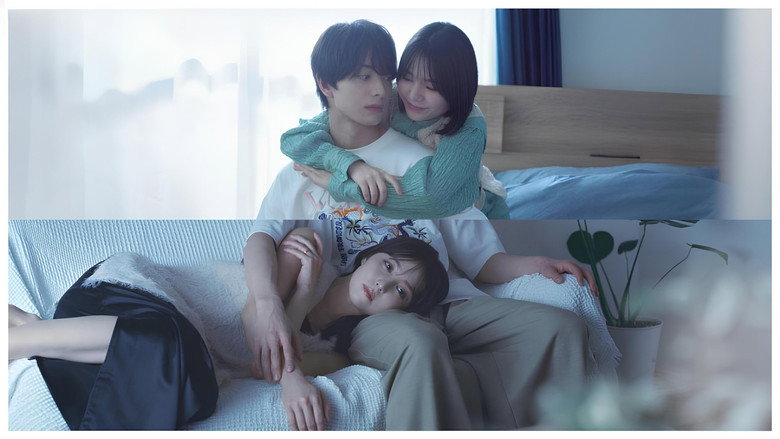
This is a story about longing, but not the kind that feels romantic. It’s the longing of a boy who moves to Tokyo for university and finds himself adrift in more ways than one. Kyosuke Katagiri (Keito Kimura) leaves behind his girlfriend, Sacchan (Hinano Nakayama), in their rural hometown, only to stumble into an affair with a married woman, Shino (Ren Ishikawa).
The premise is simple, almost clichéd—long-distance love, temptation, betrayal—but the execution is where Sacchan, Boku wa. stumbles, then regains its footing, then stumbles again.
The first thing you notice is the dialogue. Or, rather, the way it doesn’t sound like people actually talk. The IMDb user who titled their review “Arty Maybe; Boring Definitely” wasn’t wrong: the exchanges between characters often feel stilted, as if they’re reciting lines from a script rather than speaking from the heart.
There’s a formality to it, a stiffness that makes even the most intimate moments feel performative. When Kyosuke tells Sacchan, “If only I’d had sex with you that time, perhaps I wouldn’t have wandered down this disastrous path,” it’s less a raw admission than a narrative convenience, a way to fast-forward the plot toward its inevitable collapse.
And yet. There are moments when the stiffness falls away, when the performances rise above the script’s limitations. Hinano Nakayama’s Sacchan is the emotional core of the series, a character whose quiet devotion is both its strength and its tragedy.
The same IMDb user who dismissed the dialogue as inscrutable admitted that Sacchan’s portrayal “made me cry sometimes.” That’s the paradox of Sacchan, Boku wa.: it’s a show that often feels clumsy in its execution, but its emotional honesty sneaks up on you. Nakayama doesn’t play Sacchan as a saint or a victim; she plays her as someone who loves deeply but isn’t naive. When she learns of Kyosuke’s betrayal, her reaction isn’t histrionics or rage—it’s a slow, devastating realization, the kind that settles in the bones.
You can see it in the way she holds her coffee cup, fingers tightening just enough to betray her.
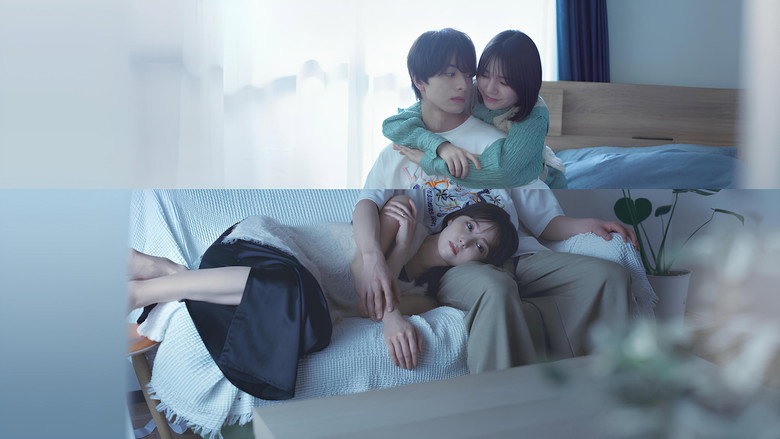
The affair with Shino is where the series walks its tightest rope. Shino isn’t a villain, nor is she a femme fatale. She’s a woman trapped in a marriage that feels like a gilded cage, and Kyosuke is the distraction she didn’t know she needed.
Their relationship is less about passion than it is about loneliness—a transaction of need, not desire. MyDramaList’s tags for the series include “Extramarital Affair” and “Lack of Communication,” and that’s exactly what it is: two people using each other to fill a void, neither of them willing to name what they’re really after. The problem isn’t that the affair exists; it’s that the series struggles to make us care about it.
Shino’s husband, Kaname (Dori Sakurada), is a cipher, a man defined only by his absence. Without a counterweight to Kyosuke and Shino’s entanglement, their relationship feels weightless, like a subplot that never quite connects to the main story.
That’s the central frustration of Sacchan, Boku wa.: it’s a series that wants to be about the messiness of human connection, but it often settles for the easy shorthand of melodrama. The long-distance relationship between Kyosuke and Sacchan is the emotional anchor, but the affair with Shino is the spectacle, the thing that’s supposed to matter. And yet, the more the series leans into the affair, the more it feels like it’s avoiding the harder questions.
What does it mean to love someone when you’re both changing? How do you reconcile the person you were with the person you’re becoming? These are the questions that linger in the spaces between the dialogue, the ones the series hints at but never fully explores.
There’s a scene in the middle of the series that sticks with me. Kyosuke and Sacchan are on the phone, thousands of miles apart, and she asks him if he’s happy in Tokyo. He hesitates—just for a second, but it’s enough—and then lies.
It’s a small moment, but it’s the kind of detail that makes Sacchan, Boku wa. feel real, even when the rest of it doesn’t. The lie isn’t just about the affair; it’s about the distance between them, the way they’ve both started to outgrow each other. That’s the tragedy at the heart of the series: it’s not about betrayal, but about the slow, inevitable drift of two people who still love each other but no longer know how to be together.
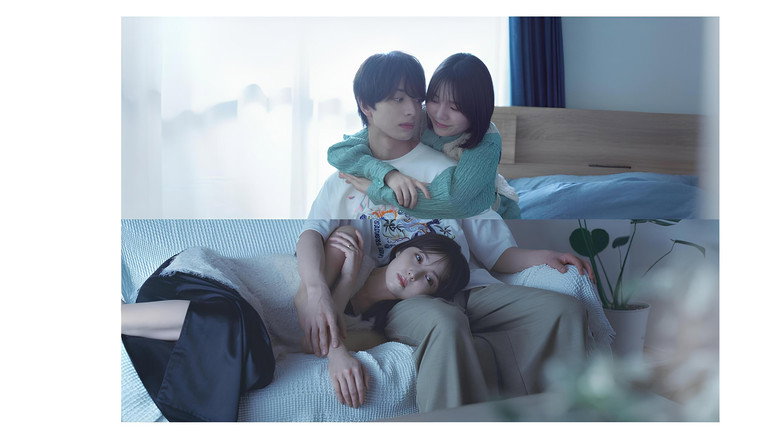
The series’ visual language is where it finds its footing. The underwater motif from the opening sequence returns in key moments, not as a cheap shock tactic, but as a metaphor for Kyosuke’s emotional state. He’s drowning in his own choices, in the weight of what he’s done and what he’s about to lose.
The cinematography leans into muted tones, blues and grays that mirror the characters’ emotional detachment. Even the Tokyo skyline, usually a symbol of possibility, feels oppressive here, a maze of concrete and neon that Kyosuke can’t navigate.
If there’s a saving grace to Sacchan, Boku wa., it’s that it never lets itself off the hook. This isn’t a story that rewards its characters for their bad decisions, nor does it punish them in a way that feels cathartic. It’s a series that sits with the discomfort, that forces its audience to reckon with the fact that there are no easy answers.
The ending isn’t happy, but it isn’t tragic, either. It’s just… over. Kyosuke and Sacchan part ways, not with a bang but with a whimper, and the series leaves us with the sense that this was always how it was going to end.
In the end, Sacchan, Boku wa. is a series that wants to be more than it is. It wants to be a meditation on love and loss, on the choices that define us and the ones that undo us. But too often, it settles for being a well-acted, visually striking melodrama that can’t quite commit to its own ambitions.
It’s not a bad series—far from it. But it’s a frustrating one, a show that keeps reaching for something deeper and coming up short.
And yet. I keep thinking about that opening shot. The water.
The way Kyosuke’s fingers scrabble at the surface, desperate for air. Maybe that’s the point. Maybe Sacchan, Boku wa. isn’t about the moments when we come up for air, but about the ones when we don’t.
Maybe it’s about the weight of wanting, and the way it pulls us under.
"A morally ambiguous love triangle whose emotional depth is undercut by its unsettling premise."
The series follows the loneliness and confusion of a college student adjusting to life in Tokyo, torn between his long-distance girlfriend and a married neighbor. The premise sparks curiosity, but the execution is cold, and its tone and character decisions split opinion. The emotional stakes are uneven and the story's direction is divisive.
Sacchan, Boku wa. (2024), the Japanese drama known in English as Dear Sa-Chan, has quietly become one of the year’s most talked-about series—not just for its emotional storytelling, but for the moral tightrope it walks. The show follows Kyosuke, a university student who moves to Tokyo and finds himself entangled in a fraught love triangle, torn between his hometown girlfriend and a married woman living nearby. latestnetflix.com's take is that with its blend of romance, drama, and darker themes, the series has sparked conversations about its portrayal of relationships, morality, and the consequences of impulsive decisions.
Sacchan, Boku wa. is a character-driven drama exploring the complexities of young adulthood. Kyosuke’s move to Tokyo sets the stage for his emotional unraveling, as he grapples with loneliness, temptation, and the weight of his choices. The series doesn’t shy away from uncomfortable territory, including themes of infidelity and emotional manipulation, which have drawn both criticism and praise from viewers.
The show’s tone is a departure from typical romantic dramas, leaning into psychological tension rather than idealized love stories. According to snippets from MyDramaList, the series is tagged with content warnings for "Crime Against Morality," "Sexual Violence," and "Mild Sexual Content," suggesting it doesn’t sugarcoat its subject matter. This unflinching approach has made it a polarizing watch—some viewers appreciate its realism, while others find its themes too heavy for a romance-driven narrative.
The series features a mix of emerging and established talent, with Keito Kimura (Kyosuke) and Hinano Nakayama (Sa-Chan) leading the charge. Kimura, known for his roles in Alice in Borderland and The Naked Director, brings a brooding intensity to Kyosuke, a character whose moral compass is constantly tested. Nakayama, a relative newcomer, plays the titular Sa-Chan, Kyosuke’s hometown girlfriend, whose quiet resilience contrasts with his growing instability.
Supporting the leads are Ren Ishikawa, Dori Sakurada, and Taketo Tanaka, though their roles remain less defined in the available evidence. Ishikawa, in particular, has been a standout in recent Japanese dramas, and his involvement here suggests the series is a platform for rising stars to showcase their range.
Sacchan, Boku wa. is directed by a trio of filmmakers—Izuru Kumasaka, Noriteru Kosuge, and Miki Tomita—though their individual contributions to the series remain unclear from the available snippets. The show’s 12-episode run aired on TBS from June to August 2024, with a late-night time slot (Tuesday at 23:56) that hints at its mature themes.
The series’ opening and ending themes, performed by Hi-Fi Un!corn, have also garnered attention, with the track Left or Right adding a moody, introspective layer to the storytelling. Despite its controversial subject matter, the show has avoided major backlash, likely due to its nuanced portrayal of flawed characters rather than glorifying their actions.
With the series now concluded, speculation about a potential second season is already circulating, though no official announcements have been made. Given the open-ended nature of its finale, a continuation isn’t out of the question—especially if the show’s bold storytelling continues to resonate with audiences.
For now, Sacchan, Boku wa. shows the growing appetite for morally complex dramas in Japanese television. It’s a series that doesn’t offer easy answers, instead forcing viewers to sit with discomfort—and that might be its greatest strength.
Entertainment rumors and trivia aggregated from public reporting. Treat speculation as unverified unless a cited source confirms it.
More titles in the same genres and with the same cast.