Sul Kyung-gu
Park Dong-ho
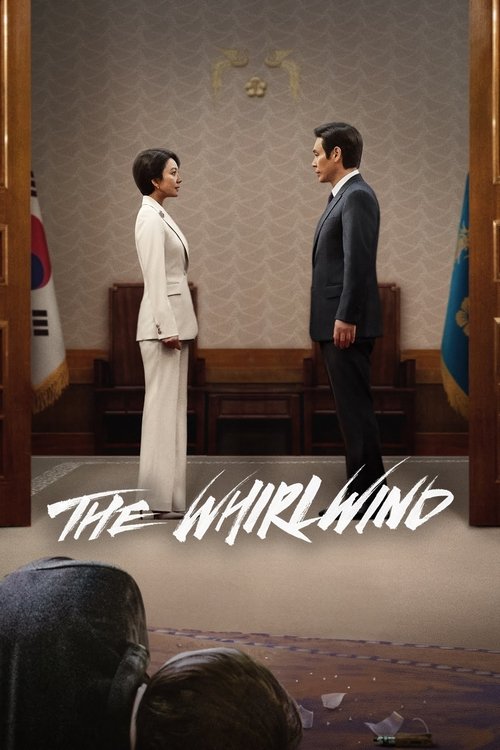
“That day, the president's heart stopped.”
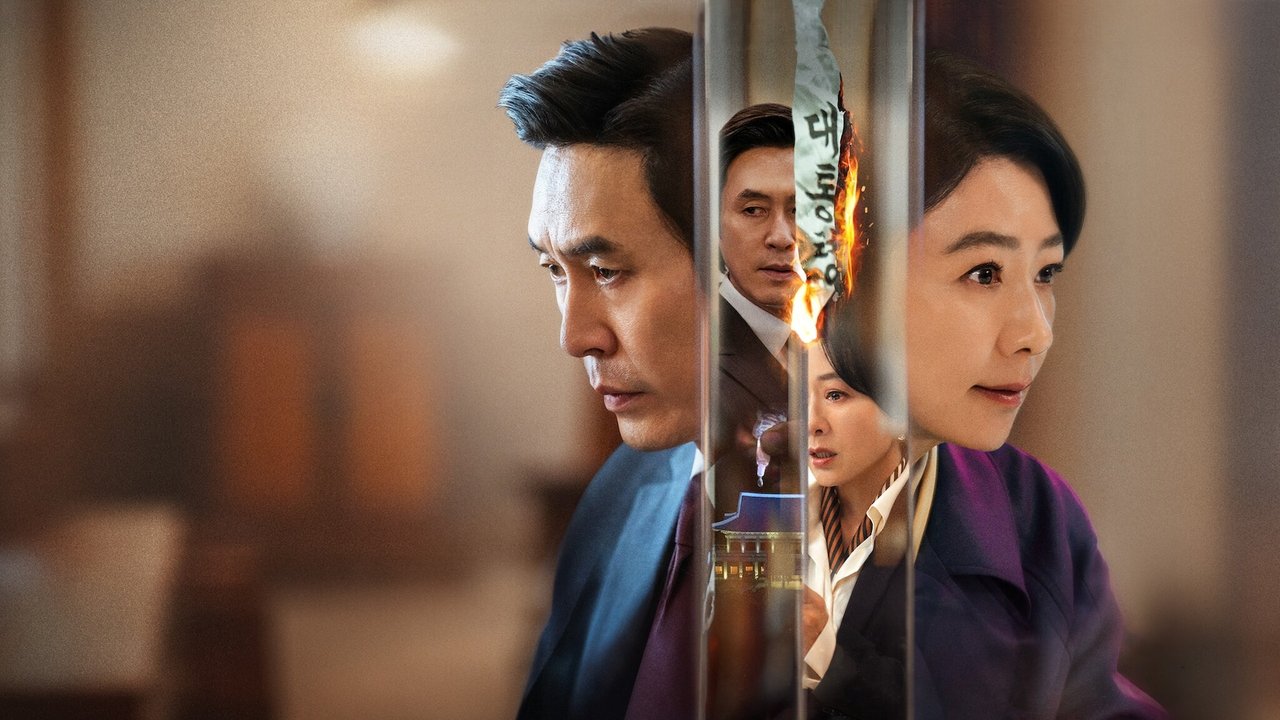
A whirlwind power clash between the prime minister and deputy prime minister unravels the day the president suffers an assassination attempt.
Official
I keep thinking about the first move this series makes: it doesn’t rush to the assassination attempt that gives the whole thing its charge. Instead, it lingers on the machinery around power — the polished tables, the clipped exchanges, the little pauses in conversation when people decide how much truth they can afford. That’s where The Whirlwind lives.
latestnetflix.com's view is that Not in the blast of crisis, but in the vacuum it creates, when everyone in the room starts revealing themselves by how quickly they reach for the telephone, the statement, the alibi.
I went into this expecting a familiar political thriller setup — the sort that treats institutions as chessboards and keeps the pieces gleaming. But Kim Yong-wan’s direction is much less interested in the clean logic of strategy than in the dirty, improvisational panic of survival. This isn’t a story about who deserves power.
It’s about who can hold onto it when language stops working and every courtesy in the room starts to sound like a threat. The show is very much of its moment, too. Korean political dramas have a way of carrying the country’s recent history in the body of the genre itself, and The Whirlwind feels like it’s asking whether the center can still hold after years of public distrust, factional drift, and the now-familiar spectacle of leaders speaking as if they’re already thinking of the cameras.
Kim Yong-wan, who’s been moving between thrillers and high-stakes melodrama for years, seems to understand that political suspense depends on rhythm more than scale. He likes a hard cut, a sudden entrance, a face held just a beat too long. Here, that sensibility serves the material well.
The series doesn’t need constant movement; it needs pressure. Conversations are staged like negotiations over oxygen. A character enters a room and the energy changes before anyone even speaks.
That’s the fun of it, if “fun” is the word — watching a room recalibrate itself around the possibility that somebody has already lied.
What I like most is how the show uses architecture. Offices, hallways, meeting rooms, secure inner chambers — they’re not just backdrops, they’re instruments. The camera often stays at a respectful distance, as if it’s eavesdropping on people who’ve spent their lives being careful.
When it does move in, it’s usually to catch a flicker of doubt that the character has just tried to bury. The lighting is cool and managerial, which is another way of saying morally exhausted. No one glows in this world.
Even the strongest figures look like they’ve been sitting under fluorescent bulbs for too long, which, honestly, is probably the most realistic thing here.
There’s a scene midway through the series — one of those tense, nearly silent exchanges that tell you more than a monologue ever could — where two power brokers trade formalities while the whole room seems to lean toward collapse. The camera doesn’t cut away for relief. It watches hands, then faces, then the small mechanical efforts people make to appear composed: a glass lifted and set down, a glance toward a secretary, a half-smile that fails to harden into anything usable.
The scene works because the series trusts bodies before speeches. You can see who’s trying to dominate, who’s bluffing, who’s already lost the argument but hasn’t admitted it yet. That physical hesitation matters.
Politics, the show reminds us, is often a performance of confidence by people who are privately full of static.
Sul Kyung-gu is especially good at this kind of tension. He’s spent so much of his career playing men who seem to have one foot in authority and another in damage that he’s become one of those actors whose stillness can feel like a plot point. Here, he carries himself with the tired precision of a man who knows exactly how institutions breathe.
There’s a weight in the way he stands — not noble, not exactly stoic, just worn down by the habit of having to be the adult in the room. Kim Hee-ae, meanwhile, brings a different energy: sharper, cooler, and more alert to the gendered negotiations embedded in the series’ power games. She has a way of making composure look like an active effort rather than a natural state.
That’s crucial here. Her scenes don’t just suggest intelligence; they suggest the labor of being underestimated.
Kim Mi-sook, Kim Young-min, and Lim Se-mi deepen the ensemble by refusing to become mere functionaries of the plot. Each one gives the impression of a person who has learned how to survive an ecosystem of whispers. That may sound like a small thing, but in a series this dependent on factional maneuvering, the difference between a stock supporting role and a lived-in one is enormous.
Nobody feels dropped in from a “political drama” template. Even when the writing leans into familiar escalations, the actors keep the world specific.
I should say, though, that the series isn’t perfect. At times, it can get tangled in its own appetite for intrigue. There are stretches where the plotting becomes a little too pleased with itself, as if every new reveal has to arrive with a ceremonial drumroll.
I’m not sure it always earns that confidence. Some secondary beats feel less like revelations than obligations — the sort of procedural detours political thrillers accumulate when they don’t fully trust the emotional simplicity of their premise. Still, even then, the show usually recovers by returning to what it understands best: that power is a social atmosphere before it’s a structure.
There’s a reason this kind of story keeps coming back. We’re endlessly fascinated by people who can’t quite separate conviction from ambition, and by the institutions that make that confusion look like governance. The Whirlwind doesn’t offer any comforting fantasy that the right person can fix the system if only given one more chance. It’s more suspicious than that.
More sober. Sometimes almost bleak, though not in a posey way. What it offers instead is a close study of how authority behaves when it starts to tremble: how it speaks more formally, not less; how it turns inward; how it asks for loyalty while quietly fearing exposure.
I’m still not sure whether the series’s greatest strength is its intelligence or its nerve. Probably both. But what lingers for me is simpler: the sensation of watching a room full of capable people discover, all at once, that control is mostly a story they tell each other.
And once that story cracks, everything shows.
Netflix’s latest Korean political drama, The Whirlwind, has stormed onto screens with a high-stakes premise, A-list talent, and a polarizing reception. Starring Sul Kyung-gu and Kim Hee-ae as bitter rivals in a cutthroat power struggle, the series promises brutal political warfare—but does it deliver? latestnetflix.com's read is that Behind the scenes, the show’s production choices and mixed reviews are sparking as much conversation as its on-screen drama.
The Whirlwind (Korean title: 돌풍, or "Storm Wind") drops viewers into a world of corruption, betrayal, and assassination attempts. Sul Kyung-gu plays Park Dong-ho, a politician who fails in his attempt to kill a corrupt president, setting off a 12-episode battle for survival and revenge. Opposite him, Kim Hee-ae stars as Jeong Su-jin, his political nemesis, with the two locked in a deadly game of power and ideology.
The series, written by Park Kyung-soo and directed by Kim Yong-wan, premiered on Netflix on June 28, 2024. While the platform hasn’t released official viewership numbers, early buzz suggests it’s drawing attention—though not always for the right reasons.
Sul Kyung-gu and Kim Hee-ae are no strangers to intense roles, but The Whirlwind demands a different kind of gravitas. Sul, known for his commanding screen presence in films like The Attorney and Kingdom, takes on a role that requires both physical and emotional intensity. Kim Hee-ae, a veteran of K-dramas like The World of the Married, brings a steely resolve to her character, though some critics argue the writing doesn’t give her enough depth.
Supporting the leads are Kim Mi-sook, Kim Young-min, and Lim Se-mi, rounding out a cast of seasoned actors. But while the performances are praised—particularly Sul’s—the series has faced criticism for underdeveloped side characters and a lack of compelling backstories.
The Whirlwind isn’t short on ambition. The premise—a failed assassination attempt triggering a political firestorm—is undeniably gripping, and the show’s pacing keeps viewers hooked. But critics argue that the execution falls short. A review from MEAWW calls out the writing for failing to establish a strong foundation for Dong-ho’s motivations, leaving the audience with "a visually striking but emotionally hollow" experience.
Fans, however, are divided. Some praise the series for its unflinching portrayal of political corruption, while others feel the characters lack the complexity needed to make the story truly resonate. The 12-episode structure (confirmed in) may be a factor—some argue it rushes key developments, leaving little room for nuance.
Details about the production remain scarce. Unlike some Netflix K-dramas, The Whirlwind hasn’t been accompanied by a flood of behind-the-scenes interviews or set photos. The director, Kim Yong-wan, is a relatively low-profile figure in Korean television, which may explain the lack of buzz.
What is clear is that the series was designed for binge-watching. Netflix’s global release strategy means it dropped all at once, a move that aligns with the platform’s push for Korean content. Whether it becomes a breakout hit or fades into the background remains to be seen.
The Whirlwind is a series that demands attention—if not always admiration. Sul Kyung-gu’s performance is a standout, and the political intrigue is undeniably compelling. But with critics pointing to weak character development and rushed storytelling, it’s a show that may leave some viewers wanting more.
For now, it’s a must-watch for political thriller fans, but don’t expect a flawless execution. The real question: Will the storm pass, or will it leave a lasting mark?
Entertainment rumors and trivia aggregated from public reporting. Treat speculation as unverified unless a cited source confirms it.
More titles in the same genres and with the same cast.