Limited Series
3 episodes Sep 12, 2025 6.7
- 1 Act I: The Law
- 2 Act II: Nothing Special
- 3 Act III: The Curse

At a career-defining moment, a governor's child vanishes. Torn between ambition and family secrets, he must choose: politics or his daughter's safety.
Latest episode: S1 E3 Act III: The Curse (Sep 12, 2025)
Official
I’ve always been drawn to stories where the political and the personal collide—not as a backdrop, but as a slow-motion car crash. Maledictions is one of those stories, though it takes its time revealing just how deep the wreckage goes. Daniel Burman’s three-part Netflix series (or is it a film? More on that later) unfolds like a thriller, but its real tension isn’t in the kidnapping plot or the lithium bill vote.
It’s in the way power, like a virus, infects everything it touches: friendships, marriages, even the idea of parenthood.
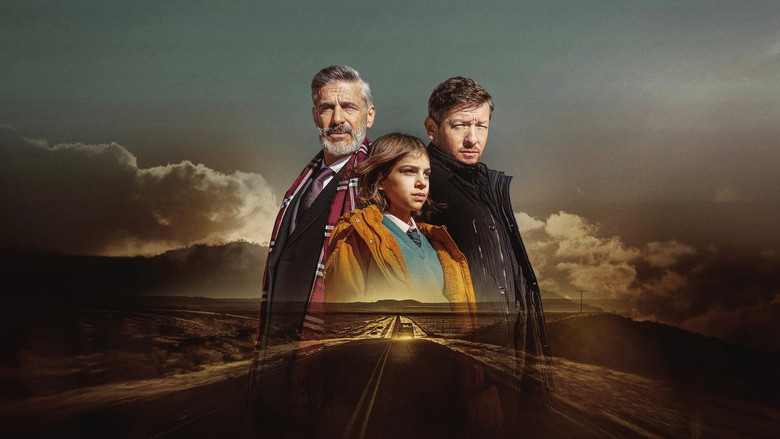
The setup is deceptively simple. Fernando Rovira (Leonardo Sbaraglia), a provincial governor in northern Argentina, is on the verge of a career-defining vote when his 12-year-old daughter Zoe is kidnapped by his most trusted advisor, Román Sabaté (Gustavo Bassani). The immediate question—why would Román do this?—is only the first layer.
The second, revealed in a flashback episode that feels like a gut punch, is far more devastating: Zoe isn’t Fernando’s daughter at all. She’s Román’s, conceived in a secret arrangement between the two men and Fernando’s late wife, Lucrecia. The kidnapping, then, isn’t just a political maneuver or a personal vendetta.
It’s a reckoning.
Burman has always been fascinated by the ways families fracture under pressure—see Family Law (2006) or The Tenth Man (2017)—but here, he scales that intimacy up to the level of statecraft. The lithium bill at the center of the plot isn’t just a MacGuffin; it’s a stand-in for the extractive politics that have defined Argentina’s relationship with its natural resources for decades. Yet, as Ready Steady Cut astutely notes, the real drama isn’t in the “fat-free political points” but in the “more incisive personal questions” about who gets to claim a child, and what happens when the people we trust most are the ones holding the knife.
That knife, by the way, is literal in at least one scene. The series’ third act devolves into a kind of desert western, complete with dust-choked shootouts and a final confrontation that feels lifted from a Sergio Leone film. It’s a tonal shift that shouldn’t work—thriller to family drama to spaghetti western in under two hours—but Burman and co-director Martín Hodara pull it off, largely because the emotional stakes have been so carefully laid.
The problem is that the symbolism starts to creak under its own weight. Thistles that prick feet, a missing button, a recurring image of a cracked mirror: these aren’t subtle motifs so much as neon signs flashing CURSE in the viewer’s face. Otros Cines calls this out, arguing that the finale “over-explains” these elements through “didactic, overly obvious” dialogue. I’d go further: by the end, the curses feel less like an organic part of the story and more like a gimmick, a way to tie up loose ends with a neat, if heavy-handed, bow.
The performances, though, are another story. Sbaraglia, who has made a career out of playing men who are equal parts charismatic and morally bankrupt (see his turn as Carlos Menem in the series Menem), is perfectly cast as Fernando. He’s a man who has spent so long crafting his public image that he’s forgotten how to be a father—or even a husband.
There’s a moment in the first episode where he’s on the phone with a journalist, spinning a story about his daughter’s “bravery” in the face of her kidnapping, while his face betrays nothing but exhaustion. It’s a small beat, but it encapsulates everything about him: the performance of power, the hollowness beneath.
Bassani’s Román is the more interesting character, if only because he’s the one who actually changes. In the flashback episode, we see him as a younger man, idealistic and in love with Lucrecia (Mónica Antonópulos), whose quiet intensity in these scenes suggests a bond with Román that goes beyond the transactional. By the present day, he’s a man who has spent years enabling Fernando’s worst impulses, only to realize too late that he’s lost himself in the process.
Bassani plays this transformation with a kind of weary resignation, as if Román has been sleepwalking through his own life. In an interview, he describes Román as someone who eventually says “hasta acá voy” (“this is as far as I go”), and that’s exactly what the performance conveys: a man waking up to the fact that he’s been complicit in his own undoing.
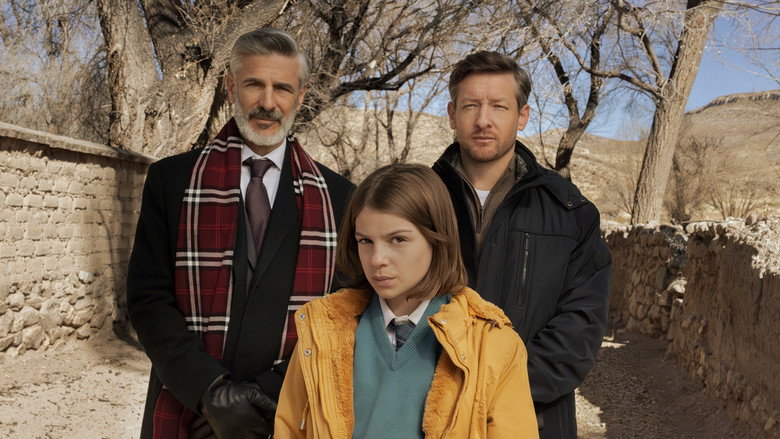
The real standout, though, is Francesca Varela as Zoe. Cast locally in Jujuy, where the series was shot, she brings a toughness to the role that feels earned, not performed. Zoe isn’t a victim; she’s a kid who has spent her life navigating the minefield of her father’s ambition, and Varela plays her with a mix of defiance and vulnerability that makes her more than just a pawn in the men’s game.
There’s a scene in the second act where she’s alone in a safe house, listening to her father’s press conference on the radio. She doesn’t cry. She doesn’t rage.
She just sits there, her face unreadable, and you get the sense that she’s already figured out what the adults around her are still struggling to admit: that none of this is about her.
Which brings us back to the question of form. Maledictions runs just over two hours, split into three episodes that feel more like acts in a play than standalone chapters. Critics have been divided on whether this structure works. Decider, via Rotten Tomatoes, suggests approaching it “like it’s a movie instead of a series,” arguing that the “vibe of the show is appropriately tense” when viewed that way. Midgard Times, on the other hand, calls it “a flat, bland blend of drama and thriller” that offers “no joy, no pleasure, no sense of beauty.” I’m somewhere in the middle.
The three-act structure does give the story a certain rhythm, especially the flashback episode, which is shot in a different aspect ratio to distinguish it from the present-day timeline. But there’s also something undeniably gimmicky about it, like a film that’s been chopped up to fit a streaming algorithm rather than an organic narrative choice.
The landscapes, at least, are undeniably striking. Shot in the high deserts of Jujuy, the series uses its setting to great effect, framing the characters against vast, empty backdrops that emphasize their isolation. The cinematography by Rodrigo Pulpeiro and Javier Juliá is impeccable, toggling between the claustrophobic interiors of government offices and the wide-open spaces of the desert.
There’s a moment in the final act where Román and Fernando face off in the middle of nowhere, the camera pulling back to reveal just how small they are against the landscape. It’s a visual metaphor that doesn’t need to be spelled out: these men, for all their power, are just specks in a much larger, indifferent world.
And yet, for all its ambition, Maledictions never quite escapes the feeling that it’s trying a little too hard to be important. The political themes are timely, sure, but they’re also broad enough to feel generic. The family drama is more compelling, but it’s undermined by the heavy-handed symbolism.
The performances are strong, but the script sometimes struggles to give them room to breathe. It’s not a bad series—far from it. But it’s also not the revelation it could have been.
In the end, Maledictions is a story about the things we inherit: from our parents, from our friends, from the systems we’re born into. Some of those things are blessings. Others are curses.
The tragedy of the series is that its characters can’t tell the difference until it’s too late. That’s a powerful idea, but it’s one that gets lost in the shuffle of thistles and missing buttons. What lingers isn’t the weight of the curses, but the quiet moments between the characters—the way Zoe looks at her father when she realizes he’s lying, the way Román’s hands shake when he finally confronts him.
Those are the scenes that feel real. The rest, for better or worse, feels like a spell we’re meant to take at face value.
"A gripping but uneven thriller that shines in its tense moments but struggles with pacing and depth."
The series has an intense atmosphere and strong performances, particularly from Leonardo Sbaraglia and Gustavo Bassani, who anchor the kidnapping plot with palpable tension. The conspiracy elements are underdeveloped, though, and the pacing drags in places, leaving key characters underused. Northern Argentina makes a distinctive backdrop, but the execution doesn’t always match the ambition.
Netflix’s upcoming political thriller Maledictions (2025) is already generating buzz—not just for its high-stakes plot, but for the real-world tensions simmering behind the scenes. Set against the backdrop of Argentina’s lithium mining boom, the series follows a governor whose daughter is kidnapped during a pivotal vote, unraveling a 13-year-old conspiracy. But the drama isn’t confined to the screen: from extreme filming conditions to a cast navigating power, ambition, and moral ambiguity, latestnetflix.com contends, Maledictions is as much about its off-camera battles as its on-screen ones.
At the heart of Maledictions is a governor’s nightmare: Fernando Rovira (Leonardo Sbaraglia), a provincial leader in northern Argentina, faces a crisis when his daughter is abducted by a trusted aide (Gustavo Bassani) amid a high-stakes lithium mining vote. The series, based on Claudia Piñeiro’s novel, blends political thriller with family drama, but its real hook is the setting—Argentina’s lithium-rich northern provinces, where global demand for the "white gold" has turned local politics into a pressure cooker.
The kidnapping isn’t just a plot device; it’s a mirror. As one source notes, the story forces characters to confront how "everyone ends up a victim of their own ambition". That theme resonates in a country where lithium extraction has sparked protests over environmental damage and indigenous land rights. While Maledictions doesn’t claim to be a documentary, its timing—premiering amid Argentina’s economic crisis and lithium rush—gives it an unavoidable edge.
The series’ production wasn’t for the faint of heart. Maledictions was shot in Jujuy, a province in Argentina’s northwest known for its rugged landscapes—and its scorching temperatures. Sources describe the shoot as "extreme," with the cast and crew battling the elements while filming a story that’s already emotionally charged.
The location wasn’t just a backdrop; it was a character. Jujuy’s lithium mines and arid terrain provided the perfect visual metaphor for the series’ themes of exploitation and desperation. But the conditions took a toll. Gustavo Bassani, who plays the governor’s aide-turned-kidnapper, hinted at the physical and mental demands of the role, telling an Argentine outlet that the shoot pushed everyone to their limits. Leonardo Sbaraglia, a veteran of intense dramas, likely didn’t have it easier—though specifics on his experience remain scarce.
The ensemble cast reads like a who’s who of Argentine cinema, but their roles in Maledictions are far from glamorous. Sbaraglia, a heavyweight of Latin American film, plays a governor whose power crumbles under pressure. Bassani, his co-star, portrays a man whose loyalty fractures into violence. Then there’s Francesca Varela, a young Jujuy native cast as the governor’s kidnapped daughter—a role that reportedly required her to navigate the emotional weight of the story while filming in her home province.
The series’ title, Las Maldiciones (Spanish for "The Curses"), hints at its bleak worldview. As one review notes, the story is "a thriller about political and family betrayal," where no one escapes unscathed. That extends to the audience: the series’ trailer teases a narrative where even the "good guys" are complicit in the system’s corruption.
Maledictions arrives at a fraught moment for Argentina. The country is the world’s fourth-largest lithium producer, and its northern provinces—like Jujuy—are ground zero for a mining boom that’s reshaping local economies and ecosystems. The series doesn’t shy away from that reality. While it’s a work of fiction, its plot—a governor’s daughter kidnapped over a lithium vote—feels ripped from headlines about resource conflicts and political corruption.
Netflix’s decision to drop the series globally on September 12 suggests confidence in its appeal beyond Latin America. But its real test will be whether it can balance its thriller pacing with the weight of its themes. Early buzz suggests it’s leaning into the latter: one source calls it a "drama about ambition and its consequences," where the real villain might be the system itself.
For all its intrigue, Maledictions leaves some details frustratingly vague. How many episodes will the series have? The evidence only confirms it’s a "mini-series" or "3-episode" format, but Netflix hasn’t released a full episode count. And while the cast’s performances are generating early praise, the series’ reception remains a mystery—no reviews have dropped yet.
There’s also the question of how closely the show hews to Claudia Piñeiro’s novel. Burman, the series’ creator, is known for adapting literary works (like his 2018 film The Invisible Eye), but whether Maledictions takes creative liberties—or doubles down on the book’s bleakness—is unclear.
One thing’s certain: this isn’t just another kidnapping thriller. Between its real-world parallels and its punishing shoot, Maledictions feels like a project that demanded everything from its cast and crew. Whether that translates into must-watch TV remains to be seen.
Entertainment rumors and trivia aggregated from public reporting. Treat speculation as unverified unless a cited source confirms it.
More titles in the same genres and with the same cast.