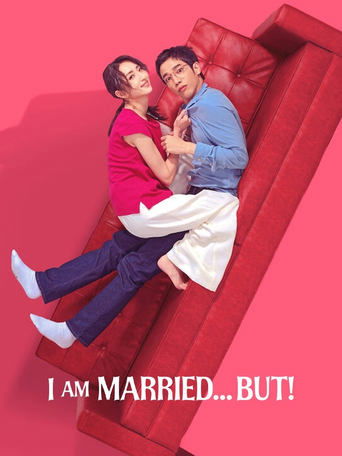
Alice Ko
Shen Xingren

A department store mogul has his son work incognito in a menial job to prove his worthiness, while female co-workers teach him how normal people live.
I’ve always been suspicious of workplace comedies that pretend the office is just a neutral backdrop for romance. The fluorescent lights, the shared printers, the way your boss’s email signature lingers in your inbox like a bad smell—these things aren’t incidental. They’re the architecture of power, and power is the real aphrodisiac. Office Girls, the 2011 Taiwanese series, understands this better than most.
It doesn’t just set a love story in a department store; it lets the store’s hierarchies, its petty rivalries, and its absurd rituals dictate the terms of desire. The result is a show that’s equal parts charming and claustrophobic, like being trapped in an elevator with someone you’re trying not to stare at.

The premise is a classic rich-boy-goes-undercover setup: Qin Zi Qi (Roy Chiu), the spoiled heir to a retail empire, is forced to work a menial job in one of his father’s stores to prove he’s not a complete waste of space. There, he meets Shen Xing Ren (Ko Chia-Yen), a sharp-tongued salesgirl who has no patience for his entitled nonsense. Their chemistry is immediate, but the show is smart enough to know that chemistry alone doesn’t make a story.
What makes Office Girls compelling is the way it treats the workplace as a living organism, one that shapes its characters’ emotions in ways they can’t control.
Take the scene where Zi Qi, still adjusting to his new life as a lowly employee, is tasked with restocking shelves. He’s sweating through his uniform, his hands are raw from handling boxes, and he keeps dropping things. Xing Ren watches him struggle, arms crossed, and instead of helping, she smirks and says, “You’re not in your father’s office anymore.” It’s a small moment, but it’s electric.
The power dynamic isn’t just between them—it’s between them and the store itself, which demands they perform their roles with a smile, no matter how humiliating. The camera lingers on Zi Qi’s face as he realizes, for the first time, that his last name doesn’t mean anything here. That’s the show’s secret weapon: it understands that desire isn’t just about attraction.
It’s about the thrill of watching someone be stripped of their armor.
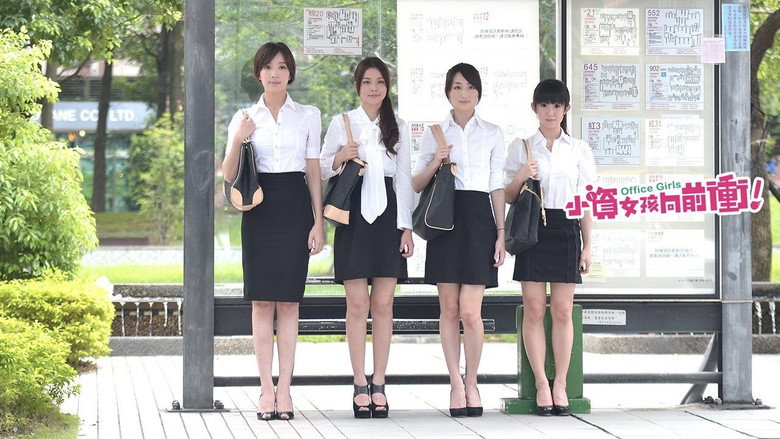
The gossip surrounding Office Girls—the real-life love triangles, the breakup fallout, the paparazzi chases—feels like an extension of the show’s themes. Roy Chiu and Tia Li’s off-screen entanglements, the rumors of infidelity, the way their characters’ on-screen rivalry mirrored their real-life drama, all of it underscores the same idea: the office, whether it’s a department store or a TV set, is a place where people perform versions of themselves.
Sometimes those performances spill over into real life. Sometimes they don’t. But the tension is always there.
What I appreciate most about Office Girls is its refusal to romanticize the workplace. The show’s version of office life is messy, exhausting, and often absurd. There’s a scene where Zi Qi, in a moment of frustration, accidentally knocks over a display of perfume bottles.
The sound of glass shattering is like a gunshot. The other employees freeze. The manager storms over.
The moment is played for laughs, but it’s also a perfect metaphor for the show’s worldview: one wrong move, and everything comes crashing down. The office doesn’t care about your feelings. It only cares about the bottom line.

That said, the show isn’t without its flaws. The pacing can be uneven, especially in the later episodes, where the will-they-won’t-they tension starts to feel like a treadmill. And some of the supporting characters—particularly the scheming Cheng Kai-er (Tia Li)—veer into caricature.
But even these missteps feel like part of the show’s DNA. Office Girls isn’t trying to be a perfectly polished rom-com. It’s trying to capture the chaos of real life, where people are flawed, where power imbalances shape relationships, and where the line between professional and personal is always blurring.
I keep thinking about that elevator scene. Zi Qi and Xing Ren are trapped in a small metal box, their reflections warped in the polished doors. They’re not touching, but the air between them is thick with something unspoken.
The elevator dings. The doors open. They step out, back into the fluorescent glow of the office.
The moment passes. But the tension doesn’t. That’s the show in a nutshell: a series of small, charged moments that add up to something bigger than the sum of its parts.
It’s not just a love story. It’s a story about how we perform ourselves, how we navigate power, and how, sometimes, the most unexpected places become the stage for our deepest desires.
"A charming workplace romance with heartfelt moments and strong lead performances, though its predictable plot keeps it from greatness."
The leads have strong chemistry, and the relatable workplace dynamics add warmth and humor. The storyline follows familiar tropes, and some side characters are underdeveloped, limiting the show's depth. The blend of comedy and drama works, but the lack of surprises keeps it from being memorable.
When Office Girls turned the daily grind into must-watch comfort TV, nobody told us the real chaos was happening off camera. latestnetflix.com's view is that Cheating rumors, “third wheel” accusations, emotional breakdowns, and a cast that reunited with significant others in tow — the behind-the-scenes saga could’ve filled another 30 episodes.
Grab your green envelopes and some popcorn. The HR department cannot save anyone from this.
While Qin Zi Qi was busy falling for Shen Xing Ren on screen, actor Roy Chiu was, in real life, deeply entangled with Chinese actress Tiffany Tang. The pair reportedly dated for about three years, overlapping with Office Girls’ 2011 run, but kept things under wraps until much later when Roy finally admitted they had broken up.
After news of the split came out in early 2013, a Weibo user claiming to be Tiffany’s former assistant publicly dragged Roy, accusing him of:
Reports at the time described Tiffany as distraught and “emotionally unstable”; there were even unconfirmed whispers of suicide attempts tied to the breakup, though those were never solidly verified and should be treated as rumor, not fact.
Then things got very Office Girls very fast. Multiple outlets reported that the alleged “other woman” in Roy and Tiffany’s breakup was none other than Office Girls second female lead Tia Li (Cheng Kai‑er). - Tia and Roy first worked together on Office Girls in 2011 and publicly described each other as “good friends,” with Roy even admitting there was a “special emotion” between them back then. - She later acted with him again on Miss Rose, keeping their drama-circle connection very much alive.
Did the office romance script… leak into real life? The evidence is circumstantial, but juicy enough that fans still haven’t let it go.
In late June 2013, Taiwan’s Next Magazine spotted Tia Li driving Roy Chiu home in the wee hours after a night out with friends. The details read like a C‑drama storyboard:
Roy’s explanation? “We just got back from a gathering with the drama cast. I drank a little too much, and since Tia was sober, she was kind enough to drive me home.”
Surprisingly, for a drama full of office daggers and petty politics, the actual set seems to have been… pretty functional. Most of the “feud” energy came from viewers, not co‑stars.
No on-set screaming matches, no walk-offs. The real drama was happening in tabloids and comment sections.
If Office Girls made Roy Chiu a household name, his romantic history tried its best to unmake him.
Commenters on Koala’s Playground casually listed Roy’s alleged dating history like a résumé: Rainie Yang, Joe Chen, Tiffany Tang — all said to have been dated and dumped by Roy. Other long-form gossip writeups (outside the Office Girls bubble) piled on stories of him being emotionally cold, controlling, and wildly inconsistent in relationships, leading to a long‑standing “scumbag” image in both Taiwan and mainland gossip circles.
In short: Qin Zi Qi may have grown into a responsible heir on screen. Off screen, Roy had to dig himself out of a PR crater.
While many fans shipped Roy Chiu and Ko Chia‑yen thanks to their crackling chemistry, real life went in a different direction. At the 2014 Office Girls reunion dinner, Ko turned up with her real-life boyfriend, entertainer Kun Da, in an adorably “sorry, we’re endgame elsewhere” move. The two had met through another drama and would later marry in 2017, with Taiwanese media and outlets like Cosmopolitan Taiwan treating their story as a genuine real-life fairy tale.
Koala’s Playground also casually dropped that Patrick Li and actress Janel Tsai were an item at the time — so much so that they were simply referred to as “Patrick Li and girlfriend Janel Tsai” when noting who missed the reunion. The Office Girls alumni network is basically a web of drama‑world pairings.
Even at that 2014 reunion, Koala’s blogger reminded readers that Tia Li was “still trying to shake off being the third wheel in the horrid breakup between Roy and Tang Yan”. Years later, new romances for Tia would still be reported alongside a recap of the Roy/Tang Yan triangle — talk about a long PR shadow.
Over a decade after Office Girls, Roy Chiu and Ko Chia‑yen are reuniting again — this time as a married couple in a psychological thriller about moving into a haunted house, with Taiwanese entertainment news openly playing it up as an Office Girls CP reunion “upgraded to husband and wife”. Fans on social media reacted like their 2011 ship had finally been canonized in an alternate universe.
While not scandalous, they’re definitely fun: the drama spun off a behind-the-scenes package called 小資女孩職場攻略 (“Office Girls Workplace Strategy”), a series of short segments running after episodes with NGs, bloopers, and set stories. Clips resurfacing on Bilibili show:
After years of being the villain in other people’s breakup narratives, Roy quietly married actress Tiffany Ann Hsu (a different Tiffany — this one a co‑star from Man in Love) in 2021 and welcomed their first child in 2025, with Taiwanese and regional media calling it a “real-life fairy tale” for two long‑suffering idol-drama veterans. Taiwanese outlets and fan pages even joked that Roy’s wedding photos looked like the Office Girls finale finally got the big wedding it skipped.
Ko and Kun Da’s relationship has been covered with almost comical positivity: long-distance support, surprise visits to overseas shoots, years of steady dating before marriage, and a refreshingly chill approach to kids and work. If Roy’s love life reads like a mess of leaked scripts, Ko’s reads like the calm, mature sequel to Office Girls’ office romance chaos.
Office Girls itself may be a sweet, slightly retro office romcom, but the ecosystem around it is pure tabloid gold:
For a show about surviving office politics, the real lesson might be: never underestimate what happens when idol drama hearts, egos, and paparazzi all clock in at the same time.
Entertainment rumors and trivia aggregated from public reporting. Treat speculation as unverified unless a cited source confirms it.
More titles in the same genres and with the same cast.