Season 1
6 episodes Jan 26, 2025 8.2
- 1 GREED: Blood Pudding
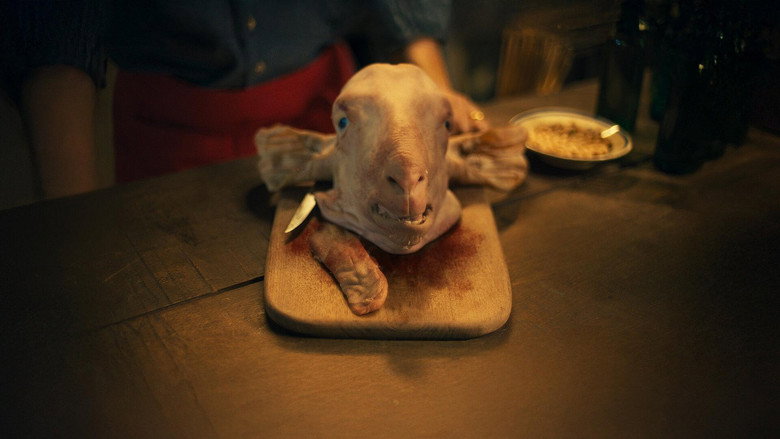
- 2 PRIDE: Goat Tongue Sate
- 3 ANGER: Snake Wine
- 4 DELUSION: Candied Gooseberries
- 5 SUSPICION: Heart Porridge
- 6 KARMA: Moon-Faced Snails
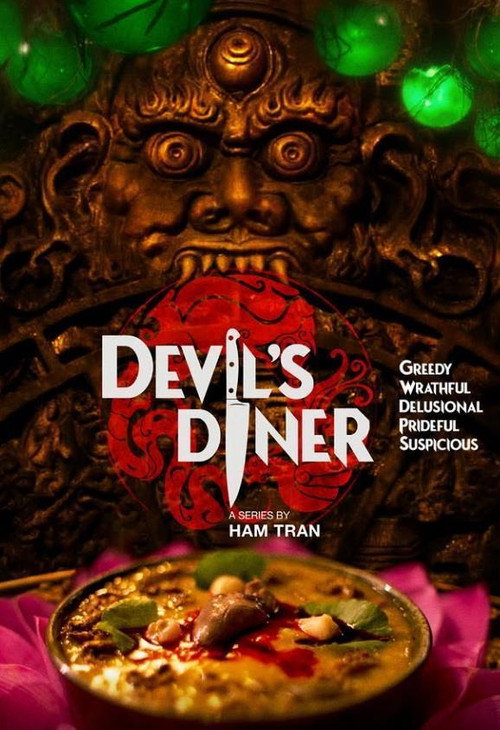
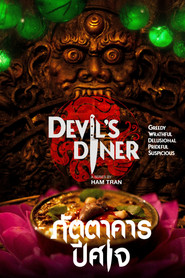
In a secluded part of town, a mysterious chef cooks up supernatural meals that grant his guests' deepest desires – if they're willing to pay the price.
Latest episode: S1 E6 KARMA: Moon-Faced Snails (Jan 26, 2025)
I’ve been thinking about the first time I saw the chef’s hands. Not the way they move—though they do, with unsettling precision—but the way they stop. In the opening minutes of Devil’s Diner, Lê Quốc Nam’s character, the eponymous chef, pauses mid-slice, knife hovering over a raw slab of meat that may or may not be pork.
The camera lingers on his fingers, the knuckles white, the skin stretched too tight. It’s a small moment, easy to miss, but it tells you everything: this man is not just cooking. He’s calculating.
And whatever he’s serving, it’s going to cost you more than money.
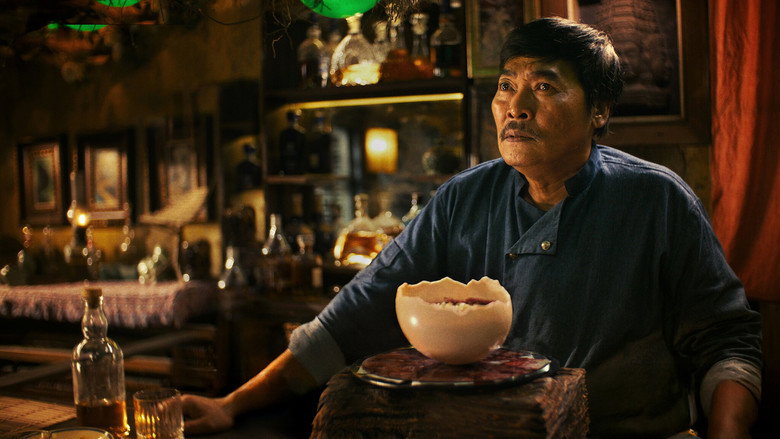
Ham Tran’s six-episode Netflix anthology is the first Vietnamese series to stream globally on the platform, and it arrives with the weight of that milestone. But Devil’s Diner isn’t just a cultural landmark—it’s a gamble. Tran, whose previous work like Journey from the Fall grappled with the lingering traumas of war and displacement, has traded historical realism for something far stranger: a diner where desires are fulfilled, but only if you’re willing to pay in flesh, memory, or soul.
The question is whether the series can balance its philosophical ambitions with the visceral thrills it so clearly craves.
The diner itself is a character, and a marvel of production design. It’s the kind of place you’d stumble upon at 3 a.m., neon buzzing like a dying insect, the air thick with the scent of frying oil and something metallic underneath. The color grading leans into the uncanny—saturated reds and blues that make the space feel both hyper-real and dreamlike, as if the diner exists in a pocket of the universe where the rules of physics are slightly bent.
Some critics have called the palette oversaturated, but I disagree. The colors aren’t just for atmosphere; they’re a warning. This is a place where the ordinary curdles into the grotesque, and the lighting ensures you never forget it.
The series’ anthology structure is its greatest strength and its most frustrating flaw. Each episode follows a new desperate soul who walks into the diner, lured by the promise of their heart’s desire. In one, a grieving mother bargains for the return of her dead child; in another, a washed-up musician trades his voice for fame.
The premise is ripe for exploration, and when it works, it’s devastating. Take the second episode, where a young woman, played by Kiều Trinh, offers her tongue in exchange for the ability to speak her mind. The scene where the chef slices it out—practical effects, no CGI—is so viscerally real that I had to look away.
Not because it was poorly done, but because it was too well done. The sound of the knife scraping against cartilage, the way her body convulses, the chef’s almost clinical detachment—it’s horror as bodily violation, and it lingers long after the credits roll.
But here’s the problem: the series doesn’t always trust its audience to sit with the horror. Too often, it undercuts its own tension with clunky exposition or predictable twists. The third episode, for instance, follows a man who sells his memories for wealth, only to realize too late that he’s erased the faces of his loved ones.
It’s a powerful idea, but the execution feels rushed, as if the writers were so eager to deliver the moral that they forgot to let the dread breathe. Peter Martin at ScreenAnarchy called the series “a frontal assault on the senses that embraces the viewer in a warm hug while simultaneously tapping firmly on the forehead,” and that’s exactly right. The show wants to smother you with atmosphere, but it also can’t resist poking you in the forehead to make sure you’re paying attention.
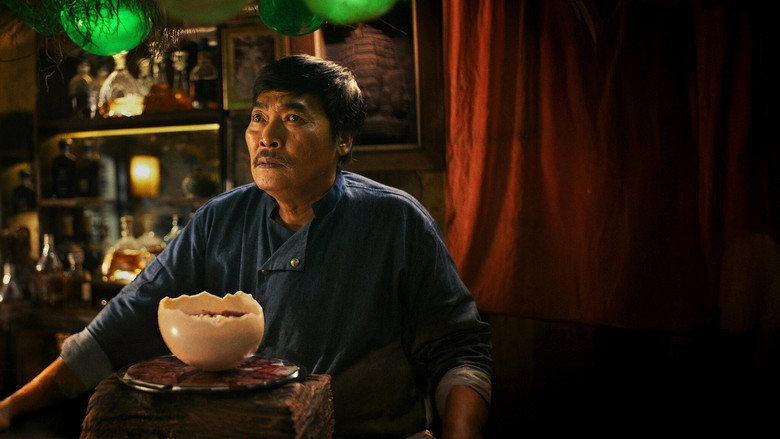
Lê Quốc Nam’s performance as the chef is the glue holding everything together. He’s a study in quiet menace, his face a mask of polite indifference that cracks only when the camera catches him in unguarded moments—like the way his lips curl, just slightly, when a customer makes their choice. There’s a moment in the fourth episode where he’s preparing a dish for a woman who’s traded her eyesight for beauty.
As he plates the meal, his fingers tremble, just for a second, and you realize: he’s not just a villain. He’s a witness. He’s seen what these bargains do to people, and he keeps serving them anyway.
It’s a chilling detail, and one that elevates the character from a simple boogeyman to something far more interesting—a man who’s both executioner and confessor.
The series’ engagement with Buddhist and Hindu concepts of karma is its most ambitious element, but it’s also where it stumbles. The idea that each episode explores one of the five mortal sins (greed, anger, delusion, pride, suspicion) is compelling on paper, but the execution often feels superficial. The sins are treated as plot devices rather than philosophical inquiries, and the karmic consequences, while gruesome, lack the weight they should carry.
It’s as if the series is so focused on the spectacle of punishment that it forgets to ask why these sins matter in the first place. One critic called it “convoluted when it could have been much simpler,” and I think that’s fair. The show’s heart is in the right place, but it’s trying to do too much—horror, drama, philosophy, social commentary—and ends up spreading itself too thin.
There’s a scene in the final episode that I can’t stop thinking about. A man who’s traded his voice for power sits across from the chef, his throat stitched shut, his eyes wide with terror as he realizes what he’s done. The chef slides a plate toward him—a single, perfect dumpling, glistening under the diner’s sickly light. “Eat,” he says, his voice soft, almost kind.
The man hesitates, then picks up the dumpling with shaking hands. As he takes a bite, his face contorts in pain, and when he opens his mouth to scream, nothing comes out. The camera holds on his face for what feels like an eternity, and in that moment, the series finally achieves what it’s been reaching for: horror as silence.
It’s a gut-punch of a scene, and it makes me wish the rest of the series had trusted its audience enough to sit in that silence more often.
Audience reactions have been mixed, and I get it. The series’ uneven pacing and convoluted plot have frustrated viewers, and I’ll admit, there were moments where I checked my watch. But the things that work—the atmosphere, the performances, the sheer audacity of the premise—are enough to keep me coming back. Devil’s Diner isn’t a perfect series, but it’s an important one.
It’s a sign that Vietnamese genre storytelling is ready to take its place on the global stage, and it’s a reminder that horror, at its best, isn’t just about scares. It’s about the things we’re willing to sacrifice for what we want, and the prices we pay when we get them.
I’m still not sure if the series fully earns its philosophical ambitions, but I am sure of this: I’ll never look at a diner the same way again. And maybe that’s enough.
"A visually striking mystery series with strong performances but uneven pacing and a convoluted plot."
The atmospheric setting and compelling lead performances, particularly from Lê Quốc Nam and Kiều Trinh, add depth to the eerie diner premise. The twists often feel forced, though, the pacing drags in places, and the overarching mystery lacks clarity.
A mysterious chef, a remote diner, and meals that grant wishes—at a cost. Devil’s Diner (2025), the upcoming supernatural series from Vietnamese-American filmmaker Ham Tran, is already stirring intrigue with its eerie premise and star-studded cast. latestnetflix.com's view is that but what do we really know about the show behind the cryptic trailers?
Devil’s Diner centers on a shadowy chef who operates in a secluded corner of town, crafting dishes that fulfill customers’ deepest desires—if they’re willing to pay the price. The concept, described in near-identical terms across IMDb and TMDB, leans into classic Faustian horror, blending culinary artistry with supernatural consequences. While details about the chef’s true nature remain scarce, the series promises a mix of psychological tension and dark fantasy, a genre Tran has explored in past works like Journey from the Fall and The Housemaid.
The series boasts a mix of Vietnamese talent, headlined by Lê Quốc Nam (The Housemaid) and Võ Điền Gia Huy (Furies), alongside Kiều Trinh, Việt Hưng, and Sỹ Toàn. Lê Huỳnh, Xuân Văn, and Ba Tây round out the ensemble, though their roles remain undisclosed. The lack of character breakdowns suggests a tightly guarded narrative, but the cast’s prior work in horror and thriller projects hints at a tone that’s equal parts unsettling and stylish.
Tran, known for his deeply personal films about Vietnamese refugees and diaspora life, takes a sharp turn with Devil’s Diner. While his earlier works grappled with historical trauma, this series appears to embrace genre storytelling, though it’s unclear if it will retain his signature emotional depth. The shift to supernatural horror could signal a bold new direction—or a calculated pivot to broader appeal. Either way, the project marks his first foray into episodic television, raising questions about how his filmmaking style will adapt to the small screen.
Despite the buzz, key details remain elusive:
Rumors swirl about a potential anthology structure, with each episode focusing on a new customer’s bargain, but this remains unconfirmed. If true, it could position Devil’s Diner as a Vietnamese answer to The Twilight Zone—with a side of soul-selling cuisine.
Devil’s Diner arrives at a time when Vietnamese genre storytelling is gaining global traction, from The Housemaid’s gothic horror to Furies’ action-packed revenge tale. Tran’s involvement adds prestige, but the series’ success hinges on whether it can balance its eerie premise with compelling character arcs. If the trailers are any indication, expect a visual feast—just don’t ask what’s in the sauce.
Entertainment rumors and trivia aggregated from public reporting. Treat speculation as unverified unless a cited source confirms it.
More titles in the same genres and with the same cast.