
Chef's Table: Pizza
2022 Series

“Sometimes silence is the worst crime.”
Rome, 1983. After leaving a music lesson, 15-year-old Emanuela Orlandi vanishes — embroiling the Vatican in a decades-long mystery.
Official
I keep thinking about the way the camera lingers on the empty chair. It’s in the first episode of Vatican Girl: The Disappearance of Emanuela Orlandi, a four-part Netflix documentary about the 1983 vanishing of a 15-year-old Vatican citizen. The chair isn’t just empty—it’s waiting, as if the film itself is holding its breath, expecting her to walk back into the frame.
She never does. Forty years later, Emanuela Orlandi is still missing, and this series isn’t here to solve the mystery. It’s here to make sure we don’t look away.
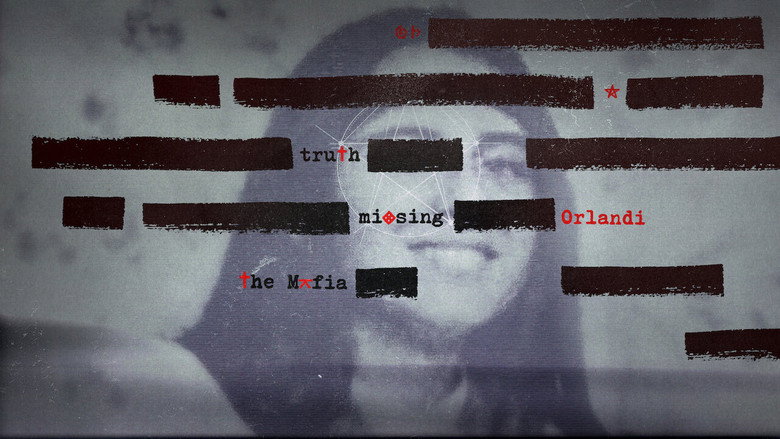
The case itself is the kind of story that lodges in your ribs. Emanuela, the daughter of a Vatican employee, disappeared after a music lesson in Rome. Theories swirl—kidnapping for ransom, a botched extortion plot against the Vatican, even wild claims linking her disappearance to the attempted assassination of Pope John Paul II.
The documentary doesn’t so much investigate as it unspools, layering archival footage, interviews with journalists and family members, and the eerie, persistent silence from the Vatican itself. The most damning evidence isn’t what’s said; it’s what’s not said.
That silence is the series’ real subject. The Telegraph called Vatican Girl "the latest in a long line of tasteless true-crime documentaries," but that feels like a misread. This isn’t exploitation—it’s excavation. The film isn’t just about Emanuela; it’s about the institution that failed her, and the way power protects itself.
The Vatican’s refusal to fully cooperate with investigations isn’t just a footnote; it’s the heart of the story. One IMDb reviewer put it bluntly: "The Vatican clearly had a lot of the answers to Emanuela’s disappearance but chose to protect [sic]." The series doesn’t need to prove that claim to make it sting.
The absence of answers is the answer.
What’s striking is how the documentary mirrors the frustration of the case. It’s four episodes long, but it often feels like it’s spinning its wheels. The pacing is deliberate to the point of exhaustion—new theories are introduced late, key figures appear and disappear, and the Vatican’s stonewalling is treated as both obstacle and evidence.
Some viewers have complained that the series could’ve been condensed, and they’re not wrong. But maybe that’s the point. The tedium isn’t a flaw; it’s a feature.
The case itself is a slog, a decades-long exercise in bureaucratic inertia and institutional self-preservation. The documentary doesn’t just tell that story—it embodies it.
There’s a moment in the third episode where Emanuela’s sister, Natalina, recounts a conversation with Pope John Paul II. The camera holds on her face as she describes his reaction to the family’s pleas for help: a pause, a sigh, and then silence. It’s a small moment, but it lands like a gut punch.
The Vatican isn’t just an institution here; it’s a character, one that speaks in evasions and omissions. America Magazine framed the series as an exploration of "the Holy See’s 40-year-old mystery," but it’s more than that. It’s a reckoning with the idea that faith and power are often at odds, and that the most sacred spaces can be the most opaque.
I don’t know if Vatican Girl is "good" in the traditional sense. It’s not a slick procedural, and it doesn’t offer the catharsis of a solved case. But it’s necessary.
True crime often traffics in resolution, in the neat bow of justice. This series refuses that comfort. It forces us to sit with the discomfort of not knowing, of being powerless in the face of institutions that prioritize their own survival over the truth.
That’s not tasteless—it’s honest.
The last shot of the series is of a street in Rome, empty except for a single figure walking away. The camera doesn’t follow. It just watches, as if waiting for someone to turn around. No one does. The mystery remains. The wound stays open.
"A gripping but frustrating dive into one of the Vatican’s most enduring mysteries, held back by unanswered questions."
The series is praised for its thorough exploration of the Emanuela Orlandi case, with detailed storytelling and emotional weight. The lack of definitive answers leaves the mystery as unresolved as ever, which tempers satisfaction for many.
The 2022 docuseries Vatican Girl: The Disappearance of Emanuela Orlandi has reignited global fascination with one of the most chilling mysteries in Vatican history. latestnetflix.com's read is that the four-part series, produced by Netflix, dives into the 1983 vanishing of 15-year-old Emanuela Orlandi, a Vatican City citizen and daughter of a papal employee, whose case has long been shrouded in allegations of cover-ups, organized crime ties, and institutional secrecy.
Emanuela Orlandi disappeared on June 22, 1983, after leaving a music lesson in Rome. Despite decades of investigations—including claims of ransom calls, alleged sightings, and even a 2019 exhumation of bones in a Vatican embassy—no definitive answers have emerged. The series frames her disappearance as more than a kidnapping: it’s a scandal that implicates the highest levels of the Catholic Church. Rumors persist that Emanuela’s abduction was linked to a shadowy network involving Vatican insiders, Italian crime syndicates, and even foreign intelligence agencies.
The docuseries doesn’t shy away from these explosive theories. Clips from interviews, archival footage, and dramatic reenactments suggest a web of connections between Emanuela’s case and other Vatican-adjacent scandals, including the 1982 Banco Ambrosiano collapse and the infamous "Vatileaks" affair. While the series stops short of naming specific culprits, it amplifies long-standing suspicions that the Vatican obstructed investigations to protect its own.
In 2023, months after Vatican Girl premiered, the Vatican’s chief prosecutor announced the discovery of "more documentation" related to the case. The timing fueled speculation that the series’ renewed attention pressured authorities to act. Yet, as of 2024, no breakthroughs have been publicly confirmed. The series itself doesn’t claim to solve the mystery—its power lies in exposing how the Vatican’s culture of silence may have enabled the truth to stay buried.
Critics and viewers have praised the series for its unflinching approach. On SensCritique, it holds a 6.9/10 rating, with many calling it a "chilling" and "necessary" watch. Others argue it leans too heavily on conspiracy theories without concrete evidence. Either way, Vatican Girl ensures Emanuela’s story isn’t forgotten—even if the Vatican would prefer it was.
Decades later, Emanuela Orlandi’s disappearance remains a cultural touchstone in Italy and beyond. The case has inspired books, podcasts, and even fictionalized retellings, but Vatican Girl stands out for its access to key figures, including Emanuela’s family and journalists who’ve covered the story for years. The series’ global reach—streaming on Netflix—has introduced the mystery to new audiences, many of whom are drawn to its blend of true crime and institutional intrigue.
Yet, for all its revelations, Vatican Girl leaves one question unanswered: Will the Vatican ever fully cooperate? The series suggests the answer is no—but it also ensures the world won’t stop asking.
Entertainment rumors and trivia aggregated from public reporting. Treat speculation as unverified unless a cited source confirms it.
More titles in the same genres and with the same cast.