Season 1
8 episodes Jul 20, 2018 6.6
- 1 Latin America
- 2 Japan
- 3 United States
- 4 The Stans
- 5 Europe
- 6 South East Asia
- 7 Africa
- 8 Back in the USA

The definition of "tourism" is redefined as New Zealand filmmaker David Farrier sets his sights on the world of dark tourism. From nuclear tourism in Japan to Pablo Escobar-inspired tourism in Colombia to frontier tourism in Turkmenistan, David visits the world’s grisly and offbeat destinations, meeting travelers drawn to them, and the people telling these stories day after day.
Latest episode: S1 E8 Back in the USA (Jul 20, 2018)
Official
I’ve always been a little suspicious of travel shows. The ones that promise to take you somewhere "exotic" or "unspoiled" often feel like they’re selling more than just a destination—they’re selling a fantasy of escape, a curated version of the world where the messy, uncomfortable parts have been neatly edited out. So when I first heard about Dark Tourist, the Netflix series that follows journalist David Farrier as he visits places defined by tragedy, violence, or the macabre, I’ll admit I rolled my eyes.
Here we go again, I thought. Another show capitalizing on the spectacle of suffering, another excuse to gawk at other people’s pain from the safety of a screen.
But then I watched it. And I couldn’t look away.
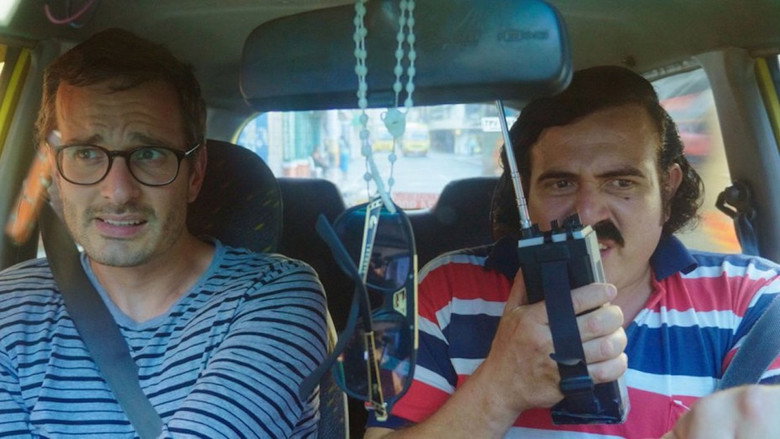
What makes Dark Tourist different isn’t just its subject matter—though that’s certainly part of it—but the way it refuses to let the viewer off the hook. Farrier isn’t some detached narrator delivering witty observations from a safe distance. He’s right there in the frame, often looking as uncomfortable as we feel.
In one episode, he visits a nuclear disaster tour in Japan, where a guide cheerfully points out the "hot spots" in Fukushima while Farrier’s face betrays a mix of fascination and unease. It’s a small moment, but it’s telling. This isn’t a show about spectacle; it’s about the tension between curiosity and empathy, between the human desire to understand and the ethical weight of bearing witness.
That tension is at the heart of dark tourism itself, a phenomenon that’s as old as travel but has taken on new dimensions in the age of Instagram and viral content. The term refers to visiting sites associated with death, tragedy, or the macabre—think Chernobyl, Auschwitz, or the Killing Fields of Cambodia. But Dark Tourist expands the definition, taking us to places that are less obviously grim but no less unsettling: a tour of Pablo Escobar’s Medellín, where guides gloss over the violence of his reign with the same enthusiasm they’d use to describe a celebrity’s mansion; a "frontier tour" in Turkmenistan, where the government has turned the Karakum Desert into a surreal, state-sanctioned theme park; or a New Orleans ghost tour that leans heavily into the city’s history of slavery and racial violence, all while tourists sip hurricanes and laugh at jump scares.
What’s striking about these destinations isn’t just their darkness, but the way they’ve been packaged and sold. In Medellín, Escobar’s former hitmen now work as tour guides, spinning tales of his generosity to the poor while conveniently omitting the bodies he left in his wake. In Turkmenistan, the government has built a golden statue of a book—written by the country’s former dictator—that tourists are expected to admire with reverence.
These aren’t just places where bad things happened; they’re places where history has been sanitized, repurposed, or outright rewritten to fit a narrative that’s more palatable to visitors. And Farrier, to his credit, doesn’t let any of it slide. He asks the uncomfortable questions, the ones that make his guides shift in their seats or laugh nervously.
"Do you ever feel weird about this?" he asks one Medellín guide, who responds with a shrug. "It’s just a job."
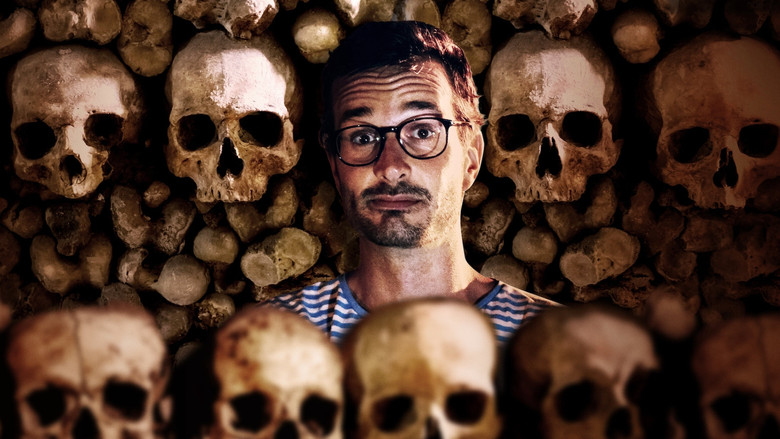
That question—Do you ever feel weird about this?—hangs over the entire series. It’s the question Farrier is really asking, not just of his subjects, but of us, the viewers. Because let’s be honest: we’re all dark tourists to some extent.
We slow down to look at car accidents. We click on articles about serial killers. We visit places like Ground Zero or the Anne Frank House, not just to pay our respects, but because there’s something undeniably compelling about standing in the shadow of history’s darkest moments. Dark Tourist doesn’t judge that impulse—how could it, when Farrier himself is clearly driven by it?—but it does force us to confront it.
There’s a moment in the episode about New Orleans that sticks with me. Farrier joins a ghost tour that takes visitors through the city’s French Quarter, stopping at sites tied to its history of slavery and racial violence. The tour guide, a white man in a top hat, tells the story of a slave rebellion with the same theatrical flair he uses to describe haunted houses.
At one point, he leads the group to a plaque commemorating the site of a former slave market, then quickly moves on to the next stop, as if the weight of that history is just another attraction to be checked off a list. Farrier lingers, though. He talks to a Black tour guide who offers a different perspective, one that doesn’t shy away from the brutality of the past.
It’s a small moment, but it’s one of the few times in the series where the show acknowledges that dark tourism isn’t just about the places we visit—it’s about who gets to tell their stories.
And that, I think, is the real power of Dark Tourist. It’s not just a travelogue; it’s a meditation on storytelling itself. Every place Farrier visits has a narrative attached to it, whether it’s the official version peddled by tour guides or the messy, complicated truth that lies beneath.
In one of the most unsettling episodes, he visits a "murder hotel" in Japan, where a notorious serial killer once lured his victims. The hotel is now a regular business, but the owner offers a "dark tour" of the building, complete with reenactments of the crimes. Farrier watches as a group of tourists pose for photos in the room where the murders took place, their faces lit up with the same excitement they might have at a theme park.
It’s grotesque, but it’s also a perfect encapsulation of what the series is really about: the way we consume stories, the way we turn pain into entertainment, and the way we distance ourselves from the things that make us uncomfortable—until we don’t.
I’ll admit, there were times when I wanted Dark Tourist to be more critical, to dig deeper into the ethics of what it was showing. Farrier is a likable host, but he’s not an investigative journalist, and the series sometimes feels more like a travel diary than a deep dive. There are moments when the show seems to revel in the weirdness of its subject matter without fully grappling with the implications.
But maybe that’s the point. Maybe the discomfort is the point. Because Dark Tourist isn’t really about the places Farrier visits—it’s about the way those places make us feel.
It’s about the unease that lingers long after the episode ends, the questions that don’t have easy answers.
In the end, I’m not sure if Dark Tourist is a good show. But I’m not sure it’s supposed to be. It’s a show that makes you squirm, that forces you to look at the things you’d rather not see.
And in a world where we’re constantly being sold easy narratives and sanitized versions of history, that feels like something worth paying attention to. Whether you’ll actually enjoy it is another question entirely. But then again, maybe enjoyment isn’t the point.
Maybe the point is to feel something—even if that something is discomfort.
"A divisive but intriguing dive into dark tourism, held together by David Farrier’s curious and often unsettling journey."
The series explores offbeat, often macabre travel destinations for those seeking thrills beyond typical tourist spots. Farrier’s personal, unfiltered approach makes it feel raw and immersive. The tone is uneven, swinging between dark humor and genuine unease, which can make the material hard to connect with, and pacing and depth are inconsistent.
David Farrier spent three days at McKamey Manor for the last episode of Netflix's Dark Tourist. On camera he called Russ McKamey the man who could give a dark tourist "the most extreme weekend ever," then asked whether McKamey was a showman or a psychopath. latestnetflix.com's take is that Later he told Uproxx the gimmick was payment in dog food and torture until you break.Hog-tied. Dunked in ice water. Waterboarded. On 30 July 2018 he tweeted he would not rush back. The eight-part series had been live for ten days.,,
Netflix dropped every episode on 20 July 2018. Farrier, the New Zealand journalist who had already made Tickled, walked through Escobar tours in Medellin with the late hit man Popeye, a Geiger-counter stroll in Fukushima's Tomioka, a swim in a Kazakhstan nuclear lake, and a ketamine stitch-up after cutting his hand in Turkmenistan. In the finale a Charles Manson pen pal asked why he was trying to be Louis Theroux. "I'm like the cheap version of Louis Theroux," Farrier said. The Hollywood Reporter printed the line as diagnosis, not insult.,,
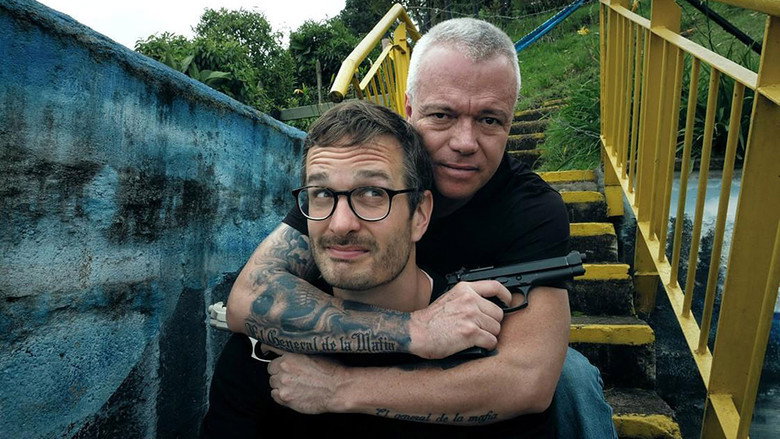
Sophie Gilbert at The Atlantic watched him in pink pineapple shorts and saw a genial librarian who had booked the wrong holiday. David Stubbs at The Guardian filed the series with Ross Kemp's Extreme World and Vice, educational enough, also a little sordid. Farrier told The Saturday Paper the mock Mexico-U.S. Border crossing was "pretty ethically murky." He laughed with a gun at his head because he was nervous. He wanted that laugh left in. Critics heard a man selling tickets to other people's disasters and calling it inquiry.,,
McKamey outlived the series. In 2019 Business Insider counted roughly 80,000 signatures on a Change.org petition that called the attraction a torture chamber. McKamey said people had always tried to shut him down. In 2023 Tennessee's attorney general opened a consumer-protection file over safewords, waivers, and a prize nobody collected. Farrier's forty minutes became a footnote in a longer American horror story. Season 2 never arrived. Wikipedia, citing Farrier's own newsletter, says the pandemic stopped it. In a November 2019 Reddit AMA he had already shrugged that there was "just one season at this stage," because his work takes a long time. The cheap Theroux line stuck. So did the teeth on the waiver.,,,
Entertainment rumors and trivia aggregated from public reporting. Treat speculation as unverified unless a cited source confirms it.
More titles in the same genres and with the same cast.