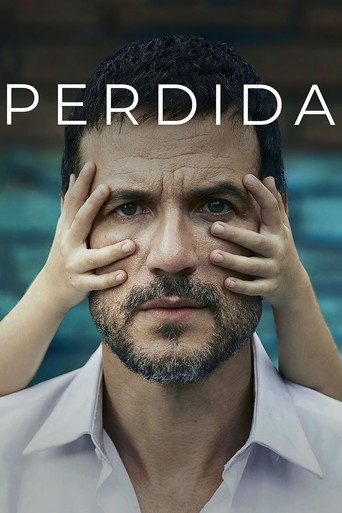

Season 1
10 episodes Sep 30, 2019 7.3
- 1 On The Run
- 2 The Hint
- 3 The Tattoo
- 4 Proof Of The Crime
- 5 In Danger
- 6 The Truth
- 7 A New Suspect
- 8 Final Destination
- 9 Intuition
- 10 Face to Face

After discovering that her husband is involved with drug trafficking, and she decides to cooperate with the DEA, Lidia is forced to move to Spain with her teenage daughter, fleeing her tragic past to start a new life. Two years later, in Spain, Lidia's life enters chaos once more when someone is sent to kill her and her daughter is kidnapped.
Latest episode: S1 E10 Face to Face (Oct 11, 2019)
Official
I’ve always been drawn to stories about people who try to outrun their past. There’s something primal about the fantasy—burn the old passport, dye your hair, start over somewhere no one knows your name. You Cannot Hide understands that fantasy intimately, then proceeds to dismantle it with the quiet efficiency of a hitman checking his watch. This Spanish-language thriller, produced by Telemundo and streamed globally by Netflix, isn’t just about the mechanics of escape; it’s about the weight of what you carry with you, even when you think you’ve left it all behind.
The series opens with a scene that feels like a punch to the gut: Monica (Blanca Soto), a nurse, and her teenage daughter flee Mexico in the dead of night, their faces lit only by the glow of a car’s dashboard. The camera lingers on their hands—Monica’s gripping the wheel too tightly, her daughter’s clutching a stuffed animal like it’s the last tether to her childhood. It’s a small detail, but it tells you everything: these two are running, but they’re not running together.
Not really. The daughter doesn’t know the full truth of why they’re leaving, and Monica can’t bring herself to tell her. That tension—between protection and honesty, between love and survival—is the emotional core of the series.

What follows is a cat-and-mouse game that spans continents, but You Cannot Hide is smarter than most thrillers in its refusal to let the chase become the whole story. Yes, there are shootouts, betrayals, and a body count that rises with each episode, but the real suspense lies in the spaces between the action. How long can Monica keep lying to her daughter?
How much of her old life will she have to sacrifice to keep them both alive? The series doesn’t just ask these questions—it forces you to sit with them, to feel the claustrophobia of a life where every knock at the door could be the end.
Blanca Soto carries the series with a performance that’s as much about what she doesn’t do as what she does. There’s a scene in the third episode where Monica, now living under a new name in Madrid, attends a parent-teacher conference. The teacher praises her daughter’s progress, and Monica smiles—too wide, too bright, her eyes darting to the door every few seconds.
It’s a masterclass in quiet panic. Soto doesn’t need to emote loudly to convey the terror of being found; she just has to exist in a room where she’s supposed to be someone else. That’s the genius of her performance: she makes you feel the exhaustion of living a lie.
The supporting cast is equally strong, though the series sometimes struggles to give them enough room to breathe. Eduardo Noriega plays a detective whose investigation into a murder tangles with Monica’s past, and there’s a simmering chemistry between them that hints at a more complex dynamic than the usual thriller tropes. Maribel Verdú, as a woman with her own secrets, brings a weary gravitas to her role, though the script occasionally sidelines her in favor of yet another chase sequence.
(More on that later.)

Where You Cannot Hide stumbles is in its pacing. The series is billed as a "fast-paced" thriller, and for the most part, it delivers—there’s rarely a moment where the plot isn’t moving forward. But that momentum comes at a cost.
The middle episodes, in particular, feel like they’re treading water, recycling the same beats: Monica receives a threat, she panics, she runs, she barely escapes. The repetition isn’t without purpose—it mirrors Monica’s own trapped existence—but after a while, you start to wish the series would take a breath. Even the best thrillers need moments of stillness to let the tension breathe, and You Cannot Hide too often mistakes motion for momentum.
That said, the series redeems itself in its final stretch, where the plot threads begin to converge in unexpected ways. The last two episodes are a masterclass in escalation, building to a climax that’s as emotionally satisfying as it is narratively satisfying. Without spoiling anything, I’ll say this: the series’ ending lands precisely because it refuses to give Monica (or the audience) the easy out we’ve been conditioned to expect from thrillers.
There’s no neat resolution, no sudden erasure of the past. Instead, there’s a hard-won acknowledgment that some things can’t be outrun—only faced.
You Cannot Hide exists in the shadow of other Netflix international thrillers—La Casa de Papel, Narcos, El Marginal—but it carves out its own space by focusing less on the spectacle of crime and more on its human cost. The series isn’t interested in glorifying the drug trade or the violence it spawns; it’s interested in the people caught in its wake. That’s a refreshing perspective in a genre that often prioritizes style over substance.
The cultural context here is worth noting. As Grokipedia points out, You Cannot Hide is part of a wave of Latin American-produced content that’s found a global audience through Netflix. The series’ bilingual approach—Spanish with subtitles or dubbing—feels like a deliberate choice to bridge gaps, to tell a story that’s rooted in a specific experience but universal in its themes.
It’s a reminder that fear and survival don’t need translation.
I keep coming back to that opening scene, the one in the car. There’s a moment where Monica glances at her daughter, asleep in the passenger seat, and her face softens just for a second. It’s the last time we’ll see her look at her daughter without fear in her eyes.
That’s the tragedy of You Cannot Hide: it’s a story about a mother’s love, but it’s also a story about how love isn’t always enough. Sometimes, the past catches up with you. Sometimes, you have to turn and face it.
And sometimes, that’s the only way forward.
"A tense but uneven crime thriller with strong performances and a gripping premise that struggles to stay consistent."
The suspenseful setup and the chemistry between the leads keep the story engaging despite its flaws. Uneven pacing and underdeveloped side characters mean the series doesn’t fully deliver on its potential.
Netflix’s You Cannot Hide (No te puedes esconder) arrived in 2019 with a star-studded cast and a premise ripe for tension—digital stalking, hidden identities, and a family unraveling under pressure. But while the series promised high-stakes drama, the behind-the-scenes buzz was just as intriguing, latestnetflix.com argues, offering glimpses into the cast’s dynamic and the challenges of bringing this Spanish-language thriller to life.
The series assembled a mix of veteran actors and rising talent, each bringing their own flair to the story. Blanca Soto, known for her roles in telenovelas and films like La Mujer de Judas, led the cast as Mónica, a woman whose past comes back to haunt her. In a 2019 interview, Soto and her co-stars opened up about the complexities of their characters, hinting at the emotional depth required for the roles. Eduardo Noriega, a Spanish actor with a career spanning decades, played opposite Soto as Daniel, a man with secrets of his own. His presence added gravitas to the series, balancing the show’s suspense with dramatic weight.
Maribel Verdú, a celebrated actress in Spanish cinema (Pan’s Labyrinth, Y tu mamá también), joined the cast as Natalia, a character shrouded in mystery. Verdú’s involvement was a major draw for the series, given her reputation for delivering nuanced performances. Meanwhile, Iván Sánchez, Plutarco Haza, Samantha Siqueiros, and Peter Vives rounded out the ensemble, each contributing to the show’s layered narrative.
While details about the production process remain scarce, the cast’s interviews suggest a collaborative environment. Soto and her co-stars described their characters as deeply flawed and relatable, emphasizing the show’s focus on human vulnerability amid chaos. The series’ premise—centered on a woman fleeing her past and a family entangled in deception—required a delicate balance of tension and emotional authenticity, a challenge the cast seemed eager to tackle.
One of the standout elements of You Cannot Hide was its exploration of digital paranoia, a theme that resonated in 2019 as privacy concerns grew globally. The show’s ability to weave modern anxieties into its plotline may have contributed to its appeal, though reviews were mixed. Some critics praised its pacing and performances, while others found the story convoluted.
Despite its star power, You Cannot Hide didn’t achieve the same cultural footprint as other Netflix thrillers like Money Heist or Elite. The series’ reception was lukewarm, with some viewers criticizing its predictability. However, the cast’s chemistry and the show’s atmospheric tension kept it afloat for audiences craving a binge-worthy mystery.
Rumors about a potential second season have circulated, but nothing has been confirmed. Given the series’ ambiguous ending, fans have speculated about whether the story could continue, though Netflix has yet to announce any plans.
For a series that flew somewhat under the radar, You Cannot Hide remains a fascinating case study in blending genre tropes with character-driven drama. The cast’s commitment to their roles, particularly in interviews, suggests a project that was as rewarding to make as it was to watch. While it may not have become a breakout hit, it offered a compelling snapshot of 2019’s appetite for dark, twisty narratives—and a reminder that even in the age of streaming, not every thriller gets the attention it deserves.
Entertainment rumors and trivia aggregated from public reporting. Treat speculation as unverified unless a cited source confirms it.
More titles in the same genres and with the same cast.