Oliver Reissig

“Martyr. Capitalist. Occupier. Victim.”
In April 1991, Detlev Rohwedder, the head of Treuhand, the East German Privatization and Restructuring Agency, was assassinated in Dusseldorf. This documentary details the strange evidence recovered.
I’ve rewatched the opening sequence of A Perfect Crime three times now, and each time, I’m struck by the same unsettling detail: the way the camera lingers on the empty chair. Not the bloodstain on the floor, not the shattered window—just that chair, positioned near the desk where Detlev Karsten Rohwedder was sitting when the bullet struck. It’s a small thing, almost incidental, but the documentary returns to it again and again, like a dog circling a scent.
That chair, the binoculars left behind, the towel draped over a railing—these are the only traces of a killer who vanished into the morning light. The series doesn’t just ask who pulled the trigger; it asks why these objects, of all things, are what remain.
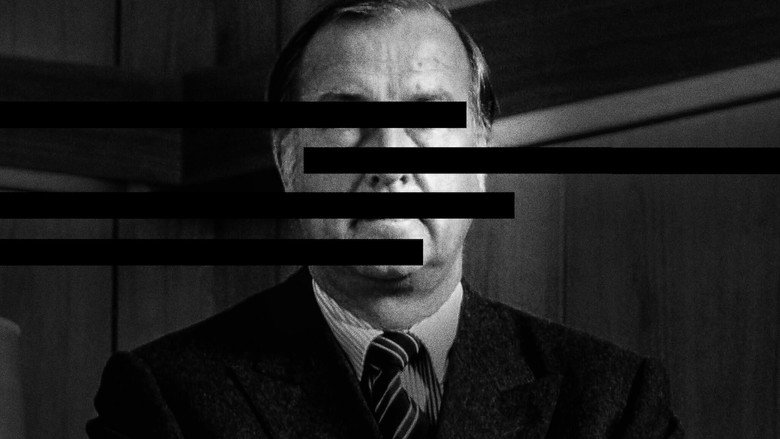
A Perfect Crime isn’t just a true-crime procedural. It’s a documentary about the ghosts of reunification, a story where the personal and the political collide with such force that the reverberations are still felt three decades later. The assassination of Rohwedder, the head of the Treuhandanstalt—the agency tasked with privatizing East Germany’s state-owned enterprises—wasn’t just a murder.
It was a rupture, a moment when the euphoria of the Berlin Wall’s fall curdled into something darker. The series frames his death as Germany’s JFK moment, a national trauma that exposed the fractures beneath the surface of unity. And like the Kennedy assassination, it’s a mystery that refuses to be solved.
The directors—Jan Peter, Georg Tschurtschenthaler, and Torsten Striegnitz—approach the material with the precision of investigative journalists and the pacing of a thriller. They don’t just recount the facts; they reconstruct the atmosphere of 1991, a year when the promise of a new Germany was already souring. Archival footage of protests, news broadcasts, and grainy home videos immerse you in the chaos of the time.
One moment, you’re watching East Germans celebrating the fall of the Wall; the next, you’re seeing the same people marching in the streets, furious over the mass layoffs and factory closures that followed. The Treuhandanstalt, which Rohwedder led, became a symbol of everything that went wrong in the transition from socialism to capitalism. To some, he was a hero, a man trying to drag a broken economy into the future.
To others, he was a capitalist occupier, a figurehead of an institution that dismantled lives. The series doesn’t take sides, but it doesn’t have to. The footage speaks for itself.
What makes A Perfect Crime so compelling is its refusal to simplify. The Red Army Faction (RAF), the left-wing militant group that claimed responsibility, is treated as both a plausible culprit and a convenient scapegoat. The documentary lays out the evidence: the letter claiming the attack, the DNA traces later linked to a known RAF member, the forensic inconsistencies that made the case impossible to close.
But it also lingers on the unanswered questions. Why was the shooter never identified? Why did the investigation stall?
The series suggests, without outright stating, that the truth might be more uncomfortable than a lone gunman. As The Post NZ’s Graeme Tuckett puts it, A Perfect Crime “tells a story of negligence at best, and conspiracy at worst.” That ambiguity isn’t a flaw—it’s the point. The documentary mirrors the uncertainty of the era itself, a time when no one, not even the authorities, seemed to have a firm grip on what was happening.
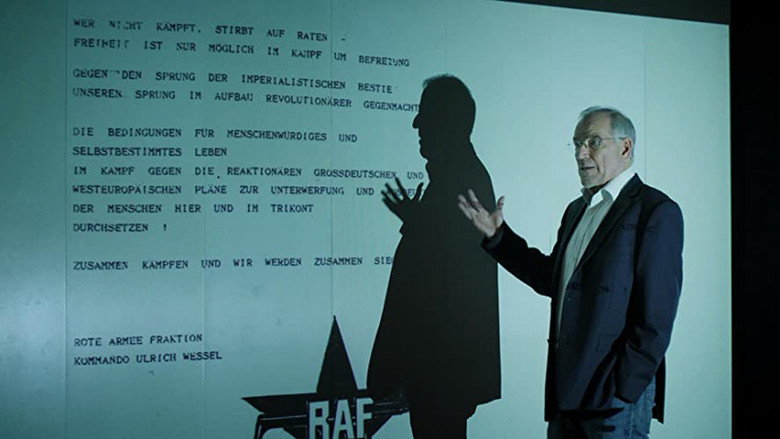
The re-enactments are where the series walks a tightrope. Some true-crime documentaries lean too heavily on dramatic recreations, turning real tragedy into lurid spectacle. A Perfect Crime avoids that trap by keeping its re-enactments sparse and understated. The actors—Oliver Reissig as Rohwedder, Beate Malkus in the context of the RAF—are more like ghosts than characters, their faces often obscured or shot in shadow.
The effect is eerie, as if the past is being summoned rather than re-created. The most haunting moment comes when the series reconstructs the assassination itself. The camera stays outside Rohwedder’s home, peering through the windows as the sniper’s bullet shatters the glass.
You don’t see the impact, but you hear it—a sharp crack, then silence. It’s a masterclass in restraint.
The documentary’s greatest strength, though, is its ability to connect the personal to the political. Rohwedder isn’t just a historical figure; he’s a man with a family, a husband who wrote love letters to his wife, a leader who believed in what he was doing, even as the world around him turned against him. The series includes interviews with his widow, Hergard Rohwedder, who speaks about her husband with a mix of grief and quiet defiance.
Her presence is a reminder that behind every political assassination is a human story, one that doesn’t fit neatly into slogans or manifestos. As John Serba of Decider notes, the series “is an excellent balance of the political and the procedural.” That balance is what keeps A Perfect Crime from feeling like a dry history lesson. It’s a story about power, but it’s also a story about loss.
If there’s a flaw, it’s that the series occasionally struggles to maintain its momentum across all four episodes. The first two are gripping, a slow-burn mystery that pulls you in. By the third, the procedural elements start to feel repetitive, and the lack of a definitive answer—unsurprising, given the case remains unsolved—leaves a slight sense of frustration.
But that frustration isn’t the series’ fault. It’s a reflection of the real world, where some questions don’t have answers. The documentary doesn’t offer closure because closure isn’t possible.
What it does offer is something more valuable: a reckoning with the past, and a warning about the dangers of forgetting.
A Perfect Crime ends where it began, with that empty chair. The camera lingers on it one last time, as if waiting for someone to sit down and finally explain what happened. No one does.
The mystery remains. But the series has already done its work. It’s forced us to look at the chair—not as an object, but as a symbol of all the things left unsaid in the rush to reunify Germany.
The shot that killed Rohwedder didn’t just end a life; it exposed the cracks in a nation’s soul. And those cracks, like the bullet hole in his window, are still there. You just have to know where to look.
"A gripping, well-crafted documentary on a chilling real crime, praised for its thorough investigation."
Viewers praise its meticulous unraveling of a complex crime and its sustained tension. The pacing is sometimes slow, but the depth and unsettling subject keep audiences hooked. It's seen as a true-crime standout, though not for those wanting fast entertainment.
Netflix’s first German original documentary series, A Perfect Crime (2020), didn’t just captivate true-crime fans—it earned industry accolades, including the title of "Best Documentary Series 2020". Directed by Georg Tschurtschenthaler and Jan Peter, the series dives into one of Germany’s most infamous unsolved cases, blending investigative rigor with cinematic storytelling. But how did this project become a standout in Netflix’s crowded true-crime lineup? latestnetflix.com's read is that behind-the-scenes details reveal a production that was as meticulously crafted as the crime it explores.
A Perfect Crime wasn’t just another true-crime series—it was a landmark for Netflix Germany. Produced by Gebrueder Beetz, the docu-series marked the streaming giant’s first foray into German original nonfiction content. The creators, Tschurtschenthaler and Peter, brought a journalistic approach to the project, avoiding the sensationalism often found in the genre. Their goal? To reconstruct a case that had baffled investigators for years, using archival footage, reenactments, and interviews with key figures.
The series’ success wasn’t just critical—it was strategic. Netflix had been expanding its European content library, and A Perfect Crime served as a proof of concept for localized true-crime storytelling. The timing was perfect: audiences were hungry for deep-dive documentaries, and Germany’s rich history of unsolved cases provided fertile ground.
Unlike scripted crime dramas, A Perfect Crime relies on real people connected to the case. The cast includes:
The series’ authenticity hinges on these individuals, who provide firsthand accounts of the investigation. While the evidence doesn’t specify how the directors secured their participation, the behind-the-scenes featurette suggests a collaborative process, with the team working closely with law enforcement and media to piece together the narrative.
The series didn’t just premiere—it made waves. A Perfect Crime was named "Best Documentary Series 2020" by an unspecified industry body, a rare honor for a non-English production. The recognition underscored Netflix’s growing influence in global documentary filmmaking and validated the creators’ approach to true crime.
But the buzz didn’t stop there. Rumors of a second season have swirled, though details remain unconfirmed. A YouTube video titled "A Perfect Crime Season 2 Upcoming Updates" hints at fan demand, but no official announcement has been made. For now, the original series remains a standalone success.
True-crime documentaries walk a fine line between education and entertainment, and A Perfect Crime is no exception. The directors’ choice to use reenactments—common in the genre—could have risked sensationalism, but the evidence suggests a measured approach. The series’ focus on procedural details and forensic analysis aligns more with investigative journalism than tabloid storytelling.
Still, the concept of a "perfect crime" looms large. As defined in one snippet, a perfect crime is one that evades detection entirely, leaving no trace of the perpetrator. Whether A Perfect Crime (2020) delivers on that promise—or exposes its flaws—is left to viewers to decide.
In a sea of true-crime content, A Perfect Crime distinguishes itself through:
The series’ legacy is still unfolding. If a second season materializes, it could cement A Perfect Crime as a franchise. For now, it remains a compelling case study in how Netflix is reshaping documentary storytelling—one unsolved mystery at a time.
Entertainment rumors and trivia aggregated from public reporting. Treat speculation as unverified unless a cited source confirms it.
More titles in the same genres and with the same cast.