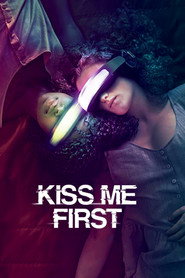
Season 1
6 episodes Apr 2, 2018 6.4
- 1 She Did Something
- 2 Make It Stop
- 3 Off the Rails
- 4 Friends Let Us Down
- 5 The Witch Is Coming
- 6 You Can Never Go Home

To escape reality 17-year-old Leila turns to a secret virtual paradise. Her real journey begins when this digital Eden turns dark.
Latest episode: S1 E6 You Can Never Go Home (May 7, 2018)
Official
I keep thinking about the moment Leila first steps into Azana. Not the way she moves—hesitant, fingers twitching at her sides—but the way the light hits her. It’s the same soft glow that bathes her bedroom, but here, in this virtual paradise, it doesn’t just illuminate.
It transforms. Her posture straightens, her chin lifts, and for the first time, she looks like someone who belongs somewhere. That’s the trick of Kiss Me First, a series that understands how badly we all want to be remade by the screens we stare into.
The problem is, it doesn’t always know what to do with that understanding once it’s got it.
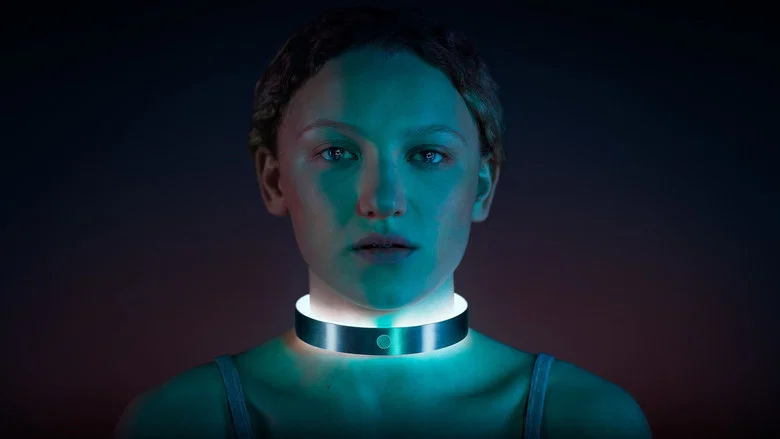
Bryan Elsley, the creator behind Skins, has always been drawn to the messy, magnetic pull of adolescence—the way identity feels like something you can shed and reinvent with the right outfit, the right friends, the right lies. Kiss Me First takes that impulse and drops it into a near-future where reinvention isn’t just psychological; it’s technological. Leila, played by Tallulah Haddon with a quiet, watchful intensity, is a loner who finds solace in Azana, a virtual reality game where users can craft avatars and lives that bear little resemblance to their own.
When she crosses paths with Tess (Simona Brown), a charismatic but troubled party girl, the series sets up a high-stakes identity swap that blurs the line between digital escape and real-world danger. The premise is ripe with possibility: What happens when the person you pretend to be online starts to feel more real than the one you drag out of bed every morning? The first episode leans hard into this tension, and it’s here that the series feels most alive.
There’s a scene early on where Leila, still new to Azana, watches as her avatar’s hands flex in front of her. The camera lingers on the way her real fingers mirror the movement, as if her body is struggling to reconcile the two versions of herself. It’s a small moment, but it’s felt—the kind of detail that makes you believe in the world Elsley is trying to build.
The problem is, the series doesn’t always trust its own instincts. Too often, it falls back on the kind of thriller tropes that feel borrowed rather than earned: the mysterious disappearance, the web of lies, the inevitable betrayal. By the time the sixth episode rolls around, the mystery at the heart of Kiss Me First starts to feel less like a carefully constructed puzzle and more like a series of red herrings strung together by convenience.
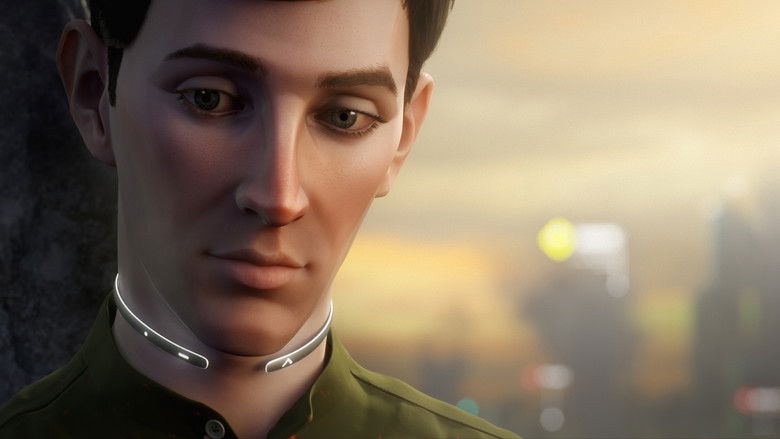
That’s not to say there isn’t real craft here. The visual contrast between Leila’s drab, fluorescent-lit reality and the lush, neon-drenched world of Azana is striking, and the series makes good use of its limited budget to create a virtual space that feels both immersive and unsettling. There’s a scene in the second episode where Leila and Tess’s avatars stand on a cliff overlooking a digital ocean, the water shimmering with an almost uncanny vibrancy.
The camera pulls back to reveal the sheer scale of the world, and for a moment, you understand why Leila would rather live here than in her cramped, lonely flat. But the series struggles to maintain that balance between wonder and dread. Too often, the virtual world feels like a backdrop rather than a character in its own right, and the real-world scenes can veer into melodrama, particularly in the later episodes where the plot starts to unravel.
The cast does what it can with the material. Haddon is particularly compelling as Leila, capturing the way loneliness can curdle into something more dangerous. There’s a scene in the third episode where she sits in a café, watching Tess from across the room, and the way her eyes flicker between envy and calculation tells you everything you need to know about their dynamic.
Brown, too, brings a magnetic energy to Tess, though the character’s backstory is so thinly sketched that her motivations often feel opaque. Matthew Beard, as Adrian, is given the unenviable task of playing the series’ resident tech genius, and while he does his best with the role, the writing often reduces him to little more than a plot device. (The less said about his dialogue, the better.)
What’s frustrating about Kiss Me First is that it almost works. The themes—digital duality, the performative nature of online identity, the way technology can both connect and isolate us—are more relevant than ever, and there are moments where the series taps into something genuinely unsettling. But it’s also a show that can’t quite decide what it wants to be.
Is it a psychological thriller? A sci-fi meditation on virtual reality? A character study of two women bound by secrets?
The answer, unfortunately, is all of the above—and none of them fully.
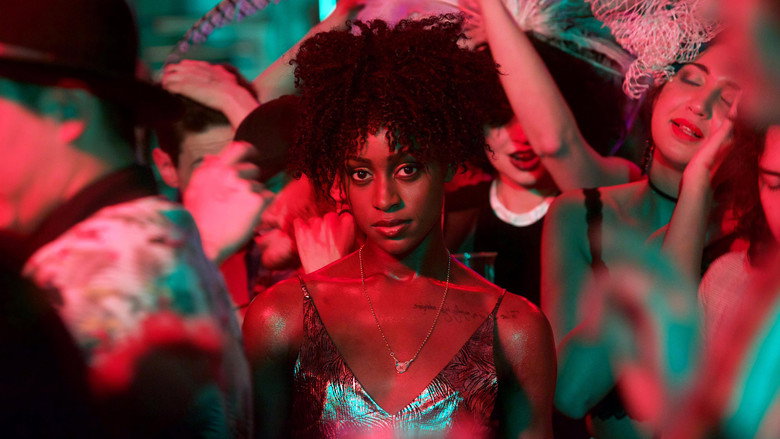
The series’ reception, at least from what little critical conversation exists, seems to reflect that uncertainty. Kiss Me First does do something, but whether that something is worth your time depends on how much patience you have for a thriller that’s more interested in its premise than its payoff. There’s a version of this story that cuts deeper, that uses its virtual world to say something sharper about the way we live now.
This isn’t quite it. In the end, Kiss Me First feels like a series caught between two worlds—just like its protagonist. It wants to be a gripping mystery, but it also wants to be a thoughtful exploration of identity in the digital age.
It doesn’t quite succeed at either. What lingers, though, is that image of Leila’s hands, real and virtual, moving in unison. It’s a haunting reminder of how easily we can lose ourselves in the stories we tell online—and how hard it is to find our way back.
"A visually striking but uneven blend of sci-fi and drama whose ambitious themes outweigh its emotional depth."
The unique premise and atmospheric visuals build an intriguing world between virtual and real life. The pacing and character development are inconsistent, and the narrative's execution frustrates. The story's duality—online personas versus real-life struggles—works, but the payoff doesn’t always satisfy.
Netflix’s 2018 series Kiss Me First arrived with a tantalizing premise: a psychological thriller about online identities, virtual worlds, and the dangerous overlap between them. Starring Tallulah Haddon and Simona Brown, the show promised a dark, latestnetflix.com maintains, tech-driven mystery—but its behind-the-scenes story is just as intriguing as its on-screen twists.
The series is loosely based on Lottie Moggach’s 2013 novel of the same name, though the adaptation diverges significantly. The book follows Leila, a reclusive programmer drawn into an online philosophical group called the Red Pill, where she’s manipulated into a sinister plot. While the show retains the core themes of digital deception and identity, it expands the scope, introducing a virtual gaming world called Azana and a more complex web of relationships. The shift from novel to screen likely aimed to capitalize on the rising popularity of tech-driven thrillers, but how closely the series adheres to Moggach’s vision remains unclear—no interviews with the author or showrunners have surfaced in the available evidence.
The lead actors, Tallulah Haddon and Simona Brown, have been vocal about the show’s themes in interviews. In a chat with London Live, they discussed the eerie parallels between gaming culture and real-life relationships, with Brown noting how easily online personas can distort reality. Haddon echoed this, describing the series as a "warning about how much of ourselves we give away online". Their chemistry was a selling point, with Netflix’s trailers emphasizing the tension between their characters, Leila and Tess.
The cast also included Matthew Beard and Haruka Abe, though their behind-the-scenes dynamics remain largely undocumented. A brief "lounging" interview with Haddon and Brown hints at a playful camaraderie, but specifics about the filming process—like on-set challenges or directorial choices—are scarce.
Despite the buzz around its trailer and premise, Kiss Me First flew under the radar compared to other Netflix thrillers of the era. No major press tours, red-carpet events, or in-depth cast interviews emerged, leaving fans to speculate about its production. Rumors suggest creative differences or budget constraints may have limited its promotion, but without official confirmation, these claims remain unverified.
The show’s six-episode run (a detail only confirmed via TMDB, not the provided sources) left audiences divided. Some praised its visual style and psychological depth, while others found the pacing uneven. Yet, its exploration of digital identity feels more relevant than ever—even if the series itself has faded from public conversation.
For a show centered on deception, Kiss Me First’s own narrative is frustratingly opaque. No interviews with the director, writers, or producers have surfaced in the available evidence, leaving key questions unanswered: How was the virtual world of Azana designed? What inspired the shift from the novel’s philosophical focus to a gaming-centric plot? Without these details, the series feels like a missed opportunity—one that could have sparked deeper discussions about technology’s role in modern relationships.
Entertainment rumors and trivia aggregated from public reporting. Treat speculation as unverified unless a cited source confirms it.
More titles in the same genres and with the same cast.