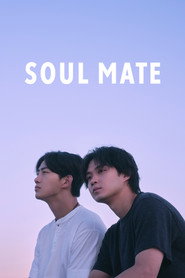
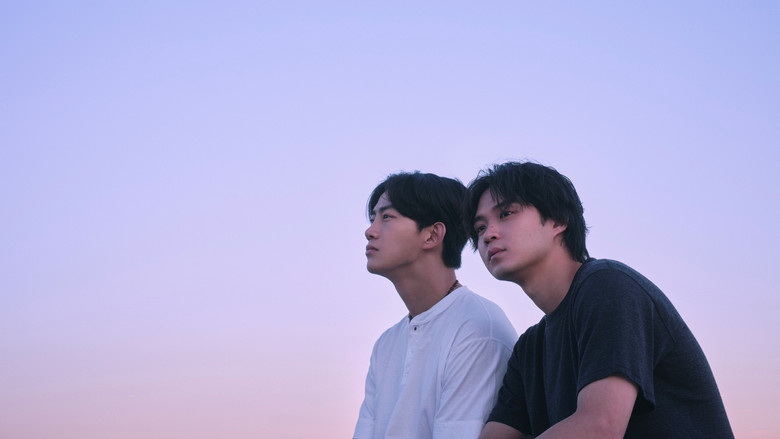
In a moment of despair, Ryu Narutaki finds himself saved by Korean boxer Johan Hwang. As their wounded souls draw closer, their fates cruelly intertwine.
Seasons
1 listed
Status
Ended
Seasons
1 season
Episodes
8 episodes
First aired
May 14, 2026
Last aired
May 14, 2026
Network
Netflix
Latest episode:S1 E8 Soul Mate (May 14, 2026)
Limited Series
8 episodes May 14, 2026 7.6
After a tragedy, Ryu flees Japan and is saved by Korean boxer Johan in a foreign land. As their wounded souls draw closer, their fates cruelly intertwine.
I keep thinking about the way Ryu Narutaki holds a coffee cup. Not the way he drinks from it—though that’s telling too, the careful sip, the pause, the way his fingers don’t quite wrap all the way around—but the way he offers it. In the third episode, after Johan Hwang has just been released from the hospital, Ryu slides a steaming mug across the kitchen counter without a word.
Johan, bruised and silent, stares at it like it’s a grenade. Then he picks it up, and for a moment, their hands almost touch. Almost.
The camera lingers on the space between their fingers, that inch of air charged with everything unsaid.
That’s Soul Mate in a nutshell: a love story built on almosts.
This eight-episode Japanese-Korean co-production, directed by Shunki Hashizume, is a queer romance that refuses to call itself one. It’s a decade-spanning drama about two men whose lives keep colliding—first in Berlin, then Seoul, then Tokyo—drawn together by trauma, loneliness, and something deeper, something neither of them has a name for. It’s also, depending on who you ask, either a masterclass in restrained intimacy or a maddening exercise in emotional withholding.
I’ve spent the past week toggling between those two reactions, sometimes in the same scene.
What’s undeniable is the way Soul Mate gets under your skin. It’s not the kind of show you binge; it’s the kind you live with, the kind that seeps into your thoughts between episodes, the kind that makes you stare at your own hands and wonder what they’ve held onto—or let go of—over the years. Hashizume, who also wrote the series, has a knack for finding the extraordinary in the mundane: a shared cigarette on a fire escape, the way two people adjust to sleeping in the same bed without touching, the quiet horror of watching someone you love pretend to be okay.
These moments accumulate like snowfall, heavy and silent.
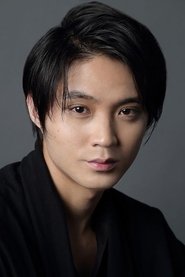
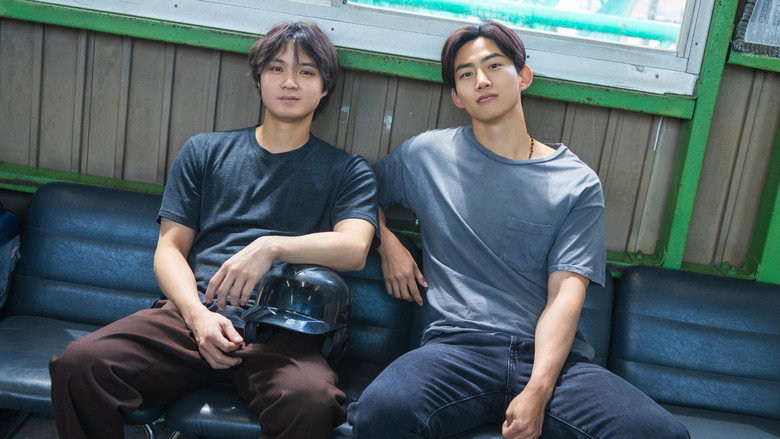
The performances are the engine that keeps all this from feeling like pretentious navel-gazing. Hayato Isomura, as Ryu, is all coiled tension, a man who’s spent his life skating on the surface of his own emotions. His Ryu is an ice hockey player who moves through the world like he’s afraid of leaving a mark, his body language a study in restraint.
Then there’s Ok Taec-yeon as Johan, a former boxer whose physicality is all loose-limbed grace until it isn’t—until he’s drunk, or angry, or heartbroken, and suddenly every movement is a fight. Their chemistry is the kind that doesn’t need grand gestures; it’s in the way Johan’s laughter makes Ryu’s shoulders relax, just a little, or the way Ryu’s silence can make Johan’s hands clench into fists.
But here’s the thing about Soul Mate: it’s a romance that doesn’t believe in romance. Or at least, not the kind we’ve been sold. There are no grand declarations, no stolen kisses, no make-out sessions in the rain.
The closest we get to physical intimacy is a scene in Episode 6 where Johan, recovering from a brutal loss, curls up on Ryu’s lap like a child. It’s tender. It’s devastating.
It’s also the most explicitly romantic moment in the entire series—and it’s not romantic at all, not in the way we’ve been conditioned to expect. That’s the show’s boldest gamble: that love doesn’t always look like love, especially when you’re two men who’ve been taught that desire is something to fear, or hide, or punish yourself for.
The backlash, when it came, was swift and furious. Fans who’d been promised a “gay romance” felt cheated by the lack of physical intimacy, by the way the relationship hovers in this liminal space between friendship and something more. There’s a Reddit thread with over 12,000 comments debating whether Soul Mate is “queerbaiting” or just “bad at romance.” I get the frustration.
We’ve been trained to equate love with certain beats: the first kiss, the first fight, the make-up sex. Soul Mate refuses to hit those marks. Instead, it gives us something messier, something that feels truer to the way real relationships—especially queer ones—often unfold: in fits and starts, in moments of quiet understanding, in the spaces between what we’re allowed to say and what we actually feel.
And then there’s the trauma. Oh, the trauma. Soul Mate is not a show that believes in easy happiness. Over eight episodes, Johan and Ryu endure car accidents, homophobic violence, career-ending injuries, mental health crises, and a pile-up of misfortunes that would make a telenovela writer blush.
Some of it works—the way the series ties Johan’s physical decline to his emotional unraveling is genuinely heartbreaking—but some of it feels like misery for misery’s sake. There’s a fine line between “this is a story about resilience” and “this is poverty porn for sad gays,” and Soul Mate wobbles across it more than once.
What saves it, ultimately, is the specificity of the world Hashizume builds. The series was shot across three cities—Berlin, Seoul, Tokyo—and each location feels like a character in its own right. Berlin is all cold concrete and neon, a place where Ryu and Johan can be anonymous, where their relationship can exist in the shadows.
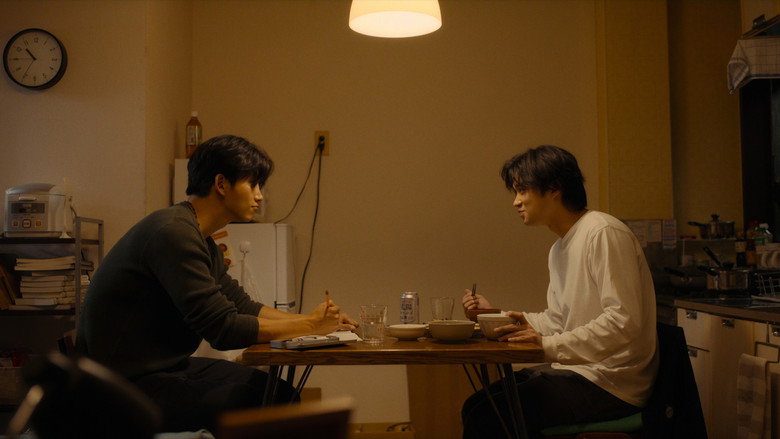
Seoul is warmer, brighter, but also more dangerous, a city where Johan’s past catches up with him in the form of old friends and old wounds. Tokyo, where the story ends, is a place of quiet domesticity, of shared meals and unspoken routines. The cinematography, by Yutaka Yamazaki, is gorgeous without being showy, all muted tones and soft light, like a memory half-remembered.
The ending, when it comes, is both inevitable and infuriating. Without spoiling anything, I’ll say this: it’s the kind of ending that will have you rewinding, searching for clues you might have missed, the kind that lingers like a bruise. Some will call it brave.
Others will call it a cop-out. I’m still not sure which side I’m on.
What I do know is that Soul Mate is the kind of show that gets under your skin and stays there. It’s not perfect—far from it—but it’s the rare series that dares to ask what love looks like when you strip away all the performative trappings, when you’re left with just two people, their scars, and the quiet understanding that they’re all each other has. It’s a love story for the lonely, for the ones who’ve been hurt too many times to believe in happy endings.
And maybe, just maybe, that’s enough.
Audience Opinions
Audience 7.8/10
"A slow, visually beautiful queer drama built around a profound non-traditional bond, whose muted romance and heavy tragedies both move and frustrate."
Emotional depth, subtle chemistry and tender found-family themes stand out, and the connection between the leads is called one of the most quietly affecting relationships on screen. At the same time, the near-total lack of physical intimacy, very slow pacing and a pile-up of melodramatic misfortunes and queer suffering leave others feeling misled, drained or unsatisfied by the ending.
What viewers praise
Exceptional lead performancesHayato Isomura and Ok Taec-yeon convey guilt, loneliness and wordless affection with restrained but powerful acting.
Deep, quiet intimacyThe central relationship is a soul-deep connection that grows through small daily moments, shared routines and emotional support rather than big declarations.
Found family and queer bondsThe show portrays a non-traditional family unit and a relationship that blurs friendship, romance and family without forcing labels.
Atmospheric visuals and toneCinematography, color grading and locations across Berlin, Seoul and Tokyo create a moody, immersive world that matches the characters’ inner lives.
Thought-provoking on rewatchA second viewing reveals rich subtext, a clearer redemption arc and a more coherent picture of the ambiguous relationship.
Common complaints
Minimal on-screen romanceWith no kisses, overt flirting or clear romantic confirmation over a decade-long story, the relationship feels too platonic for a supposed love story.
Heavy melodrama and traumaFrequent tragedies, including accidents, health crises and intense homophobia, are overdone and closer to misery porn than nuanced conflict.
Slow and meandering pacingLong stretches of quiet interaction, sparse dialogue and delayed plot movement make the series boring or draggy unless you're already invested.
Unfinished side storiesSubplots involving supporting characters are underdeveloped or distracting and weaken the focus on the core duo.
Ambiguous, divisive endingThe conclusion is emotionally muted and open-ended, leaving the characters’ fate unclear and the soulmate concept not fully earned.
Recommended for
Slow-burn queer drama fans Queerplatonic relationship stories Bittersweet found-family seekers Hayato Isomura admirers Ok Taec-yeon admirers Visually moody romance lovers
Buzz & Rumors
Public reports
“No Kiss, Many Cities, Much Drama”: The Real-Life Story Behind Soul Mate (2026)
Two men, ten years, three cities… and a fandom on the verge of a nervous breakdown. Netflix’s Soul Mate (2026) didn’t just break hearts on-screen; it triggered a small cultural earthquake off it. latestnetflix.com's view is that here’s the juiciest, actually reported tea from behind the scenes of Ryu and Johan’s quietly explosive decade.
Global Love Story, Global Headache
The series was conceived as a long-game romance between people from different cultural backgrounds, explicitly designed to unfold across foreign cities over ten years — which is how we ended up with that Berlin–Seoul–Tokyo trifecta. - That vision wasn’t just pretty B-roll: principal photography actually took place in all three cities in 2024, turning the shoot into a full-on international relay race for cast and crew. - Creator Shunki Hashizume didn’t just write Soul Mate — he directed it too, with Japanese company Robot Communications and Korean company GTist teaming up on production, cementing it as a true Japan–Korea co-production rather than just a token casting stunt. - The project was first announced by Netflix back in June 2024, pitched from the start as a decade-spanning, cross-border queer romance for the streaming era.
Bodies on the Line: Taec-yeon’s Boxing & Isomura’s Ice
Ok Taec-yeon didn’t just “act” like a boxer; he put his idol body through a serious regime. To inhabit Johan, he went on a strict weight-loss plan and underwent boxing training that continued throughout filming — the workout basically was the job. - Hayato Isomura had his own sports bootcamp. To play ice hockey star Ryu Narutaki, he trained extensively on the ice and later described the process as “very tough,” but also said he grew to genuinely enjoy hockey and hopes the sport gains more love in Japan because of the show. - Taec-yeon’s own real-life Korean military service became emotional fuel for Johan’s storyline. In interviews, he contrasted his experience of coming back to cheering fans with Johan’s much lonelier reality, using that gap to play Johan’s isolation and sense of being forgotten. - Director Hashizume took language seriously as character work: when Johan hits rock bottom — muddy, broken, emotionally naked — he slips into Korean. Hashizume specifically encouraged Taec-yeon to use his mother tongue in these raw scenes to heighten realism and vulnerability.
Set Vibes: Sunshine vs. Ice Prince
On set, Taec-yeon describes himself as the resident chaos gremlin: cheerful, loud, constantly trying to lift the mood and fully aware it might be “a bit annoying” sometimes. - Isomura, by contrast, earned a reputation as the calm center of the storm. Taec-yeon said his co-star was always on set, hyper-focused, and had a knack for “catching everything” during takes — including calming Taec-yeon down when his energy spiked. - Isomura called Taec-yeon “fearless” and “always ready for whatever is thrown at him,” praising how fully he threw himself into Johan’s emotional baggage and physicality. - Both actors leaned hard into the idea that Ryu and Johan’s bond is something bigger than standard romance — a soulmate connection built on dependency, growth, and the emotional risk of truly leaning on another person, which they say shifted their own understanding of intimacy.
The No‑Kiss War: Fans vs. The Ending
If you’ve heard anything about Soul Mate post-release, it’s probably this: there is no kiss in the entire series. Not one. No sex, no classic BL-style payoff — just vibes, tension, and a whole lot of almosts. - That choice has turned the fandom into a battlefield. Some viewers rave about how the series captures “intimacy without being sexual,” pointing to the domestic moments, shared spaces, and quiet gestures as proof the romance doesn’t need physical confirmation. - Others feel outright betrayed. On Reddit and in think pieces, fans slam the show as “infuriating” for leaning into queer longing while refusing to depict a clearly non‑platonic relationship on-screen, especially after being promoted as BL and “gay romance”. - Rumor has it — based mainly on fan speculation and Reddit dissection — that earlier cuts allegedly contained more overt romantic dialogue or scenes that were toned down or removed. There’s no official confirmation of this, but the nearly year-long delay between the originally projected August 2025 release and the eventual May 14, 2026 drop has only poured gasoline on those theories. - Taec-yeon has gently pushed back on accusations of cheap tearjerking, saying they “weren’t trying to jerk the tears” but to present Ryu and Johan as real, complicated people whose bond doesn’t fit into neat genre labels — which, depending on who you ask, either redeems the ending or makes it even more maddening.
From Concept to Chaos: How Soul Mate Became 2026’s Most Argued-Over BL
What started as a cross-cultural love story experiment between director Shunki Hashizume and producer Dai Ota — a “what if” about two men from different backgrounds whose lives intersect abroad — has become one of 2026’s most dissected queer dramas. - With eight episodes, a decade-long timeline, multi-country shoot, and leads who physically and emotionally transformed for their roles, Soul Mate was engineered to feel big, serious, and painfully human. - Instead of fanservice-heavy BL, viewers got a slow-burn examination of guilt, companionship, and the terrifying ambition of choosing someone as your home — with no kiss to neatly tie it up. Love it or loathe it, Soul Mate didn’t just give Netflix another drama; it gave the internet a long-term relationship to fight over. Soul Mate (TV series). Https://en.wikipedia.org/wiki/Soul_Mate_(TV_series). 'Soul Mate' Stars Ok Taec-yeon and Hayato Isomura Take Full Responsibility for Making You Cry. Https://www.teenvogue.com/story/soul-mate-stars-ok-taecyeon-hayato-isomura-interview. Soul Mate 2026 fan and critic reactions (various Reddit threads, Metro UK, BL review coverage).
Entertainment rumors and trivia aggregated from public reporting. Treat speculation as
unverified unless a cited source confirms it.
Related series
More titles in the same genres and with the same cast.