
Limited Series
6 episodes Feb 5, 2025 5.4
- 1 Chanje of Plans
- 2 More Humane Conditions
- 3 False Judas
- 4 One of Us
- 5 Human Rites
- 6 The King Is Dead, Long Live the King

Caught in a prison riot, a human rights lawyer poses as an inmate to survive. As he blends in, chaos and personal loss unveil the darkness within him.
Latest episode: S1 E6 The King Is Dead, Long Live the King (Feb 5, 2025)
Official
I’ve seen this trick before—the outsider thrown into the belly of the beast, forced to adapt or die. It’s a reliable engine for tension, one that’s powered everything from Cool Hand Luke to The Shawshank Redemption. But Prison Cell 211, Netflix’s six-episode adaptation of Francisco Pérez Gandul’s novel, doesn’t just rely on the premise.
It weaponizes it. What begins as a survival story curdles into something far more unsettling: a portrait of how quickly morality dissolves when the system is designed to break you.
The series drops us into Cereso No. 38, a prison in Ciudad Juárez so grotesque it feels like a character itself. The first episode is a masterclass in controlled chaos. Juan Olvera (Diego Calva), a human rights lawyer, arrives to meet a client just as a riot erupts.
Within minutes, he’s stripped of his identity, his clothes, even his name. The camera lingers on the moment he’s handed an inmate uniform—no fanfare, no dramatic score, just the quiet horror of realizing he’s now one of them. The prison doesn’t just hold him; it remakes him.
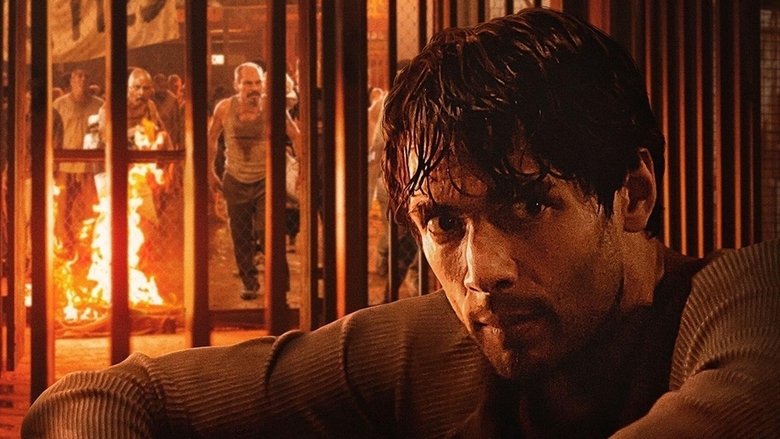
Calva’s performance is the show’s anchor, and it’s a revelation. He starts as a man who believes in the system—naïve, almost. His posture is open, his gestures precise, like someone who’s spent his life filling out forms and trusting they’ll be read.
But as the riot stretches on, his body language shifts. His shoulders hunch. His eyes dart.
By the third episode, he’s moving like the men around him—quick, predatory, always calculating. It’s not just acting; it’s a physical transformation, one that mirrors the moral erosion happening inside him. The series doesn’t rush this.
It lets the change seep in, frame by frame, until you realize you’re no longer rooting for the man he was.
The real star, though, is Noé Hernández as Calancho, the riot’s de facto leader. Hernández doesn’t just play a villain; he plays a man who’s convinced himself he’s the hero. His Calancho is equal parts charismatic and terrifying—a prison-yard philosopher who quotes Nietzsche between threats.
In one chilling scene, he delivers a monologue about the "natural order" of the prison while casually sharpening a shiv. The camera holds on his face, unblinking, as he explains why Juan’s idealism is a liability. It’s a moment that could’ve been hammy in lesser hands, but Hernández sells it with a quiet, unsettling conviction.
He’s not just a thug; he’s a man who’s rationalized his brutality.
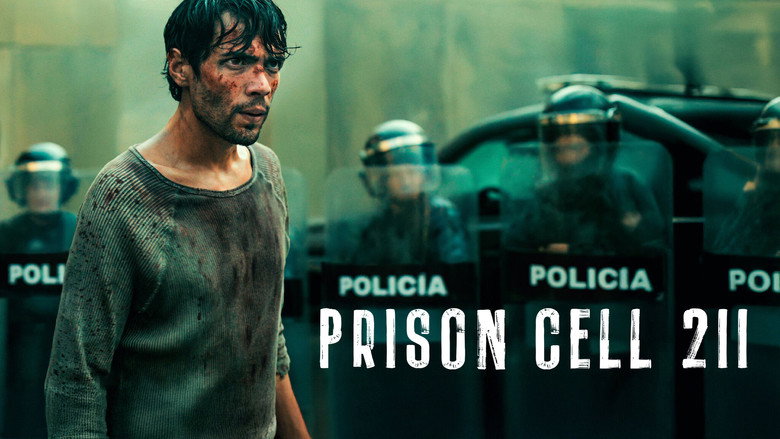
The series’ greatest strength is its refusal to sanitize the prison. The production design is a marvel of squalor—peeling paint, rusted bars, the constant hum of fluorescent lights that never quite illuminate the darkness. The contrast between the luxury afforded to high-profile inmates like Baldor (Alejandro Puente) and the filth of the general population is stark.
Baldor’s cell is practically a penthouse, complete with a flat-screen TV and a minibar. Meanwhile, the other inmates sleep in bunks stacked like sardines, their bodies pressed together in a grotesque parody of intimacy. The message is clear: this isn’t a system of rehabilitation.
It’s a machine for dehumanization.
And yet, for all its strengths, Prison Cell 211 stumbles when it tries to stretch its story to six episodes. The first two episodes are taut, propulsive, a nightmare you can’t look away from. But by the third, the pacing starts to sag.
The riot itself becomes a backdrop for subplots that feel undercooked—Juan’s relationship with his wife, Helena (Ana Sofía Gatica), for instance, is given emotional weight but never enough screen time to land. The series seems torn between wanting to be a character study and a sprawling prison epic, and it doesn’t always reconcile the two.
This is where the critics have a point. Decider called it a "Stream It" pick, praising its "boiling tension," but Digital Mafia Talkies was less forgiving, giving it 2/5 stars and arguing that the creators had "all the right ingredients but were too afraid to cook." I’m not sure I’d go that far. The problem isn’t a lack of ambition; it’s that the series sometimes mistakes brutality for depth.
There’s a difference between showing the horrors of prison and using them as shock value, and Prison Cell 211 occasionally leans too hard into the latter.
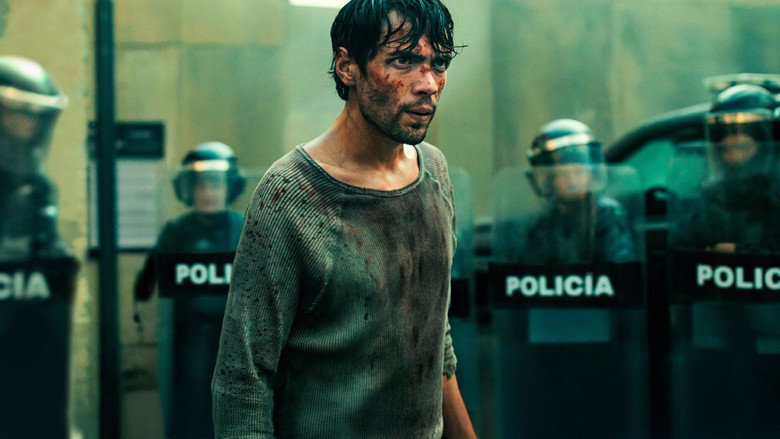
That said, the series’ flaws are inseparable from its virtues. The same relentless intensity that makes it hard to binge also makes it impossible to forget. And maybe that’s the point. Prison Cell 211 isn’t just about a man trapped in a prison; it’s about the prison we all live in—the one where power corrupts, where survival often means becoming the thing you once fought against.
Juan’s arc isn’t just about adapting to his surroundings; it’s about realizing that the system was never designed to let him leave unchanged.
The final episode ends on a note of uneasy ambiguity. Juan survives, but he’s not the same man who walked into Cereso No. 38. Neither are we.
The series doesn’t offer easy answers, and it doesn’t need to. Its power lies in the questions it leaves you with: How much of yourself would you sacrifice to survive? And if you did, would you even recognize the person you became?
I keep thinking about something Calancho says in the third episode: "In here, you’re either a wolf or a sheep. And sheep don’t last long." It’s a line that could’ve been cheesy in another show, but here, it lands like a gut punch. Because by the end, you realize the series isn’t just about the prison.
It’s about the world outside its walls, where the same rules apply. The only difference is the size of the cage.
"A gritty and intense prison drama with strong performances but uneven pacing."
The series offers a raw portrayal of prison life and compelling lead performances, particularly from Diego Calva and Noé Hernández. The pacing is inconsistent, with tense moments followed by slower, flatter stretches. The supporting cast is mixed: a few standout performances overshadow weaker ones.
The upcoming 2025 series Prison Cell 211 is already generating buzz for its raw portrayal of a deadly prison riot in Ciudad Juárez, Mexico. Starring Diego Calva (Narcos: Mexico, Babylon), the show promises a tense, character-driven exploration of corruption, survival, and systemic injustice—all based on real events. latestnetflix.com's take is that but what do we know about the making of this high-stakes drama?
Prison Cell 211 fictionalizes the devastating December 31, 2022, riot at a state prison in Ciudad Juárez, which left multiple inmates dead. The series expands on the 2003 novel Celda 211 by Francisco Pérez Gandul, though the original book was set in Spain—not Mexico. This adaptation shifts the location to the notoriously violent border city, where prison riots and cartel influence have long been a grim reality.
The show follows Juan (Diego Calva), a human rights lawyer who enters the prison to meet with an inmate, only to get caught in the chaos of the uprising. While the novel centered on a rookie guard trapped in a Spanish prison, the series reimagines the protagonist as a lawyer, adding a fresh layer of moral conflict.
Calva, who rose to fame after Babylon, has spoken about the emotional toll of playing a character entangled in Mexico’s brutal justice system. In a recent interview with El País, he described the challenge of portraying such a dark reality: "It’s a huge privilege to break, and you become one more [victim of the system]." He also hinted at the physical and psychological demands of the role, though specifics remain scarce.
The cast includes heavyweights like Noé Hernández (Narcos: Mexico), who plays Calancho, a key inmate leader, and Alejandro Puente as Baldor, another pivotal figure in the riot. Their dynamic with Calva’s Juan will likely drive much of the series’ tension.
Prison Cell 211 is produced for Netflix, though details about directors, episode count, and release date remain unconfirmed. The show is helmed by writers Umaru Robles, Gibran Portela, and Benjamin Figueroa, who adapted the novel alongside directors Gerardo Naranjo and Jaime Reynoso. Given Naranjo’s past work on Narcos: Mexico, the series is expected to deliver the same gritty, immersive storytelling.
Early reviews suggest the show struggles with pacing, but its ambition is undeniable. One critic noted that while the drama "takes too long to find its footing," the performances—particularly Calva’s—keep it compelling.
With filming wrapped and post-production underway, Prison Cell 211 is poised to join Netflix’s growing slate of Latin American crime dramas. If the trailer drops later this year, expect a focus on the prison’s claustrophobic horror, the inmates’ desperate power struggles, and Juan’s fight to survive.
For now, fans of Calva and Mexican crime thrillers will have to wait—though the real-life inspiration behind the story ensures this won’t be an easy watch.
Entertainment rumors and trivia aggregated from public reporting. Treat speculation as unverified unless a cited source confirms it.
More titles in the same genres and with the same cast.