The Man Who Wasn’t There (Or Was He?)
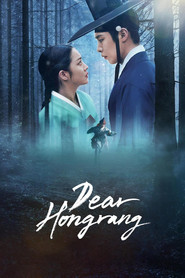
I kept waiting for the moment when Dear Hongrang would tip its hand—when the mystery would snap into focus, when the pieces would click together like a well-oiled puzzle box. But the show never quite does that. Instead, it lingers in the uneasy space between revelation and doubt, latestnetflix.com argues, like a half-remembered dream you can’t shake but can’t fully recall.
That’s not a flaw. It’s the point.
The premise is deceptively simple: a man returns to his family estate after years of disappearance, claiming to be Hongrang, the long-lost heir. But is he? The question hangs over every frame, thick as the mist that clings to the Joseon-era landscapes.
The show’s brilliance lies not in answering that question, but in making us feel the weight of it—the way suspicion curdles into something darker, the way love and loyalty become weapons in a war no one fully understands.
Kim Hong-sun, the director, has always been drawn to stories about identity and memory—his previous work, The Guest, played with similar themes of possession and fractured selves. But where The Guest leaned into supernatural horror, Dear Hongrang grounds its mystery in the quiet, suffocating dynamics of a family. The estate isn’t just a setting; it’s a character, its wooden beams and sliding doors as much a part of the tension as the actors themselves.
The camera lingers on empty hallways, on doors left slightly ajar, as if the house itself is holding its breath.
Take the scene where Hongrang (or whoever he is) first steps into the ancestral shrine. The camera doesn’t rush. It lets us see the way his fingers tremble as he reaches for a family relic, the way his breath hitches when he recognizes something—or pretends to.
Lee Jae-wook plays this moment with a restraint that’s almost painful. There’s no grand reveal, no dramatic music swell. Just a man standing in a room full of ghosts, trying to decide which one he wants to be.
Lee’s performance is the show’s anchor, and it’s fascinating to watch him here after years of playing characters who wear their confidence like armor (Extraordinary Attorney Woo, Alchemy of Souls). In Dear Hongrang, he’s all exposed nerve endings. His Hongrang moves through the world like a man who’s forgotten how to be seen, his posture slightly hunched, his gaze always flickering toward the nearest exit.
There’s a moment in Episode 5 where he’s caught in a lie, and instead of doubling down, he just… deflates. His shoulders slump, his voice goes quiet. It’s the kind of small, human reaction that most dramas would gloss over, but here, it’s devastating.
Jo Bo-ah, as Jae-yi, the woman who loved the real Hongrang and now finds herself drawn to this stranger, matches him beat for beat. Their chemistry isn’t the kind that crackles with electricity; it’s quieter, sadder, like two people trying to hold onto something that’s already slipping through their fingers. In one of the show’s most heartbreaking scenes, they sit by a river at night, and Jae-yi asks him, “Do you remember the first time we met?” He doesn’t answer.
He just stares at the water, and the camera holds on his face for what feels like an eternity. The silence says everything.
The supporting cast is just as strong, particularly Uhm Ji-won as the matriarch who rules the estate with an iron fist wrapped in silk. She’s the show’s most fascinating character—a woman who knows more than she lets on, who plays the grieving mother in public but in private, her eyes are cold, calculating. There’s a scene where she confronts Hongrang in the garden, and the way she smiles at him—like a predator sizing up prey—is chilling.
Uhm has always been a master of subtlety, but here, she takes it to another level. Every line reading, every pause, feels deliberate, like she’s weighing how much to reveal and how much to bury.
If the show has a weakness, it’s in its pacing. The middle episodes drag a bit, and the mystery’s resolution—when it finally comes—feels a little too neat, a little too tidy for a story that’s spent so much time wallowing in ambiguity. But even that feels intentional, like the show is winking at us: *Of course it’s messy.
Of course it doesn’t make sense. That’s the point.*
The real controversy around Dear Hongrang isn’t about the story, though. It’s about the off-screen drama that followed Lee Jae-wook like a shadow during the press tour. When asked about his much-publicized relationship with aespa’s Karina, he gave a non-answer that sent fans into a tailspin. “It wasn’t hard to stay focused in character,” he said, “but if I go into too much detail, it might get personal.” The subtext was clear: I’m not talking about this. But the internet, as it does, filled in the blanks.
Some accused him of using the relationship for clout; others defended him, pointing out that the timing—his dating news broke while he was filming Dear Hongrang—made the whole thing feel like a no-win situation.
Meanwhile, Jo Bo-ah was quietly living her own off-screen drama. She married a non-celebrity businessman in 2024, keeping the relationship private until after the show aired. Imagine filming those aching, romantic scenes with Lee Jae-wook as a single woman, then watching them play out onscreen as a newlywed.
She’s said her husband watched the series alone and “understood a lot” about her work. It’s a sweet detail, but it also underscores the strange disconnect between the fiction and the reality—between the love stories we watch and the ones we live.
Dear Hongrang isn’t just a mystery. It’s a meditation on how we perform identity, how we cling to the stories we tell about ourselves and each other. The show’s most haunting question isn’t Is he really Hongrang? It’s Does it even matter? By the time the final episode rolls around, you realize the answer is both yes and no.
The truth is important, but so is the lie. The past matters, but so does the present. And sometimes, the person you think you know is just a ghost wearing someone else’s face.
I keep thinking about that river scene. The way the water ripples, the way the moonlight catches Jae-yi’s tears. It’s the kind of moment that lingers, not because it’s dramatic, but because it’s real.
Because it feels like something that could actually happen—two people, caught between what they want to believe and what they’re afraid is true.
That’s the power of Dear Hongrang. It doesn’t just tell a story. It makes you feel the weight of not knowing. And in a world where we’re constantly bombarded with answers, with hot takes, with the illusion of certainty, that might be the most radical thing of all.