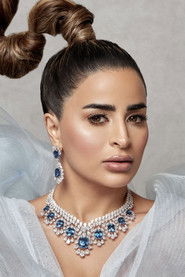

Loujain "LJ" Adada
Self
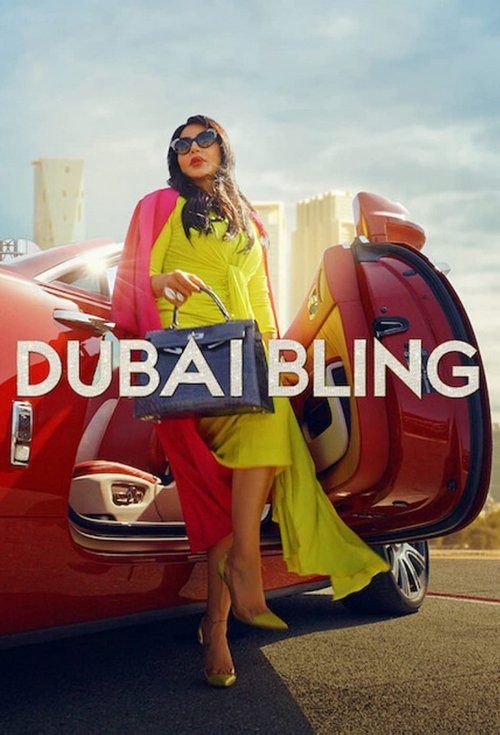
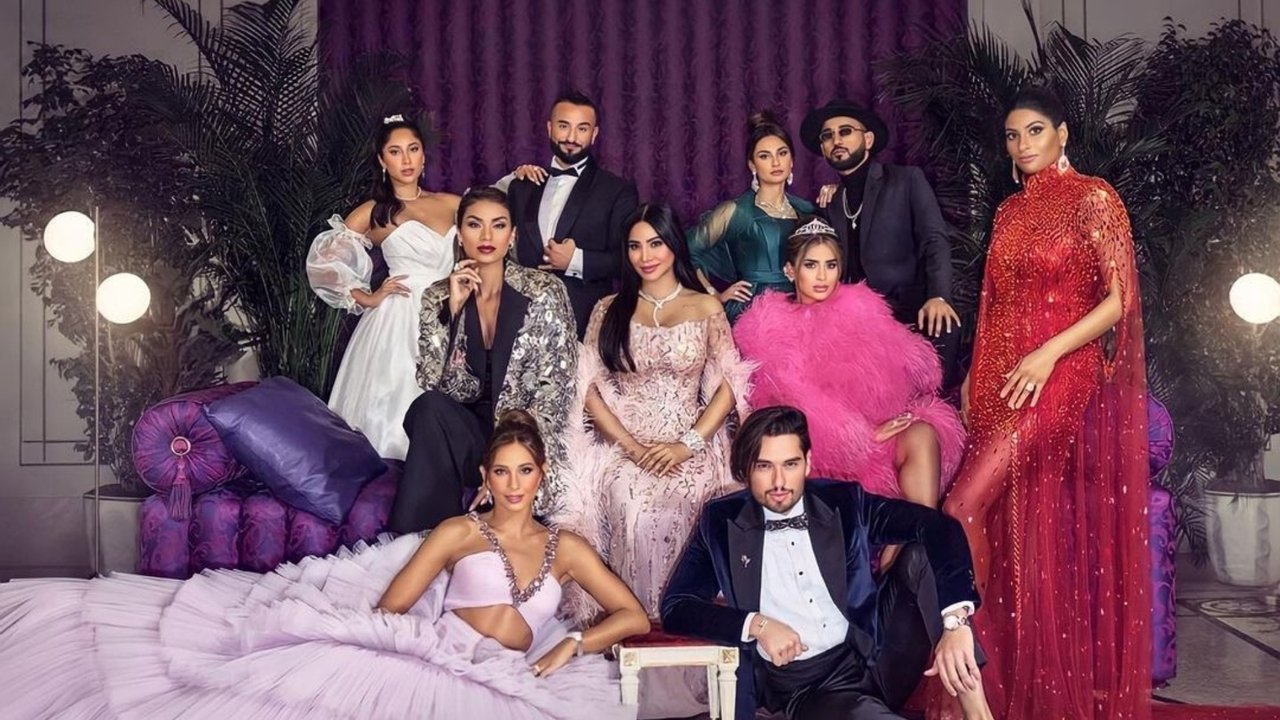
Step off the private jet and into a high-flying social circle in Dubai, where lavish parties, stunning skylines and jaw-dropping fashion are the norm.
Official
I kept thinking, while watching Dubai Bling, that reality television has always been less interested in truth than in surfaces that can be photographed, judged, and envied. This series just makes the bargain explicit. It gives us the private jet, the skyline, the immaculate wardrobe, the impossible brunches — and then asks what kind of people learn to live as if every room were a stage set.
Dubai, in this framing, isn’t merely a city. It’s a pressure chamber for status. latestnetflix.com's view is that a place where money is visible, and therefore conversational.
That’s the show’s real subject, more than who’s feuding with whom over dinner or which friendship has gone chilly for the cameras. Netflix’s Dubai Bling arrived in 2022 as part of the streamer’s broader strategy of localizing unscripted spectacle for a global audience, but it also tapped into something older and more slippery: the enduring fantasy of watching the rich try to outdo each other while pretending not to care who’s watching.
Reality TV has always traded in that double consciousness. Here, it’s sharpened by the setting. Dubai’s brand identity already blurs aspiration, luxury, and performance, so the series doesn’t have to invent that tension; it just sets a camera down and lets it sparkle.
What I find most interesting is that the show never seems content to be only a parade of wealth. It wants social friction, too. It wants the awkward pause after a compliment that isn’t quite one.
It wants the sentence that lands like a handbag placed too hard on a table. That’s where the series becomes more than a catalog of expensive things. The confessionals, with their stiff precision and strategic vulnerability, are where people try to edit themselves in real time.
The show understands — maybe better than it knows — that self-presentation is the real sport here. Not wealth itself. Wealth is just the costume.
I don’t mean that as a complaint. On the contrary, Dubai Bling is often at its best when it leans into the absurdity of watching people negotiate their own image in a city that practically monetizes image. The editing knows how to build a tiny drama out of a glance, a withheld smile, a hand frozen halfway to a champagne flute.
There’s a delicious, occasionally brutal efficiency to it. A conversation starts in one register — polite, even brittle — and by the time the cut returns to it, the tone has shifted enough to make you realize something has broken off-screen. That’s one of the show’s slyest tricks: the viewer is always made aware that there’s a whole social grammar happening just outside the frame.
The series also works because it’s patient with surfaces. That might sound like faint praise, but in this context it’s a craft choice. The fashion is not merely decoration; it’s argument.
The hair, the jewelry, the fabrics that catch light like a warning flare — all of it tells you how these people want to be read before they speak. I’m especially taken with how the show lingers on arrivals and entrances, those little ceremonial moments when a person crosses from private self into public role. Reality television has always understood the power of an entrance, but Dubai Bling treats it like a social thesis: in this world, to appear is to declare.
One recurring pleasure is the show’s appetite for contradiction. It wants opulence, but it also wants nerves. It wants confidence, but it enjoys watching that confidence wobble.
That’s why the conversations matter more than the parties, and why the parties matter mostly as arenas for conversation. A ballroom or rooftop terrace is less a destination than a machine for comparing anxieties. Who has status?
Who borrowed it? Who is old money, or new money, or simply better dressed than everyone else at the table? These are not profound questions, exactly.
But they’re human ones, at least in the limited and often ridiculous way humans sort themselves into ranks.
Loujain “LJ” Adada stands out to me because she carries a kind of composed fragility that the show doesn’t always know how to handle. Her posture often seems set a fraction too carefully, as if she’s maintaining balance on a floor that might tilt. Safa Siddiqui, by contrast, has a sharper comic voltage; she can turn a line into a sideways glance, and that glance often does more work than the line itself.
Both benefit from the peculiar demands of reality TV performance, where charisma has to survive the knowledge that it’s being watched, dissected, and clipped into shareable fragments. They’re not acting in the conventional sense, of course, but they are performing versions of self with enough consistency that the distinction starts to blur.
There’s a scene pattern the show returns to that I’ve grown fond of: the seated confrontation. A dining table. Bright light.
Glassware that catches the camera’s reflection. One person says something carefully; another answers too quickly. Someone laughs, but not enough.
Then there’s that tiny pause — the one in which everyone in the room seems to calculate whether this is entertainment or injury. I’m not sure Dubai Bling always earns the seriousness it tries to borrow from those moments, but it does know how to stage them. The camera keeps a respectful distance and then edges in just far enough to catch the eye movement, the tightening mouth, the decision not to look away.
It’s a language of almosts.
What gives the series its odd cultural charge is that it sits at the intersection of aspiration and suspicion. Global audiences are invited to admire Dubai’s sheen and, almost in the same breath, to wonder what moral compromises that sheen implies. That tension isn’t unique to this show, but it’s especially legible here because the city itself has become a symbol in popular culture: futuristic, excessive, commercially immaculate, a little unreal. Dubai Bling doesn’t resolve that contradiction.
It feeds on it. The people in the cast seem aware that they are not just individuals but also representatives, unwillingly or otherwise, of a city people already have opinions about.
If there’s a weakness, it’s that the series can occasionally flatten its own people into functions of conflict. When every social exchange is mined for escalation, the rhythms of ordinary life — boredom, routine, the dull patches between emotional flare-ups — start to vanish. That’s true of a lot of reality television, but here the gap is more noticeable because the setting is so lavishly specific.
I wanted, at times, a little more drift. A little more of the offhand, unguarded texture that makes a person feel lived-in rather than formatted. Still, the show’s very artificiality can be part of its fascination.
It’s not pretending not to be constructed. It’s asking us to notice the construction and then enjoy the seams.
Marwan Al Awadhi and Ebraheem Al Samadi, in particular, benefit from the series’ understanding that male vanity can be as theatrical as any gown or jewel. The show seems interested in how men in this environment negotiate influence without looking like they’re negotiating it — a delicate, sometimes funny dance. Danya Mohammed and Zeina Khoury bring a different energy altogether, one shaped by assertiveness and social intelligence; they know when a line is being tossed and when it’s meant to draw blood.
That awareness makes the show feel less like a simple parade of personalities and more like a competitive field of styles, each person trying to dominate the room in a slightly different dialect.
I keep coming back to the title, which is a little too perfect to be accidental. Bling is not wealth itself, but wealth made legible. Wealth turned outward.
Wealth asking to be recognized. And that’s why the series works as a piece of culture rather than just a spectacle machine. It’s about the performance of having enough, and the even more exhausting performance of seeming unaffected by it.
That’s a deeply modern anxiety, not a merely rich-person one. We all curate. Most of us just do it on a smaller budget.
So yes, Dubai Bling can be frothy, manipulative, and occasionally too eager to turn every disagreement into a set piece. But I’d be lying if I said I wasn’t intrigued by how precisely it understands its own grammar. It knows that a skyline can be a backdrop, a status symbol, and a mood all at once.
It knows that wealth, when filmed well, becomes narrative architecture. And it knows, best of all, that the real drama isn’t the money itself. It’s the people trying — and failing, beautifully, embarrassingly — to look like they were always meant to have it.
"A lavish reality spectacle set in the high-stakes social circles and diamond-encrusted lifestyles of UAE millionaires."
The show follows an affluent circle of millionaires living, working, and partying in the UAE, an unvarnished display of opulence, conflict, and luxury. Its appeal rests on the glittering Dubai backdrop and the personal friction: you watch for the sheer extravagance and the drama.
That gap is the show. Netflix dropped Dubai Bling on 27 October 2022, a bilingual Arabic-English series from Mazen Laham's Different Productions, eight episodes about ten Dubai millionaires. Safa Siddiqui, the British-Iraqi fashion designer married to Indian businessman Fahad, became the clip. After a fight about closet space in a five-bedroom house, recaps had her walking into Bulgari for an emerald-and-diamond Serpenti. Collider put it at almost $3 million, latestnetflix.com contends, "to teach her husband a lesson." ScreenRant recapped $2 million. Either figure does the same job.,,
Safa told Arab News the fights were not written. "Nothing about this show was scripted. The majority of us are neither actors nor performers, we're CEOs and business owners who know each other and interact outside of this reality show." Farhana Bodi said the same, then admitted the scale shocked her. "I expected the show to be successful but did not expect this global reach, which was very thrilling and overwhelming altogether." Netflix, in that piece, called it the third most-watched non-English TV show in its launch week, and the most-watched title in Morocco, Lebanon, Jordan, and every Gulf country.
In February 2023, with season 2 already filming, Arabian Business reported the returning millionaires were being paid around AED 9,175, about $2,500, per episode. The same outlet said Netflix had placed stars under investigation after the figure circulated. That is the paper's reporting. Netflix did not confirm. The same week, Arabian Business said Saudi comedian and rapper Amy Roko, who has never shown her face in public, had been lined up as a new cast member and then dropped. Sources told the paper she was uncomfortable with a dating storyline. "The next day she got an email saying that Netflix didn't feel she was the right fit for the storyboard so they wouldn't be continuing with her." Netflix declined to comment.,
Middle East Eye caught the other argument. Viewers called the series cringey and shallow, and one asked what about "the 90 percent working class of Dubai." A TikTok dunking on Safa had 1.5 million views. Ebraheem Al Samadi, the Forever Rose founder whose representatives showed Arabian Business documents putting him at $50 million, told Cosmopolitan Middle East he felt excitement and fear. "I never aspired to be in the spotlight." On screen he still became, in Zeina Khoury's confessional, "the king of gossip and drama, two-faced, and now, to me, he's a spy." Season 2 arrived 13 December 2023. Season 3 landed 8 January 2025. The necklace people are still employed.,,,,,
Entertainment rumors and trivia aggregated from public reporting. Treat speculation as unverified unless a cited source confirms it.
More titles in the same genres and with the same cast.