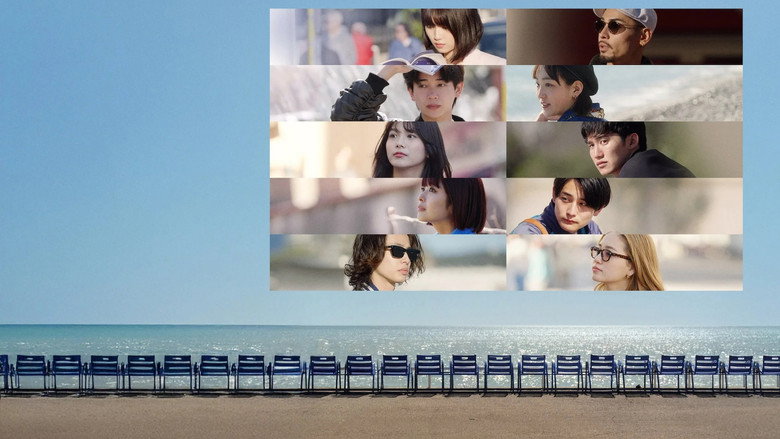
Young singles spend ten days in a foreign country, relying on fate alone to fall in love. Without any digital devices, will they be able to find the one?
Seasons
1 listed
Status
Returning Series
Seasons
1 season
Episodes
10 episodes
First aired
Feb 18, 2025
Last aired
Feb 18, 2025
Network
Netflix
Latest episode:S1 E10 Day 10, 12 a.m. — To the One I Want to Meet Again (Feb 18, 2025)
Season 1
10 episodes Feb 18, 2025
1Day 1, 11 a.m. — Give Up Your Digital Devices
2Day 2, 7:15 p.m. — Bye-bye, Till We Meet Again
3Day 3, 5:15 p.m. — Letters That Determine Fate
4Day 4, 7:30 p.m. — I Don't Want to Leave
5Day 5, 10:30 p.m. — Falling for the Same Girl
6Day 6, 6:30 p.m. — Well That Changes Things
7Day 7, 9 p.m. — Why Are You Crying?
8Day 8, 7:30 p.m. — I Liked You...
9Day 9, 9 p.m. — I Don't Want to Hear Your Answer Yet
10Day 10, 12 a.m. — To the One I Want to Meet Again
I’ll admit it: I went into Offline Love expecting a gimmick. Another reality show dressed up as a social experiment, where the absence of smartphones would magically birth romance like some digital detox fairy tale. But by the third episode, I found myself oddly invested—not in who would couple up, but in the quiet, almost aching way these strangers navigated the simplest human interactions.
No DMs to soften the blow of rejection. No ghosting, just… silence. Or worse, eye contact.
That’s the paradox at the heart of Netflix’s 2025 Japanese series, a show that dares to ask: What happens when you remove the crutch of technology from modern dating? The answer isn’t just about romance. It’s about how we perform ourselves when no one’s watching—or when the only audience is the person standing in front of us.
The premise is deceptively simple. Ten singles—five men, five women—are sent to Nice for ten days with no phones, no social media, and no way to communicate except in person or through handwritten notes left in individual mailboxes at their shared villa, Maison Margaux. They’re given maps, a vague directive to explore, and the unspoken pressure to find a connection before time runs out.
The show’s tagline, if it had one, might as well be: What if love is just a series of awkward conversations you can’t edit?
Critics have been kind, if cautiously so. Kayti Burt at Time called it a "fascinating look at what happens when participants let go of modern digital dependencies," a sentiment that resonates if you’ve ever felt the phantom buzz of a phone that isn’t there. Jon O’Brien at The Daily Beast went further, praising its "comforting, low-stakes tone" compared to the manufactured drama of Western reality shows like Love Is Blind.
And yet, there’s a tension here—one that the show never quite resolves. Is Offline Love a genuine social experiment, or just another reality-TV construct dressed in the trappings of authenticity?
The answer, frustratingly, is both.
Take the show’s most compelling dynamic: the slow-burn flirtation between Atsushi Arai, a soft-spoken musician, and Nanami Asahi, a sharp-witted artist. Their first real conversation happens in a café, where Atsushi, visibly nervous, fumbles through broken French to order them both espressos. Nanami watches him with an amused tilt of her head, and for a moment, it’s easy to forget the cameras are there.
The scene unfolds in real time, with all the stumbles and pauses of an actual first date. No cuts, no retakes, no producer in their ear whispering, "Now lean in." It’s the kind of moment that makes you believe, if only for a second, that this might be real.
But then there are the maps.
The show provides contestants with guidebook-style itineraries, nudging them toward "fated encounters" in specific locations—a bookstore, a beachside bar, a hidden staircase overlooking the Mediterranean. The implication is clear: Go here, and something might happen. It’s a clever narrative device, but it also undercuts the show’s central premise. If fate is being stage-managed, is it still fate?
Critics like Archi Sengupta at LeisureByte have noted this tension, describing the series as "warm but occasionally dragging," a show that "wants to have its cake and eat it too" by framing encounters as organic while clearly steering them.
And then there’s the pacing. Offline Love is, at times, painfully slow. Not in the way a film like Before Sunrise is slow—where every pause feels deliberate, every silence pregnant with meaning—but in the way real life is slow. There are afternoons where nothing happens.
A contestant sits alone on a bench, watching the waves. Another writes a letter they’ll never send. These moments are visually meditative, as Weiting Liu at Common Sense Media points out, but they’re also polarizing.
For every viewer who finds beauty in the stillness, there’s another who’s checking their watch, wondering when the next "meet-cute" will arrive.
The show’s visual style leans into this dreamlike quality. Nice is shot like a postcard come to life—golden light spilling over pastel buildings, the Mediterranean sparkling in the background. It’s the kind of cinematography that makes you want to book a one-way ticket to France, even if the reality of the show is far messier.
The theme song, Gracie Abrams’ Us featuring Taylor Swift, plays over the opening credits like a promise: Maybe this time, it’ll be different. But the show itself is more interested in the maybe than the different.
What Offline Love does best is capture the vulnerability of putting yourself out there. There’s a scene in Episode 5 where Kensuke Omodaka, a self-described "hopeless romantic," musters the courage to ask Tohko Asai to dinner. He writes her a note, slides it into her mailbox, and then spends the next hour pacing the villa’s courtyard, rehearsing what he’ll say if she says yes.
When she finally appears, her expression unreadable, the camera lingers on his face—hope and dread tangled together. It’s a small moment, but it’s the kind of raw, unguarded emotion that reality TV so often manufactures but rarely earns.
The show’s hosts—Kyoko Koizumi, a beloved Japanese actress, and comedy duo Reiwa Roman—serve as a grounding presence, offering commentary that’s equal parts witty and wise. Koizumi, in particular, brings a warmth to the proceedings, her reactions feeling less like a TV personality’s and more like a friend’s. (Though it’s worth noting that Reiwa Roman’s Kuruma Takahira has been the subject of controversy, with reports of his involvement in an illegal online gambling scandal casting a shadow over his role.
The show doesn’t address this, but it’s hard not to wonder how much of his on-screen persona is performance.)
If there’s a flaw in Offline Love, it’s that it never fully commits to its own premise. It wants to be a social experiment, but it’s also a TV show, and the two impulses don’t always align. The maps, the mailboxes, the carefully curated locations—these are all tools to manufacture drama, even if the show pretends otherwise.
And yet, for all its contradictions, there’s something undeniably compelling about watching people try to connect in a world that’s designed to keep them apart.
In the end, Offline Love isn’t about whether these strangers find love. It’s about whether they find themselves. And maybe, just maybe, that’s enough.
Audience Opinions
Audience 7.2/10
"A charming but uneven reality romance carried by its leads' authenticity but weak on pacing and depth."
The series is praised for its genuine portrayal of modern relationships and the natural chemistry of Kyoko Koizumi and Kuruma Takahira. Viewers find it slow and repetitive, with episodes lacking payoff, and the mix of reality and scripted elements feels disjointed.
What viewers praise
Authentic lead performancesKoizumi and Takahira make their romance feel real.
Unique premiseOffline connection in a digital world is a fresh, relevant theme.
Relatable themesThe joys and struggles of modern love and friendship add emotional weight.
Common complaints
Slow pacingSeveral episodes barely advance plot or character.
Repetitive storytellingSimilar scenarios recur.
Disjointed toneReality and scripted elements clash.
Underdeveloped side charactersThin, unresolved supporting storylines.
Recommended for
Reality romance enthusiasts Fans of authentic relationship stories Kyoko Koizumi admirers Slow-burn drama lovers Modern love story seekers
Buzz & Rumors
Public reports
Netflix’s "Offline Love" Drops Digital Distractions for Raw Romance in Nice
Netflix’s latest reality experiment, Offline Love, strips modern dating down to its analog roots. latestnetflix.com's take is that Premiering February 18, 2025, the Japanese series plucks ten singles from their screens and deposits them in the sun-drenched streets of Nice, France—where smartphones are banned and fate is the only matchmaker.
A Social Experiment in Slow Love
The premise is simple: no devices, no apps, just face-to-face chemistry. Contestants navigate language barriers, cultural whiplash, and the pressure of a ticking 10-day clock to find "The One". The twist? No producers whispering in their ears, no confessionals to script their emotions—just organic, unfiltered interactions. Sources describe it as a "reality show for the post-digital age," where the absence of technology forces participants to confront their own social instincts.
Star Power Meets Unscripted Chaos
While the cast leans on relative unknowns—Kuruma Takahira, Kemuri Matsui, and Sho Kitani among them—veteran actress Kyoko Koizumi (Babel, Tampopo) lends gravitas as a guest mentor. Rumors swirl that her role involves guiding contestants through the emotional turbulence of offline dating, though Netflix has yet to confirm details. The rest of the ensemble includes Shimamura Yudai, Tohko Asai, and Nanami Asahi, whose backstories remain under wraps.
Behind the Scenes: A Logistical Nightmare?
Filming in Nice posed unique challenges. Without phones, contestants relied on physical maps and local guides to explore the city, while producers had to adapt to capturing spontaneous moments without the usual reality-TV crutches. One unverified report suggests that at least two participants nearly quit mid-shoot, overwhelmed by the lack of digital escape valves. Netflix has declined to comment on production hiccups, but the final cut promises a raw, unpolished look at modern romance.
Why This Could Be a Hit—or a Flop
Offline Love arrives as audiences grow weary of hyper-produced dating shows. Its minimalist approach mirrors the success of Love Is Blind, but without the gimmicks. Early buzz questions whether Gen Z viewers, raised on swipe culture, will engage with a show where chemistry isn’t algorithmically curated. Yet, if the series delivers on its promise of authenticity, it could redefine reality TV’s next chapter.
For now, the experiment remains a gamble—one where the only rule is to disconnect to reconnect.
Entertainment rumors and trivia aggregated from public reporting. Treat speculation as
unverified unless a cited source confirms it.
Related series
More titles in the same genres and with the same cast.