Season 1
6 episodes Nov 12, 2024
- 1 The Next Big Thing
- 2 3, 2, 1... Flow!
- 3 Let's Get This Started!
- 4 The Performance of Your Life
- 5 Rap It Up!
- 6 The Grand Finale

To wear the rap crown, you'll need to rule the stage. Brazilian rappers face off in this competition featuring Djonga, Filipe Ret, Tasha and Tracie.
Latest episode: S1 E6 The Grand Finale (Nov 19, 2024)
Official
I’ll admit it: I went into Rhythm + Flow: Brazil with the skepticism of someone who’s seen one too many reality competitions turn art into spectacle. But by the end of the first episode, I was hooked—not by the promise of a winner, but by the way this show captures something far more interesting: the raw, unfiltered pulse of Brazilian hip-hop. It’s not just a talent show; it’s a document of a culture in motion, where every verse carries the weight of a story, and every performance feels like a piece of a larger conversation about identity, struggle, and survival.
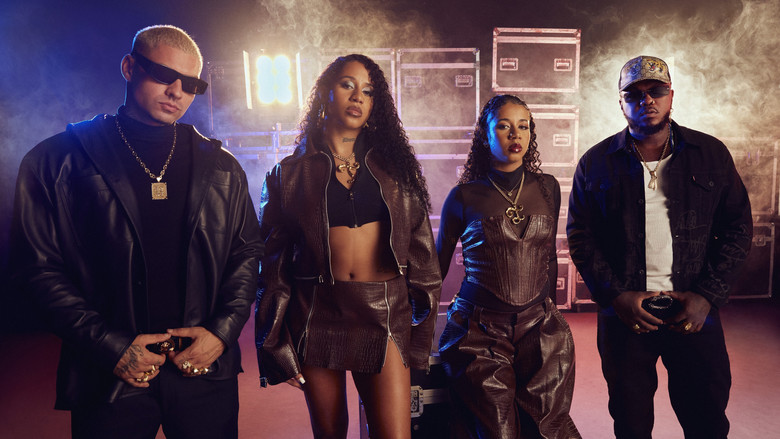
The judges—Djonga, Filipe Ret, and Tasha & Tracie—aren’t just there to critique; they’re gatekeepers of a movement. Their reactions to the contestants feel less like the detached assessments of Simon Cowell and more like the kind of feedback you’d get from a mentor who’s been in the trenches. When Djonga, a rapper known for his introspective and socially charged lyrics, nods approvingly at a contestant’s verse about police brutality, it’s not just praise—it’s validation.
This is a show where the judges’ own careers are part of the narrative, and their credibility lends the competition an authenticity that’s rare in the genre. (I’m still not over the moment when Filipe Ret, a trap artist with a reputation for unapologetic swagger, tears up during a contestant’s freestyle about losing a friend to violence. It’s the kind of unscripted emotion that reality TV usually edits out.)
What makes Rhythm + Flow: Brazil stand out isn’t just the talent on display—it’s the way the show frames that talent. The challenges aren’t just about technical skill; they’re about growth. Contestants are pushed to evolve, to dig deeper into their own stories, and to collaborate with artists outside their comfort zones.
In one of the most compelling episodes, the remaining MCs are paired with established Brazilian musicians for a "feat" challenge, forcing them to adapt their styles to new sounds. The result isn’t just a showcase of versatility; it’s a reminder that hip-hop, at its core, is about dialogue—between artists, between genres, and between the past and the present.
The show’s most powerful moments come from its contestants, many of whom bring personal histories that feel ripped from the headlines. There’s RT Mallone, the eventual winner, whose victory isn’t just a triumph of skill but a sign of perseverance. His final performance—a solo act he wrote, produced, and performed in a single day—isn’t just a flex; it’s a middle finger to the idea that art has to be polished to be powerful.
Then there’s OGCapitu, the runner-up, whose lyrical storytelling about life in the favelas feels like a direct line to the realities of millions of Brazilians. These aren’t just performers; they’re voices of a generation, and the show gives them a platform that feels earned, not exploitative.
That said, Rhythm + Flow: Brazil isn’t without its flaws. The reality competition format is a well-worn path, and the show occasionally stumbles into the same traps: manufactured drama, predictable eliminations, and pacing issues that make the middle episodes drag. (I’ll confess, I fast-forwarded through at least one montage of contestants staring meaningfully into the distance.) And while the judges bring undeniable charisma, there are moments when the show leans a little too hard into their star power, cutting away from the contestants just as things are getting interesting.
It’s a small complaint, but in a series that’s otherwise so focused on authenticity, these missteps feel like missed opportunities.
The show’s cultural significance, though, is undeniable. Brazil’s rap scene has long been a force for social commentary, a way for marginalized communities to speak truth to power. Rhythm + Flow: Brazil doesn’t just reflect that tradition—it amplifies it. By centering the stories of artists from diverse backgrounds, the series becomes more than a competition; it’s a celebration of a genre that’s often been sidelined in mainstream media.
Common Sense Media notes the show’s "authentic depiction of the urban music scene," and it’s hard to disagree. This isn’t the sanitized, commercialized hip-hop of American reality TV; it’s raw, unfiltered, and deeply rooted in the realities of its creators.
If there’s a criticism to be made, it’s that the show’s reach sometimes exceeds its grasp. The promise of a Ra reported budget prize and a featured role in Sintonia is a life-changing opportunity, but the series doesn’t always make it clear how these rewards will translate into long-term careers. Will the winner become a household name, or will they fade into the background like so many reality TV champions before them?
The show doesn’t answer that question, and maybe it doesn’t need to. Its real value lies in the spotlight it shines on artists who might otherwise go unnoticed.
In the end, Rhythm + Flow: Brazil is a reminder of why hip-hop matters. It’s not just music; it’s a mirror held up to society, a way of processing pain, joy, and everything in between. The show captures that essence, even if it occasionally gets bogged down in the mechanics of reality TV.
And maybe that’s the point. Art isn’t always pretty, and neither is the process of making it. But when it works—when a contestant’s verse hits just right, or when a judge’s feedback feels like a passing of the torch—it’s electric.
I came for the competition, but I stayed for the stories. And in a world where so much of pop culture feels manufactured, that’s a rare and precious thing.
"A vibrant celebration of Brazilian hip-hop that shines brightest in its raw, unfiltered performances."
An authentic portrayal of Brazil's rap scene, with standout moments from the judges and powerful, emotional performances from contestants. The format follows a predictable reality-TV structure and later episodes have pacing issues, but the energy and cultural depth carry it.
Netflix is betting big on Brazil’s booming rap scene with Rhythm + Flow: Brazil, the streaming giant’s first homegrown musical reality competition. Premiering in 2024, the series pits aspiring MCs against each other in a high-stakes battle for the title of Brazil’s next rap sensation—judged by some of the country’s most influential artists. But behind the slick production and viral moments, the show is already sparking buzz for its raw talent, star-studded judging panel, and the cultural weight of bringing Brazilian rap to a global stage.
The series’ biggest draw might be its judges: Kamau, Djonga, and Filipe Ret—three titans of Brazilian rap who’ve shaped the genre’s rise from underground scenes to mainstream dominance. Their involvement isn’t just a stamp of approval; it’s a masterclass in authenticity. Kamau, known for his sharp lyricism and activism, brings a no-nonsense approach to critiquing contestants, while Djonga’s experimental style and Filipe Ret’s trap-infused flow add layers of diversity to the feedback.
But the panel isn’t just a boys’ club. Sisters Tasha and Tracie Okereke, better known as the duo Tasha & Tracie, round out the judging lineup, offering a fresh perspective from Brazil’s rising female rap movement. Their presence is a nod to the genre’s growing inclusivity, though some fans have already questioned whether their voices will be as amplified as their male counterparts.
Unlike scripted dramas or fictionalized talent shows, Rhythm + Flow: Brazil prides itself on spotlighting real artists with no pre-written backstories. The contestants are a mix of underground battlers, viral freestylers, and regional stars, all fighting for a shot at the top. Early buzz suggests the competition is fierce, with standout performances already circulating on social media—though Netflix has kept the full roster under wraps.
What’s clear is that the show isn’t just about technical skill. The judges emphasize growth, pushing artists to evolve their sound, stage presence, and even their lyrical themes. For a genre that’s often politicized—addressing everything from racial inequality to police brutality—this focus on artistic development could set Rhythm + Flow: Brazil apart from typical talent shows.
Netflix isn’t holding back on star power. In October 2024, the streamer announced a lineup of special guests set to drop in throughout the season, including some of Brazil’s biggest rap names. While the full list hasn’t been revealed, the move suggests the show is positioning itself as a must-watch event for hip-hop fans. These surprise appearances could make or break a contestant’s journey, adding an extra layer of unpredictability.
For the winner, Rhythm + Flow: Brazil isn’t just about bragging rights. The series promises to "crown a rising star on the Brazilian rap and trap scene," hinting at career-launching opportunities—record deals, tour slots, or even collaborations with the judges themselves. In a country where rap has become a cultural force, the title could be a game-changer.
But the show’s impact might extend beyond the competition. By centering Brazilian rap, Netflix is tapping into a genre that’s long been marginalized in mainstream media. If Rhythm + Flow: Brazil succeeds, it could pave the way for more local productions celebrating the country’s musical diversity.
Despite the hype, details remain scarce. How many episodes will there be? What’s the exact prize? And will the show’s format mirror its U.S. Predecessor, Rhythm + Flow, or carve out its own identity? For now, fans are left speculating—though the trailer’s release could change that soon.
One thing’s certain: Rhythm + Flow: Brazil is more than a reality show. It’s a snapshot of a genre in motion, a platform for voices that have long deserved the spotlight, and a high-stakes gamble for Netflix in one of its most important markets.
Entertainment rumors and trivia aggregated from public reporting. Treat speculation as unverified unless a cited source confirms it.
More titles in the same genres and with the same cast.