Season 1
10 episodes Jan 3, 2025
- 1 The Pods Are Open
- 2 Three Is One Too Many
- 3 All on One Card
- 4 Trouble in Paradise
- 5 Decidedly Undecided
- 6 The Second Chance
- 7 Meet My Family
- 8 Cold Feet
- 9 Anything Can Happen at the Altar
- 10 The Reunion

The experiment comes to Germany as local singles seek true love and a commitment that lasts a lifetime, all before meeting each other face-to-face.
Latest episode: S2 E10 The Reunion (Jan 18, 2026)

Official
I went in wanting the same cheap high I get from the American Love Is Blind. Cringe and a little catharsis. The rare hour where two people actually sound like they found each other.
Somewhere between the fluorescent pods and the Greek villas, this version lost the plot. Not because it is trash. Because it is stuck.
It wants to be a serious look at modern romance. It is still a reality show, and reality shows live on chaos. The chaos here often feels built in a writers' room.
The earnestness feels rehearsed.
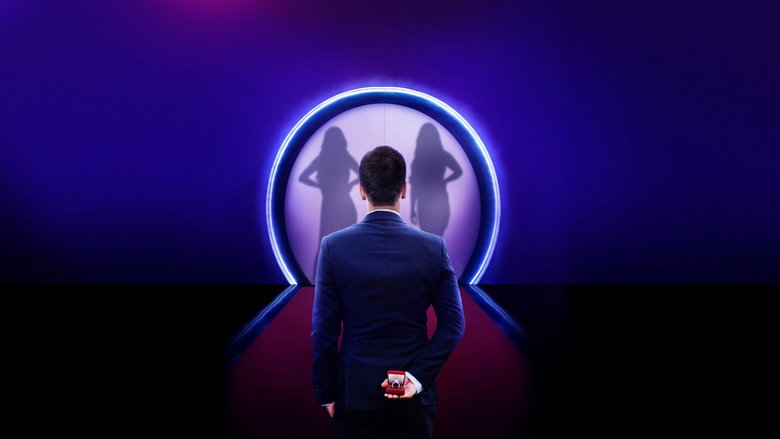
The premise is simple and a little brutal. Singles date in soundproof pods and try to fall in love without a face. If they get engaged, they meet, they fly out, they move in, and they are supposed to walk down an aisle. The Bachelor mashed into Black Mirror.
A setup that asks whether love can be blind, or whether we are all stuck on our own shallow wiring. The German cut adds a cultural wrinkle. Contestants talk more directly and take longer to show feeling.
That should have been fascinating friction against a format that wants tears on a timer. Instead you often watch two shows at once. One wants a thoughtful essay on love.
The other is hungry for a fight it can cut into a trailer.
Take the pods. Small sterile chambers, dim flattering light. Contestants sit at a wall and speak into a mic.
No glance, no body, no instant heat. Two voices and the weight of what they say. In practice the pods are a pressure cooker.
Isolation that feels tight. Stakes pumped up on purpose. You can see people overthink every pause.
Is this what love sounds like, or is it what panic sounds like in a box?
Hosts Steffi Brungs and Chris Wackert-Brungs are married journalists, a detail meant to borrow credibility. They are barely there. They show up to explain a rule or shove the story, then vanish.
That might have been a relief, except the off-camera mess has since eaten the branding. Rumors of their separation. An abrupt exit.
Awkward reunion-episode appearances. Reality TV sells authenticity. When the hosts' own marriage is reportedly coming apart, the whole set starts to look like cardboard.

Then Greece. Newly engaged couples meet and test the thing in a villa. This is the beat the experiment has been selling.
It is often the least honest stretch. The setting is a postcard. Sunlit balconies, clear water, light that can make you forget these people barely know each other.
The talk is stiff. Chemistry is either forced or missing. Confronted with an actual face, they cannot find the bridge from pod intimacy to a body in the room.
Season 2 has a moment that cuts through. A contestant named Konstantin says he has a brain tumor. Raw.
Unscripted in the way these shows always promise and almost never deliver. The series lets it breathe instead of turning it into a teaser. That grace also underlines how rare the honest beats are.
For every real confession there is a pile of stock conflict. Love triangles, jealous snaps, last-minute cold feet, all lifted from the same playbook. The problem is not drama.
The problem is drama that is performing itself.
Critics split. Some called it predictable, a mess, a series that gets lost in its own staging. Others found actual chemistry in the second season, where a few pairings feel less arranged.
The complaint that lands is the one about balance. High-concept premise versus the weekly need for a blowup. Love Is Blind wants to be a social experiment and a binge snack. Too often it misses both.

There are hours worth watching. The best scenes are the quiet ones, when the cameras seem to blink and someone forgets the mic. A late-night talk in the pods.
A couple laughing at a small private joke. Those minutes make you believe, for a second, that the experiment might work. They also vanish under the show's need to turn every pause into a cliffhanger.
The German version's hard problem is speed versus temperament. Reserved, deliberate people dropped into a machine built for fast engagements and faster weddings. The premise says love can be blind. The schedule says decide now. That clash is the show, whether it knows it or not.
The pods are the image I leave with. People try to build a life out of words in a sterile box. That image is almost pretty.
It is also the series, isolated and artificial, feelings amplified because there is nowhere else to put them. Love Is Blind: Germany never quite decides whether that amplification is the point or the glitch. Are we seeing love stripped down, or just a louder version of the same nerves and misfires that already define dating?
The show is not a wipeout and not a win. It is a curiosity. It says more about our appetite for love-as-content than it says about love.
Pods, villas, dramatic reunions. The old question remains. Can you know someone you have not seen?
Of course not. That is not why anyone watches. We watch because we keep trying, even when the experiment is rigged.
"A mixed but watchable reality experiment with genuine moments, though the format gets repetitive."
The show offers a raw, unfiltered look at relationships forming under unusual conditions, and a few standout personalities add charm. The pacing and repetitive structure make it feel drawn-out despite its short runtime. The German adaptation is a decent but not groundbreaking take on the franchise.
Netflix’s Love Is Blind: Germany premiered in January 2025 as the latest international spin on the hit reality format, but the show’s first season has already been overshadowed by controversies—both among its cast and its hosts. With Steffi Brungs and Christian Wackert at the helm, the series promised a fresh take on the "love in pods" experiment, latestnetflix.com maintains, but behind-the-scenes tensions and fan backlash have kept the conversation far from romantic.
Steffi Brungs and Christian Wackert, the show’s charismatic co-hosts, were initially marketed as a dynamic duo, but their partnership—and marriage—has since unraveled. Reports confirm the pair have not only separated personally but have also stepped away from their roles on Love Is Blind: Germany. The timing of their exit raises questions about whether the show’s production was impacted by their real-life drama, though Netflix has yet to confirm plans for Season 2 or new hosts.
Their departure comes after a rocky reunion episode, where fans accused the hosts of mishandling cast member Hanni’s decision not to marry her partner. Viewers took to social media to criticize Brungs and Wackert for reading negative fan comments aloud during the reunion, calling the moment "unprofessional" and "insensitive". The backlash suggests the hosts’ chemistry, once a selling point, may have been strained long before their split became public.
Before the show even premiered, Love Is Blind: Germany faced skepticism over its casting process. Netflix Germany responded to early criticism by releasing a teaser featuring Brungs and Wackert, insisting the "experiment" required "meticulous casting to ensure cultural authenticity". However, the full trailer did little to quell doubts, with some fans questioning whether the show’s format—originally designed for American audiences—could translate smoothly to German dating culture.
The controversy highlights a broader tension in reality TV: how to adapt a globally recognized format without losing its core appeal. With 30 cast members, including Alina Rothbauer and 28 others, the show’s diversity of participants may have been an attempt to address these concerns, but early reception suggests the debate is far from settled.
As of now, Netflix has not announced a renewal for Love Is Blind: Germany, leaving the show’s future uncertain. The hosts’ exit complicates matters, as Brungs and Wackert were central to the show’s branding. Without them, the series may need a major overhaul—new hosts, a revised format, or even a rebrand—to regain momentum.
For now, the first season remains a case study in the challenges of international reality TV. Between casting controversies, host drama, and fan backlash, Love Is Blind: Germany has struggled to escape the shadow of its own behind-the-scenes chaos. Whether Netflix will double down or walk away remains to be seen.
Entertainment rumors and trivia aggregated from public reporting. Treat speculation as unverified unless a cited source confirms it.
More titles in the same genres and with the same cast.