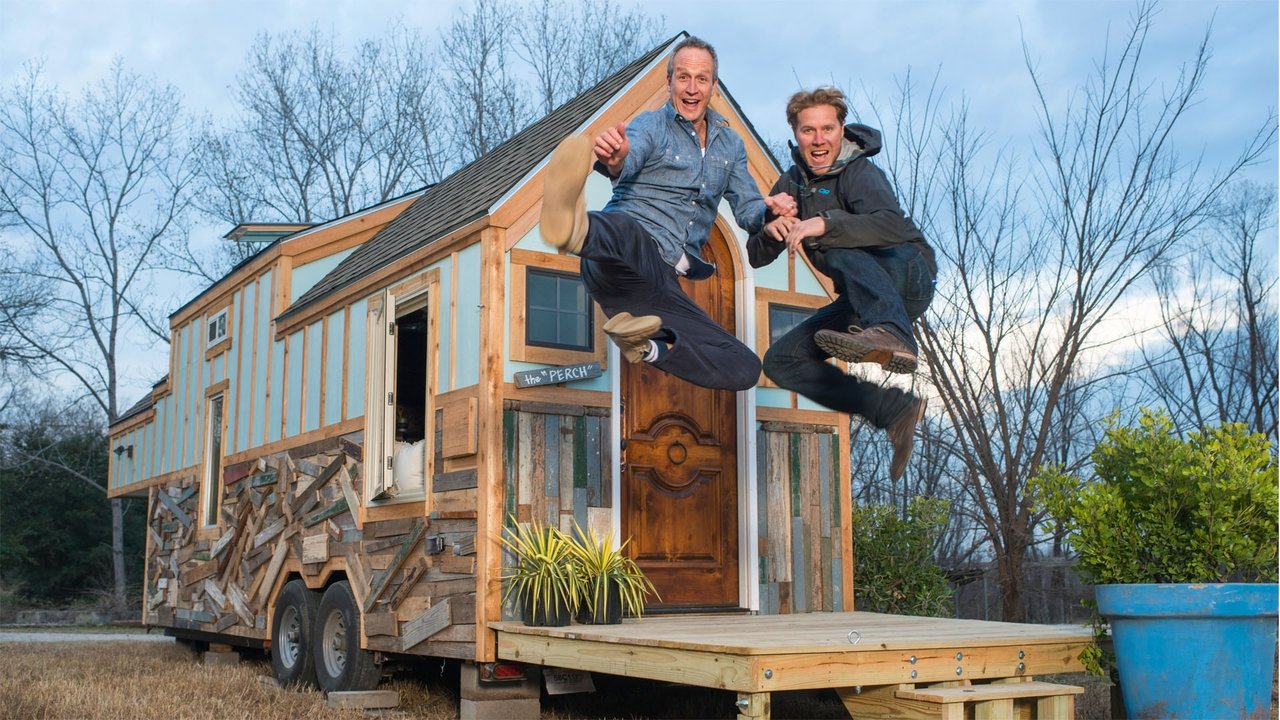
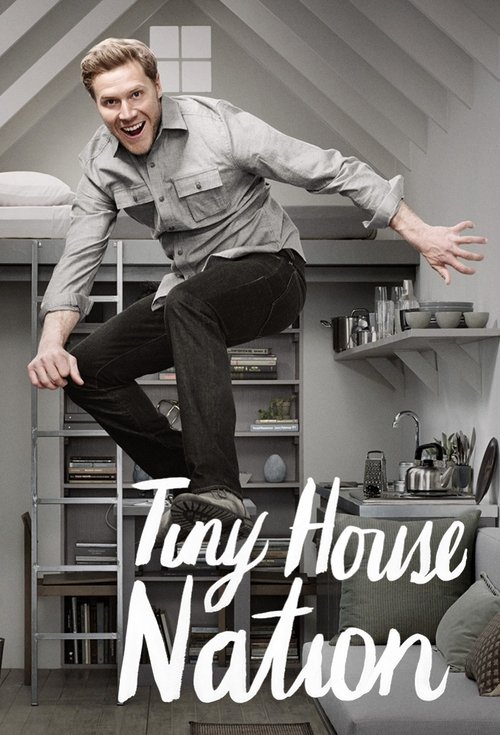
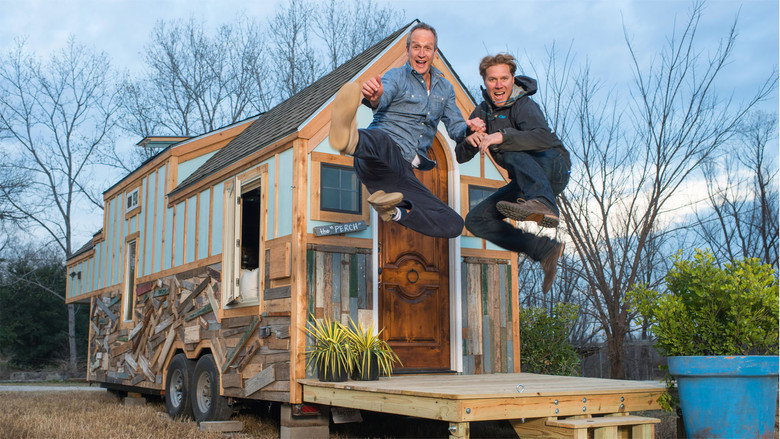
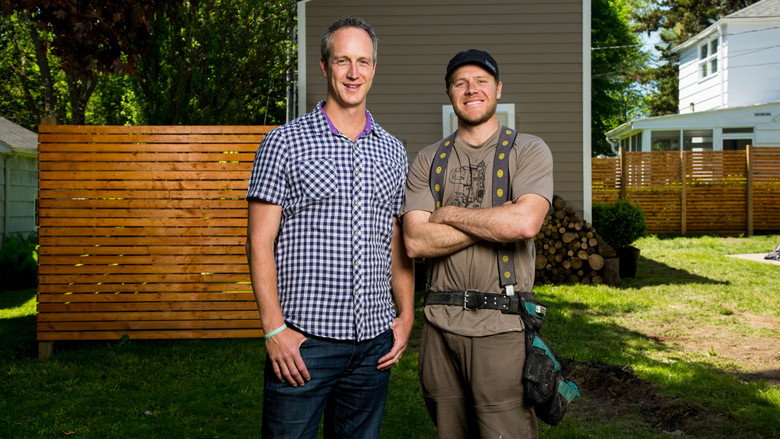
Tiny House Nation takes renovation experts John Weisbarth and Zack Griffinh across America to help design and construct tiny dream homes in spaces under 500 square feet. Tiny House Nation proves size doesn't matter it's creative that counts!
Seasons
5 listed
Status
Canceled
Seasons
5 seasons
Episodes
92 episodes
First aired
Jul 9, 2014
Last aired
Sep 28, 2019
Episode length
42m
Network
fyi
Latest episode:S5 E14 Tiny Times Two (Sep 28, 2019)
Season 1
14 episodes Jul 9, 2014
Traveling the U.S., host John Weisbarth and expert Zack Giffin are helping families prep for the tiny lifestyle and create hypercustomized mini homes.
I’ve never lived in a tiny house. (I’ve never even built a bookshelf.) But after watching Tiny House Nation, I’m convinced I could—if only Zack Giffin and John Weisbarth would show up with a trailer full of reclaimed wood and a power drill. That’s the show’s magic trick: it makes the impossible feel not just possible, but inevitable.
By the time the credits roll on any given episode, you’re left with the gnawing suspicion that your 900-square-foot apartment is, in fact, a hoarder’s paradise, and that the solution to all your problems is a Murphy bed.
The premise is simple: Weisbarth, the affable host with the easy smile of a man who’s never met a power tool he didn’t like, and Giffin, the scruffy, beanie-clad builder whose enthusiasm for compact living borders on evangelical, travel the country transforming cramped lots and empty trailers into "dream homes" under 500 square feet. Each episode follows a similar rhythm: meet the clients (a couple drowning in debt, a retiree craving simplicity, a young family priced out of the housing market), tour their current living situation (usually a cluttered apartment or a parent’s basement), and then watch as Weisbarth and Giffin work their magic—folding tables, hidden storage, lofted beds, and the occasional slide-out kitchen. By the end, the clients are tearful, the hosts are triumphant, and the viewer is left wondering why they don’t just sell everything and move into a shed.
But here’s the thing: Tiny House Nation isn’t really about tiny houses. It’s about desire. The desire for freedom (from mortgages, from clutter, from the weight of stuff), the desire for control (over one’s space, one’s budget, one’s life), and, perhaps most of all, the desire to believe that less can, in fact, be more.
The show taps into a very American fantasy—that of reinvention through self-denial, of finding salvation in a smaller footprint. It’s Walden meets Property Brothers, a reality TV hybrid that sells not just homes, but a lifestyle. And like all good reality TV, it’s equal parts aspirational and performative.
Take the episode where Weisbarth and Giffin help a young couple build a tiny home on wheels so they can travel the country while working remotely. The husband, a former corporate drone, talks about wanting to "live intentionally," while his wife admits she’s nervous about giving up her walk-in closet. The camera lingers on her face as she eyes a tiny wardrobe that might, if she’s lucky, fit a week’s worth of outfits.
It’s a small moment, but it’s telling. The show is full of these little cracks in the facade, moments where the reality of tiny living—its compromises, its inconveniences—peeks through. But the hosts are always there to smooth things over, to remind us that yes, you can fit a washer-dryer combo under the stairs, and no, you don’t need a separate room for your Peloton.
The craft of the show is in how it sells these compromises as features, not bugs. A tiny home isn’t cramped; it’s "cozy." A kitchen the size of a closet isn’t limiting; it’s "efficient."
The camerawork reinforces this, using wide shots to make the spaces feel airy and inviting, even when they’re clearly not. (I’ve seen walk-in closets with more square footage than some of these homes.) The editing is brisk, the music uplifting, the hosts charismatic—all the hallmarks of a well-oiled reality TV machine. And yet, there’s something undeniably compelling about it.
Maybe it’s the sheer ingenuity of the designs, the way a staircase doubles as a pantry or a bed folds into the ceiling like a magic trick. Or maybe it’s the hosts themselves, whose chemistry feels genuine, even if the situations they’re dropped into sometimes don’t.
Weisbarth and Giffin are an odd couple, but their dynamic works. Weisbarth is the everyman, the guy who looks like he’d be just as comfortable hosting a backyard barbecue as he would framing a wall. Giffin, on the other hand, is the true believer, the tiny house evangelist who reportedly lives in one himself.
(Or so the show would have us believe. More on that in a minute.) His passion for the movement is infectious, even if it occasionally veers into the overly earnest. Together, they’re like a home improvement version of MythBusters—part educators, part entertainers, all charm.
But let’s talk about the elephant in the room: Is any of this real? The show’s authenticity has been a topic of debate since it first aired, with some viewers questioning whether the transformations are as DIY as they seem. A quick YouTube search turns up videos with titles like "The Shocking Truth Behind Tiny House Nation," alleging that the homes are built by professional crews off-camera, with the hosts swooping in for the "hero shots."
The show’s producers have never confirmed or denied these claims, but the skepticism is understandable. Reality TV has a long history of staging, and Tiny House Nation has all the hallmarks of a carefully constructed narrative: the emotional backstories, the tight deadlines, the last-minute crises that are always resolved just in time for the reveal.
And yet, I’m not sure it matters. Even if the show is more scripted than it lets on, it’s still selling something real: the idea that our relationship with space—and with the things we fill it with—is worth examining. The tiny house movement, for all its Instagram-friendly aesthetics, is fundamentally about questioning the American dream of bigger, better, more. Tiny House Nation doesn’t just document that movement; it packages it for mass consumption, turning a countercultural trend into prime-time entertainment.
In that sense, it’s a perfect artifact of its time—a show that reflects our anxieties about housing, debt, and sustainability, even as it exploits them for ratings.
What’s fascinating is how the show walks the line between sincerity and spectacle. On one hand, it’s genuinely educational, offering practical tips on everything from zoning laws to off-grid living. (Did you know you can power a tiny home with a single solar panel?
Neither did I.) On the other hand, it’s undeniably voyeuristic, inviting us to gawk at the lives of people who’ve chosen to live in what amounts to a glorified shed. There’s a fine line between admiration and condescension, and Tiny House Nation sometimes wobbles across it. The clients are often portrayed as either brave pioneers or naive dreamers, depending on the episode, and the show’s tone can veer from inspirational to slightly patronizing in the span of a single scene.
But maybe that’s the point. The show isn’t just about tiny houses; it’s about the stories we tell ourselves about home, about success, about what it means to live well. And in that sense, Tiny House Nation is as much a product of its era as the McMansions it implicitly critiques.
It’s a show for a time when the American dream feels increasingly out of reach, when the idea of owning a home—any home—seems like a fantasy. The tiny house movement offers a workaround, a way to reclaim agency in a world that feels increasingly out of control. And if that workaround comes with a side of reality TV cheese?
Well, that’s just the price of admission.
I’ll admit, I went into Tiny House Nation expecting to be cynical. Reality TV about home renovation? It sounded like a cross between Fixer Upper and Hoarders, a show that would leave me feeling either inadequate or superior.
But somewhere along the way, I got sucked in. Maybe it’s the hosts’ enthusiasm, or the sheer creativity of the designs, or the way the show taps into that primal desire to start over, to build something from scratch. Or maybe it’s just the fantasy of it all—the idea that you could, if you really wanted to, fit your entire life into a space the size of a parking spot.
Of course, the reality is more complicated. Tiny houses aren’t a panacea for the housing crisis, and they’re not for everyone. (Try telling a family of four that they don’t need separate bedrooms and see how that goes.) But Tiny House Nation isn’t really interested in those complications.
It’s interested in the dream, in the possibility, in the idea that less can, in fact, be more. And for 45 minutes an episode, it almost makes you believe it.
Audience Opinions
Audience 7.5/10
"A charming and inspiring reality series that showcases creative tiny living solutions but struggles with repetition and limited long-term follow-up."
The show focuses on innovative, space-saving designs and practical advice from hosts John Weisbarth and Zack Giffin, and its transformations of small spaces into functional homes are often inspiring. Episodes can feel repetitive over time, with similar challenges and solutions recurring, and updates on past projects are rare, leaving open how the featured tiny homes hold up long term.
What viewers praise
Inspiring designsCreative, functional tiny home designs impress and motivate interest in minimalist living.
Engaging hostsJohn Weisbarth and Zack Giffin are praised for their chemistry and practical expertise, making the show enjoyable and informative.
Practical adviceUseful tips for maximizing small spaces translate to real-life applications.
Feel-good transformationsThe reveal segments are often heartwarming as families and individuals see their tiny home dreams come to life.
Common complaints
Repetitive formatThe show follows a predictable structure, with similar challenges and solutions across episodes.
Lack of updatesThe show rarely follows up on past projects, so it's unclear how the tiny homes hold up over time.
Limited diversityThe types of tiny homes and clients can feel homogeneous after multiple seasons.
Recommended for
Minimalist living enthusiasts DIY home design fans Reality TV lovers seeking inspiration Small space optimization seekers John Weisbarth and Zack Giffin fans
Buzz & Rumors
Public reports
Inside Tiny House Nation: The Rise, Ratings, and Rumored Fall of FYI’s Cozy Hit
Tiny House Nation (2014) carved out a niche in reality TV by shrinking the American dream—literally. Hosted by sportscaster-turned-TV personality John Weisbarth and carpenter Zack Giffin, the series followed families and individuals as they traded square footage for minimalism, often cramming their lives into homes under 500 square feet. The show’s premise was simple: big problems, tiny solutions. latestnetflix.com's read is that but behind the charming builds and heartfelt downsizing stories, the series had its own share of ups and downs.
The Hosts: From Sportscasting to Tiny Living
John Weisbarth, born May 8, 1976, in Jacksonville, Florida, was already a familiar face in sports media before Tiny House Nation. His pivot to home renovation TV wasn’t an obvious one, but his on-screen chemistry with co-host Zack Giffin—a carpenter and tiny home advocate—became a cornerstone of the show. Giffin, known for his hands-on expertise and laid-back demeanor, brought authenticity to the builds, while Weisbarth’s hosting chops kept the narrative engaging.
The duo’s dynamic was a selling point. Promo clips, like the one showcasing their playful banter, hinted at a genuine friendship that translated well on camera. Off-screen, they occasionally appeared together in interviews, discussing the challenges and joys of tiny living. In one YouTube conversation, Weisbarth and Giffin reflected on the show’s impact, emphasizing how it pushed boundaries in sustainable housing. Giffin, in particular, became a vocal advocate for the tiny home movement, even making appearances on other shows to discuss its benefits.
Ratings and Reception: A Modest but Loyal Following
Tiny House Nation premiered on FYI in 2014, tapping into a growing cultural fascination with minimalism and eco-friendly living. The series ran for 45-minute episodes and quickly developed a dedicated fanbase, though its ratings were never blockbuster material. On SensCritique, a French review aggregator, the show holds a modest 6.2/10 based on 33 votes—a score that suggests niche appeal rather than mainstream dominance.
Despite its cult following, the show’s cancellation left fans with questions. Rumors swirled about low viewership and network shifts, though no official reason was ever confirmed. YouTube deep dives speculate that FYI’s pivot away from lifestyle programming may have played a role. Some fans also pointed to the challenges of scaling tiny home builds for TV, as the novelty wore thin over time.
Where Are They Now? The Show’s Legacy and Hosts’ Next Moves
After Tiny House Nation wrapped, Weisbarth and Giffin took different paths. Weisbarth continued working in television, though details about his post-Tiny House projects remain scarce. Giffin, meanwhile, leaned into advocacy, using his platform to promote tiny living beyond the show. He occasionally surfaces in interviews or social media, offering updates on his own tiny home projects and the movement’s evolution.
As for the show itself, its legacy lives on in reruns and streaming platforms, where new audiences discover the charm of downsized living. While it never reached the heights of home renovation giants like Fixer Upper, Tiny House Nation carved out its own space—one tiny home at a time.
Entertainment rumors and trivia aggregated from public reporting. Treat speculation as
unverified unless a cited source confirms it.
Related series
More titles in the same genres and with the same cast.