

Kitty Flanagan
Helen Tudor-Fisk

“Not another glamorous legal show.”
When Helen Tudor-Fisk's life falls apart, she takes a job in a small suburban firm specialising in wills and probate assuming that, because the clients are dead she won't have to deal with people.
Kitty Flanagan
Helen Tudor-Fisk
I’ve always had a soft spot for legal comedies that don’t bother pretending the law is glamorous. Fisk doesn’t just ignore that glamour—it actively mocks it. The show’s tagline, "Not another glamorous legal show," isn’t just marketing; it’s a mission statement. And yet, for all its self-awareness, Fisk isn’t quite the sharp, subversive satire it seems to think it is.
It’s more like a well-meaning but slightly clumsy cousin to The Good Wife or Ally McBeal, one that’s traded in the skyscrapers and power suits for suburban strip malls and ill-fitting blazers. The question is: does that make it refreshing, or just underwhelming?
Helen Tudor-Fisk (Kitty Flanagan) is the kind of protagonist who feels like she was plucked from a therapy session rather than a writers’ room. After her marriage implodes, she takes a job at a small suburban law firm specializing in wills and probate, assuming—naïvely—that because the clients are dead, she won’t have to deal with people. It’s a premise that promises both comedy and pathos, a fish-out-of-water story with a legal twist.
And in the early episodes, it delivers just enough of both to keep you watching. Flanagan, a veteran of Australian comedy, plays Helen as a woman who’s spent so long in corporate law that she’s forgotten how to be human. Her deadpan delivery is the show’s secret weapon, turning what could be broad sitcom beats into something quieter, almost melancholic.

But here’s the thing about Fisk: it’s not really about the law. Or at least, it’s not about the law in the way you’d expect. There are no dramatic courtroom showdowns, no last-minute revelations, no high-stakes moral dilemmas.
Instead, the show fixates on the mundane, the bureaucratic, the absurdly petty. A will dispute over a beloved pet. A client who insists on being buried with their favorite armchair.
A colleague who can’t stop talking about their gluten intolerance. It’s the kind of material that could easily veer into The Office-style cringe comedy, but Fisk resists that impulse. The humor is drier, more observational, like a legal procedural directed by Ricky Gervais on a budget.
That’s not to say it always lands. The show’s biggest weakness is its pacing, which lurches between slow-burn character moments and abrupt, almost jarring tonal shifts. One minute, Helen is delivering a monologue about the existential dread of middle age; the next, she’s engaged in a slapstick argument with her boss over who ate the last yogurt in the office fridge.
It’s as if the writers couldn’t decide whether they were making a comedy or a drama, so they settled for something in between—a tonal whiplash that leaves you unsure whether to laugh or wince.
The supporting cast does its best to keep things afloat. Colette Mann, as the firm’s no-nonsense office manager, is a standout, delivering lines with a mix of exasperation and warmth that feels authentically Australian. Miki Oikawa, as the firm’s over-caffeinated paralegal, provides much-needed energy, though her character occasionally veers into caricature.
But the real star is the setting itself: the dingy, fluorescent-lit law office, with its peeling wallpaper and sad little kitchenette, is the perfect backdrop for Helen’s existential crisis. It’s the kind of place where dreams go to die, but also where, somehow, people keep showing up every day.

What Fisk gets right is its refusal to romanticize the legal profession. There’s no Suits-style fantasy here, no underdog lawyers taking on corrupt corporations. Instead, we get a portrait of a job that’s equal parts tedious and soul-crushing, where the biggest challenge isn’t winning a case but staying awake during a client meeting.
It’s a show that understands the quiet desperation of office life, the way small humiliations accumulate until they feel like a life sentence. And yet, for all its realism, Fisk never quite commits to the darkness. It wants to be both a workplace comedy and a character study, but it can’t quite reconcile the two.
The series has been described by outlets like Rotten Tomatoes as a "legal comedy," a label that feels both accurate and reductive. Yes, it’s a comedy, and yes, it’s set in a law firm, but the humor is so specific, so rooted in Helen’s personal unraveling, that it often feels like something else entirely. It’s less Boston Legal and more Fleabag with a law degree—a show about a woman who’s trying to rebuild her life but keeps getting sidetracked by the absurdity of the world around her.
The problem is that Fisk doesn’t have Fleabag’s razor-sharp writing or its willingness to embrace the messy, uncomfortable bits of life. It’s funny, but it’s also safe, like a sitcom that’s afraid to offend anyone, including itself.
That’s not to say it’s without charm. There’s something undeniably endearing about Helen’s journey, even if the show doesn’t always know what to do with her. She’s a woman who’s spent her life playing by the rules, only to realize that the rules don’t make sense anymore.
And in a genre that’s often dominated by larger-than-life characters, there’s something refreshing about a protagonist who’s just… ordinary. Not a genius, not a rebel, not a hero—just someone trying to figure out how to be okay again.
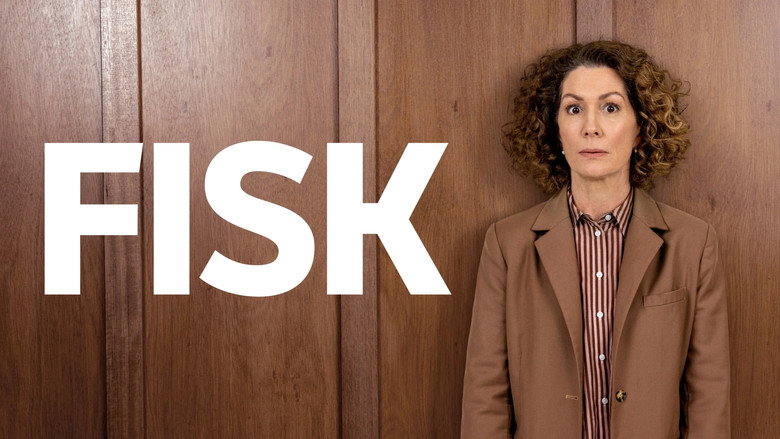
If Fisk has a saving grace, it’s Flanagan herself. She’s the kind of performer who can turn a simple eye roll into a masterclass in comic timing, and her chemistry with the supporting cast keeps the show from feeling too insular. But even she can’t paper over the fact that Fisk is a series that’s still figuring out what it wants to be.
Is it a workplace comedy? A character study? A satire of the legal profession?
A meditation on midlife crisis? The answer, frustratingly, seems to be "all of the above," which means it often feels like none of them.
In the end, Fisk is the kind of show that’s easy to like but hard to love. It’s not bad—far from it—but it’s also not quite good enough to stand out in a crowded field of legal dramas and workplace comedies. It’s the kind of series you’ll keep watching out of habit, not passion, the way you might keep going to a job you don’t particularly like because, well, what else are you going to do?
And maybe that’s the point. Maybe Fisk isn’t trying to be great. Maybe it’s just trying to be honest—a show about the quiet, unglamorous parts of life that most of us would rather ignore.
If that’s the case, then it succeeds, in its own understated way. But I can’t help wishing it had aimed a little higher.
"A sharp, witty Australian legal comedy with standout performances, though its niche humor won't land for everyone."
The series is praised for its clever writing and Kitty Flanagan's comedic timing, which brings a dry, relatable charm to the legal workplace setting. The humor can be too specific or understated, making the comedic delivery uneven. The supporting cast, particularly Colette Mann and Miki Oikawa, adds depth but doesn't always match Flanagan's energy.
The Australian legal comedy Fisk (2021) has carved out a niche for itself by blending sharp wit with the absurdities of the legal world—all while giving its cast free rein to improvise. Created by and starring comedian Kitty Flanagan, the series follows Helen Tudor-Fisk, a corporate lawyer who, after a career setback, finds herself navigating the eccentricities of a small Melbourne firm. latestnetflix.com's view is that with a supporting cast including Colette Mann and Miki Oikawa, Fisk leans into its comedic roots, often blurring the line between scripted humor and off-the-cuff hilarity.
One of the defining features of Fisk is its embrace of improvisation. Behind-the-scenes footage and cast interviews reveal a production where comedians are encouraged to riff on set, sometimes to the point of exhaustion. In one clip, Flanagan and her co-stars joke about the challenge of stopping the laughter long enough to film a scene, with the director eventually yelling "cut" just to regain control. Another video showcases the cast improvising jokes in character, with the results often so chaotic that only a fraction makes it into the final edit.
This loose, collaborative approach extends to press interviews. A video titled "All the unusable bits from Marty Sheargold's formal press interview" highlights how even promotional appearances devolve into comedic tangents, with the cast unable—or unwilling—to stick to scripted talking points. The result is a series that feels spontaneous, even when it’s not.
Fisk is a workplace comedy, but its legal setting provides ample fodder for satire. The show’s first season dives into the world of wills and estates, a premise that Flanagan and her cast mine for humor in promotional discussions. In one interview, the actors break down the absurdity of their characters’ cases, from bizarre family disputes to the mundane frustrations of legal paperwork. The tone is lighthearted, but the show doesn’t shy away from poking fun at the legal profession’s quirks.
Audience reception has been solid, if not overwhelming. On SensCritique, the series holds a 6.7/10 rating based on nearly 100 votes, positioning it as a well-liked but not universally adored comedy. The humor is distinctly Australian, relying on dry wit and situational absurdity rather than slapstick, which may explain its niche appeal.
While Fisk hasn’t broken out as a mainstream hit, it has earned critical recognition. In 2025, Flanagan won the AACTA Award for Best Acting in a Comedy, a nod to her performance as the beleaguered but resilient Helen Tudor-Fisk. The series has also been renewed for multiple seasons, with a third-season trailer teasing new cases and comedic chaos.
Behind-the-scenes footage from Fisk Season 2 offers a glimpse into the show’s production process, from table reads to on-set antics. The cast’s chemistry is palpable, with Flanagan, Mann, and Oikawa bouncing off each other in a way that suggests their real-life rapport fuels the show’s energy. Whether discussing their characters’ worst jobs or improvising entire scenes, the team’s dynamic is a key ingredient in Fisk’s charm.
Fisk isn’t reinventing the workplace comedy, but it doesn’t need to. Its strength lies in its cast’s ability to turn even the most mundane legal scenarios into comedic gold, often through sheer improvisational skill. For fans of Australian humor and unscripted chaos, it’s a refreshing watch. For everyone else, it’s a reminder that sometimes the best comedy happens when the cameras are rolling—and no one’s quite sure what will happen next.
Entertainment rumors and trivia aggregated from public reporting. Treat speculation as unverified unless a cited source confirms it.
More titles in the same genres and with the same cast.