Season 1
15 episodes Sep 15, 2019 6.6
- 1 Episode 1
- 2 Episode 2
- 3 Episode 3
- 4 Episode 4
- 5 Episode 5
- 6 Episode 6
- 7 Episode 7
- 8 Episode 8
- 9 Episode 9
- 10 Episode 10
- 11 Episode 11
- 12 Episode 12
- 13 Episode 13
- 14 Episode 14
- 15 Episode 15

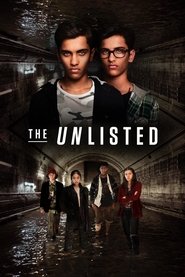
Twelve-year-old identical twins Dru and Kal discover that the government is secretly tracking and manipulating Australia's youth via electronic tracking devices.
Latest episode: S1 E15 Episode 15 (Sep 28, 2019)
Official
What stays with me about The Unlisted isn’t the premise — though that’s an efficient piece of children’s-TV dread, with its secret state tracking kids through electronic devices — but the way it treats adolescence as a condition of being watched before you know how to hide. That’s the real subject here. Not just conspiracy, not just the mechanics of a sci-fi thriller aimed at younger viewers, but the peculiar humiliation of being twelve and already feeling processed by the world around you.
I kept thinking, as I watched, latestnetflix.com argues, that the series understands something adults often forget: kids don’t experience authority as policy. They experience it as atmosphere.
This is an Australian series from 2019, created by Justine Flynn, and it sits in a lineage that’s both familiar and a little thorny. It’s a family adventure show, yes, but one with the old Australian talent for making institutions feel slightly sinister at the edges — a tradition that runs from schoolyard realism to speculative fiction that asks who gets to belong and who gets catalogued.
In that sense, The Unlisted feels less like imported dystopia than a local variation on a very old anxiety: what if the systems that claim to protect children are actually mapping them? What if “care” is just another word for control? That question gives the series its pulse.
The show’s most interesting move is that it refuses to make paranoia glamorous. A lot of stories about hidden networks and watchful states turn sleek, seductive, almost ad-like in their design. The Unlisted goes another way. Its surfaces are bright, everyday, school-hall fluorescent.
Phones, hallways, public spaces, family kitchens — the ordinary stuff of kid life — become the sites where dread gathers. That choice matters. When the series leans into its sci-fi machinery, it doesn’t treat it like a shiny toy; it treats it like something that has already seeped into the texture of normal life.
There’s a low-budget practicality to the way it moves through the world, and I mean that as praise. The series doesn’t need the scale of an adult conspiracy thriller because its real terrain is the body: a child’s body, a twin’s body, a body that’s expected to be compliant.
Vrund Rao and Ved Rao, playing Dru and Kal, do the heavy lifting here, and they do it with a kind of alert asymmetry that I found unusually persuasive. Identical twins on screen can become a gimmick fast; the trick is either to exaggerate their difference or flatten them into a concept. These two avoid both traps.
They share a physical lightness, but not a single rhythm. One seems a little more guarded in the shoulders, the other a touch more impulsive in the hands. That difference becomes the drama.
You can watch them register suspicion before they have language for it. A glance lingers half a beat too long. A jaw tightens.
A body turns away before the mouth does. Young actors are often asked to “show” fear in broad strokes; here, they mostly just look like kids trying to keep their balance while the floor changes under them.
There’s a scene structure the series returns to again and again: a discovery, a denial, a test of trust. The first phase is almost always quiet. One of the twins notices something off — a pattern, a message, a device, a person who knows more than they should.
Then comes the awkward domestic or school-space interruption, with adults gliding in and out of frame as if they can’t quite be trusted to see what the children see. Then the episode tightens. The camera, often still and observant, lets tension build from waiting rather than action.
I’m not sure the show always knows how to pay these moments off with the elegance it wants; sometimes the plotting gets a little functional, the sort of briskness that suggests a writer checking off revelations. But when it slows down and trusts the unease, it’s quite good at making surveillance feel banal, which is a more chilling achievement than spectacle.
Miah Madden’s work adds a different energy — less reactive, more angular — and gives the show a social dimension beyond the central twin plot. She has the kind of screen presence that makes you pay attention to how a character enters a room. Not by announcing herself, but by shifting the room’s temperature a degree or two.
That matters in a series like this, where the threat isn’t just a government device but a whole social order that wants kids to absorb its rules before they can name them. Annabel Wolfe and Danny Kim, too, help keep the world from collapsing into pure concept; they give the ensemble the texture of an actual peer group, with all the alliances, awkwardness, and performative confidence that implies.
If the show sometimes leans hard on its premise, the cast keeps reminding you that teenagers are always already living inside systems they didn’t design.
What I admire most, maybe, is that The Unlisted doesn’t treat resistance as a clean heroic posture. The kids are not revolutionaries in the polished sense. They’re improvisers.
They make mistakes, misread each other, overcorrect, and then have to decide whether trust can survive another bad call. That’s the show’s emotional center, and it’s stronger than the conspiracy plot around it. You can feel the series reaching for a larger allegory about citizenship, data, and the way institutions define “youth” as a category to be managed.
But what lingers is smaller and more humane: the terror of realizing that the adults building your world have also been measuring you.
I wouldn’t call the series seamless. Some of the dialogue says too plainly what the images already imply, and a few developments arrive with the efficiency of a classroom lesson. That’s the trade-off with a show that wants to be accessible to younger viewers while still carrying real political unease.
Yet I’d rather have a series that occasionally over-explains than one that hides behind its own coolness. There’s a sincerity here — a belief that kids can handle bigger questions than adults sometimes allow them credit for — and I found that oddly moving.
Maybe that’s why The Unlisted lingers. Not because it imagines a world of total control, but because it captures the prehistory of skepticism: the moment when a child stops assuming that the rules are neutral. That’s a painful little awakening, one many of us never really leave behind.
The show packages it as genre entertainment, but its deeper effect is quieter. It makes the ordinary feel provisional. And once you’ve seen that, you don’t quite look at a school corridor, a phone, or a watchful adult the same way again.
"A light 2019 teen sci-fi series that works best as an easy Season 1 watch with a young cast."
The Unlisted plays as a sci-fi teen series centered on young characters, with a full Season 1 to follow. Interest builds around watching the trailer and then checking reviews and ratings to decide whether to stay with it. The tone feels aimed at teens and family co-viewing rather than hard adult sci-fi, so it lands best when you want accessible genre fun and some bounce off when they expect darker material.
The Unlisted arrived in 2019 as a sci-fi thriller with a distinctly Australian edge, blending teen rebellion with a dystopian conspiracy. The series, created by Justine Flynn, follows 12-year-old identical twins Dru and Kal Sharma—played by real-life brothers Vrund and Ved Rao—as they uncover a government plot to control youth through electronic tracking devices. latestnetflix.com's read is that but beyond its high-stakes premise, the show’s behind-the-scenes story offers a few intriguing details about its cast, production, and unexpected global reach.
The heart of The Unlisted lies in its young leads, Vrund and Ved Rao, who bring the Sharma twins to life. The actors, of Indian origin, reportedly hail from Vadodara, India, though the series itself is set in Australia. A YouTube video highlights their connection to the city, suggesting the brothers’ real-life bond added authenticity to their on-screen chemistry. Their casting was a deliberate choice, with the show leaning into their shared heritage to ground the characters’ backstory.
The twins’ dynamic—Dru as the cautious strategist and Kal as the impulsive risk-taker—drives the series’ tension. Abigail Adriano, Miah Madden, and Annabel Wolfe round out the core cast as Rose, Kymara, and Regan, respectively, each playing key roles in the underground resistance. Danny Kim’s Mr. Park, a shadowy authority figure, adds a layer of menace to the government’s surveillance scheme.
One of the show’s biggest behind-the-scenes surprises was its international distribution. In April 2019, Netflix acquired the global rights to The Unlisted outside Australia, a significant win for the indie production. The deal catapulted the series from an Australian children’s drama to a worldwide audience, though its reception varied by region.
The move also underscored the growing appetite for youth-oriented sci-fi, particularly stories that blend social commentary with action. While the series’ 15-episode first season didn’t spawn immediate sequels, its Netflix availability ensured it found a second life among streaming audiences.
Despite its intriguing premise, The Unlisted keeps much of its production process under wraps. The director remains uncredited in the available evidence, and details about filming locations, budgets, or behind-the-scenes challenges are scarce. A MyDramaList entry mistakenly attributes a director from an unrelated Korean series (Agent Kim Reactivated), highlighting the noise in online sources—this is a red herring and should be ignored.
Rumors about potential AI involvement in the series’ production also surface in the evidence, but without confirmation, these claims remain speculative. The show’s focus on surveillance and control might make such a detail thematically fitting, but there’s no concrete proof to support it.
The Unlisted’s strength lies in its premise: a relatable teen rebellion against an Orwellian system. The Sharma twins’ duality—one twin analytical, the other reckless—mirrors classic hero dynamics, while the underground "Unlisted" group adds a Stranger Things-esque camaraderie. The series’ Australian setting also sets it apart from the usual American-centric dystopias.
However, the show’s limited episode count (15 in Season 1) and lack of a confirmed second season leave its story unresolved. Whether this was due to creative choices, budget constraints, or shifting priorities at Netflix remains unclear. The global rights deal suggests confidence in the project, but without further development, The Unlisted risks fading into obscurity as another "what if" of children’s sci-fi.
Entertainment rumors and trivia aggregated from public reporting. Treat speculation as unverified unless a cited source confirms it.
More titles in the same genres and with the same cast.