Season 1
6 episodes Feb 17, 2019 3.0
- 1 Feef
- 2 Hugh
- 3 Priscilla
- 4 Rae
- 5 Jackson
- 6 It's me

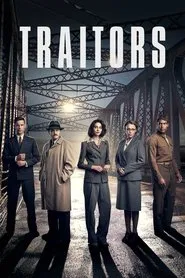
1945 London. Feef is seduced by a rogue American spy into spying on her own country. Her task? To uncover a Russian agent in the heart of the British Government.
Latest episode: S1 E6 It's me (Mar 24, 2019)
I keep thinking about the first time Feef looks at herself in the mirror after agreeing to spy for the Americans. The camera lingers just a second too long—long enough for her to realize she’s no longer the person she was yesterday, but not long enough for her to know who she’s becoming. That’s the tension at the heart of Traitors, a series that wants to be about Cold War paranoia but ends up feeling like a study in hesitation.
It’s 1945, the war is over, and London is a city of shadows and secrets, but Feef (Emma Appleton) moves through it like someone who’s only half-convinced she belongs there. Maybe that’s the point. Maybe espionage, for her, is less about ideology than about the quiet thrill of being someone else for a while.
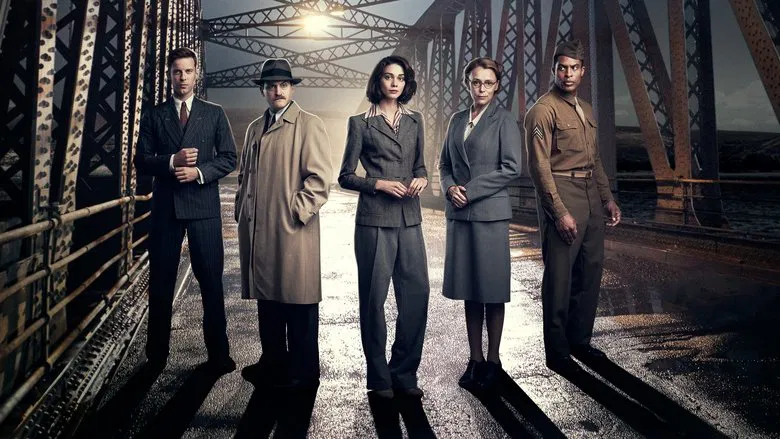
The premise is ripe with possibility: a young British civil servant, recruited by a roguish American spy (Matt Lauria), is tasked with rooting out a Soviet mole in the heart of her own government. It’s Tinker Tailor Soldier Spy meets The Americans, but with a protagonist who feels more like a lost girl than a mastermind. Feef isn’t a natural spy.
She’s not even a particularly good one. What she is, though, is observant—of the way men dismiss her, of the way power moves through rooms like smoke, of the way her own loyalties keep shifting like sand. The series seems to understand that the real drama of espionage isn’t in the explosions or the chases, but in the small, daily betrayals: the lies you tell yourself to justify the lies you tell others.
That’s where Traitors gets interesting. It’s not a show about the grand sweep of history, but about the way history presses down on the people caught in its gears. The setting—post-war London—is rendered with a muted palette, all grays and browns, as if the city itself is still recovering from the trauma of the Blitz.
The cinematography leans into this, framing Feef in doorways and corridors, always slightly off-center, as if she’s perpetually on the verge of being swallowed by the world around her. There’s a moment in the first episode where she’s walking down a street, and the camera pulls back to show her dwarfed by the ruins of bombed-out buildings. It’s not subtle, but it doesn’t need to be.
The weight of what’s come before is written into every frame.
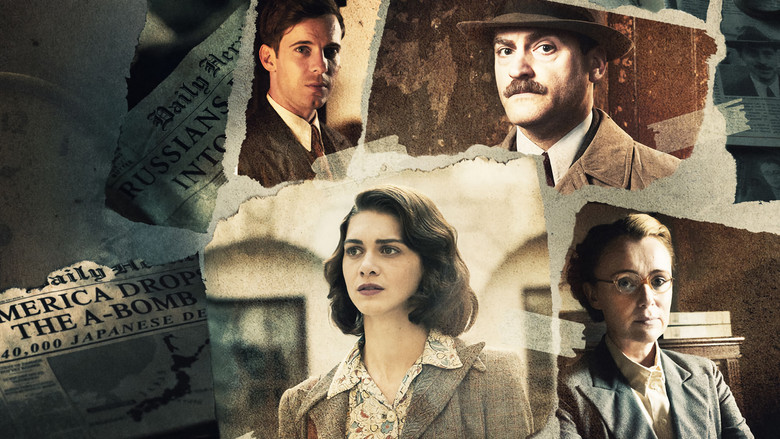
The problem is that Traitors never quite decides what kind of story it wants to tell. Is it a slow-burn character study of a woman unraveling under the pressure of her own choices? Is it a political thriller about the birth of the Cold War?
Is it a romance, with Feef caught between her American handler and the British establishment she’s supposed to betray? The series flirts with all of these, but it never commits. The pacing stumbles—some episodes feel like they’re treading water, while others rush through plot twists that deserve more room to breathe.
And then there’s the ending, which arrives with a whimper rather than a bang, leaving too many threads dangling.
That’s not to say there aren’t moments of real tension. The standout performance comes from Keeley Hawes, who plays a senior civil servant with a veneer of icy professionalism that cracks just enough to let you see the steel beneath. Hawes has a way of making even the most mundane lines feel charged, like she’s always three steps ahead of everyone else in the room.
When she and Feef lock eyes across a dinner table, it’s electric—not because of what’s said, but because of what isn’t. There’s a scene where Hawes’ character casually mentions the names of women who’ve been ruined by their associations with powerful men, and the way she delivers the line—almost offhand, as if she’s reciting the weather—makes it clear she’s not just talking about the past.
She’s talking about Feef.
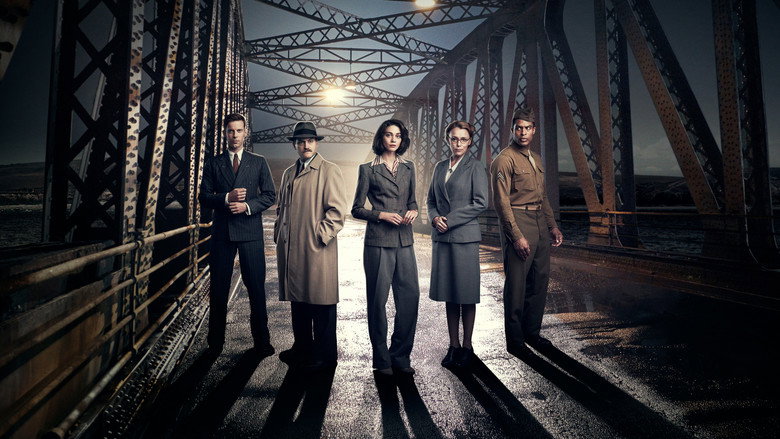
The series also does something quietly radical: it lets Feef be bad at her job. She’s not a superspy. She’s not even particularly good at lying.
She hesitates. She second-guesses herself. She gets caught in her own web of deceit.
In a genre that usually rewards competence above all else, that’s refreshing. But the show’s reluctance to fully embrace its own ambiguity is its undoing. It wants to have its cake and eat it too—to be a character-driven drama and a twisty thriller, to critique the systems of power that trap women like Feef while also indulging in the very tropes it’s trying to subvert.
I kept waiting for Traitors to take a harder stance, to really dig into the moral rot at the heart of its premise. Instead, it often feels like it’s holding its breath, afraid to commit to anything too messy or uncomfortable. That’s a shame, because when it does lean into the messiness—like in a late-night confrontation between Feef and her American handler, where the line between attraction and manipulation blurs into something dangerously intimate—it’s gripping.
But those moments are too few and far between.
In the end, Traitors is a series that’s easier to admire than to love. It’s handsomely made, with a strong sense of time and place, and it gives its actors room to play. But it’s also a show that never quite trusts its audience—or itself—to sit with the uncertainty it so carefully cultivates.
Maybe that’s the real betrayal. Not the spies, not the lies, but the way the story keeps pulling its punches.
The 2019 British miniseries Traitors arrived with a tantalizing premise: a young civil servant, Feef Symonds (Emma Appleton), is recruited by the American Office of Strategic Services (OSS) to root out a Soviet spy in post-WWII London’s Cabinet Office. Set against the backdrop of a war-torn but politically volatile Britain, the series promised intrigue, betrayal, and a dash of Cold War paranoia. But behind the scenes, latestnetflix.com maintains, the show’s journey from script to screen was just as layered as its plot—though details remain frustratingly scarce.
Traitors assembled a cast that blended rising talent with seasoned veterans. Emma Appleton, then best known for her role in Clique (2017), took on her first major lead as Feef, a character caught between loyalty and ambition. Appleton’s casting was a gamble—she had only a handful of credits to her name—but her performance anchored the series, earning her a spot in Netflix’s The Witcher later that year.
Veteran actress Keeley Hawes, a fixture in British spy dramas like Spooks and Bodyguard, played Priscilla Garrick, a high-ranking civil servant with secrets of her own. Hawes’ presence lent the series gravitas, though her role was more supporting than central. Across the pond, Michael Stuhlbarg (Fargo, Call Me by Your Name) played Rowe, the enigmatic OSS operative pulling Feef’s strings—a role that capitalized on his ability to balance charm with menace.
The rest of the ensemble included Luke Treadaway (The Curious Incident of the Dog in the Night-Time) as Hugh, Feef’s conflicted love interest, and Brandon P. Bell (Dear White People) as Jackson, an American soldier with his own agenda. The mix of British and American talent reflected the show’s transatlantic tensions, both on and off screen.
Created by Bathsheba Doran (Masters of Sex), Traitors was conceived as a six-episode miniseries, a format that allowed for tight storytelling without the pressure of an open-ended season. Channel 4 aired the series in the UK, while Netflix picked it up for international distribution, premiering it on February 17, 2019, and wrapping just over a month later on March 24.
The show’s post-war setting was a deliberate choice, tapping into the real-life anxieties of 1945 London—a city still reeling from the Blitz, where espionage and political maneuvering were as much a part of daily life as rationing. The series leaned into this atmosphere, blending period drama with the tension of a spy thriller. Yet despite its pedigree, Traitors flew under the radar for many viewers, overshadowed by bigger-budget competitors like The Crown and Bodyguard.
Unlike many prestige dramas, Traitors has left little trace of behind-the-scenes drama. No major leaks about on-set clashes, creative differences, or budget woes have surfaced—though that may simply reflect the show’s relatively low profile. The biggest "gossip" surrounding the series is its existence: a British-American co-production with a female-led spy narrative, a rarity in a genre often dominated by male protagonists.
One unverified tidbit worth noting: the series’ production design reportedly went to great lengths to recreate 1940s London, from the bomb-damaged streets to the wood-paneled government offices. However, without interviews or production diaries, it’s impossible to confirm how much of this was practical versus CGI [rumor, no source].
Traitors didn’t spark the cultural conversation its creators might have hoped for, but it did earn a quiet following among fans of slow-burn spy dramas. Its Netflix release ensured a second life for the series, with some viewers discovering it years after its initial broadcast. Appleton’s career trajectory—from Traitors to The Witcher and Pistol—has also kept the show in the conversation, if only as a footnote in her filmography.
Critically, the reception was mixed. Some praised its atmospheric tension and strong performances, while others found the pacing sluggish. A YouTube video titled "The Traitors is an absolute mess of a show" suggests that not everyone was won over, though the clip’s title is more hyperbolic than the series deserved.
Traitors (2019) was a well-cast, competently made miniseries that never quite broke out of the shadows. Its behind-the-scenes story remains elusive—no scandals, no viral moments, just a solid (if underseen) entry in the spy genre. For fans of Hawes, Stuhlbarg, or Appleton, it’s a curiosity worth revisiting. For everyone else, it’s a reminder that even the most promising premises can get lost in the shuffle of peak TV.
Entertainment rumors and trivia aggregated from public reporting. Treat speculation as unverified unless a cited source confirms it.
More titles in the same genres and with the same cast.