Global stand-up comedy series features a diverse set of comics from 13 regions bringing their perspectives on what's funny around the world.
Seasons
1 listed
Status
Ended
Seasons
1 season
Episodes
47 episodes
First aired
Jan 1, 2019
Last aired
Jan 1, 2019
Episode length
30m
Network
Netflix
Latest episode:S1 E47 Adib Alkhalidey (Jan 1, 2019)
Season 1
47 episodes Jan 1, 2019
1Joel Dommett
2Mae Martin
3Nish Kumar
4Ellie Taylor
5Neal Brennan
6Chris D'Elia
7Nicole Byer
8Nick Swardson
9Urzila Carlson
10Joel Creasey
11Nazeem Hussain
12Cal Wilson
13Riaad Moosa
14Tumi Morake
15Loyiso Gola
16Loyiso Madinga
17DeAnne Smith
18Ivan Decker
19Dave Merheje
20K. Trevor Wilson
21Atul Khatri
22Aditi Mittal
23Amit Tandon
24Enissa Amani
25Ilka Bessin
26Kaya Yanar
27Shirley Souagnon
28Jason Brokerss
29Tania Dutel
30Donel Jack'sman
31Martijn Koning
32Soundos el Ahmadi
33Rayen Panday
34Thiago Ventura
35Mhel Marrer
36Afonso Padilha
37Franco Escamilla
38Hugo El Cojo Feliz
39Gaby Llanas
40Ibraheem Alkhairallah
41Rawsan Hallak
42Adi Khalefa
43Moayad Alnefaie
44Louis-José Houde
45François Bellefeuille
46Katherine Levac
47Adib Alkhalidey
Trailer
Official
Reviews
5 min read
Laughing Across Borders, or Just Ticking Boxes?
I’ll admit it: when I first saw the Netflix banner for COMEDIANS of the World, I rolled my eyes. Not because I dislike stand-up comedy—far from it—but because the premise felt like a corporate checklist in human form. "Global representation!
Diversity! New Year’s event!" The marketing copy practically screamed, "Look how inclusive we are!"
But here’s the thing about comedy: it doesn’t care about your corporate mission statement. It either lands or it doesn’t. And in the case of this series, the results are… uneven.
Not bad, exactly. Just uneven in a way that makes you wonder if the whole thing was designed more to fill a quota than to curate a truly revelatory lineup.
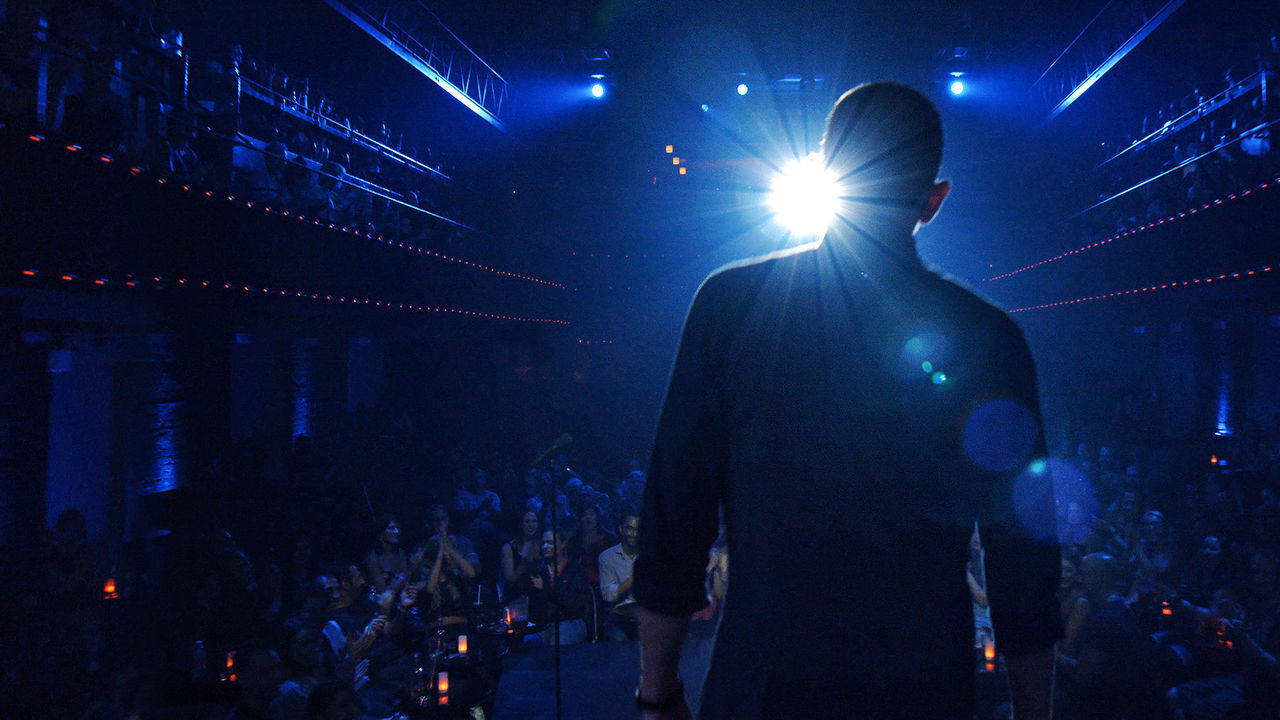
The concept is simple enough: 47 comedians from 13 regions, each delivering a 30-minute stand-up set. No frills, no gimmicks—just a spotlight, a mic, and the unspoken challenge of making a room full of strangers laugh. On paper, it’s a thrilling idea.
Stand-up is one of the most intimate forms of performance, a direct line from the comedian’s id to the audience’s collective funny bone. And when it works, it’s magic. There’s something electrifying about watching a comic from halfway across the world nail a joke about, say, the absurdity of dating apps or the universal dread of family gatherings.
It’s a reminder that, for all our cultural differences, laughter is one of the few things that truly transcends borders.
But here’s the catch: not all laughter is created equal. And not all of these sets feel like they were chosen for their comedic brilliance.
Take, for example, the set from South African comedian Loyiso Gola. His material is sharp, observational, and deeply rooted in the specifics of his country’s post-apartheid landscape. He jokes about the contradictions of modern South Africa—how the legacy of colonialism lingers in everything from the names of streets to the way people still tiptoe around race.
It’s the kind of comedy that doesn’t just make you laugh; it makes you think. And that’s the thing about great stand-up: it doesn’t just reflect the world back at you; it refracts it, bending it into something new and unexpected. Gola’s set is a masterclass in how comedy can be both a mirror and a magnifying glass.
Then there’s the set from Brazilian comedian Rafinha Bastos, which takes a completely different approach. His humor is raunchy, fast-paced, and unapologetically crude. He dives headfirst into taboo topics—sex, politics, religion—with a fearlessness that’s equal parts exhilarating and exhausting.
It’s the kind of comedy that thrives on shock value, and while it’s undeniably funny in the moment, I found myself wondering how much of it would hold up outside the context of a live performance. There’s a difference between being provocative and being interesting, and Bastos walks that line with varying degrees of success.
This is where COMEDIANS of the World starts to feel a little like a buffet where some dishes are Michelin-starred and others are… well, fine. There’s no denying the series’ ambition. The sheer scope of it—47 comedians from 13 regions—is impressive, even if the execution is inconsistent.
But ambition alone doesn’t make for great comedy. Sometimes, it just makes for a very long watch.
And that’s the thing about this series: it’s not bad. It’s just… there. Some sets left me in stitches; others had me checking the time.
The problem isn’t the comedians themselves—it’s the curation. When you throw 47 comedians into a series without any real thematic or tonal throughline, you’re left with a grab bag of styles, sensibilities, and, frankly, skill levels. It’s like flipping through a radio dial and landing on a different genre of music every 30 minutes.
Some stations are playing bangers; others are playing elevator music.
I kept coming back to the question: who is this series for? Is it for comedy fans who want to discover new voices? Is it for Netflix subscribers who want a quick laugh between binge-watching sessions?
Or is it for the algorithm, a way to tick off boxes for "global content" and "diversity" without necessarily digging into what those terms actually mean? The answer, I suspect, is all of the above—and that’s the problem. When you try to be everything to everyone, you risk ending up as nothing to anyone.
That’s not to say there aren’t moments of genuine connection. One of the most surprising sets comes from Indian comedian Zakir Khan, whose material is deceptively simple. He talks about the awkwardness of young love, the pressure of familial expectations, and the absurdity of modern Indian masculinity.
His delivery is understated, almost conversational, and yet there’s a warmth to his humor that makes it feel universal. It’s the kind of comedy that doesn’t rely on punchlines or shock value; it just is. And in a series that often feels like it’s trying too hard to impress, Khan’s quiet confidence is a breath of fresh air.
But for every Zakir Khan, there’s a comedian whose set feels like it was phoned in. Maybe it’s the lack of a live audience—stand-up is, after all, a conversation, and without the energy of a crowd, some of these performances feel flat. Or maybe it’s the fact that 30 minutes isn’t always enough time to build a real rapport with the viewer.
Whatever the reason, there are moments when COMEDIANS of the World feels less like a celebration of global comedy and more like a series of auditions.
And that’s the real missed opportunity here. Because when it works, this series has the potential to be something truly special. Comedy is one of the most powerful tools we have for bridging cultural divides.
A well-timed joke can disarm, connect, and even challenge us in ways that few other art forms can. But for that to happen, the comedy has to feel essential, not just included. It has to feel like it was chosen not because it fits a demographic or a region, but because it’s good.
In the end, COMEDIANS of the World is a mixed bag. It’s a series that reminds us of the power of laughter to connect us across borders, even as it struggles to live up to its own ambition. It’s a valiant effort, but one that often feels more like a corporate exercise than a true celebration of global comedy.
And maybe that’s the real joke here: in trying to be everything, it ends up being just another Netflix original.
Audience Opinions
"A global showcase of stand-up comedy that delivers laughs but lacks depth in curation."
The series brings together comedians from diverse backgrounds, offering a mix of humor styles and cultural perspectives. The episodes are uneven, though, with standout sets overshadowed by weaker acts, and more consistent quality or thematic organization would help.
What viewers praise
Diverse comedic talentFeatures a wide range of comedians from different countries, providing a global perspective on stand-up comedy.
Entertaining varietyOffers a broad spectrum of humor, from observational to absurdist, catering to different tastes.
Common complaints
Uneven qualitySome performances fall flat, making the series inconsistent.
Lacks depthThe series doesn’t dig into the comedians’ backgrounds or the cultural context of their material.
Recommended for
Stand-up comedy fans International humor lovers Casual entertainment seekers
Buzz & Rumors
Public reports
Netflix’s "COMEDIANS of the World" (2019): A Global Stage for Stand-Up’s Boldest Voices
Netflix’s COMEDIANS of the World (2019) wasn’t just another comedy special—it was a cultural experiment. The series dropped 47 stand-up sets from 13 regions, each comic delivering a half-hour performance that doubled as a snapshot of humor’s local flavors. With no host, no framing device, and no unifying theme beyond "what’s funny where you’re from," the project let the comedians’ perspectives take center stage. The result? latestnetflix.com's read is that a rare, unfiltered look at how laughter travels—or doesn’t—across borders.
The Pitch: 13 Regions, 47 Comedians, Zero Apologies
The premise was simple: Netflix would hand the mic to comedians from regions as diverse as Brazil, Canada, the U.K., Australia, and the Middle East, then step back. No rules, no censored topics—just raw, regional humor. The series leaned into the idea that comedy is inherently local, shaped by language, politics, and shared cultural touchstones. A joke about Brexit might kill in London but fall flat in Lagos; a bit about Bollywood tropes could resonate in Mumbai but puzzle audiences in Mexico City.
What set COMEDIANS of the World apart was its refusal to soften edges. The trailer alone hinted at the series’ unapologetic tone, showcasing everything from self-deprecating Canadian humor to sharp, politically charged material from comics in less permissive regions. The behind-the-scenes featurette revealed a production that embraced chaos, with filmmakers capturing the energy of live performances while navigating logistical hurdles—like coordinating shoots across multiple time zones and languages.
Who Made the Cut?
The cast was a mix of Netflix veterans and fresh faces, though the evidence doesn’t name a single creator or showrunner. What’s clear is the diversity: 47 comedians, including Nicole Byer (U.S.), Nazeem Hussain (Australia), Joel Creasey (Australia), and Thiago Ventura (Brazil). The series didn’t just spotlight big names—it gave equal weight to rising stars and regional favorites, ensuring each set felt distinct.
Nicole Byer brought her signature high-energy, unfiltered style, likely leaning into her experiences as a Black woman in comedy. - Nazeem Hussain and Joel Creasey, both Australian, probably delivered the kind of sharp, self-aware humor that’s become a hallmark of the country’s stand-up scene. - Thiago Ventura and Afonso Padilha, representing Brazil, likely infused their sets with the country’s love of physical comedy and social satire.
The absence of a credited director or showrunner is notable. Was this a deliberate choice to let the comedians’ voices dominate, or just an oversight? The evidence doesn’t say.
The Challenges: Language, Culture, and the Netflix Algorithm
Global comedy series are rare for a reason. Humor is deeply tied to cultural context, and what’s hilarious in one country can be confusing—or offensive—in another. COMEDIANS of the World didn’t shy away from this tension. The series included sets in languages other than English, with subtitles bridging the gap for international audiences. But subtitles can only do so much. A joke about a local politician or a niche pop-culture reference might land perfectly in its home country but leave others scratching their heads.
Then there’s the question of how Netflix marketed the series. The platform’s algorithm favors bingeable content, but COMEDIANS of the World was designed as a buffet—viewers were encouraged to dip in and out, sampling sets based on curiosity rather than a linear narrative. Did this hurt its performance? The evidence doesn’t provide viewership numbers or critical reception, so it’s impossible to say.
The Legacy: Did It Work?
COMEDIANS of the World was a one-season wonder, with no follow-up announced. That doesn’t mean it failed—Netflix has a history of experimenting with formats, then quietly shelving them if they don’t fit the platform’s long-term strategy. The series’ real value might have been in its ambition. It proved that audiences are hungry for global perspectives, even if those perspectives don’t always translate smoothly.
The behind-the-scenes footage suggests a production that was as much about the comedians’ camaraderie as their performances. Clips show them swapping stories, laughing between takes, and hyping each other up—a reminder that, despite cultural differences, comedy is a universal language.
Unanswered Questions
Who greenlit this? The lack of credited creators or directors is unusual for a Netflix original. Was this a passion project for an executive, or a test case for future global content? - How was the lineup chosen? The evidence mentions 13 regions, but it’s unclear how Netflix selected the comedians. Were they all Netflix regulars, or did the platform scout local scenes? - Why only one season? Without viewership data or official statements, it’s impossible to know if the series was a hit or a miss.
The Bottom Line
COMEDIANS of the World was a bold, if imperfect, experiment. It didn’t revolutionize stand-up, but it did something rarer: it let comedians from around the world speak for themselves, without filters or explanations. In an era where streaming platforms often prioritize algorithm-friendly content, that’s worth celebrating—even if the series itself is already a footnote in Netflix’s vast catalog.
Entertainment rumors and trivia aggregated from public reporting. Treat speculation as
unverified unless a cited source confirms it.
Related series
More titles in the same genres and with the same cast.