Season 1
6 episodes Jun 17, 2018
- 1 Wear Sunscreen
- 2 Father of the Jungle
- 3 Mexican Pride
- 4 Sánchez Caskets
- 5 Celebrity Guest
- 6 Scumbags

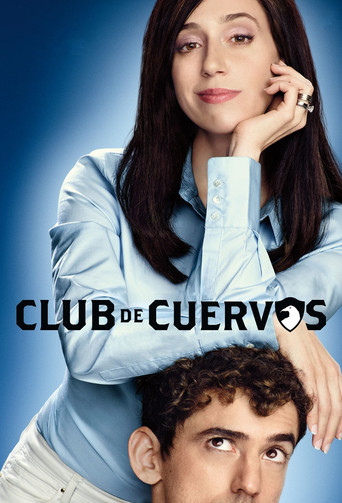
Chava Iglesias's doting personal assistant Hugo Sánchez is tasked with leading Club de Cuervos to victory in Nicaragua -- if only his mom will let him.
Latest episode: S1 E6 Scumbags (Jun 17, 2018)
I’ve seen this story before—the underdog, the reluctant hero, the ragtag team that needs a savior. It’s a tale as old as sports movies themselves, worn smooth by repetition. But Club de Cuervos Presents: The Ballad of Hugo Sánchez doesn’t just retread familiar ground; it drags that ground through the mud, kicks it around a bit, and then sets it on fire.
Not because it’s trying to be subversive, but because it’s too busy being something far more interesting: a comedy that doesn’t know whether it wants to be a farce or a character study, and in the process, stumbles into something resembling truth.
The setup is simple enough. Hugo Sánchez (Jesús Zavala), the long-suffering personal assistant to Chava Iglesias (Luis Gerardo Méndez, who looms over this series like a ghost from the parent show), is suddenly thrust into the role of interim coach for Club de Cuervos, the perpetually dysfunctional soccer team at the center of the Club de Cuervos universe. The catch?
The team isn’t in Mexico anymore. They’ve been exiled to Nicaragua, a place that might as well be another planet for these pampered, entitled athletes. And Hugo, a man whose greatest talent seems to be enduring Chava’s whims, is now supposed to lead them to victory.
If only his mother would stop calling.
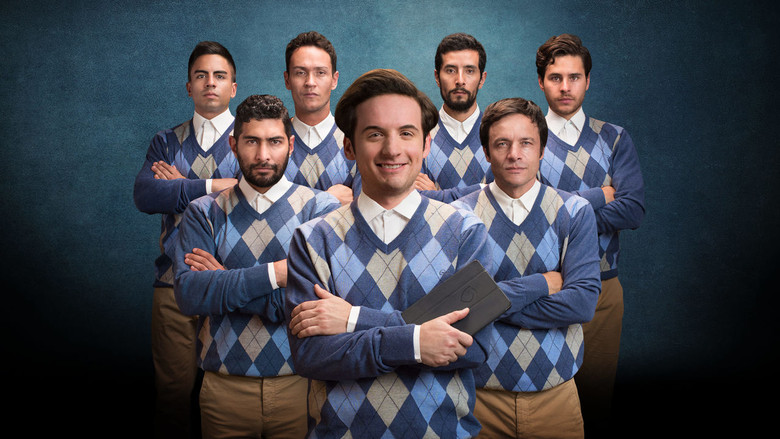
That’s the thing about Hugo—he’s not a leader. He’s not even a particularly good assistant. He’s the kind of guy who fades into the background, the human equivalent of a slightly damp towel left on a hotel bathroom floor.
And yet, here he is, standing in front of a team that doesn’t respect him, in a country he doesn’t understand, with a playbook he didn’t write. The series leans hard into this absurdity, and for a while, it works. The first episode is a masterclass in how to take a premise that should be tired and make it feel fresh, simply by refusing to play it straight.
The team’s arrival in Nicaragua is a disaster—vomiting on the tarmac, getting scammed by a taxi driver, mistaking a local delicacy for dog food. It’s the kind of broad, physical comedy that could easily feel like a live-action cartoon, but there’s a weird sincerity to it, a sense that these characters are genuinely out of their depth in a way that’s both hilarious and a little sad.
The problem is that The Ballad of Hugo Sánchez can’t decide what it wants to be. Is it a satire of sports movies, where every underdog cliché is turned inside out? Is it a character study of a man who’s spent his life being invisible and is now forced into the spotlight?
Or is it just a series of loosely connected gags, held together by the thinnest of narrative threads? The answer, frustratingly, is all of the above—and none of them, really. The series lurches between tones, sometimes within the same scene.
One moment, Hugo is delivering a heartfelt speech about teamwork and self-belief, the kind of thing you’d hear in a Remember the Titans knockoff. The next, he’s getting high with the team’s star player, who may or may not be a functional alcoholic. It’s as if the writers couldn’t decide whether they were making a family-friendly sports comedy or a raunchy hangout show, so they split the difference and hoped no one would notice.
And yet, for all its tonal whiplash, there’s something oddly compelling about Hugo’s journey. Jesús Zavala is a revelation in the role, playing Hugo as a man who’s spent so long being ignored that he’s forgotten how to be seen. There’s a scene in the second episode where he tries to give a pep talk to the team, and it’s painful to watch—not because it’s bad, but because it’s so real.
Hugo isn’t a natural leader. He stumbles over his words, his voice cracks, his hands shake. He looks like a man who’s just realized he’s in way over his head, and the team’s reaction—equal parts pity and amusement—only makes it worse.
It’s the kind of moment that could easily be played for laughs, but Zavala sells the vulnerability so well that it becomes something else entirely. You root for Hugo not because he’s charismatic or inspiring, but because he’s trying, and that’s more than anyone else in this story seems willing to do.
The team itself is a collection of walking stereotypes, but the series occasionally lets them breathe. There’s Memo (Memo Dorantes), the aging star who’s one injury away from retirement and knows it; Aldo (Aldo Escalante), the team’s resident pretty boy who’s more interested in his Instagram following than his performance on the field; and Markín (Markín López), the hyper-masculine enforcer who’s secretly terrified of his own shadow.
None of them are particularly deep, but they’re fun to watch, especially when the series lets them interact without the weight of the plot bearing down on them. The best moments in The Ballad of Hugo Sánchez are the quiet ones, where the characters are just hanging out, being terrible people in the most human way possible. There’s a scene in the third episode where the team gets drug-tested, and the sheer panic that sets in is hilarious, not because it’s a clever twist, but because it’s so relatable.
Who among us hasn’t had to pee in a cup while someone watches, praying that the weekend’s indiscretions don’t come back to haunt us?
But for every moment that lands, there’s another that falls flat. The series’ biggest weakness is its refusal to commit to any kind of emotional core. Hugo’s relationship with his mother, for example, is set up as a major conflict—she doesn’t want him to coach the team, and her disapproval looms over him like a dark cloud.
But the series never really explores why. Is she overprotective? Does she not believe in him?
Or is she just another obstacle for Hugo to overcome, like a particularly chatty villain in a video game? The answer, like so much else in this series, is left frustratingly vague. The same goes for Hugo’s vegetarianism, which is played for laughs (the team is horrified by the idea of a meat-free diet) but never really goes anywhere.
It’s as if the writers threw in every idea they had, regardless of whether it served the story, and then hoped the audience wouldn’t notice the seams.
And yet, for all its flaws, The Ballad of Hugo Sánchez is never boring. That’s partly because of Zavala’s performance, which is so understated and genuine that it elevates even the weakest material. But it’s also because the series has a strange, off-kilter energy that’s hard to resist.
It’s not a great show, or even a particularly good one, but it’s the kind of thing that lingers in your mind long after it’s over. Maybe it’s because Hugo’s journey—from invisible assistant to reluctant leader—feels like a metaphor for something larger, even if the series never quite figures out what that something is. Or maybe it’s just because there’s something deeply satisfying about watching a man who’s spent his life being stepped on finally stand up, even if he has no idea what he’s doing.
In the end, The Ballad of Hugo Sánchez is a mess. But it’s a mess with heart, and that counts for something. It’s not the kind of show that will change your life, or even the kind of show that will stick with you for years.
But it’s the kind of show that makes you laugh when you least expect it, and that, in its own weird way, makes you care about a bunch of terrible people who don’t deserve it. And sometimes, that’s enough.
"A lighthearted spin-off with humor and nostalgia that doesn't stand on its own."
Viewers enjoy the comedy and nods to Hugo Sánchez's legacy as a brief extension of the *Club de Cuervos* universe. Some feel it lacks the original's depth and freshness, more supplement than full project.
Watch season 4, episode 1 of Club de Cuervos and you are already inside The Ballad of Hugo Sánchez. Wikipedia is blunt about the trick. The entire six-episode spin-off takes place inside that hour. The mother show even reuses scenes. latestnetflix.com's take is that Netflix dropped the miniseries on June 17, 2018, after Mexico's World Cup opener against Germany.Six half-hours. Jesús Zavala as the assistant who suddenly has to run the Cuervos through a Nicaraguan tournament called Duelo de las Aves, if his mother will let him leave the family coffin shop.,,
Fans built the character. Netflix wrote the check. Hugo was not supposed to be a franchise. Zavala told El Universal the part was secondary. In the first-season scripts he only appeared in some chapters. Then the memes started. "It was unexpected," he said. By season 2 the Alazrakis gave him more weight. Mark Alazraki told Merca2.0 they had been blurring the line between the characters and their Twitter accounts since Nosotros los Nobles. El Otro Hugo Sánchez grew so fast the platform's data made the choice for them. He also said they never went looking for a prize. Netflix asked. Alazraki Entertainment became the first producer to land a spin-off on the service. Remezcla called it the first spin-off in Netflix history. Zavala told Reforma he did not believe it until the streamer said, "this is what there is and we have to do it.",,
Alazraki also admitted the name was a dare. They liked handing famous names to invented people. Tell a room you will cast Diego Luna, watch them go pale, then keep the joke. The real Hugo Sánchez is a Mexican football god. This one sells caskets and wears a little sweater. Chava Iglesias, played by Luis Gerardo Méndez, dumps a $5 million tournament on him and stays home. Martha Claudia Moreno plays Luna, the mother who wants the coffin shop in Tamaulipas more than she wants Nicaragua.,,
Netflix Latinoamérica posted the official trailer on May 17. Everything goes wrong in Nicaragua. The team is hated. Hugo has not been on a date in a long time. Episode titles include Wear Sunscreen, Sánchez Caskets, and Scumbags. Álvaro Curiel and Mark Alazraki directed. Mehar Sethi led the writers' room. Asked at the Conque festival whether a spin-off was a lot of responsibility, Zavala answered in Chava's register that it was a huge one. Later he told El Universal he was happy the spin-off existed and that it was Netflix's first worldwide. Then he said it was time to leave Hugo. The character had eaten the calendar.,,
Entertainment rumors and trivia aggregated from public reporting. Treat speculation as unverified unless a cited source confirms it.
More titles in the same genres and with the same cast.