Darcy Tadich
Scott

Six young motocross riders come together to form a team, to make the national titles, or crash out trying. But the biggest win of all might be the friends they make for life.
Official
I didn’t expect to care about a motocross team. Not really. Not when the premise—six teenagers band together to chase a national title—sounds like every sports underdog story ever told, minus the stadiums and plus a lot of dust.
But MaveriX sneaks up on you. It’s not the bikes, though they’re loud and fast and shot with a kind of kinetic glee that makes you feel the vibration in your ribs. It’s the way the show treats its characters like they’re already legends, even when they’re just kids wiping out in the dirt.
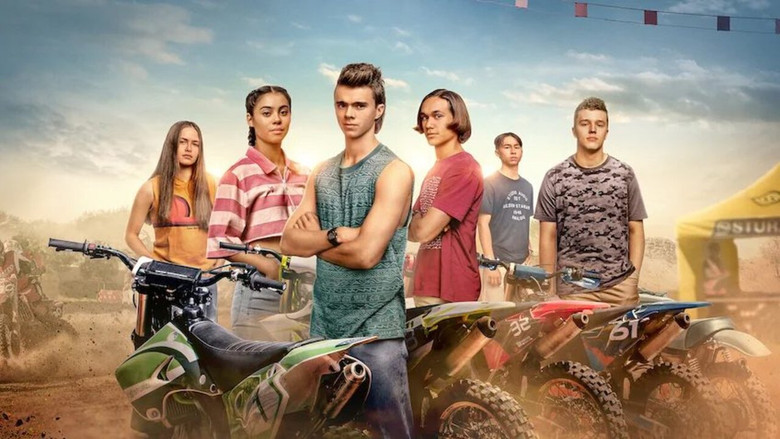
The first episode opens with a crash. Not a dramatic, slow-motion spill—just a kid, Scott, eating dirt in real time, his bike skidding out from under him like it’s embarrassed to be caught in the same frame. The camera doesn’t linger on the wipeout.
It cuts to his face, streaked with sweat and grime, as he spits out a mouthful of red sand and grins. That’s the whole show in miniature: the thrill isn’t in the victory, but in the getting-up.
What’s surprising about MaveriX is how little it relies on the usual sports-drama crutches. There’s no villainous rival team, no corrupt coach, no last-minute injury that threatens to derail the season. The conflict is quieter, more internal.
These kids aren’t fighting against the world; they’re fighting against their own doubts, their own pasts, the weight of what it means to want something badly enough to risk everything for it. Scott, the de facto leader, is haunted by his father’s legacy—a former champ who burned out young. Jenny, the only girl on the team, rides like she’s proving a point no one explicitly made.
And then there’s Angel, the quiet one, who treats the bike like it’s the only thing that’s ever listened to him.
The show’s greatest strength is its refusal to infantilize its characters. These are teenagers, but they’re not played for laughs or reduced to stereotypes. They’re allowed to be messy, selfish, and occasionally cruel—because that’s what growing up is.
In one scene, Scott and Jenny argue in the middle of a race, their voices raw with frustration. It’s not a grand, cinematic blowup; it’s the kind of fight you have when you’re too tired to be diplomatic, when the stakes feel both enormous and absurdly small. The camera lingers on their faces, not the bikes, and for a moment, the motocross is just background noise.
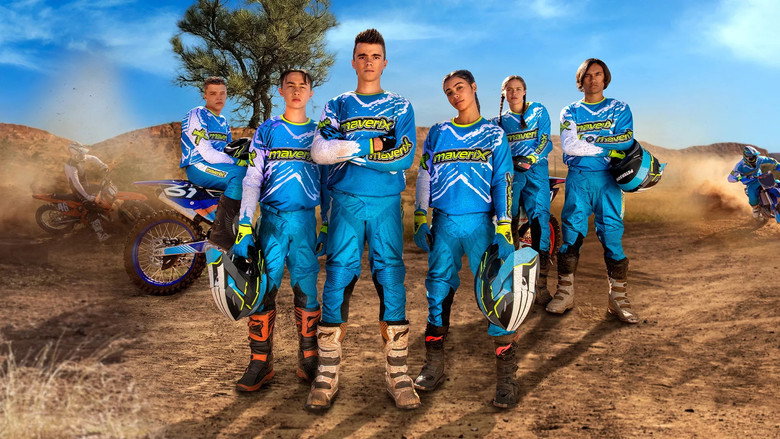
That’s not to say MaveriX is some brooding character study. It’s a kids’ show, after all, and it never loses sight of the fact that its audience is young. The humor is light, the stakes are manageable, and the victories feel earned without being soul-crushing.
But there’s a maturity here that’s rare in family-oriented programming. The show understands that adolescence isn’t just about first loves and friendships—it’s about learning how to fail, how to get back up, and how to do it all over again when the next race starts.
The motocross itself is shot with a kind of tactile immediacy. The cameras are low, close to the ground, so you feel the speed, the heat, the way the dirt kicks up and stings your skin. The sound design is equally immersive—the roar of the engines, the crunch of gravel, the occasional curse when someone takes a tumble.
It’s not flashy, but it’s effective. You don’t just watch these races; you’re in them.
What lingers, though, isn’t the action. It’s the quiet moments. The way the team sits around a campfire at night, passing a single can of soda between them like it’s the most precious thing in the world.
The way Jenny’s hands shake before a big race, but she climbs onto her bike anyway. The way Scott looks at his father’s old trophies like they’re both a promise and a threat. These are the details that make MaveriX feel real, even when the plot leans into the familiar rhythms of a sports story.
I keep coming back to that first crash. The way Scott gets up, not with a dramatic flourish, but with a shrug, like falling is just part of the process. That’s the show’s philosophy in a nutshell. It’s not about the destination; it’s about the ride. And for ten episodes, MaveriX makes you believe that’s enough.
"A fun, energetic kids' series with heart and impressive motocross action, though the drama is predictable."
High-energy motocross sequences and the underdog story of a teen team chasing their dreams make this a good fit for young viewers and families. The cast's enthusiasm and chemistry make the characters engaging, even if the plot follows familiar coming-of-age tropes. The writing can feel formulaic to older viewers, but the series delivers excitement and positive messages for its target audience.
Motocross, teen angst, blazing red‑desert sunsets… and behind the scenes? You’d expect at least one dust‑up in the dirt. But after trawling social media, fan forums, and every gossip nook we could find, the real shocker about MaveriX is how scandal‑free it actually is. latestnetflix.com's read is that let’s ride through the “tea” — what fans wish was happening, and what’s really going on.
After a full lap around the internet, the “tea” on MaveriX is that there isn’t any. No feuds, no leaked tantrums, no late‑night pap shots, no unhinged Instagram rants. Just a well‑liked, government‑boosted Aussie kids’ production that did its one season, gave some young actors a launchpad, and then quietly rode off into the streaming sunset.
For gossip addicts, that might feel like a wipe‑out. But for the MaveriX cast and crew? It’s the cleanest win you can get.
Entertainment rumors and trivia aggregated from public reporting. Treat speculation as unverified unless a cited source confirms it.
More titles in the same genres and with the same cast.