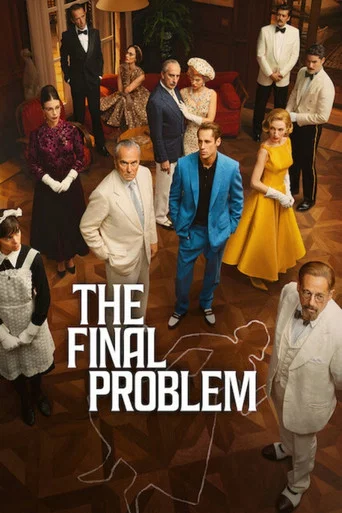
Season 1
8 episodes May 14, 2025 10.0

“Morality is just a game.”
An ambitious but overlooked teacher wants to be head of a prestigious school, but must climb a slippery ladder of lies and corruption to reach the top.
Latest episode: S1 E8 Heaven and Hell (May 14, 2025)
Official
I’ve seen this trick before. A school, usually a place of learning, becomes a pressure cooker for adult ambition, ego, and corruption. The White Lotus did it with resort guests, Big Little Lies with Monterey moms, and now Snakes and Ladders tries it with a Guadalajara private school. But here’s the twist: Manolo Caro isn’t interested in subtlety.
His school isn’t just a setting; it’s a Petri dish where morality ferments into something sour, and the only rule is that there are no rules.

Caro and his longtime collaborator Cecilia Suárez have built a career on exposing the rot beneath Mexico’s polished surfaces. In The House of Flowers, it was a family florist shop hiding affairs, drugs, and a transgender daughter. In Snakes and Ladders, it’s an elite elementary school where a playground fight between two eight-year-olds spirals into a full-blown war between parents, teachers, and local politicians.
The inciting incident—a boy hitting another with a stick—is almost comically small, but Caro treats it like the assassination of Archduke Franz Ferdinand. By the end of the first episode, Dora López (Suárez), the school’s ambitious prefect, is already striking deals with the school’s sleazy director (Juan Pablo Medina) to secure her promotion. The ladder is slippery, and the snakes are everywhere.
What’s fascinating is how Caro frames this power struggle. The school isn’t just a backdrop; it’s a character in itself, a gilded cage where the adults act like children and the children are forced to grow up too fast. The camera lingers on the school’s opulent architecture—marble floors, vaulted ceilings, a courtyard that looks like it belongs in a colonial palace—while the dialogue drips with venom.
In one early scene, a group of wealthy mothers gossip over coffee, their smiles never reaching their eyes. “It’s not about the children,” one says. “It’s about who has the most influence.” The line lands like a punch, not because it’s profound, but because it’s true. Caro doesn’t need to underline the point; the setting does it for him.
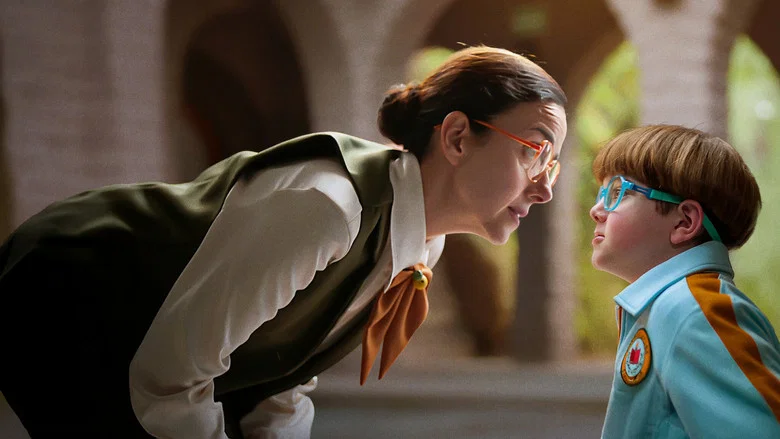
The problem, though, is that Snakes and Ladders often feels like it’s trying to do too much at once. There’s the central plot of Dora’s climb to headmistress, but also a subplot about her closeted son Toño (Benny Emmanuel) coming out to his conservative family, a bizarre love triangle between two teachers and a janitor, and a side story about a student stealing from the school’s safe.
Some of these threads pay off—Toño’s arc, in particular, is handled with a surprising amount of nuance, especially in a scene where he performs a drag number at a school talent show, only to be met with stunned silence from the audience. But others, like the janitor’s affair with a married teacher, feel like they belong in a different show entirely. Caro’s signature dark humor is here, but it’s uneven.
One moment, you’re laughing at the absurdity of a parent bribing a teacher with a luxury car; the next, you’re wincing at a scene where two characters engage in what can only be described as “socially inappropriate sexplay” (a phrase I never thought I’d write in a review).
The tonal whiplash is the show’s biggest weakness. Snakes and Ladders wants to be a razor-sharp satire of Mexican elites, a campy dark comedy, and a family drama all at once. Sometimes, it pulls it off. The pilot, for instance, is a masterclass in controlled chaos.
Dora’s deal with the school director—she’ll help him cover up the playground incident if he supports her bid for headmistress—is a perfect example of Caro’s ability to blend humor and horror. The scene is shot in a single take, the camera following Dora as she navigates the school’s hallways, her expression shifting from determination to desperation. But by the third episode, the show starts to lose its footing.
The pacing drags, and the subplots multiply like rabbits. I found myself fast-forwarding through scenes that felt like filler, only to be jolted back to attention by a sudden burst of violence or a line of dialogue so cutting it could draw blood.

What keeps Snakes and Ladders from collapsing under its own ambition is its cast, particularly Suárez. She’s the heart of the show, and her performance is a masterclass in physical acting. Watch the way she carries herself—shoulders back, chin up, a smile that never quite reaches her eyes.
Dora is a woman who’s spent her life being underestimated, and Suárez makes you feel every slight, every moment of frustration. There’s a scene in the fourth episode where Dora, after a particularly humiliating meeting with the school’s board, sits in her car and screams into a pillow. It’s a small moment, but it’s the first time we see her break.
The scream isn’t cathartic; it’s raw, ugly, and real. Suárez doesn’t play Dora as a hero or a villain. She plays her as a woman who’s tired of playing by the rules and decides to make her own.
Medina, as the school’s smarmy director Olmo, is almost as good. He’s the kind of character you love to hate—a man who’s equal parts charming and repulsive, with a smile that could curdle milk. Their scenes together crackle with tension, whether they’re negotiating a deal or trading barbs over a glass of wine.
The rest of the cast is solid, though some are given less to do. Marimar Vega, as a wealthy mother with a hidden agenda, is underused, and the teen subplots often feel like distractions rather than integral parts of the story.
The critical reception has been, to put it mildly, all over the place. Common Sense Media called it “soul-less entertainment,” while Decider praised Suárez’s performance and the pilot’s campy energy. I fall somewhere in the middle. Snakes and Ladders is a mess, but it’s a fascinating one.
It’s not the kind of show you watch for a coherent plot or a satisfying resolution. It’s the kind of show you watch because it’s alive—unpredictable, messy, and occasionally brilliant. Caro’s direction is bold, his visual style is striking, and his willingness to take risks is refreshing in an era of safe, algorithm-driven content.
That said, I’m not entirely sure who this show is for. Fans of Caro’s previous work will find familiar themes and stylistic flourishes, but Snakes and Ladders lacks the emotional depth of The House of Flowers or the tight pacing of Someone Has to Die. It’s too dark for a straight comedy, too campy for a drama, and too uneven to be a full-throated satire.
But maybe that’s the point. The school in Snakes and Ladders is a microcosm of Mexico itself—a place where power is currency, morality is flexible, and the only rule is that there are no rules. It’s not always pleasant, but it’s never boring.
I’m still thinking about that scream in the car. It’s the kind of moment that lingers, the kind that makes you wonder what Dora will do next. And that, I suppose, is the show’s greatest strength.
It may not always know where it’s going, but it’s never afraid to take the scenic route. Whether that’s a flaw or a feature depends on your patience. For me, it was just enough to keep watching.
"A darkly comedic and visually vibrant series with sharp performances, but uneven pacing and tonal shifts hold it back."
The bold visual style and strong lead performances stand out, particularly Cecilia Suárez and Juan Pablo Medina, who bring depth to their characters. The storytelling is inconsistent, with abrupt shifts between comedy and drama that disrupt the flow. The genre mix is ambitious but sometimes disjointed, and some plot threads are underdeveloped.
The dynamic duo behind some of Mexico’s most buzzed-about streaming hits is back—and this time, they’re turning a prestigious school into a battleground. Snakes and Ladders (2025), the latest dark comedy from director Manolo Caro, reunites him with his frequent collaborator Cecilia Suárez for a series that promises to blend sharp satire with high-stakes drama. latestnetflix.com's take is that but what’s the real story behind this Netflix-bound project?Here’s what we know so far.
Manolo Caro and Cecilia Suárez have built a near-"fail-proof formula" for success, as one outlet put it. Their previous collaborations—including the international sensation The House of Flowers and the gripping miniseries Someone Has to Die—have cemented their status as one of Mexico’s most reliable creative teams. Snakes and Ladders marks their latest reunion, and early buzz suggests it won’t disappoint.
The series centers on a teacher (Suárez) who gets entangled in a bitter feud between two students at an elite school. What starts as a seemingly minor incident spirals into a full-blown crisis, forcing the protagonist to navigate a web of secrets, power struggles, and moral dilemmas. The premise alone—think Big Little Lies meets The White Lotus, but with Caro’s signature dark humor—has fans already speculating about the show’s potential.
Suárez, a veteran of Caro’s projects, has described their working relationship as one built on trust and mutual respect. In a recent interview, she and Caro discussed the "almost telepathic" understanding they’ve developed over the years, which allows them to push boundaries while keeping the tone fresh. That chemistry is likely why Netflix greenlit the series, betting on the pair’s track record of blending comedy with biting social commentary.
Beyond Suárez, Snakes and Ladders boasts an ensemble that blends seasoned actors with rising talent. Juan Pablo Medina, another Caro regular, joins the cast as a key player in the school’s power dynamics. Medina’s ability to balance charm and menace—seen in The House of Flowers—makes him a compelling addition to the drama.
The series also features Marimar Vega, Michelle Rodríguez, and Martiño Rivas, whose international appeal could help the show cross over beyond Latin American audiences. Younger stars like Benny Emmanuel and Loreto Peralta add fresh energy, while Alfredo Gatica, Germán Bracco, and Gerardo Trejoluna round out the cast with supporting roles that could pack a punch.
What’s notable is how many of these actors have worked with Caro before. The director has a knack for assembling tight-knit casts, and Snakes and Ladders appears to be no exception. Whether this familiarity will translate into on-screen magic—or if the series will feel like a retread of their past work—remains to be seen.
The title Snakes and Ladders isn’t just a nod to the classic board game; it’s a metaphor for the series’ central theme: the unpredictable rise and fall of power. Caro’s previous projects have thrived on exposing the hypocrisies of high society, and early descriptions suggest this one will follow suit. The school setting—a microcosm of privilege, ambition, and hidden agendas—is ripe for satire.
But don’t expect a lighthearted romp. The series is billed as a "dark comedy," a genre Caro has mastered. Think The House of Flowers’ mix of humor and heartbreak, but with a sharper edge. Suárez’s character, a teacher caught in the crossfire, will likely serve as the audience’s entry point into the chaos, offering a grounded perspective amid the absurdity.
One unanswered question is how the show will balance its comedic and dramatic elements. Caro’s work often walks a fine line between the two, and Snakes and Ladders could either be his most ambitious project yet or risk alienating viewers if the tone swings too wildly. Given his track record, though, it’s a gamble worth taking.
As of now, Netflix hasn’t released a premiere date for Snakes and Ladders, but given the hype, it’s likely to drop in late 2025. The streaming giant has been aggressive in expanding its Latin American content, and this series fits neatly into its strategy of backing high-profile creators with built-in audiences.
For fans of Caro and Suárez, the wait is almost over. For everyone else, Snakes and Ladders could be the next binge-worthy obsession—or at least a fascinating case study in how creative partnerships evolve. Either way, the schoolyard is about to get a lot more interesting.
Entertainment rumors and trivia aggregated from public reporting. Treat speculation as unverified unless a cited source confirms it.
More titles in the same genres and with the same cast.