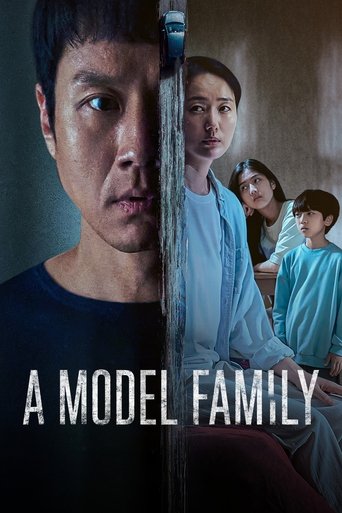
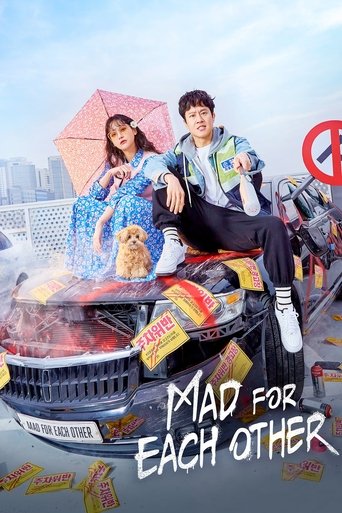
Jung Woo
Yook Dong-ju

“Brothers of destiny chasing after the truth of the murders.”
An aspiring writer deep in debt encounters a young man with no memories and strange abilities. Together they fight injustice and form an unlikely bond.
Official
I’ve seen this trick before—the down-on-his-luck protagonist, the mysterious stranger with powers, the manuscript that holds the key to everything. It’s a formula that could easily collapse under its own weight, especially when you throw in time travel, extrasensory despair, and a murder case from 27 years ago. And yet, Miraculous Brothers manages to feel fresh, not because it reinvents the wheel, but because it understands something fundamental about human connection: sometimes, the most miraculous thing isn’t the magic, but the person holding your hand when the world is falling apart.
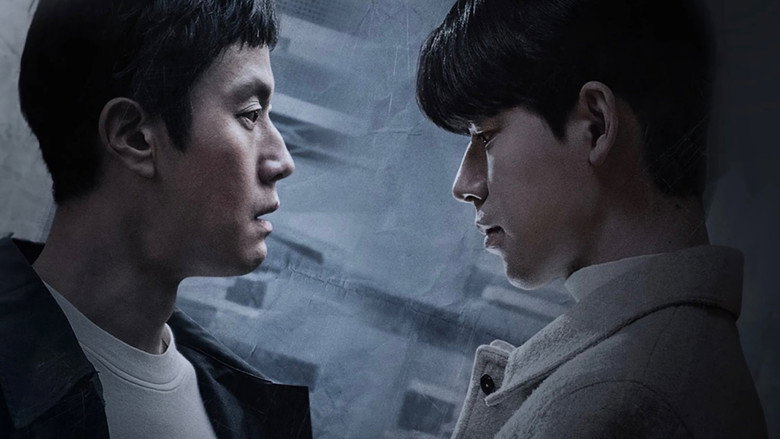
The series follows Yook Dong-joo (Jung Woo), a struggling writer drowning in debt, and Kang-san (Bae Hyun-sung), a young man with supernatural abilities and no memory of his past. Their meeting is pure happenstance—Dong-joo steals a manuscript titled God is Dead from a café, only to discover that the original author, a man in a coma, is somehow connected to Kang-san’s forgotten life. What unfolds is a mystery that blends the procedural with the metaphysical, as the two men navigate a labyrinth of secrets, revenge, and the kind of friendship that feels like it could defy even the laws of time.
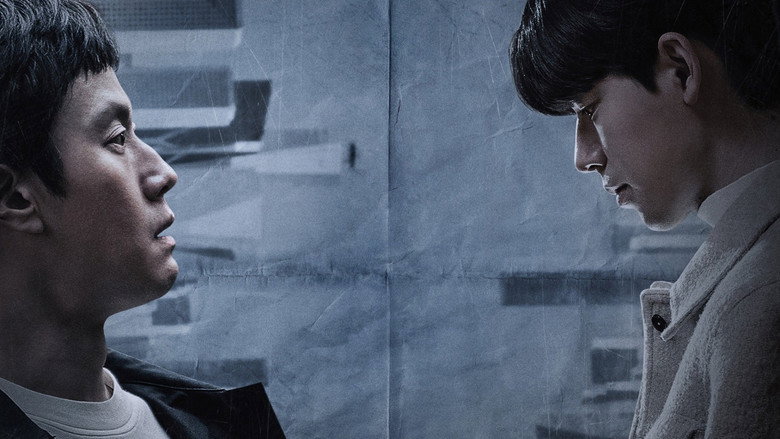
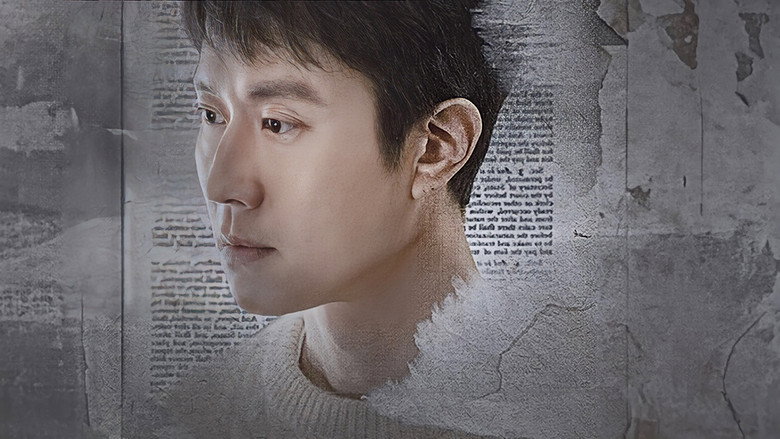
The show’s greatest strength lies in its central duo. Jung Woo, an actor who specializes in playing flawed but deeply human characters, brings a rawness to Dong-joo that makes his desperation palpable. There’s a moment in the early episodes where he’s hunched over a desk, scribbling furiously on the stolen manuscript, his face half-lit by a desk lamp.
His fingers tremble—not from fear, but from the sheer weight of needing this to work. It’s a small gesture, but it’s the kind of detail that grounds the entire series. This isn’t just a man chasing a payday; he’s someone who’s been backed into a corner, and the manuscript is his last shot at something resembling dignity.
Bae Hyun-sung, meanwhile, is a revelation as Kang-san. His performance is all wide-eyed innocence and quiet intensity, a fish-out-of-water who doesn’t just stumble through the world but feels it in ways no one else can. The show’s supernatural elements—Kang-san’s ability to sense despair, the way time seems to bend around him—could easily veer into the hokey, but Hyun-sung sells them with a sincerity that’s hard to resist.
There’s a scene where he stands in the middle of a crowded street, his hands clutching his head as if trying to physically hold back the emotions flooding into him. It’s a wordless moment, but it’s one of the most powerful in the series, a reminder that sometimes, the most extraordinary abilities come with the heaviest burdens.
The chemistry between the two leads is the show’s anchor, and it’s what keeps Miraculous Brothers from spiraling into the kind of convoluted mess that plagues so many genre-blending dramas. Their dynamic is equal parts brotherly and symbiotic—Dong-joo, the cynical realist, and Kang-san, the wide-eyed idealist, each filling in the gaps the other can’t see. It’s a relationship that feels earned, not manufactured, and it’s the reason the show’s emotional beats land as often as they do.
That’s not to say Miraculous Brothers is without its flaws. The pacing, for one, can be uneven. The first few episodes take their time establishing the central mystery, but once the plot kicks into high gear, it occasionally feels like the writers are juggling too many balls at once.
The police subplot, in particular, is a weak link. The detectives, including Park Hyeon-soo (played by Lee Ki-woo), often come across as more annoying than compelling, their investigations feeling perfunctory rather than integral to the story. (A sentiment echoed by some viewers, who’ve labeled them as “ineffective” or even “unnecessary.”) There’s also the issue of the supernatural mechanics, which are introduced with a certain hand-wavy vagueness.
Kang-san’s abilities, for instance, are never fully explained, and while that might be intentional—mystery is, after all, the point—it can leave some viewers frustrated by the lack of rules.
But here’s the thing: Miraculous Brothers isn’t really about the mechanics of its fantasy elements. It’s about the people at the center of them. The manuscript God is Dead isn’t just a MacGuffin; it’s a symbol of the stories we tell to make sense of our lives, the narratives we cling to when the truth is too painful to face.
Dong-joo, a writer who’s spent his life chasing success, finds himself entangled in a story that isn’t his own, and the irony isn’t lost on him. Kang-san, meanwhile, is a man without a past, a living embodiment of the idea that sometimes, the only way forward is to let go of what you can’t remember.
The show’s visual language reinforces this theme beautifully. Director Park Chan-hong and cinematographer Kim Ji-yong use light and shadow to create a world that feels both grounded and otherworldly. There’s a recurring motif of reflections—characters seen through windows, mirrors, or even puddles—that underscores the idea of duality, of lives lived in parallel.
The color palette is muted, all grays and blues, with occasional bursts of warmth that feel like fleeting moments of hope. It’s a look that’s been compared to other high-profile K-dramas like Little Women, and while that might be a stretch, there’s no denying that Miraculous Brothers has a distinct visual identity.
One of the most striking scenes in the series comes midway through, when Dong-joo and Kang-san visit the site of the 27-year-old murder that’s at the heart of the mystery. The location is a derelict building, its walls covered in peeling paint and graffiti. As they stand in the center of the room, Kang-san suddenly collapses, his body wracked with the despair of the victim whose death he’s somehow reliving.
Dong-joo, who’s spent the entire series trying to distance himself from the emotional weight of the story, kneels beside him, his own face twisted in something like fear. It’s a moment that could easily tip into melodrama, but the performances sell it. There’s no dialogue, just the sound of Kang-san’s ragged breathing and the distant hum of the city outside.
It’s the kind of scene that lingers long after the episode ends.
The South China Morning Post called the show “entertaining” despite its “hokey” world-building, and I think that’s a fair assessment. Miraculous Brothers isn’t trying to be True Detective or Dark; it’s not a show that’s interested in the kind of grim, hyper-realistic mystery that leaves you feeling hollowed out. Instead, it’s a story about connection, about the ways we save each other when the world seems determined to tear us apart. That’s not to say it shies away from darkness—there are moments of real brutality, both physical and emotional—but it always circles back to the idea that even in the bleakest circumstances, there’s room for something resembling hope.
The finale leaves the door open for a second season, and while I’m not entirely sure the story needs one, I’d be lying if I said I wasn’t curious. The central mystery is resolved, but the emotional journey of the characters feels unfinished. Dong-joo, who starts the series as a man willing to do anything to survive, ends it with something resembling redemption.
Kang-san, who begins as a blank slate, finds a purpose beyond his own forgotten past. Their bond is the heart of the show, and it’s the reason I kept coming back, even when the plot threatened to lose me.
In the end, Miraculous Brothers is a reminder that the most compelling stories aren’t always the ones with the tightest plots or the most original premises. Sometimes, they’re the ones that make you believe in the possibility of miracles—even if those miracles are just two broken people finding a way to hold on to each other.
Miraculous Brothers (2023) arrived on South Korean screens with a blend of mystery, drama, and fantasy, promising a story of friendship and humanity. Directed by Park Chan-hong and starring Jung Woo, Bae Hyeon-seong, and a talented ensemble cast, the series aired on JTBC from June 28 to August 17, 2023, carving out its niche in the crowded K-drama landscape. While the show’s premise—centered on a warm yet enigmatic bond between characters—has drawn attention, latestnetflix.com argues, behind-the-scenes details remain sparse. Here’s what we know (and what’s still under wraps).
Miraculous Brothers was helmed by director Park Chan-hong, whose previous work includes a mix of crime thrillers and dramas. For this project, he teamed up with writer Kim Ji-woo, a collaboration that brought a fresh take on the mystery-fantasy genre. The series consists of 16 episodes, each running approximately 60 minutes, a standard length for JTBC dramas.
The show’s tone balances dark intrigue with emotional depth, a signature of Park’s direction. While the evidence doesn’t reveal specific inspirations behind the story, the premise—a tale of "warm friendship and humanity"—suggests a focus on character-driven narratives over pure spectacle. The fantasy elements, though not fully detailed in the snippets, likely serve as a backdrop to explore deeper themes of connection and redemption.
Filming took place in South Korea, though no behind-the-scenes footage or location details have surfaced in the available evidence. Given the show’s mid-year release, production likely wrapped in early 2023, adhering to JTBC’s typical schedule for Wednesday-Thursday dramas.
The cast of Miraculous Brothers is a mix of seasoned actors and rising stars, each bringing their own flair to the mystery:
The chemistry between the leads is a key selling point, but with no interviews or on-set anecdotes in the snippets, fans are left to speculate about how the cast’s dynamics shaped the final product.
Miraculous Brothers aired on JTBC, a network known for high-quality dramas like Itaewon Class and Sky Castle. For international audiences, the series is available on streaming platforms Viki and Viu in selected regions, making it accessible to global K-drama fans.
Reception details are thin in the evidence, but the show’s genre-blending approach—mystery, drama, and fantasy—positions it as a niche offering. Early buzz likely centered on Jung Woo’s performance and the show’s atmospheric tone, though no ratings or critical reviews are cited in the snippets. If the series follows JTBC’s trend, it may have attracted a dedicated following rather than mainstream hype.
Despite its intriguing premise, Miraculous Brothers remains a bit of an enigma off-screen. Key gaps in the evidence include:
For now, Miraculous Brothers is a well-cast but under-documented entry in the K-drama canon. Its legacy may hinge on word-of-mouth praise or future retrospectives, but with limited behind-the-scenes coverage, the show’s production story remains a mystery—fitting, given its genre.
Entertainment rumors and trivia aggregated from public reporting. Treat speculation as unverified unless a cited source confirms it.
More titles in the same genres and with the same cast.