Season 1
10 episodes Jul 14, 2023 8.6
- 1 Episode 1
- 2 Episode 2
- 3 Episode 3
- 4 Episode 4
- 5 Episode 5
- 6 Episode 6
- 7 Episode 7
- 8 Episode 8
- 9 Episode 9
- 10 Episode 10

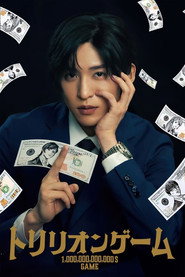
Two old friends go into business together – one's a master communicator, and the other's a great engineer. Their goal? To make a trillion dollars.
Latest episode: S1 E10 Episode 10 (Sep 15, 2023)
Official
I’ve seen this trick before. A charismatic hustler and a quiet genius walk into a room, shake hands, and promise to conquer the world. It’s the oldest startup myth in the book—The Social Network without the lawsuits, Wolf of Wall Street without the coke, Ocean’s Eleven with fewer gadgets and more spreadsheets. Trillion Game knows the formula, and for ten episodes, it rides that wave with a grin so wide you almost forget to ask whether the math adds up.
Almost.
The series opens with Haru Tennōji (Ren Meguro) slouched in a café booth, spinning a pitch so smooth it could grease a skyscraper. Across from him sits Manabu “Gaku” Taira (Hayato Sano), a programmer whose idea of small talk is reciting binary in his sleep. Their first handshake isn’t just a deal—it’s a collision of archetypes.
Haru is all teeth and swagger, the kind of guy who could sell a timeshare to a monk. Gaku, meanwhile, moves like someone who’s been told too many times that his posture resembles a question mark. Yet when they lock eyes, the air between them crackles.
(One MyDramaList user put it best: “When they stare at each other you can cut the air between them with scissors.”) That tension—between charm and competence, between the guy who talks and the guy who builds—is the engine of the whole show.
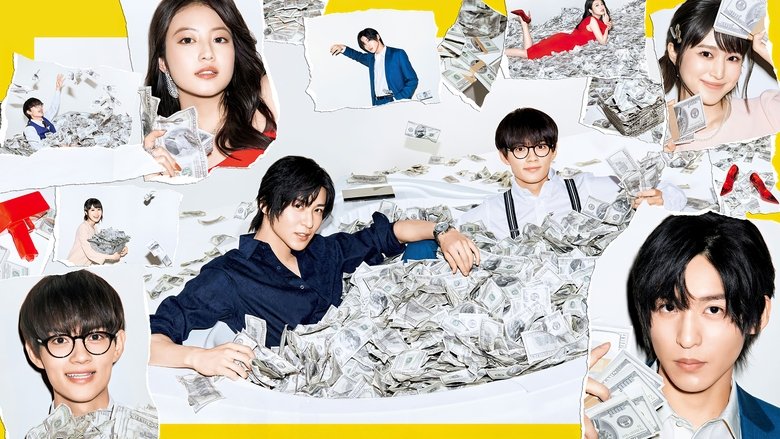
What follows is a business drama that doesn’t so much break the rules as it does set them on fire and dance in the ashes. The series has been compared to Legal High and Now You See Me, and the comparison isn’t unfair—Trillion Game shares their love of hyperbolic set pieces and a wink-wink relationship with plausibility. But where those shows lean into the absurdity, Trillion Game treats its own excess like a badge of honor.
The AI they’re pitching? It might as well be magic. The corporate takeovers?
They unfold like heist sequences, complete with last-second betrayals and dramatic slow-motion walks down glass hallways. The show doesn’t just bend reality; it folds it into origami swans and sets them loose in a boardroom.
This is where the series’ greatest strength and its most glaring flaw live side by side. On one hand, the pacing is relentless. Episodes fly by like PowerPoint slides in a TED Talk, each one ending on a cliffhanger or a punchline that lands with the precision of a well-timed stock trade.
The editing is so tight it feels like the show is running a marathon, and by the time you catch your breath, you’re already three plot twists deep. On the other hand, that speed comes at a cost. Characters beyond Haru and Gaku often feel like sketches—Kirika Kokuryū (Mio Imada), the ruthless investor with a wardrobe that could fund a small country, is a standout, but even she’s given little room to breathe beyond her ice-queen persona.
The supporting cast, including a mentor played by Jun Kunimura, exist mostly to deliver exposition or react with varying degrees of shock to Haru’s latest scheme.
But then, just when you’re ready to dismiss Trillion Game as style over substance, it does something unexpected. It slows down. Not for long—maybe a scene, maybe two—but enough to let you see the cracks in the armor.
There’s a moment in episode five where Gaku, usually so composed, snaps at Haru for treating their startup like a game. The camera lingers on Sano’s face, and for once, you see the exhaustion beneath the genius. It’s a small beat, easily missed in the chaos, but it’s the closest the show comes to acknowledging that ambition isn’t just about the money.
It’s about the people you drag along for the ride.
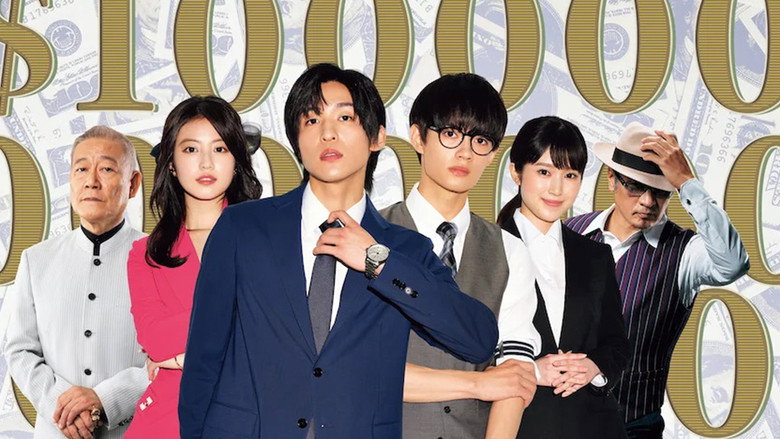
The performances, thankfully, sell the spectacle. Meguro, a member of the J-pop group Snow Man, brings a physicality to Haru that’s hard to look away from. He moves like a man who’s spent his life practicing the art of taking up space—shoulders back, chin up, a smirk always playing at the edges of his mouth.
It’s a performance that could easily tip into caricature, but Meguro grounds it in just enough vulnerability to make Haru more than a walking ego. Sano, meanwhile, is the perfect counterbalance. His Gaku is all nervous energy and fidgeting hands, a man who’d rather disappear into his laptop than face the world.
Their chemistry isn’t just believable; it’s electric, the kind of dynamic that makes you root for them even when you know they’re probably doomed.
And maybe that’s the point. Trillion Game isn’t interested in realism. It’s a fantasy, one where talent and charisma can outrun the laws of economics, where a handshake can change the world, and where the line between genius and madness is as thin as a stock ticker. The show’s critics are right to call it hyperbolic, but they’re missing the forest for the trees.
This isn’t a story about how startups work. It’s a story about how they feel—the adrenaline, the paranoia, the intoxicating belief that you’re one good idea away from changing everything.
That fantasy has a cost, of course. The series’ final episodes rush toward a conclusion that feels both inevitable and unsatisfying, like a startup that burns too bright and fizzles out before it can deliver on its promises. (I won’t spoil it, but let’s just say the last ten minutes left me staring at the screen, waiting for the other shoe to drop.
It never did.) Yet even in its flaws, Trillion Game leaves you with something rare: the sense that you’ve just watched a show that’s as hungry as its characters. It wants to be loved, to be remembered, to be the next big thing. And for ten episodes, it almost is.
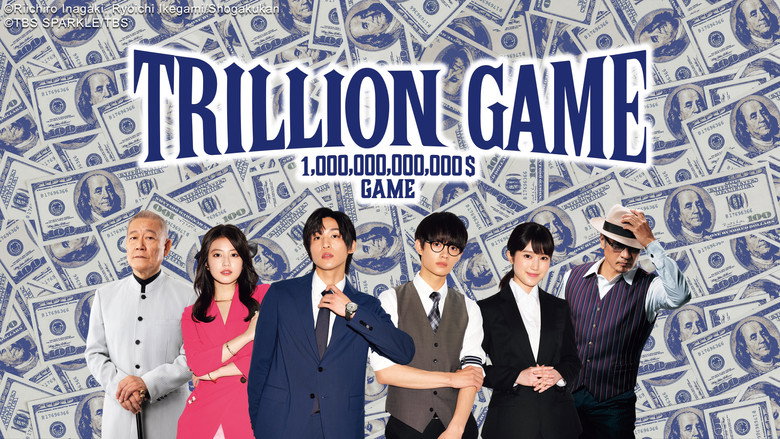
I keep thinking about that handshake. The first one, in the café. It’s such a simple gesture, but in Trillion Game, it’s everything.
A promise, a gamble, a leap of faith. The show never lets you forget that behind every trillion-dollar idea, there’s a moment where two people decide to trust each other. And maybe that’s the real fantasy—not the money, not the power, but the belief that someone else will catch you when you jump.
Whether Trillion Game sticks the landing is almost beside the point. For a little while, it makes you believe in the leap.
The Japanese drama Trillion Game (2023) isn’t just another workplace saga—it’s a high-octane ride into the cutthroat world of tech startups, where ambition and betrayal collide. Directed by Kenta Tanaka, Kentarō Takemura, and Yoshiaki Murao, the series has quickly become a standout for its sharp storytelling and magnetic cast. But what’s the real story behind the scenes? latestnetflix.com's view is that here’s what we know (and what’s still shrouded in mystery).
At the heart of Trillion Game is the dynamic between Ren Meguro (Haru) and Hayato Sano (Gaku), whose bromance-turned-business-partnership drives the plot. Meguro’s portrayal of the charismatic, ruthless Haru has drawn praise for its effortless swagger, while Sano’s Gaku—a timid but brilliant programmer—provides the perfect foil. The two leads reportedly clicked instantly, with off-screen camaraderie translating into a believable on-screen partnership. Rumor has it that their improvisational skills during rehearsals led to some of the show’s most electric moments, though the production team has kept details under wraps [unconfirmed].
Supporting players like Mio Imada and Riko Fukumoto add depth to the ensemble, but it’s the Meguro-Sano dynamic that fans can’t stop talking about. Critics have even called their chemistry a rare example of "bromance done right" in modern J-dramas.
Trillion Game wasn’t just a creative gamble—it was a logistical one. The series, which aired from July 14 to September 15, 2023, packed 10 episodes into a tight two-month window, a breakneck pace for a drama with high production values. Sources suggest the team faced last-minute script tweaks to heighten the tension between Haru and Gaku’s business rivals, though specifics remain scarce.
The show’s workplace setting—a tech startup—required meticulous attention to detail, from office layouts to coding jargon. While the series leans into the "greedy male lead" trope, it’s the authenticity of the business rivalry that sets it apart. Whether this was intentional or a happy accident, the result is a drama that feels both aspirational and grounded.
Here’s where things get tricky. Trillion Game shares its name with a popular manga by Riichiro Inagaki and Ryoichi Ikegami, serialized from 2020 to 2025. However, the 2023 live-action series is not a direct adaptation—it’s an original story inspired by the manga’s themes of ambition and corporate warfare. This distinction is crucial, as the drama carves its own path while nodding to the source material’s DNA.
The manga’s English release via Viz Media has fueled speculation about a Western adaptation, but for now, the 2023 series stands alone as a Japanese original. Whether future seasons will dive deeper into the manga’s lore remains to be seen.
With a 9.1/10 rating on MyDramaList, Trillion Game has earned its place as a must-watch. Critics praise its pacing, performances, and willingness to embrace the messiness of ambition—flaws and all. Minor editing quirks and occasional plot hiccups haven’t dampened the enthusiasm, with many calling it a "10-hour investment you won’t regret".
Still, unanswered questions linger. How much of the cast’s off-screen chemistry was scripted? Will the series return for a second season? For now, fans are left to savor the ride—and hope the creators aren’t done playing the trillion-dollar game.
Entertainment rumors and trivia aggregated from public reporting. Treat speculation as unverified unless a cited source confirms it.
More titles in the same genres and with the same cast.