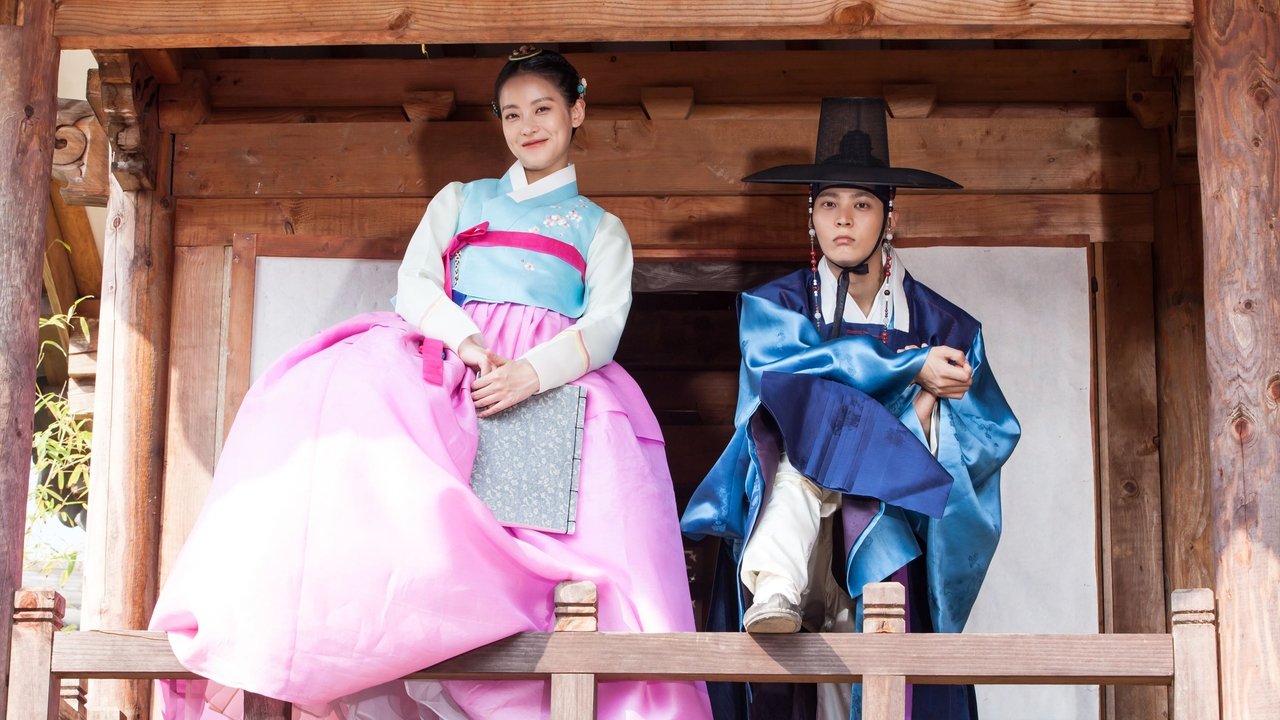

Joo Won
Gyun-Woo
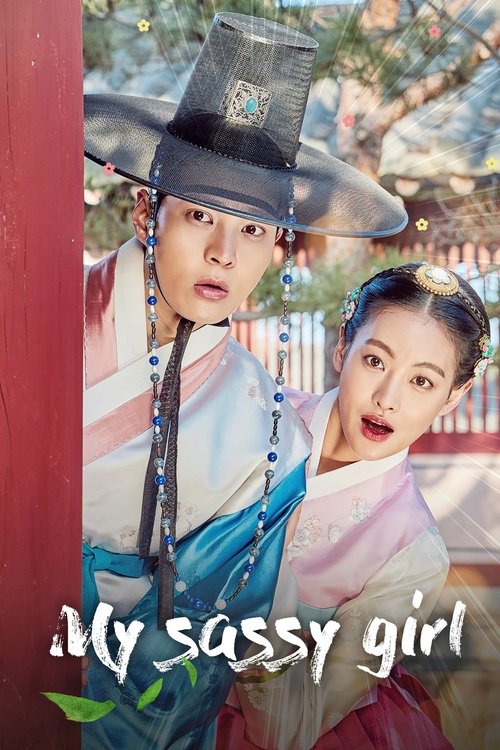
Set in the Joseon Dynasty period, a romance takes place between cold-hearted Gyun-Woo and Princess Hyemyung who causes troubles.
Official
Joo Won
Gyun-Woo

Oh Yeon-seo
Princess Hyemyung

Lee Jung-shin
Kang Joon-Young

Kim Yoon-hye
Jung Da-Yeon

Kwak Hee-sung
Park Chang-Whi
I kept thinking, while watching My Sassy Girl, that the title itself is a little prank. It promises the unruly modern romantic-comedy chaos most of us associate with the 2001 film, but this 2017 series moves the whole joke into Joseon court life, where a bad temper isn’t just a personality trait — it’s a political inconvenience. That shift matters.
Oh Jin-seok isn’t merely dressing a familiar idea in hanbok; he’s asking what happens when a story built on embarrassment, flirtation, and emotional collision is transplanted into a world of rank, ritual, and surveillance. latestnetflix.com's view is that the result is less a simple remake than a historical reimagining of disorder itself.
What interests me most is the way the series treats noise. Not literal noise, though there’s plenty of that, but social noise: gossip, interruption, provocation, the constant friction of people talking before they think. In many period romances, dignity is the default mode and feeling arrives in hushed glances.
Here, feeling barges in, trips over furniture, and refuses to apologize. Princess Hyemyung’s troublemaking isn’t just comic decoration; it’s the force that exposes how brittle the court’s polished surfaces really are. Joo Won’s Gyun-woo, by contrast, begins as a man who seems to think emotional self-protection is the same thing as intelligence.
He has the stiff posture of someone who’s spent years trying not to be humiliated. That’s exactly why the series works when it does: it’s about how two people, both guarding themselves, keep setting off each other’s defenses.
I should say, before going further, that this is a long series — 32 episodes, which is a lot of time to spend in a comic-romantic loop, and not every episode earns its keep. There are stretches where the plot feels like it’s wandering in circles, as if the drama knows the destination but keeps stopping to admire the scenery on the way there. Still, the basic premise has enough elasticity to survive the overextension.
This version of My Sassy Girl is a period comedy-drama that came out in 2017, long after the original film had become a kind of cultural shorthand for the “difficult” woman in romantic storytelling. In that sense, it belongs to a broader trend of Korean television remaking familiar properties for serial form, but the creator’s trick here is to make the historical setting do more than provide decorative prestige.
Joseon becomes a machine for misunderstanding.
I’m not entirely sure every joke lands, and some of them are very much of the “look how awkward everyone is” variety. But the series often compensates with physical comedy that feels rooted in character rather than sketch-writing. Joo Won, who’d already built a reputation for playing high-control, high-functioning roles, is smart casting here because he’s so good at looking like a man trying to keep his composure in public while privately coming apart.
His face is doing half the work; the other half is in his shoulders, which keep tightening whenever Hyemyung comes near, as if his body has already decided he’s been defeated. Oh Yeon-seo, meanwhile, doesn’t play Hyemyung as a generic manic heroine. She gives her a forward, almost impatient gait, the body language of someone used to crossing lines because she’s bored by them.
The performance has a useful bluntness. She’s funny because she looks like she’s truly decided the world’s rules are somebody else’s problem.
If there’s a scene type that stays with me, it’s the sequence where the drama lets its central pair’s antagonism become choreography. One of them advances, the other retreats; one speaks too quickly, the other answers with a glare or a delay just long enough to become its own joke. The camera doesn’t need to over-edit this.
It often finds its humor by holding a beat longer than comfort recommends, letting embarrassment settle in the air. That lingering quality is important. A lesser series would cut away for speed.
This one, at its best, understands that romance is often just two people trapped in the same awkward pause and forced to notice each other.
The historical setting also gives the familiar push-pull of rom-com banter a sharper edge. In contemporary stories, a rude remark is a rude remark. In Joseon, it can become a matter of protocol, hierarchy, or worse.
That means the series can turn comic friction into a commentary on power without getting preachy about it. Hyemyung’s misbehavior isn’t just adorable rebellion; it keeps revealing how much of court life depends on everyone pretending to be smaller than they are. There’s a political undertone to that, and the drama knows it.
Women are expected to remain legible and contained, men are expected to appear steady, and the court itself is a place where performance is survival. The princess’s refusal to be easy is therefore more than romantic chemistry. It’s a refusal of the script.
Oh Yeon-seo, who’d already spent years moving between television melodrama and lighter genre work, has the harder role because Hyemyung needs to be both disruptive and sympathetic. If she leans too far into mischief, the character becomes exhausting; too much sweetness, and the whole conceit deflates. She mostly avoids that trap by grounding the comic energy in a kind of restless alertness.
Even when the show’s writing gives her a broad gag, she tends to play the reaction beneath it — the quick recalculation, the sense that she’s always one step ahead of the room and half a step behind her own feelings. That’s useful because the series’ emotional center isn’t really about a spectacular change of heart. It’s about the slow realization that the person who irritates you may be the only one paying attention.
The supporting cast helps more than you might expect in a story this crowded. Period comedies can get noisy in the wrong way — all bustle, no texture — but here the surrounding figures often sharpen the main pair by embodying different responses to the same rigid world: opportunism, obedience, vanity, calculation, vanity again (courts are fond of that one). When the series drifts, it’s usually because it leans too hard on side intrigue instead of letting the central relationship breathe.
Yet even then, I found myself staying with it because the tone has a kind of reckless confidence. It doesn’t fear silliness. That’s rarer than it should be.
There’s a danger in treating this sort of adaptation as inherently frivolous, as though moving a beloved rom-com into a historical register is just a marketing trick with prettier sleeves. But I think the series is trying to say something more specific about how stories travel. The “sassy girl” archetype can easily become a cliché — the difficult woman who exists to be tamed, explained, or softened.
What’s interesting here is that the show keeps flirting with that danger while also insisting on Hyemyung’s agency. She’s not a puzzle box waiting for a man to solve her; she’s a force that rearranges the room. Whether the series fully honors that idea every time is another matter.
Sometimes it slips back into well-worn genre comfort. Still, when it’s alive, it understands that romance isn’t about surrender so much as recognition: seeing the other person clearly enough to stop mistaking their defenses for their essence.
I came away thinking the series is at its best when it lets comedy keep a little bite. Not cruelty. Just bite.
That’s what makes the emotional payoffs register, and that’s what keeps the historical setting from turning into costume wallpaper. My Sassy Girl is uneven, overextended, and occasionally too pleased with its own antics. But it also has a genuine sense of play, and play is no small thing in a story about rules. By the end, what lingers isn’t some grand romance-soaked idea of destiny.
It’s the simpler, better feeling that two stubborn people have finally started speaking the same language — one built out of annoyance, embarrassment, and the faint possibility that this might actually matter.
"A period-set spin on the classic romance dynamic, this Joseon-era adaptation is a playful historical romantic comedy for international K-drama fans."
The production transplants the signature dynamic into a historical Korean drama setting and has drawn attention in international drama communities through localized dubs and episode reviews. Longtime fans naturally weigh it against the earlier film versions, but the colorful sageuk presentation gives the romantic formula a distinctly energetic take.
The 2017 Korean drama My Sassy Girl brought a fresh twist to the classic rom-com formula by transplanting its chaotic love story into the Joseon Dynasty. Starring Joo Won as the stoic scholar Gyun Woo and Oh Yeon-seo as the mischievous Princess Hye Myung, the series promised a blend of historical drama and modern humor. But what went on behind the cameras? latestnetflix.com's view is that here’s what the evidence reveals—and where the details get murky.
One of the most concrete behind-the-scenes tidbits is the reunion between lead actor Joo Won and director Oh Jin-seok. The pair had previously collaborated on the 2015 medical drama Yong-pal, which became a hit and cemented Joo Won’s status as a leading man. Their second project together, My Sassy Girl, was positioned as another high-stakes collaboration, this time in the sageuk (historical drama) genre. The first script reading took place on August 27, 2016, signaling a swift move from Yong-pal’s success to a new creative challenge.
The series was also part of a broader trend in Korean television: youth-oriented sageuk dramas. Following the breakout success of Love in the Moonlight (2016), which starred Park Bo-gum and Kim Yoo-jung, networks were eager to capitalize on the blend of historical settings and contemporary romantic tropes. My Sassy Girl fit neatly into this wave, offering a princess who defied traditional expectations—a sassy, troublemaking royal who clashed with her scholarly love interest.
Joo Won’s casting as Gyun Woo, the "Joseon’s national treasure" scholar, was a natural fit for his established screen persona: a mix of intelligence, stoicism, and hidden warmth. Oh Yeon-seo, meanwhile, took on the role of Princess Hye Myung, a character described as "sassy" and "troublesome" in nearly every source. The chemistry between the leads was a focal point of promotional material, including trailers that teased their bickering-turned-romance dynamic.
Supporting cast members added depth to the series, though their behind-the-scenes roles are less documented. Lee Jung-shin (of CNBLUE fame) played Kang Joon-young, a rival love interest, while Kim Yoon-hye took on the role of Jung Da-yeon, a court lady with her own secrets. Veteran actors like Son Chang-min and Jung Woong-in rounded out the ensemble, bringing gravitas to the historical setting.
One unverified but intriguing detail comes from a French review site, which lists the series’ runtime as 35 minutes per episode and gives it a lukewarm rating of 6.2/10 based on 102 votes. While this doesn’t reveal much about production, it hints at the show’s mixed reception—something that might have influenced the cast’s post-Sassy Girl projects.
Despite the buzz, My Sassy Girl (2017) has left surprisingly few traces in the gossip columns. Unlike its 2001 film predecessor (which spawned a cult following and even a Hollywood remake), the 2017 series didn’t generate the same level of behind-the-scenes drama or viral moments. This could be due to a few factors:
One oddity worth noting: Rotten Tomatoes’ page for My Sassy Girl lists Cha Tae-hyun and Jun Ji-hyun in the cast, but this appears to be a case of mistaken identity. Those actors starred in the 2001 film My Sassy Girl, not the 2017 series. The error underscores how easily the two projects get conflated, even on major platforms.
With limited evidence, it’s hard to gauge My Sassy Girl (2017)’s lasting impact. The series didn’t spawn a wave of imitators or become a defining work for its stars. Joo Won and Oh Yeon-seo moved on to other projects, and director Oh Jin-seok’s subsequent work remains obscure. The show’s native title, 엽기적인 그녀 (Yeopgijeogin Geunyeo), translates to "My Outrageous Girl," but its outrageousness didn’t translate into a cultural phenomenon.
That said, the series did carve out a niche for itself as a lighthearted sageuk with a modern edge. For fans of historical rom-coms, it offered a playful alternative to the heavier political dramas of the era. And while it may not have generated tabloid headlines, its existence proves that even in a crowded market, there’s always room for a sassy princess and a long-suffering scholar.
Entertainment rumors and trivia aggregated from public reporting. Treat speculation as unverified unless a cited source confirms it.