Season 1
8 episodes May 5, 2016 7.0
- 1 20 Years
- 2 Straw Man
- 3 Crocodile
- 4 Intox (Brainwashing)
- 5 Face-off
- 6 Liberty, Equality, Without Pity
- 7 Voted
- 8 The Final Battle

The longtime mayor of Marseille is preparing to hand over the reins to his protégé when a sudden and ruthless battle erupts for control of the city.
Latest episode: S2 E8 Justice (Feb 23, 2018)
I’ve spent the last two weeks in Marseille—not the real one, with its sun-bleached ports and the scent of salt and diesel, but the version conjured by this Netflix series. It’s a place where ambition curdles into betrayal, where every handshake carries the weight of a knife, and where the Mediterranean light doesn’t so much illuminate as expose. The show’s Marseille is less a city than a character itself: hungry, beautiful, and utterly indifferent to the people it devours.
That indifference is the first thing that strikes you. The opening credits roll over aerial shots of the city’s sprawl, the camera gliding past the Vieux-Port and the towering housing projects like a drone surveying a battlefield. There’s no voiceover, no grand declaration of intent—just the hum of a helicopter and the distant wail of a police siren.
It’s a bold choice, this refusal to explain. Marseille doesn’t care if you understand it. It’s been here for 2,600 years; your confusion is a temporary inconvenience.
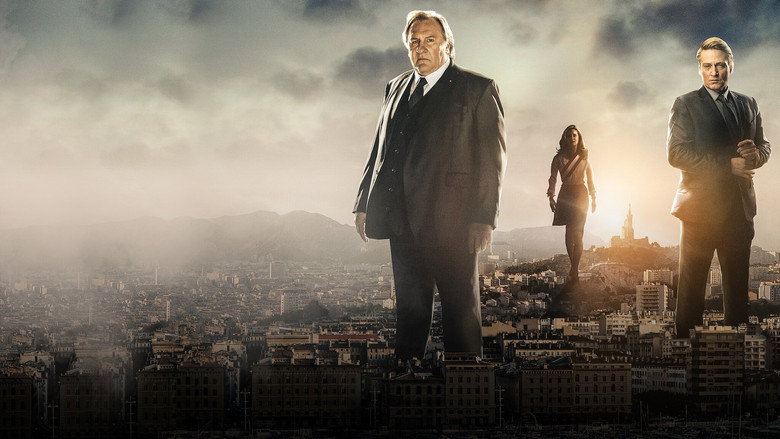
The story follows Robert Taro (Gérard Depardieu), the city’s longtime mayor, as he prepares to pass the torch to his protégé, Lucas Barrès (Benoît Magimel). It’s a transition that should be ceremonial, a coronation. But Marseille, as the show never lets you forget, is a city that thrives on chaos.
A young activist is shot in the opening minutes, and just like that, the fragile peace shatters. What follows isn’t so much a political drama as a feeding frenzy. Taro and Barrès circle each other like sharks, their alliance unraveling into something uglier, more personal.
By the end of the first season, the question isn’t who will win, but how much of the city will be left when the dust settles.
Depardieu is the show’s gravitational center, a force of nature even when he’s standing still. He plays Taro as a man who’s spent decades bending Marseille to his will, only to realize too late that the city has been bending him right back. There’s a moment in the second episode where he sits in his office, staring at a framed photo of himself with François Mitterrand.
The camera lingers on his face—jowly, weary, the eyes half-lidded—as he traces the glass with his thumb. It’s a small gesture, but it says everything: here is a man who once believed in history, in legacy, and now finds himself reduced to a relic. Depardieu doesn’t need to emote; the weight of his presence does the work.
He’s like one of those ancient Roman statues, eroded by time but still imposing, still there.
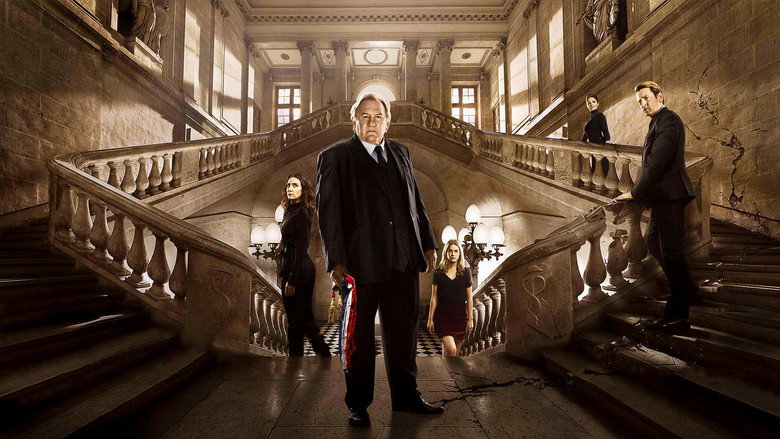
If Taro is the past, then Lucas Barrès is the future—or at least, the future as Marseille imagines it: sleek, ruthless, and utterly hollow. Magimel plays him with a kind of coiled intensity, all sharp suits and sharper smiles. He’s the kind of politician who could sell you a timeshare in hell, and for a while, it’s thrilling to watch him work.
But there’s something missing, a core of conviction that never quite materializes. Maybe that’s the point. Barrès isn’t a man with a vision; he’s a man with an appetite.
The tragedy of his character is that he doesn’t even realize it until it’s too late.
The show’s most interesting relationship isn’t between Taro and Barrès, though, but between Barrès and his wife, Rachel (Nadia Farès). Their marriage is a masterclass in passive-aggressive warfare, a dance of glances and silences that speaks louder than any scripted argument. In one scene, Rachel walks into a room where Lucas is on the phone, his back turned to her.
She stands there for a beat, watching him, her face unreadable. Then she turns on her heel and leaves. No words, no confrontation—just the quiet understanding that they are now strangers to each other.
It’s the kind of moment that lingers, the kind that makes you lean forward and think, Oh. That’s what this is about.
Marseille’s politics are a bloodsport, but the show’s real subject is power—not the kind that comes from a title or an office, but the kind that seeps into your bones, that warps you until you don’t recognize yourself anymore. The women in this story understand this better than the men. Rachel, Taro’s daughter Julia (Geraldine Pailhas), and even the young activist’s mother (Hiam Abbass) all operate in the margins, but their influence is the most lasting.
Abbass, in particular, is devastating in her few scenes. She plays a woman who has lost everything but her dignity, and her quiet fury is more powerful than any of the men’s bluster.
The show’s biggest flaw is its pacing. The first season takes its time, letting the tension simmer, but the second season rushes toward its conclusion like a train with no brakes. Subplots are introduced and then abandoned, characters vanish without explanation, and the final episodes feel more like a checklist than a story.
It’s as if the writers, having set the city on fire, suddenly realized they had to put it out before the budget ran dry. The result is a whiplash-inducing shift from slow-burn drama to melodramatic spectacle, complete with car chases and last-minute betrayals that feel unearned.
And yet, for all its flaws, Marseille sticks with you. Maybe it’s because the city itself is such a compelling character. The show was shot on location, and it shows.
The camera lingers on the crumbling facades of the quartiers nord, the neon glow of the nightclubs, the way the light hits the water in the harbor. There’s a tactile quality to the cinematography, a sense that you could reach out and touch the grime on the walls, the sweat on the characters’ skin. It’s a far cry from the sanitized, tourist-board version of Marseille you might see in a travel brochure.
This is the Marseille of the people who live there, the ones who know which streets to avoid after dark, the ones who’ve learned to navigate its labyrinthine politics just to survive.
I keep coming back to that opening shot, the one of the city from above. It’s a god’s-eye view, detached and clinical. But the show itself is anything but.
It’s messy, emotional, sometimes frustratingly uneven. It’s the kind of series that doesn’t just tell you a story—it drops you into a world and lets you fend for yourself. And maybe that’s the point.
Marseille isn’t a place for tourists. It’s a place for survivors. The show, for all its stumbles, understands that better than most.
Five days before season 2, Netflix tried to buy the north stand. The plan was a mosaic in the series colors, ads on the stadium screens, and Gérard Depardieu doing the ceremonial kickoff before Olympique de Marseille faced Bordeaux. AFP put the spend at 20,000 to 30,000 euros for plastic, paper, and a three-day warehouse at Parc Chanot. Christian Cataldo, head of the Dodgers ultras, walked. "It's a shit series that sinks Marseille more than it promotes it. There are thugs and junkies elsewhere than Marseille. I don't want to be associated with this series." The rest of the virage followed. latestnetflix.com's take is that Organizers cancelled the mosaic rather than watch it get sabotaged.Depardieu stayed off the pitch. The ads came down. Florian Thauvin scored. The streamer left with a 1-0 and no banner.,
That screening was 4 May 2016, a local premiere for Netflix's first French-language original. Variety clocked a packed Marseille crowd and "10 seconds or so of polite applause, but no more." Pierre Serisier in Le Monde reached for two registers. "In refined language, this would be called an industrial accident. More colloquially, this is cowshit." Telerama's Pierre Langlais called it an artistic rout and Netflix's first in-house dud. Dan Franck, who wrote Carlos, had built a mayoral war around Depardieu as Robert Taro, twenty years in office, pushing a casino onto the marina, then running again after his protege Lucas Barres, Benoît Magimel, votes the project down. Real mayor Jean-Claude Gaudin posed with Depardieu at city hall and dubbed the character "the other mayor." The opening image is Taro snorting a line inside the Velodrome, then walking out to the roar. Franck told The Guardian the powder was the point. "We know that political personalities do drugs.",,
TF1 took the first two episodes on 12 May 2016. TeleStar later put that prime at 4.4 million, a miss by TF1 standards. Netflix still renewed on 6 June. The series Twitter account posted that the fight was not over. Variety said Tele-Loisirs reported the overseas watch, Brazil and Russia in particular, as the reason. Paris reviews were treated like weather.,
Capital reported that Franck collected a large check from producer Pascal Breton to leave before shooting started in April 2017. The amount was not published. Other pens came in, including journalist Philippe Pujol. Netflix's spend on the new run was put at 10 to 12 million euros. The eight episodes dropped on 23 February 2018. When TF1 Series Films later ran season 1 in prime, Capital clocked 255,000 viewers. Producers still claimed 130 million abroad. Netflix confirmed the kill on 20 April 2018. The first French original ended as a two-season argument with the city it named itself after. The official season 2 trailer is still on YouTube if you want the soccer-conspiracy pitch they sold after the ultras said no.,,
Entertainment rumors and trivia aggregated from public reporting. Treat speculation as unverified unless a cited source confirms it.
More titles in the same genres and with the same cast.