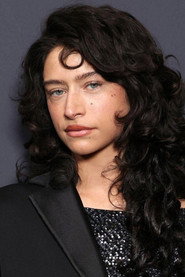
Odessa A'zion
Joey Del Marco

Five students at the largest public high school in Brooklyn take on a chaotic world as they fight to succeed, survive, break free and seize the future.
Official
I keep thinking about the opening shot of Grand Army—a slow pan across a Brooklyn high school hallway, lockers slamming, laughter bouncing off linoleum, the kind of chaos that feels like freedom until it isn’t. Then the explosion. Not a metaphor.
A bomb. A real, jarring cut to smoke and screaming, the kind of violence that’s supposed to shock but instead feels like it’s been waiting in the wings all along. That’s the thing about this show: it wants to be urgent, but it moves like a student dragging themselves to first period, late and already exhausted.
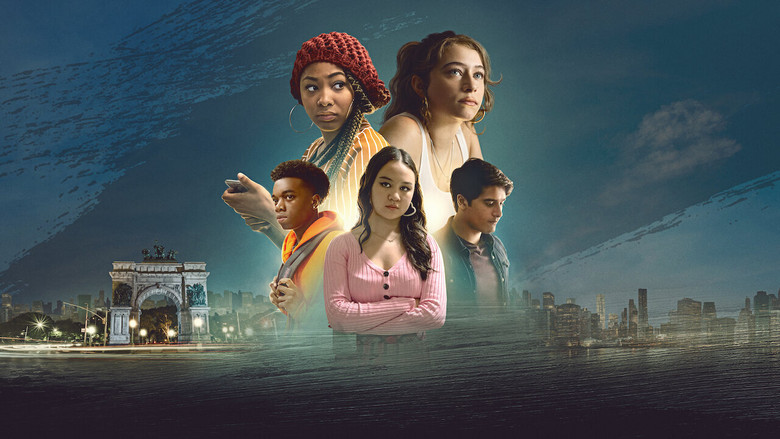
Katie Cappiello’s series, adapted from her own play Slut, is an attempt to capture the sprawl of teenage life in all its messy, contradictory glory. It follows five students at Grand Army High, Brooklyn’s largest public school, as they navigate sex, race, class, and the quiet terror of impending adulthood. There’s Joey (Odessa A’zion), the white, middle-class girl whose assault at the hands of three friends becomes the show’s emotional core; Dom (Odley Jean), the Haitian-American senior juggling school, work, and the weight of her family’s expectations; Sid (Amir Bageria), the Indian-American swimmer grappling with his sexuality and the pressure to get into Harvard; Jayson (Maliq Johnson), the Black jazz musician caught in the school-to-prison pipeline; and Leila (Amalia Yoo), the Chinese-Jewish adoptee whose identity crises manifest in increasingly volatile ways.
It’s an ambitious ensemble, and at its best, Grand Army feels like a series that’s actually about something—about the way systems fail kids, about the way kids fail each other, about the way we all carry our traumas like backpacks we can’t put down.
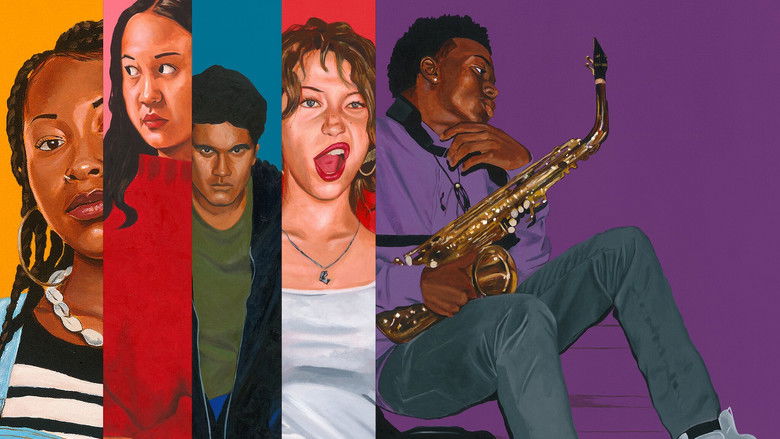
But ambition isn’t the same as execution. The show’s biggest flaw isn’t its subject matter—it’s the way it stumbles under the weight of its own intentions. There’s a moment in the third episode where Dom, after a particularly brutal day of balancing school, work, and her siblings’ needs, snaps at her guidance counselor: “My anger doesn’t count.” It’s a line that lands like a punch, a perfect distillation of the way Black women’s emotions are policed, dismissed, or weaponized against them.
Odley Jean delivers it with a rawness that feels like a revelation, and for a second, you think the show might actually have something to say. But then the episode lurches into another subplot, another thread left dangling, another character’s crisis that feels more like a checklist item than a lived experience. The Hollywood Reporter’s Inkoo Kang put it best: “Grand Army lets several of its cast members shine through complex characters and culturally specific plotlines and [yet] the show’s ambitions underscore its messy, sluggish, all-too-frequently frustrating storytelling.”
That frustration is baked into the show’s DNA. Grand Army wants to be Degrassi for the streaming era—grittier, more diverse, more willing to stare directly at the ugliness of adolescence—but it never quite finds the rhythm to make its sprawl feel intentional. The pacing is a problem, yes, but it’s more than that. It’s the way the show’s various threads never quite cohere, like a mixtape where every song is good but none of them belong on the same album.
There’s the terrorist bombing that opens the series, which feels like it should be a throughline but instead becomes an afterthought. There’s the anonymous manifesto, typed out in jagged, increasingly violent prose, which Variety called “problematic and ultimately nonsensical,” a device that never quite justifies its own existence. And then there’s Leila, whose arc is either the show’s most daring subversion or its biggest misfire, depending on who you ask.
Amalia Yoo plays her with a ferocity that’s hard to look away from, but the character’s descent into online toxicity and violent fantasies feels less like a commentary on teen alienation and more like a series of provocations without a payoff. When she snaps at a group of bullies—“Speak fucking English”—it’s one of the few moments where the show’s anger feels earned, where the mask slips and you see the real pain underneath.
The performances, at least, are never less than compelling. Odessa A’zion’s Joey is a study in the way trauma hollows you out. In the early episodes, she’s all sharp edges and brittle humor, the kind of girl who uses sarcasm like armor.
But after the assault, something in her breaks, and A’zion plays it with a quiet devastation that’s hard to shake. There’s a scene where Joey, still reeling, tries to masturbate in her bedroom, her movements mechanical, her face blank. It’s uncomfortable to watch, not because it’s graphic, but because it’s so real—the way desire and violation get tangled up, the way the body keeps moving even when the mind is elsewhere.
Odley Jean, meanwhile, is the show’s secret weapon. Dom’s storyline—balancing an internship, a family in crisis, and the pressure to be the “good” Black girl—could have been a cliché in lesser hands, but Jean makes every moment feel lived-in. When she finally lets herself scream into a pillow, it’s not just a release; it’s a rebellion.
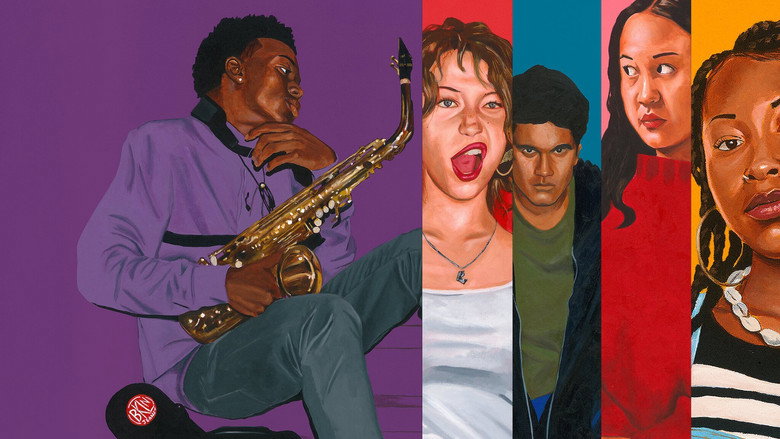
And then there’s Maliq Johnson’s Jayson, whose storyline about a prank gone wrong and the disproportionate punishment that follows is one of the show’s most effective. It’s a quiet arc, the kind that sneaks up on you. Jayson isn’t the loudest character, but Johnson plays him with a quiet intensity that makes you lean in.
When he’s suspended for something that wasn’t even his fault, the injustice of it isn’t just about the moment—it’s about the way the system has been stacked against him from the start. It’s the kind of storytelling that Grand Army does best: small, human, and devastating.
But for every moment like that, there’s another where the show feels like it’s trying too hard to be important. The college-essay voiceovers for Sid, the animated ultraviolent fantasies for Leila—these are the kind of stylistic choices that feel like they belong in a different show, one that’s more interested in style than substance. The naturalism that works so well for Dom and Joey feels at odds with the show’s occasional lapses into melodrama.
And then there’s the pacing, which The Hollywood Reporter called “sludgy and soporific,” a fair assessment. Grand Army moves like a student who’s been up all night cramming for a test, exhausted but too wired to stop.
The show’s cancellation after one season feels inevitable in hindsight. Netflix doesn’t often stick with series that don’t immediately find an audience, and Grand Army’s mixed reception—71% on Rotten Tomatoes, but with a critics consensus that calls it “too overwrought to make an impact”—probably didn’t help. There’s also the cloud of the writers’ room controversy, where writer Ming Peiffer alleged racist exploitation and abuse, a claim that complicates the show’s already fraught relationship with representation.
It’s a shame, because there’s something here worth salvaging. The best episodes of Grand Army feel like they’re reaching for something real, something that most teen dramas either gloss over or exploit. But the show’s flaws—its pacing, its tonal inconsistencies, its occasional lapses into didacticism—keep it from fully delivering on that promise.
I keep coming back to that manifesto, the one the show keeps cutting to—a student typing furiously, their words growing more violent, more desperate. It’s supposed to be a commentary on the way anger festers in places like Grand Army High, but it never quite lands. Maybe that’s the point.
Maybe Grand Army is itself an unfinished manifesto, a series that knows what it wants to say but hasn’t quite figured out how to say it. There’s a line in one of the later episodes, spoken by Dom: “I don’t know what I’m supposed to do with all this.” It feels like the show’s thesis, its confession, its plea. It’s also, unfortunately, its epitaph.
Netflix’s Grand Army (2020) arrived as a raw, unfiltered look at the lives of Brooklyn high schoolers navigating identity, activism, and adolescence. While the series earned praise for its bold storytelling, the cast’s off-screen camaraderie and behind-the-scenes insights have kept fans buzzing. latestnetflix.com's take is that From playful interviews to candid discussions about queer representation, the young ensemble has offered glimpses into the show’s creation—and the lingering question of whether a second season will ever materialize.
The Grand Army cast didn’t just play friends—they became them. Odessa A’zion (Joey Del Marco) and Amir Bageria (Siddhartha Pakam) set the tone in a lighthearted interview, swapping jokes about filming in Toronto and ribbing their co-stars. A’zion, in particular, emerged as a fan favorite for her sharp wit and unfiltered humor, whether discussing her character’s complexities or playfully teasing Bageria about his on-screen intensity.
The ensemble’s dynamic extended beyond the cameras. In a group interview, the cast revealed how they bonded over shared experiences, from improvising scenes to dissecting which actors were most like their characters. Maliq Johnson (Jayson Jackson) and Amalia Yoo (Anna Delaney) stood out for their ability to blur the line between role and reality, with Johnson admitting he channeled his own high school energy into Jayson’s rebellious spirit. Meanwhile, Brittany Adebumola (Dominique Pierre) and Crystal Nelson (Tamika Jones) brought a grounded, sisterly vibe to their characters’ friendship, a chemistry that translated smoothly on screen.
Grand Army didn’t shy away from LGBTQ+ storylines, and the cast embraced the opportunity to amplify queer voices. In a sit-down with Raffy Ermac, actors like A’zion and Bageria discussed the importance of authentic representation, particularly in Joey and Sid’s relationship—a rare portrayal of queer teens navigating love and identity without sensationalism. A’zion highlighted how the show’s writers consulted with LGBTQ+ advisors to ensure the storylines felt real, not just performative.
The cast also opened up about the pressures of playing characters so deeply tied to real-world issues. Odley Jean (Mei Wazowski) spoke about the weight of portraying a young woman grappling with activism and personal trauma, while Alphonso Jones II (Tim Delaney) admitted to drawing from his own experiences as a Black teen in predominantly white spaces. Their candidness underscored the show’s commitment to raw, unvarnished storytelling—even when it meant tackling uncomfortable truths.
Despite the show’s cult following, Grand Army’s future remains uncertain. The cast has been vocal about their desire for a second season, with A’zion and Bageria even reacting to fan theories and rumors in an exclusive interview. While Netflix has yet to confirm renewal, the actors hinted at untapped storylines, including deeper dives into Dominique’s political awakening and Joey’s post-assault journey.
MTV News teased five key elements fans could expect if the show returned, from expanded queer narratives to a sharper focus on systemic inequality. But with no official word from Netflix, the cast’s enthusiasm—paired with the show’s abrupt ending—leaves the door open for speculation. For now, fans are left clinging to the hope that Grand Army’s story isn’t over.
Grand Army’s legacy isn’t just in its storytelling—it’s in the cast’s unfiltered, often hilarious, behind-the-scenes moments. From Toronto inside jokes to heartfelt discussions about representation, the ensemble brought a level of authenticity that made the show feel like more than just another teen drama. Whether or not a second season materializes, their chemistry and commitment to the material have already cemented Grand Army as a standout in Netflix’s lineup.
Entertainment rumors and trivia aggregated from public reporting. Treat speculation as unverified unless a cited source confirms it.
More titles in the same genres and with the same cast.