Aqua Teen Hunger Force backdrop
Aqua Teen Hunger Force poster

Aqua Teen Hunger Force

“Dancing is forbidden!”

7.5
2000
12 Seasons • 144 Episodes
AnimationComedy

Overview

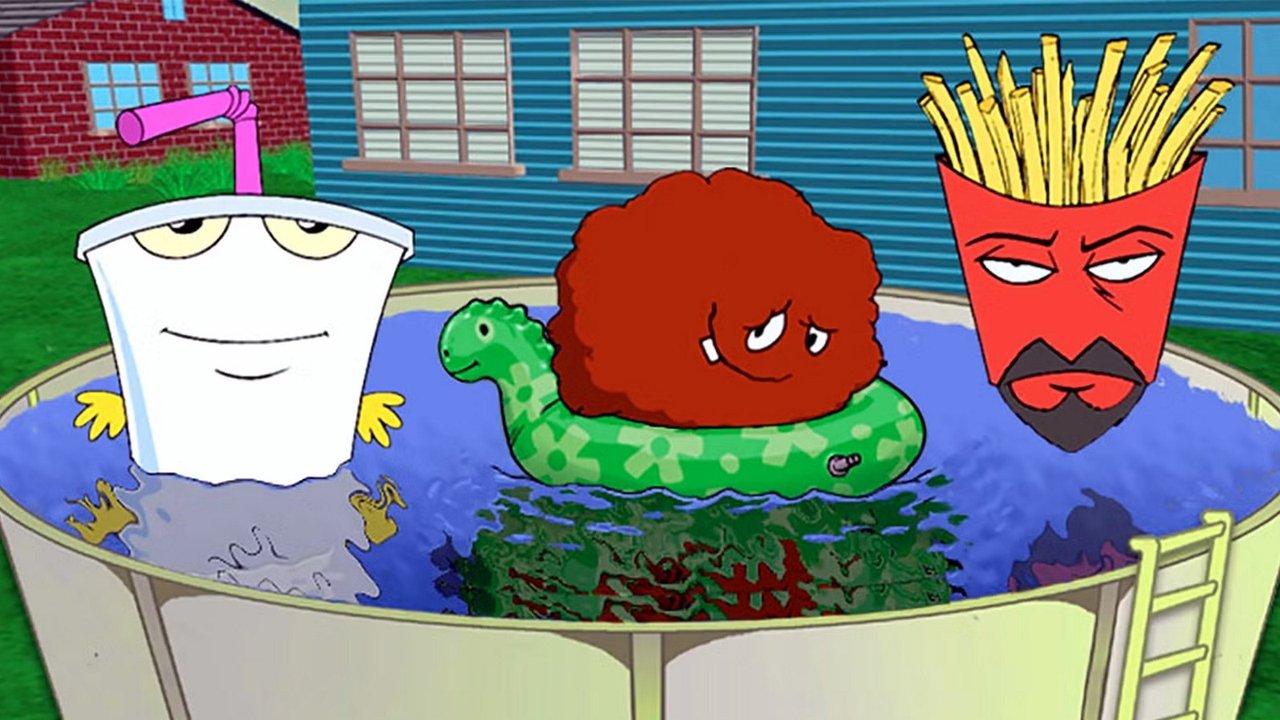
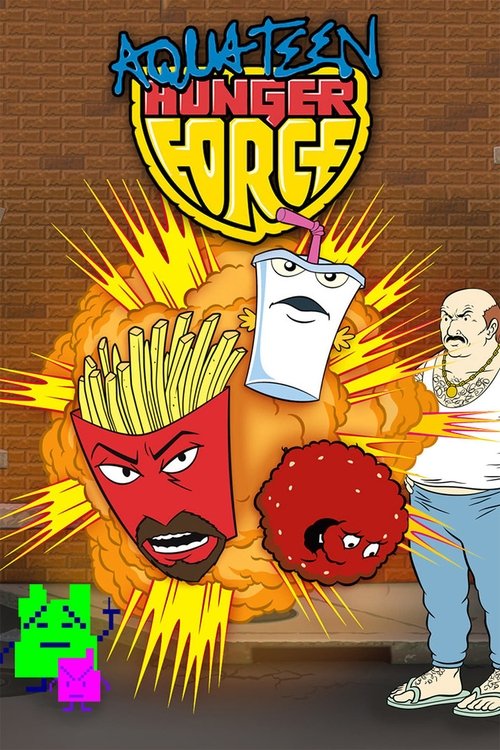
The surreal adventures of three anthropomorphic fast food items: Master Shake, Frylock and Meatwad, and their human nextdoor neighbor, Carl Brutananadilewski.

Sponsored

Trailer

Aqua Teen Hunger Force Forever: The Final Season | Aqua Teen Hunger Force Forever | Adult Swim Official

Cast

Reviews

AI-generated review
The Geometry of Longing

It feels a little strange, nearly thirty-five years later, to look at a film like *Ghost* and remember that its director, Jerry Zucker, was primarily known for the frantic, gag-a-minute slapstick of *Airplane!* and *The Naked Gun*. You’d expect a tonal whiplash, a kind of visual vertigo, but that’s not what we got. Instead, we got a movie that treats the supernatural with the mundane, heavy-lidded seriousness of a tax return, and maybe that’s why it actually works. It doesn’t ask you to believe in the afterlife so much as it asks you to believe in the specific, crushing weight of unfinished business.

Sam and Molly at the pottery wheel, a moment of intimacy that became an enduring image of 90s cinema.

The pottery scene — let’s address it quickly so we can move on — is less about the eroticism the cultural memory insists on, and more about the texture of existence. It’s an exercise in tactile grief. Before Sam (Patrick Swayze) becomes the ghost, he’s a man obsessed with the physical world, with the *feel* of things. The clay is messy, yielding, and present. When he dies, the tragedy isn't just that he’s gone; it's that the world stops yielding for him. He reaches out to touch, and his hand passes through. It’s the ultimate claustrophobia. He's trapped in a version of his own life where he has become a ghost in his own house.

What strikes me is how Patrick Swayze carries himself in this film. In his earlier work, like *Road House*, he used his body as a weapon — everything was rigid, controlled, deliberate. Here, he is constantly frantic. His posture is slumped, desperate. When he learns to move objects — the frustration of the penny, the anger of the subway ghost — you watch him unravel. He’s trying to shout, to punch, to scream, but he’s fighting against the friction-less nature of the spiritual plane. It’s a physical performance of impotence, and I think that’s why it’s more compelling than any of the thriller plot elements involving money laundering or boardroom betrayals.

Sam attempting to interact with the physical world, his frustration mounting as he fails to make an impact.

Then there's Whoopi Goldberg. Watching her now, you realize she is the only thing keeping this movie from drifting off into pure melodrama. Vincent Canby, writing for *The New York Times* in 1990, dismissed the film as a "soap opera," and he wasn't wrong — it is. But soap operas are usually about the messiness of being alive. Goldberg acts as our proxy. She is annoyed, terrified, and skeptical, constantly asking the questions the audience is thinking. "You're a ghost? Why am I talking to you?" She grounds the film’s high-concept, New Age spirituality in a blunt, hilarious reality. Without her, the film would be entirely too precious. She forces the story to acknowledge that being haunted is, primarily, a major inconvenience.

What really lingers, though, is the ending. It’s not just the "me too" line, which has been meme-ified into oblivion. It’s the visual of the light. Zucker opts for something surprisingly restrained. The film doesn't try to show us some grand, CGI-heavy heaven. It shows us a removal. A subtraction.

Sam's final moments of contact before crossing over, a scene that relies on quiet intimacy rather than spectacle.

Maybe it's the timing of the film — that moment in the early 90s when we were still comfortable with big, earnest, unironic romantic gestures. We seem less capable of that now. We want our ghosts to be metaphors for trauma or political allegory, not just sad spirits who want to say goodbye. Watching it back, I don't really know if the thriller plot holds up — it feels a bit like a drag, frankly — but the central, ache-filled idea remains. The horror isn't dying. The horror is being unable to touch the person you love one last time. That’s a feeling that doesn't age, no matter how much the special effects do.