Season 1
9 episodes Oct 9, 2025 7.6
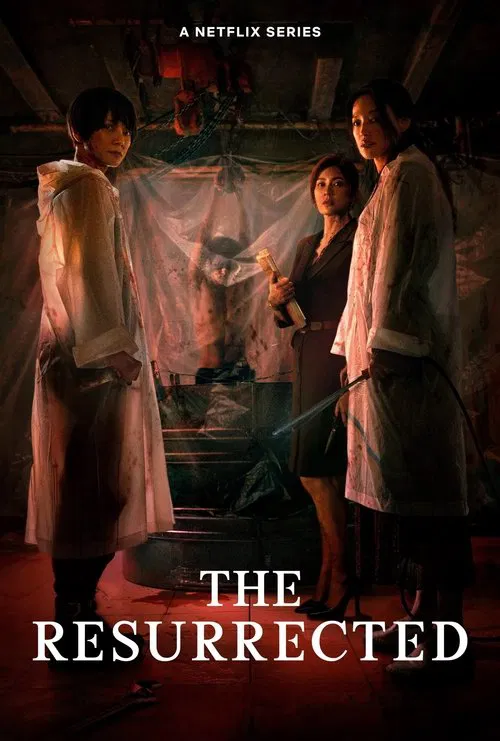
Two grieving mothers resurrect a scam ringleader to avenge their daughters — but as painful truths emerge, justice slips from their reach.
Latest episode: S1 E9 Judgement Night (Oct 9, 2025)
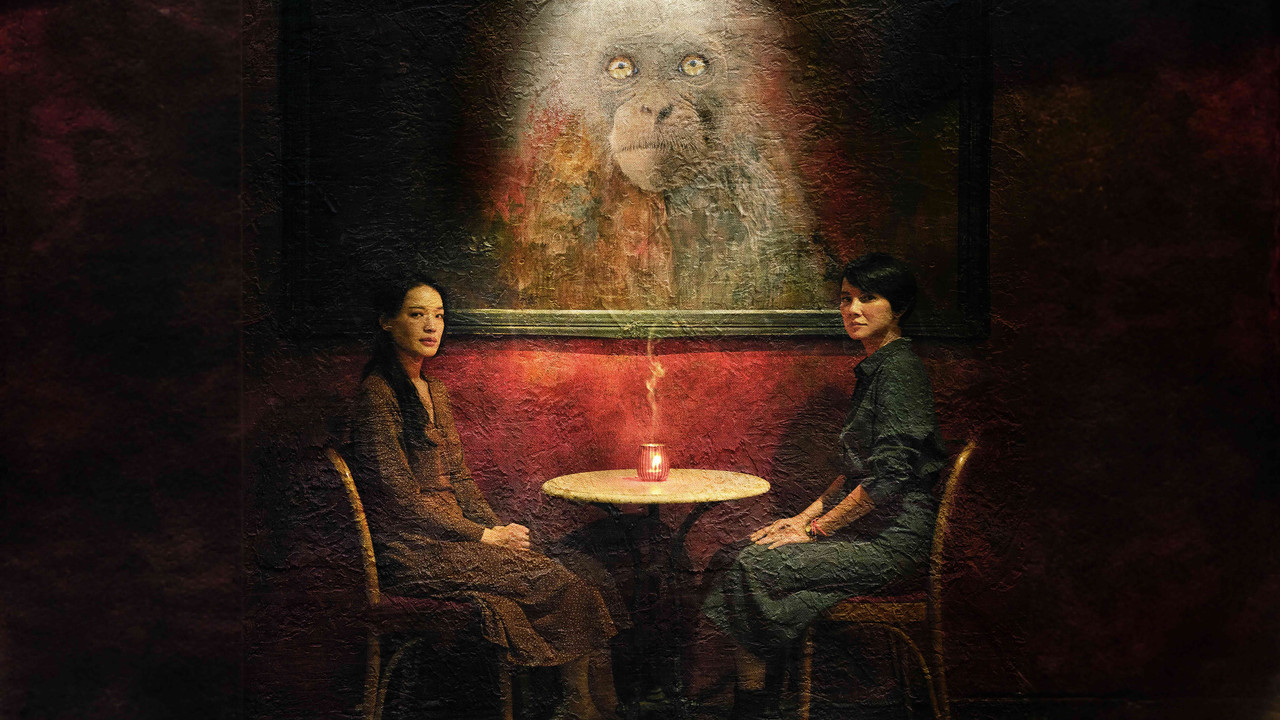
I keep thinking about the monkey. Not the one in the opening ceremony—that macabre ritual under the full moon where a shaman slits its throat, then brings it back to life as some kind of grotesque proof of concept. No, I mean the way The Resurrected itself feels like that monkey: something yanked back from the dead, twitching with borrowed time, its purpose unclear, its suffering undeniable.
The series wants to be a revenge thriller, a supernatural horror, a social critique, and a mother-daughter melodrama all at once. What it becomes, more often than not, is a fascinating mess—one that lingers in the mind like a half-remembered nightmare, even when the logic of it slips through your fingers.
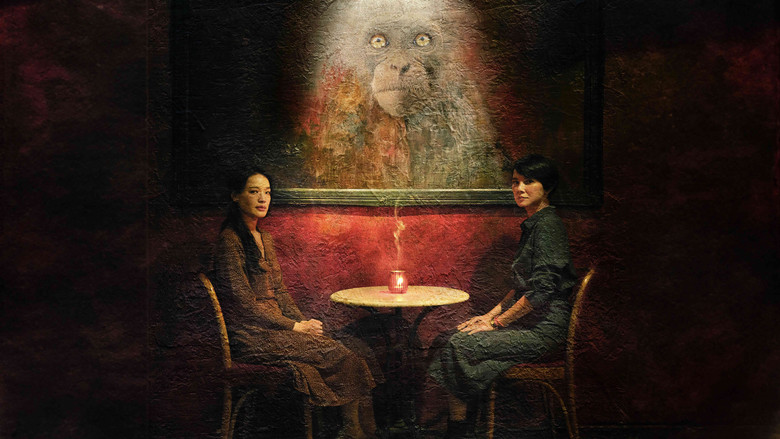
The premise is simple enough: two mothers, Wang Hui-chun (Shu Qi) and Chao Ching (Angelica Lee Sin-Jie), whose daughters have been destroyed by a telecom scam ring, resurrect the ringleader, Chang Shih-kai (Fu Meng-po), for seven days to extract vengeance. But simplicity is the first casualty here. The show lurches between past and present with little warning, its timeline marked only by a recurring on-screen graphic that reads "Present Day" like a nervous tic.
The first episode alone jumps between the mothers’ initial meeting, the scam’s horrific aftermath, and the resurrection ritual itself, leaving the viewer scrambling to piece together who these women are and why they’re about to commit an act that will haunt them far more than it hurts their target. This structural chaos isn’t just a pacing issue—it’s the show’s central tension. The Resurrected is obsessed with the idea that time is slippery, that justice is a moving target, and that the past isn’t just prologue but a living, breathing thing that refuses to stay buried.
The problem is that the series often seems as confused about its own timeline as the audience is. Decider’s early review nailed it: "The Resurrected looks like a show that’s going to operate on more than one level, but in a way that might prove to be confusing to viewers." That confusion isn’t always a flaw—sometimes it’s the point. But when the show leans too hard into its own cleverness, it risks losing the emotional thread that should anchor all this narrative noise.
And what an emotional thread it could be. Shu Qi and Angelica Lee are two of the most magnetic actresses working in Chinese-language cinema today, and their chemistry here is electric, even when the script threatens to short-circuit. Shu Qi’s Hui-chun is a study in quiet devastation—a woman who has spent so long being broken by her husband that she’s forgotten how to fight back.
Her performance is all small gestures: the way she flinches when touched, the hollow stare when she thinks no one’s looking, the way her voice cracks when she finally snaps. Lee’s Chao Ching, by contrast, is all sharp edges—a career woman who has built her life around control, only to have it shattered by the kidnapping and murder of her daughter. Their dynamic is less "grieving mothers united" and more "two people who recognize each other’s pain but have no idea how to comfort it."
"A gripping yet uneven crime drama with standout performances but a convoluted plot."
Viewers praise the intense performances, particularly from Shu Qi and Angelica Lee Sin-Jie, which anchor the series' dark, atmospheric tone. However, the mystery unfolds in a way that some find overly complex, with pacing issues and underdeveloped side characters detracting from the overall experience. latestnetflix.com's take is that the blend of crime and supernatural elements divides opinions, with some appreciating its boldness and others feeling it muddles the narrative.
Netflix’s grim revenge thriller may be soaked in blood, scams, and resurrection rites, but behind the camera the drama is a lot less murder-y and a lot more “actors crying until they can’t see their phones.latestnetflix.com's take is that ” From emotional meltdowns to production controversies and hyperactive fan theories, here’s the real-world tea around The Resurrected.
Malaysia-born star Lee Sinje (Angelica Lee) admitted that stepping out of her The Resurrected character was “a huge struggle,” saying the role’s extreme darkness and grief followed her even after filming wrapped  . She described feeling unfamiliar with herself during the long shoot, essentially haunted by her own performance.
Shu Qi revealed that filming the show’s brutal emotional scenes pushed her to the point where she cried until her eyes couldn’t focus properly; after one particularly intense shoot she checked her phone and realized she suddenly “couldn’t see clearly” from over-straining her eyes  . Talk about method misery.
The famous rooftop confrontation was shot on a genuinely derelict building in Thailand. In a Vogue Taiwan interview, Shu Qi and Lee Sinje recalled that the location’s real-world danger and eeriness made the scene hit harder — they were wired up for safety off-camera, but it still felt like acting on the edge of a horror set .
Lee Sinje wrote about camping out in Thailand from December just to prepare and “settle” herself before the January start of filming, describing the experience as pacing back and forth between character and her real self as a “new normal” . Translation: this show cooked them emotionally and literally.
Despite the vicious mother-vs-mother breakdown in the second half of the series, every piece of public info points to zero real-life feud between Shu Qi and Lee Sinje.
In a Taiwanese entertainment segment, Lee Sinje joked that the scenes where she and Shu Qi brutalize Fu Meng-po (Chang Shih-kai) actually produced blooper-level laughter because they were playing the torture so intensely that Fu shot back with, essentially, “What exactly do you want from me?” between takes . The trio insist, “We were very serious!” while everyone’s clearly cracking up.
Variety’s coverage of the Busan promotion emphasizes how Shu Qi and Lee Sinje were working together for the first time yet described their collaboration as having “great unspoken chemistry,” like old friends finding a rhythm almost instantly  . That’s the opposite of “secret feud” energy.
BTS pieces from TV segments and Facebook posts have crew and reporters marveling at how terrifyingly fierce the two are in character, then how disarmingly casual and goofy they are as soon as the director yells cut — with Shu Qi especially called “super chill” and Lee Sinje praised for her warmth . Any “diva war” storyline is strictly fanfic at this point.
Bottom line: All the “fighting” we’re getting is scripted… unfortunately for those hoping for a Queen vs Queen cold war.
If you were hoping The Resurrected was secretly a dating show in disguise, brace yourself:
Public chatter around Thai-German heartthrob Patrick Nattawat Finkler (Eason) focuses on his rising profile and fanbase, not on behind-the-scenes hookups .
Loading Instagram post…
https://www.instagram.com/reel/DM9TRQkSZCf/
Thai actor Weir Sukollawat proudly hyped the show on Instagram, celebrating his involvement and telling fans to “stay tuned” globally . The comments are full of heart-eyes emojis, but no credible coupling rumors.
At this stage, anything about on-set romance is pure fan speculation with zero verifiable receipts.
No DUIs, no cheating exposés, no secret babies. The real scandal? Labeling and politics.
A Taiwanese commentator on Threads sparked a mini firestorm by pointing out that The Resurrected is produced by a company registered in China, not Taiwan, and warning viewers not to let Netflix’s “Taiwanese series” label blur that distinction . This triggered heated discussion about soft power, cultural branding, and whether it should count as a “台劇” (Taiwanese drama) at all.
On Reddit, one widely shared review calls The Resurrected a “gripping revenge drama,” but slams the ending for trying to twist itself into oblivion, accusing the show of unnecessary scenes, too many reversals, and a weak landing  . Chinese-language reviews echo this: one popular article calls it a “revenge show turned inner-camp feud” and notes that by the finale the plot “stacks so many buffs it breaks its own logic” .
Several Chinese-language think pieces and Christian and women’s lifestyle outlets highlight how the series uses real telecommunication scam horrors, cages of trafficked victims, and corrupt power structures as its backdrop, asking whether it’s cathartic or exploitative to turn such tragedies into entertainment . The debate: brutal truth-telling vs trauma porn.
If you’re hunting for full-on leak drama, this show is surprisingly well sealed — no rogue episodes, no pirated workprint floating around — but there is good behind-the-scenes intel:
A Chinese podcast episode on the show quotes director Chen Zhengdao as acknowledging they “went a little mad,” likening it to singing off-key in KTV with too many ideas jammed into one season, which fans took as a low-key confession that a chunk of the bigger vision had to be cut back .
Netflix’s “Making Of” featurette reveals extended angles and staging for the opening resurrection festival and some action sequences that differ slightly from the final edit — enough for fans to suspect there’s a longer, darker assembly cut sitting on a hard drive somewhere . No full deleted scenes have been formally released.
Early Chinese entertainment news and promos heavily highlighted Alyssa Chia as one of the marquee names alongside the three leads . In the finished series, she appears much less than that hype suggests, leading viewers to speculate that her role was trimmed in the edit to keep focus on Shu Qi and Lee Sinje. This is unconfirmed, but fan complaints about “criminally underused Alyssa Chia” are plentiful.
This is where The Resurrected really delivers like a cursed crypto wallet.
The Straits Times and multiple outlets hammer home that this is Shu Qi’s first TV role in 19 years, and her first time playing a mother on television . She described it as a massive challenge, especially drawing on her own traumatic childhood with an alcoholic father to tap into the character’s pain .
For Chang Shih-kai’s underwater and physically punishing scenes, Fu Meng-po reportedly went so hard on prep that he earned a freediving certificate to handle holding his breath and working underwater safely . Cast and hosts roasted him (affectionately) for doing the most.
On Douban and Zhihu, fans obsess over whether Wang Huijun’s daughter Zhending is actually in a vegetative state or faking it.
It’s still just a fan theory, but it’s one of the show’s hottest discussion topics .
Lifestyle Asia and fan breakdowns point to the final scenes where Pong walks off with the crypto wallet as proof he’s the real mastermind, setting him up as the big bad for a potential Season 2 . An ELLE Taiwan breakdown of Easter eggs leans into this reading, treating him as the chess player behind the chaos .
A popular Instagram drama-sharing account claimed that the creative team has a three-season arc mapped out, but that seasons 2 and 3 are waiting on renewal  . Netflix has not officially confirmed the renewal at the time referenced, so chalk this up as unconfirmed but tantalizing long-game gossip.
Netflix made The Resurrected the first Chinese-language series to get its own Netflix profile icons, a perk usually reserved for major global IP . That move alone sent fan confidence through the roof: you don’t mint profile icons if you think a show will die quietly.
Netflix later crowed that the series shot to #1 in Taiwan and broke into the Top 10 daily rankings in multiple Asian regions, sparking “lively conversations across social media” . Translation: your timeline was supposed to be full of resurrected scam lords for a while.
If you came for drugs, arrests, or co-star cheating scandals… this one’s almost disappointingly clean. The juiciest bits are:
In other words: all the chaos is baked into the show itself. Off screen, the cast is mostly just exhausted, overqualified, and scarily good at pretending to hate each other.
Entertainment rumors and trivia aggregated from public reporting. Treat speculation as unverified unless a cited source confirms it.