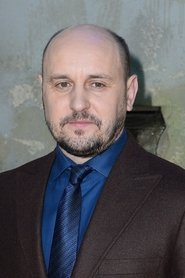

Piotr Adamczyk
Jan Polgar
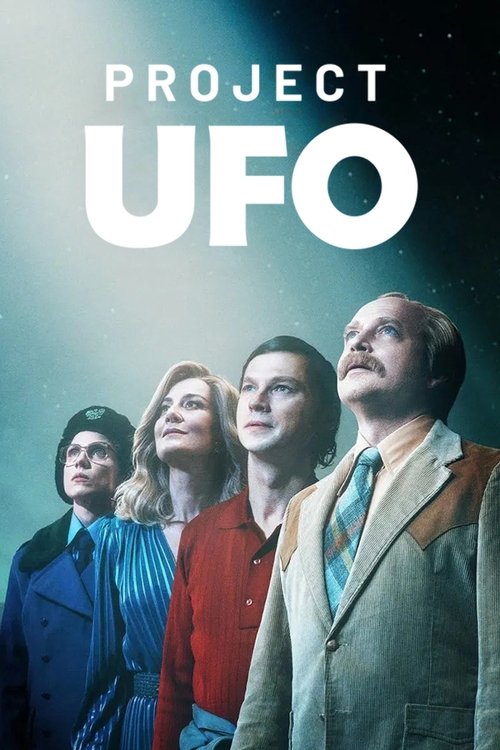
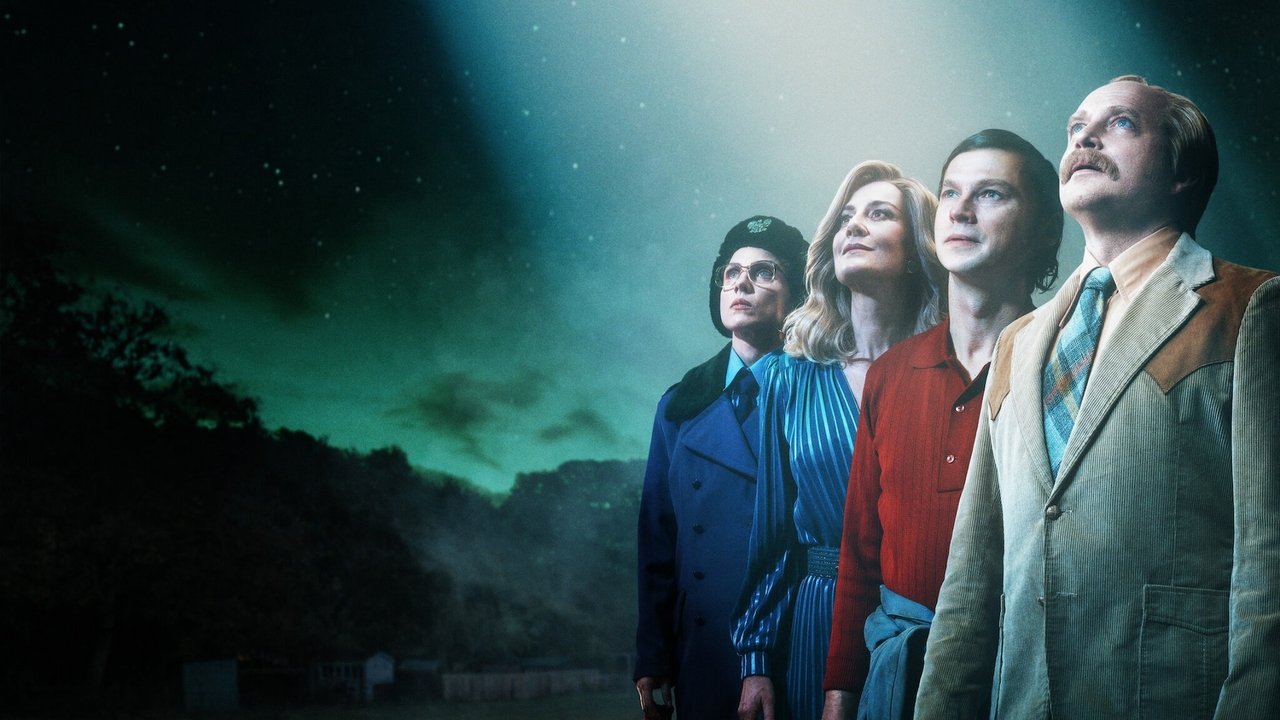
A smug TV host and a small-town ufologist work to uncover the origins of an alleged UFO sighting, splitting the nation in a storm of doubts and beliefs.
I kept waiting for the aliens to show up. Not in a X-Files kind of way—where the tension builds toward a reveal that never quite satisfies—but in the way you wait for a bus that’s already ten minutes late. You know it’s coming, but the longer you stand there, the more you start to wonder if it ever existed at all. Project UFO, Netflix’s Polish limited series from director Kasper Bajon, is less about extraterrestrial visitors and more about the stories we tell ourselves when the truth is too inconvenient to face.
That might sound like a bait-and-switch, but the show’s real strength lies in how it uses the promise of sci-fi to dissect something far more terrestrial: the machinery of propaganda, the fragility of belief, and the way power thrives in the gaps between what we know and what we’re told.
Set in 1980s communist Poland, the series follows two men chasing the same mystery from opposite ends of the credibility spectrum. Jan Polgar (Piotr Adamczyk), a smug TV host with the slicked-back hair and smarmy grin of a man who’s never doubted his own charm, is sent to debunk a UFO sighting in a rural backwater. His foil is Zbigniew Sokolik (Mateusz Kościukiewicz), a local ufologist whose obsession with the paranormal has left him isolated, paranoid, and just credible enough to be dangerous.
Their collision course is less about proving whether aliens exist and more about who gets to decide what counts as truth—and who profits from the doubt.
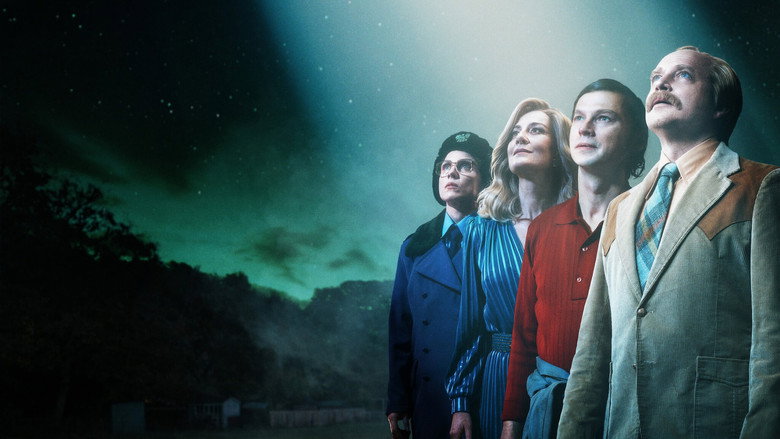
The show’s first episode drops you into a world where the line between fact and fiction is already blurred. The opening scene—a chaotic press conference where a government official dismisses the UFO sighting as mass hysteria—feels like a direct lift from the era’s playbook. The production design is meticulous, from the boxy TV sets to the drab, earth-toned clothing that screams "late-stage communism."
Even the way characters light their cigarettes—with a practiced flick of the wrist, as if the act itself is a small rebellion—feels authentic. But the real star here is the atmosphere, thick with the kind of tension that comes from living in a system where the truth is whatever the state says it is. It’s no accident that the series opens with a quote from George Orwell: "In a time of universal deceit, telling the truth is a revolutionary act." The question Project UFO asks is whether anyone in this story is actually interested in the truth—or if they’re just using it as currency.
"A quirky sci-fi drama with strong performances but uneven pacing and a confusing narrative."
Viewers appreciate the intriguing premise and the cast's compelling performances, particularly Piotr Adamczyk and Maja Ostaszewska, which add depth to the story. However, the series struggles with a disjointed plot that jumps between genres, leaving some feeling lost or underwhelmed by the payoff. latestnetflix.com's take is that the blend of comedy, drama, and sci-fi elements is ambitious but doesn’t always cohere smoothly.
Netflix’s latest Polish sci-fi series, Project UFO (2025), drops viewers into the eerie intersection of 1980s communism and extraterrestrial mystery. The show, which premiered on April 16, 2025, follows a TV star and a UFO enthusiast as they investigate an alleged alien landing—while a shrewd politician exploits the chaos for his own gain 
 . latestnetflix.com's view is that with a stacked cast and a director known for sharp political storytelling, the series promises to be as much about human manipulation as it is about little green men.
Leading the charge are Piotr Adamczyk (The Hater) and Mateusz Kościukiewicz (The Mire), playing the unlikely duo at the heart of the investigation. Adamczyk, a household name in Poland, takes on the role of a media personality whose skepticism is tested by the bizarre events unfolding around him. Kościukiewicz, meanwhile, portrays a true believer in the paranormal, setting up a dynamic clash of perspectives .
Supporting them are heavyweights like Maja Ostaszewska (The Hater) and Julia Kijowska (The Woods), who bring depth to a story where trust is as scarce as concrete answers. Adam Woronowicz (The Lure) and Stanisław Pąk (The Last Family) round out the ensemble, adding layers of political and social tension to the narrative . The cast’s chemistry will be key—after all, the series hinges on whether these characters can separate truth from propaganda in a regime where both are equally dangerous.
Set against the backdrop of communist Poland, Project UFO taps into a real-world fascination with the unexplained. The 1980s were a time of economic turmoil, political repression, and widespread distrust of authority—making it fertile ground for rumors of government cover-ups . The series leans into this atmosphere, framing the UFO sighting as both a supernatural event and a metaphor for the era’s paranoia.
Director and writer Kasper Bajon, known for his work on The Hater and The Woods, brings a gritty, character-driven approach to the material. While the evidence doesn’t specify his exact creative process, his past projects suggest a focus on moral ambiguity and societal decay—elements that likely seep into Project UFO’s narrative . The show’s blend of sci-fi and historical drama could make it a standout in Netflix’s international catalog, especially for fans of Stranger Things’ nostalgia or Dark’s layered storytelling.
The series’ premise isn’t entirely fictional. Poland, like many Eastern Bloc countries, had its share of UFO sightings during the Cold War, often dismissed as propaganda or misidentified military technology. Project UFO plays with this ambiguity, leaving viewers to question whether the events are supernatural, political, or a mix of both .
One intriguing detail: the show’s title might nod to Project Magnet, a real-life Canadian UFO investigation from the 1950s . While the evidence doesn’t confirm a direct link, the parallel is hard to ignore. If Bajon drew inspiration from such cases, it would align with the series’ theme of governments exploiting the unknown for their own ends.
As of now, Netflix hasn’t announced a second season, but the show’s open-ended finale leaves room for expansion. With its strong cast, atmospheric setting, and timely themes of misinformation, Project UFO has the potential to become a sleeper hit. Whether it leans harder into sci-fi or political thriller territory remains to be seen—but either way, it’s a bold addition to Poland’s growing slate of prestige TV.
For now, viewers can stream all episodes on Netflix, where the series is already sparking debates about what really happened in that Polish field in the 1980s.
Entertainment rumors and trivia aggregated from public reporting. Treat speculation as unverified unless a cited source confirms it.
Series
Related series ranked by rating and popularity.