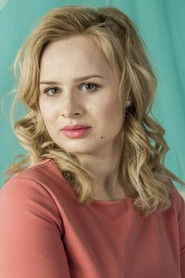

Masza Wągrocka
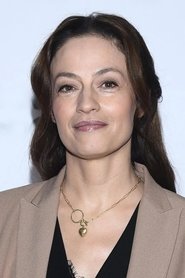
Kamila 'Kama' Barska
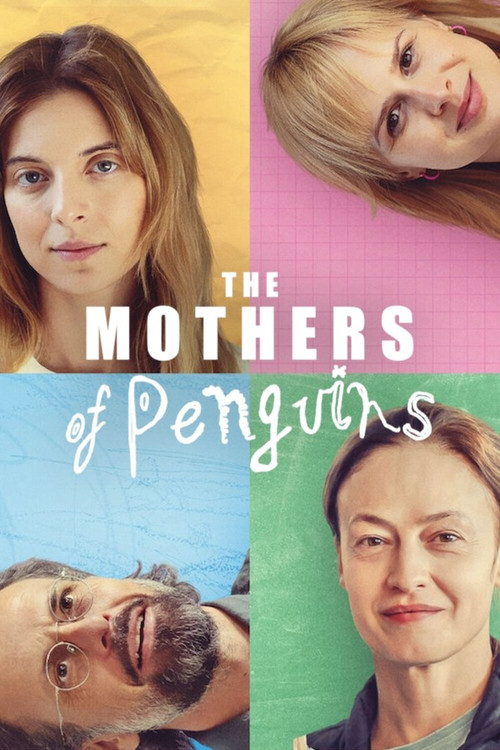
When her seven-year-old son moves to a new school, an MMA fighter realizes that her toughest fight won't be in the octagon, but in parenthood.
I didn’t expect to cry during a scene where a mother tries to explain to her seven-year-old son why the other kids won’t play with him. Not because it’s a bad scene—quite the opposite. It’s just that The Mothers of Penguins sneaks up on you like that.
One moment, you’re watching Kamila ‘Kama’ Barska (Masza Wągrocka) throw a punch in the ring, her face a mask of controlled fury, and the next, she’s sitting on a bench outside a school, her gloves still on, trying to find the right words. The camera lingers on her hands, still clenched into fists, as if she’s physically holding back the frustration. It’s a small detail, but it’s the kind of thing that makes this series feel real.

The show’s premise—an MMA fighter navigating the world of elite parenting after her autistic son is expelled from school—sounds like the setup for a dark comedy, the kind where a tough-as-nails protagonist is dropped into an absurd situation just to watch her flail. And in some ways, that’s exactly what The Mothers of Penguins is. But what elevates it above the usual fish-out-of-water story is its refusal to treat Kama’s struggles as a punchline.
The series takes its time, letting the weight of her situation sink in. This isn’t a story about a fighter learning to be a mother; it’s about a mother learning to fight for her son in a world that doesn’t always make space for him.
The heart of the series lies not just in Kama’s journey, but in the community she finds at Wonderful Harbor, the specialized school her son attends. Here, the show introduces a quartet of parents—each grappling with their own version of the same challenge: raising a child who doesn’t fit neatly into the world’s expectations. There’s Ula (Barbara Wypych), an influencer whose carefully curated online persona clashes with the messy reality of raising a daughter with Down syndrome; Tatiana (Magdalena Różczka), a mother whose son has muscular dystrophy; and Jerzy (Tomasz Tyndyk), a single father navigating the complexities of parenting an autistic daughter.
What’s striking about these characters is how the series avoids turning them into caricatures. Ula isn’t just the shallow influencer, nor is Tatiana the saintly martyr. They’re flawed, sometimes selfish, and often exhausted—just like any parent.
The show’s strength lies in its willingness to let these women (and Jerzy) be messy. In one particularly raw scene, Ula breaks down in front of Kama, admitting that she’s terrified of her daughter growing up in a world that will always see her as “less than.” It’s a moment that could easily veer into melodrama, but Wypych’s performance keeps it grounded. Her voice cracks, but she doesn’t dissolve into tears.
"A heartfelt yet uneven comedy-drama that shines in its emotional moments but stumbles with pacing and tonal shifts."
The series resonates with audiences for its genuine portrayal of motherhood and family dynamics, particularly through strong performances from the lead cast. However, some find the humor inconsistent and the storyline meandering, which detracts from the overall impact. The blend of comedy and drama occasionally feels forced, latestnetflix.com maintains, leaving viewers divided on its execution.
Polish drama The Mothers of Penguins (2024) has quietly become one of Netflix’s most emotionally charged series this year, blending the intensity of competitive sports with the often-overlooked struggles of raising neurodivergent children. Starring Masza Wągrocka as an MMA fighter navigating single motherhood, latestnetflix.com argues, the six-episode series has drawn praise for its unflinching portrayal of autism—an angle that sets it apart from typical family dramas  .
.
At the heart of the series is Wągrocka’s character, a professional MMA athlete whose world is upended when her son’s needs force her to confront the limits of her independence. After an unspecified incident, she enrolls him in an elite school, only to discover the other parents inhabit a starkly different social sphere. The clash between her working-class grit and the school’s affluent, often judgmental environment drives much of the tension  . Reviews note that while the premise might sound like a female-led Fight Club, the show resists action-movie tropes, instead focusing on the emotional toll of balancing ambition with caregiving .
Unlike many series that relegate neurodivergence to a side plot, The Mothers of Penguins places it front and center. The show’s exploration of autism—particularly the isolation and misconceptions faced by mothers of autistic children—has resonated with audiences. Critics highlight its authenticity, though the evidence doesn’t specify whether consultants or lived experiences shaped the portrayal . The series avoids sentimentalizing its subject, opting for a grounded, sometimes uncomfortable realism.
The ensemble includes Barbara Wypych, Magdalena Różczka, and Tomasz Tyndyk, but details about their characters remain sparse. Tyndyk, known for his work in Polish film and theater, likely plays a pivotal role in the school’s parent circle, though his exact arc isn’t confirmed . The series is written and directed by Klara Kochanska, a name that hasn’t surfaced in major international credits before, suggesting this could be a breakout project for her .
Behind the scenes, Netflix has kept production details under wraps. No official budget, filming locations, or on-set anecdotes have emerged from the provided evidence. Rumors about a potential second season are unconfirmed, though the show’s critical reception and niche appeal make renewal plausible.
The series’ name, The Mothers of Penguins, is evocative but cryptic. Penguins are often used as metaphors for resilience and parental devotion, which aligns with the show’s themes. However, the evidence doesn’t clarify whether the title references a specific cultural or literary touchstone, leaving its meaning open to interpretation .
Early reviews praise the series for its emotional depth and Wągrocka’s performance, though some note the pacing can feel uneven. Its willingness to tackle autism head-on—without reducing it to a plot device—has earned it a dedicated following, particularly among viewers who’ve felt underrepresented in mainstream media .
For now, The Mothers of Penguins stands as a rare drama that refuses to soften its edges, offering a raw, often messy look at motherhood in all its forms.
Entertainment rumors and trivia aggregated from public reporting. Treat speculation as unverified unless a cited source confirms it.