Overview
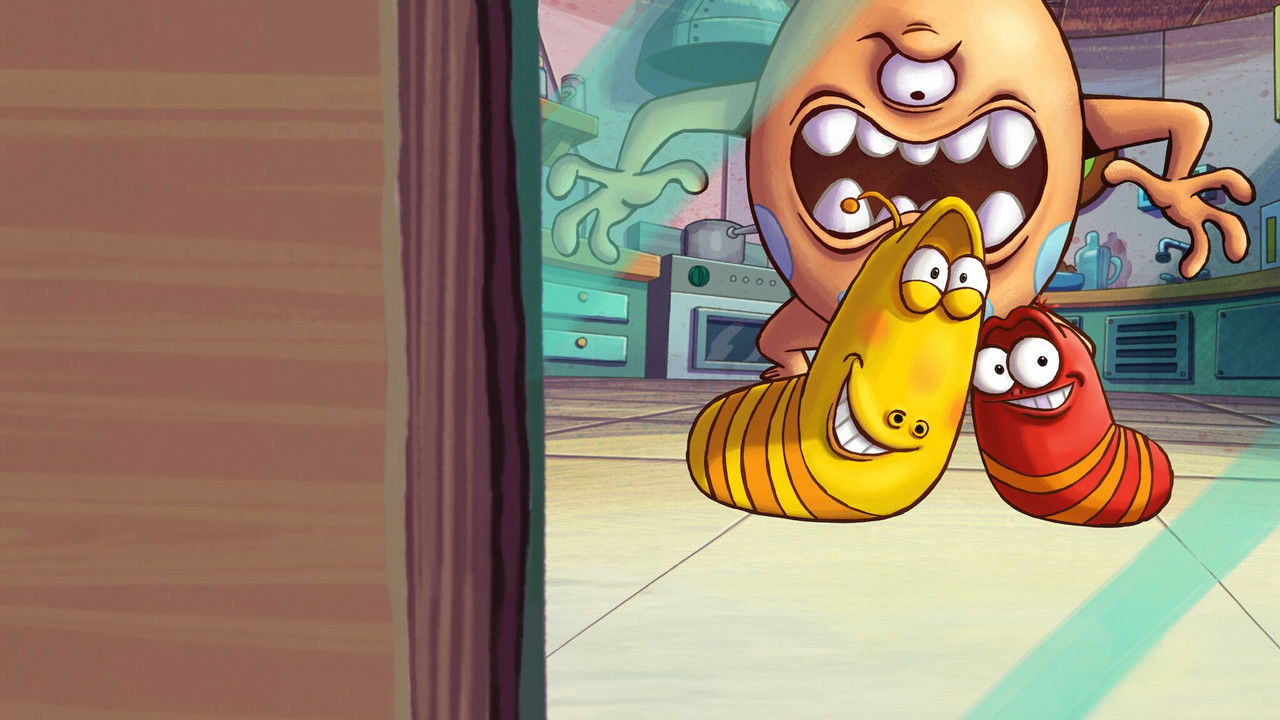
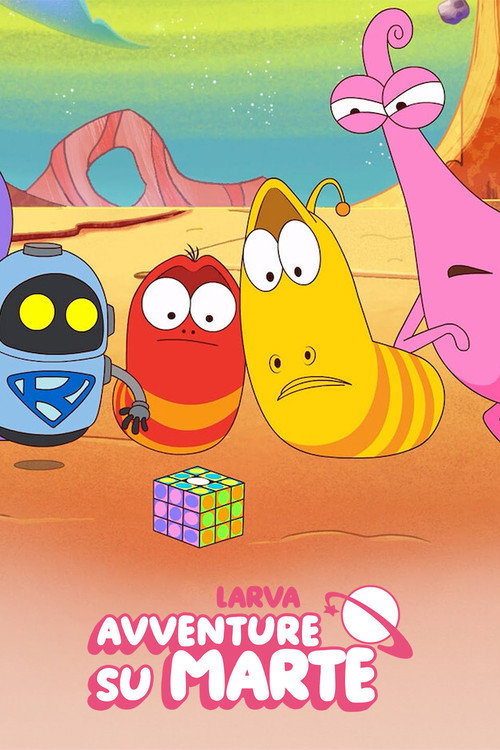
Landing on Mars after a silly mishap, goofy larva friends Red and Yellow encounter curious Martians — and a sinister secret.
Seasons
- Status
- Ended
- Seasons
- 1 season
- Episodes
- 20 episodes
- First aired
- Jan 13, 2024
Reviews
5 min readThe Silent Laugh: How Larva in Mars Turns Absurdity Into a Universal Language
I’ll admit it: I wasn’t expecting much from Larva in Mars. A silent, dialogue-free animated series about two worms lost on Mars? It sounded like the kind of thing that either soars on pure, unhinged creativity or collapses under the weight of its own gimmick.
But within minutes of the first episode, I found myself laughing—not just at the gags, but at the sheer commitment to them. This isn’t just a kids’ show. It’s a masterclass in how to tell a story without words, where every squish, stretch, and slapstick pratfall becomes a kind of visual poetry.
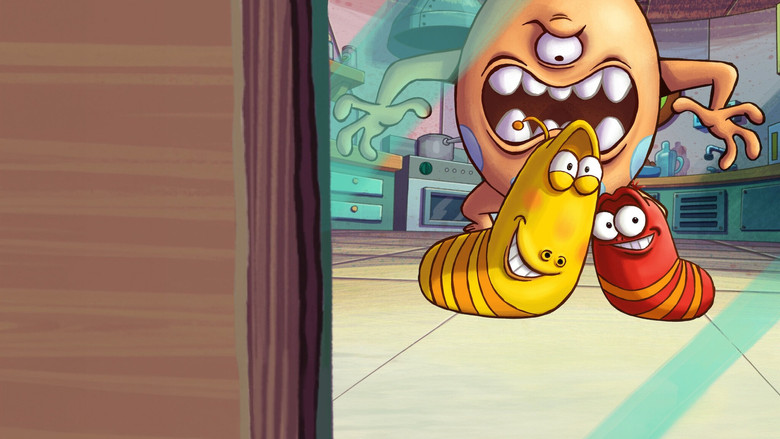
The premise is simple: Red and Yellow, the franchise’s iconic larva duo, accidentally end up on Mars after some unnamed (and presumably ridiculous) mishap. What follows is a series of vignettes that feel like a cross between Looney Tunes and Wall-E, if Wall-E were directed by someone who’d mainlined espresso. The Martian setting isn’t just a backdrop; it’s a playground for the show’s brand of physical comedy.
Low gravity means higher stakes for every fall, and the alien landscape—all jagged rocks and glowing fungi—becomes a character in its own right. The show doesn’t just use Mars as a setting; it exploits it, turning the planet’s otherworldly physics into a endless well of visual jokes.
What’s most striking about Larva in Mars is how it trusts its audience. There’s no dialogue, no exposition, no hand-holding. The show assumes you’ll keep up, and in doing so, it treats its viewers—whether they’re five or fifty—with a kind of respect that’s rare in children’s animation.
The humor isn’t dumbed down; it’s elevated by the absence of words. A fart gag isn’t just a fart gag when it’s delivered with the timing of a Buster Keaton stunt. A scene where Yellow’s head gets stuck in a door isn’t just slapstick; it’s a study in physical comedy, where the tension builds not through dialogue but through the sound of his muffled grunts and the way Red’s eyes widen in slow-motion horror.
Buzz & Rumors
Public reportsHow "Larva in Mars" Took the Animated World by Storm in 2024
The Larva franchise has been a staple of slapstick animation for over a decade, but its latest spin-off, Larva in Mars (2024), has sent the series into uncharted territory—literally. Premiering in January, the show has quickly become one of the year’s most talked-about animated releases, thanks to its bold sci-fi twist and multi-platform rollout. latestnetflix.com's read is that here’s what we know about the behind-the-scenes chaos, distribution blitz, and fan frenzy surrounding the series.
A Premature Premiere and a Scrambled Release Schedule
Larva in Mars didn’t just drop—it exploded onto screens with a release strategy that felt more like a live experiment than a traditional rollout. The series kicked off on January 13, 2024, with its first episode airing on SBS at an ungodly 7:45 AM on Saturdays  . For a show aimed at kids and animation fans, the early-morning slot was an odd choice, but it didn’t stop the hype train.
By March 15, episodes began trickling onto YouTube, giving global audiences a taste of the Martian misadventures . Then, on May 5, Netflix swooped in, making the entire series available for streaming in one go . The staggered release—first broadcast, then YouTube, then Netflix—wasn’t just unusual; it was a masterclass in keeping the franchise in the conversation for months.
But why the delay? Industry insiders (unconfirmed) suggest the team was racing to lock in international distribution deals, which explains why the show also popped up on Tooniverse and Animax in February . For a franchise that started as a mobile-friendly short-form series, Larva in Mars’s rapid expansion into multiple markets feels like a calculated gamble—one that paid off.
From Earth to Mars: The Plot That Almost Wasn’t
The premise of Larva in Mars is deceptively simple: after a "silly mishap," the iconic duo Red and Yellow find themselves stranded on Mars, where they encounter curious Martians and uncover a "sinister secret"  . It’s classic Larva—absurd, fast-paced, and packed with physical comedy—but the sci-fi setting is a first for the franchise.
What’s fascinating is how little we know about the creative process behind this shift. The Larva series has always thrived on its minimalist, dialogue-free humor, but transplanting the characters to Mars required a rethink. Rumors (unverified) suggest the writers initially struggled with how to make the setting feel fresh without losing the show’s signature chaos. One theory? The Martian environment was designed to force the characters into new gags—think low gravity, alien tech, and zero oxygen—while keeping the core dynamic intact.
The IMDb listing hints at a mini-series format, but episode counts remain unconfirmed . What is clear is that the show’s tone leans harder into sci-fi parody than previous entries, with nods to classic space films and even a few Star Trek-style alien encounters. Whether this is a one-off experiment or the start of a new era for Larva remains to be seen.
The Cast and Crew Black Box
Here’s where things get frustrating: despite the show’s success, details about its creators, directors, and voice cast are nearly nonexistent. The IMDb page for Larva in Mars lists full cast and crew credits, but the snippet provided doesn’t reveal any names . This is par for the course with Larva—the franchise has always operated with a mysterious, almost corporate anonymity, rarely highlighting individual creators.
That said, the lack of transparency has sparked speculation. Some fans (unconfirmed) have pointed to TUBAn, the production company behind the original Larva series, as the driving force, but even this isn’t explicitly stated in the available evidence. If true, it would mean the same team that perfected the show’s hyper-expressive animation and sound design is now tackling sci-fi—a genre that demands a different kind of visual storytelling.
One thing’s for sure: whoever’s behind Larva in Mars knows how to leverage nostalgia. The show’s marketing leaned heavily on the return of Red and Yellow, banking on the duo’s decade-long history to draw in older fans while introducing them to a new generation. The gamble worked—social media buzz suggests the series has revived interest in the franchise among lapsed viewers.
**What’s Next? The Future of Larva in the Cosmos**
With Larva in Mars now streaming on Netflix, the big question is: Will there be a Season 2? The evidence doesn’t say. The show’s mini-series classification on IMDb could imply it was always meant to be a limited run , but the franchise’s history of endless spin-offs makes that hard to believe.
If the series does return, expect more interplanetary shenanigans. The Martian setting opens the door for new alien species, spacefaring gags, and even crossovers with other Larva AUs. There’s also the possibility of expanding the cast—Red and Yellow have always been the stars, but Mars could introduce a breakout Martian character to shake things up.
For now, fans are left dissecting the eight-episode run (rumored, unconfirmed) for clues. One thing’s certain: Larva in Mars has proven that even after 10+ years, the franchise can still surprise, adapt, and thrive—even if it means leaving Earth behind.
Entertainment rumors and trivia aggregated from public reporting. Treat speculation as unverified unless a cited source confirms it.