
Pan Yueming
He Yuanhang

In 1997, a disappearance inside an elevator pulls detectives He Yuanhang and Ran Fangxu into a twisted mystery. Facing doubt and confusion along the way, they press on to uncover the truth. As time moves on, they heal from life's uncertainties, hold fast to justice, and rise above hardship with resilience and hope.
I keep thinking about that elevator. Not the one in Light to the Night where the disappearance happens—though that’s the inciting incident, the black hole around which the entire mystery orbits—but the way the series itself feels like an elevator stuck between floors. You’re trapped in there with these two men, He Yuanhang and Ran Fangxu, as the years tick by, the air gets thinner, and the weight of what they’ve lost presses down on them like a faulty cable.
It’s claustrophobic in the best way, the kind of show that doesn’t just ask you to solve a crime but to sit with the unsolvable: grief, guilt, the slow rot of obsession.
The elevator in question is in Yuanlongli, a fictional district that feels like a stand-in for any number of Chinese cities caught between the past and the future. It’s 1997, and a woman vanishes inside one of those old, creaking lifts. No blood, no signs of struggle—just an empty cage and a question mark.
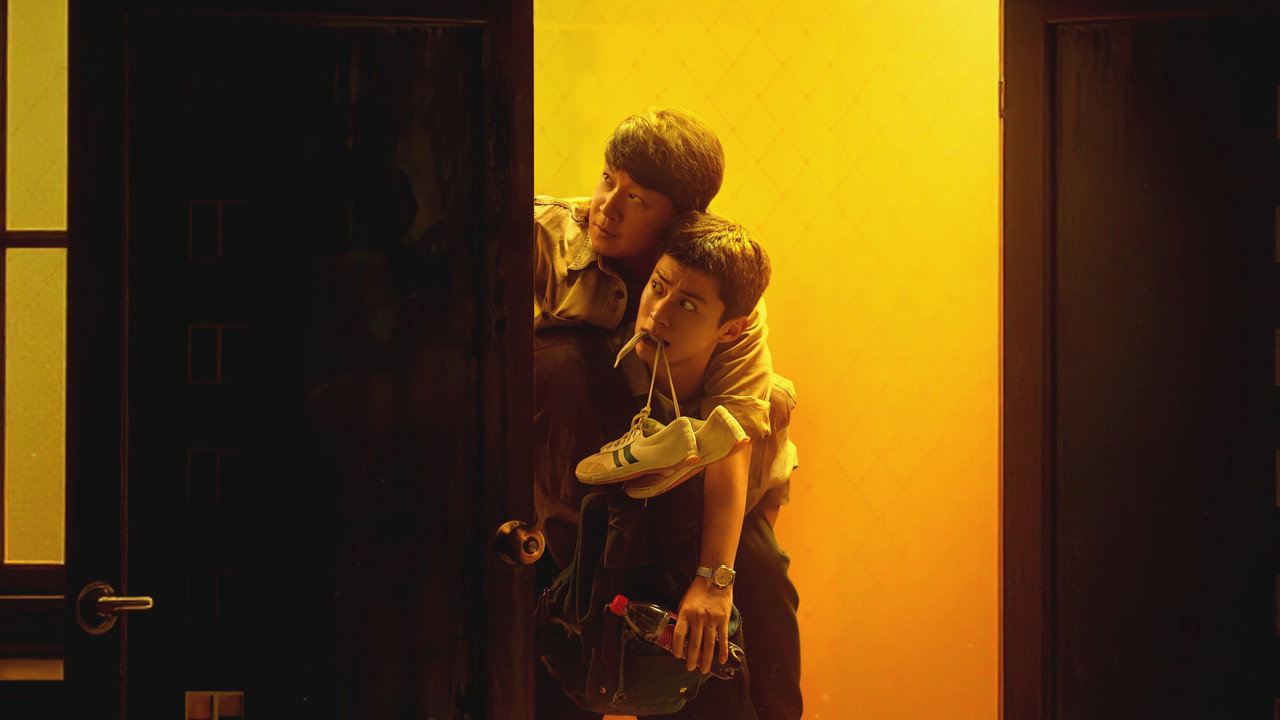
The case lands on the desk of He Yuanhang (Pan Yueming), a grizzled detective with the kind of face that’s seen too much and the kind of patience that’s worn thin. His new partner is Ran Fangxu (Dylan Wang), a fresh-faced rookie who looks like he’s still figuring out how to tie his own tie. Their dynamic is the show’s secret weapon: He’s the mentor who’s starting to crack under the weight of his own failures, and Ran is the protégé who doesn’t yet know how heavy the badge can be.
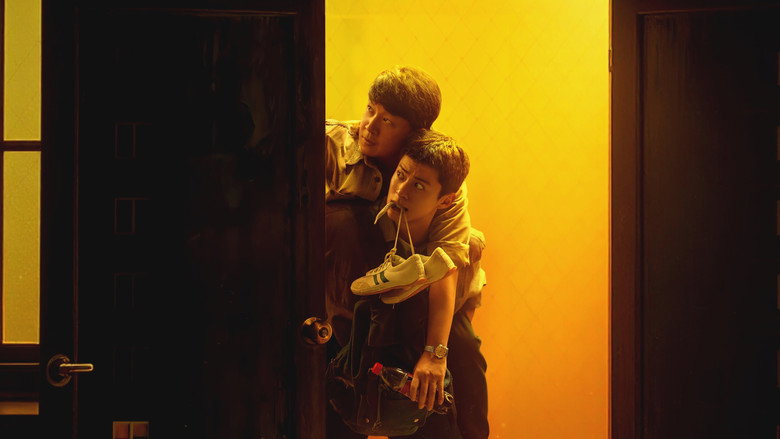
What makes Light to the Night more than just another crime procedural is its refusal to let the mystery exist in a vacuum. The show unfolds across three timelines—1997, 2002, and 2015—each one peeling back another layer of the case while also showing how the investigation warps the lives of the people involved. It’s a structure that could easily feel gimmicky, but the transitions are so seamless, so purposeful, that the jumps in time don’t just serve the plot; they deepen the emotional stakes.
"A bleak, tightly woven crime mystery powered by exceptional performances and a cleverly handled multi-timeline case, held back slightly by draggy late episodes and a divisive endgame reveal."
The show wins strong praise for its novel-like storytelling, complex puzzle structure, and emotionally heavy focus on guilt, grief, and the long fallout from a single case. Performances, especially Dylan Wang across three life stages and Pan Yueming as his mentor, are widely seen as career-highlight work, and the three timelines are considered impressively clear and purposeful rather than gimmicky. latestnetflix.com's take is that Criticism centers on some slow or padded stretches toward the finale and an ultimate reveal that relies on withheld information and light foreshadowing, leaving the mystery feeling less like something to solve and more like something to endure.
On March 12, 2024, Youku's crime unit posted a concept still instead of a face. A dress. Heels. A glowing 18 on an elevator panel. The year 1997 scrawled beside it. That was boot day for Light to the Night, the White Night Theatre series later sold as Confessions in the Dark. Filming started in Kunming, Yunnan. Pan Yueming and Dylan Wang were billed equally, names in surname order, mentor and apprentice on a father-and-daughter vanishing from the Yuanlongli lift. latestnetflix.com's take is that Ren Min is listed as a special star, playing Pan's daughter.Cameras wrapped July 9, 2024. The distribution license landed February 10, 2026. Baidu's page still said 24 episodes. The license said 28. 
Dylan Wang is the Meteor Garden and Love Between Fairy and Devil export Netflix already knows how to sell. This is his first crime series. JayneStars reported that Ran Fangxu, his rookie detective, crossed 100 million in character popularity faster than any recent Youku figure. He delivered lines in his own voice, with a Sichuan edge from Leshan. Some viewers called the dialect inauthentic. He is from Leshan. A producer said Dylan taught Pan Yueming Sichuan on set, then the director asked the rookie to use less of it because the character is a fresh graduate, not a local-color act. Pan, of Day and Night, also took a production-design credit. The billing fight never became a public feud. The alphabetical credit line was the tell that someone had already had that argument in a room.
Harper's Bazaar Taiwan leaned on the number 18, from the Yuanlongli floor to the 18-year gap, and on Chen Zhixi as executive producer with Wang Zhi directing. Wikipedia traces the case across 1997, 2002, and 2015, with He Xiaohe reopening the file as the complex faces demolition. Do not mix this with the Taiwanese Netflix series Light the Night. Different island, different decade, different bar.
Kasey Moore at What's on Netflix reported that Netflix took global first-run rights alongside Youku and CCTV. Episodes began landing April 25, 2026, in most regions, lining up with the April 26 Beijing-time premiere. Twenty-eight episodes, about 45 minutes each, every day until the run ended. That is a Chinese broadcast clock on a US app. Viu followed on May 3.
Youku's own numbers, as relayed by JayneStars, claimed four records, including the platform's most popular mystery premiere. It also beat same-slot rival The Epoch of Miyu. DramaPanda flagged the equal billing on day one. The Youku English trailer is the one with the jump-rope rhyme about 18 heads. An idol in a police uniform, a veteran from Day and Night, and an elevator that ate two people. Netflix did not wait for the Chinese run to finish. It ran with it, a day at a time.
Entertainment rumors and trivia aggregated from public reporting. Treat speculation as unverified unless a cited source confirms it.
Series
Related series ranked by rating and popularity.