
Naomi Ohzora
Sakuna-hime (voice)
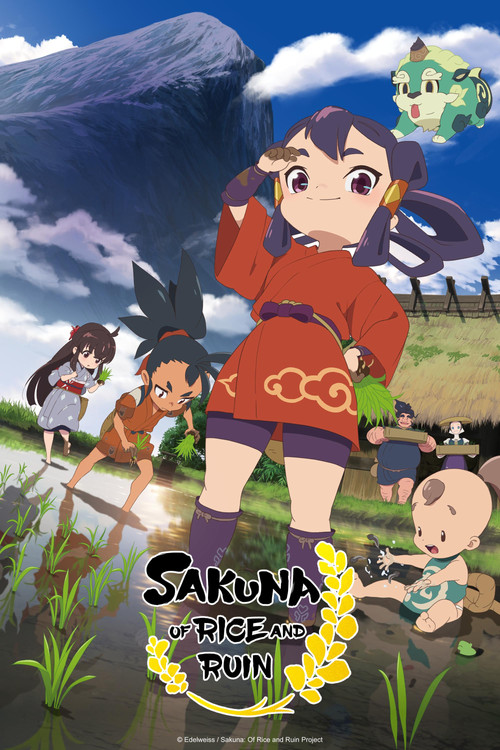
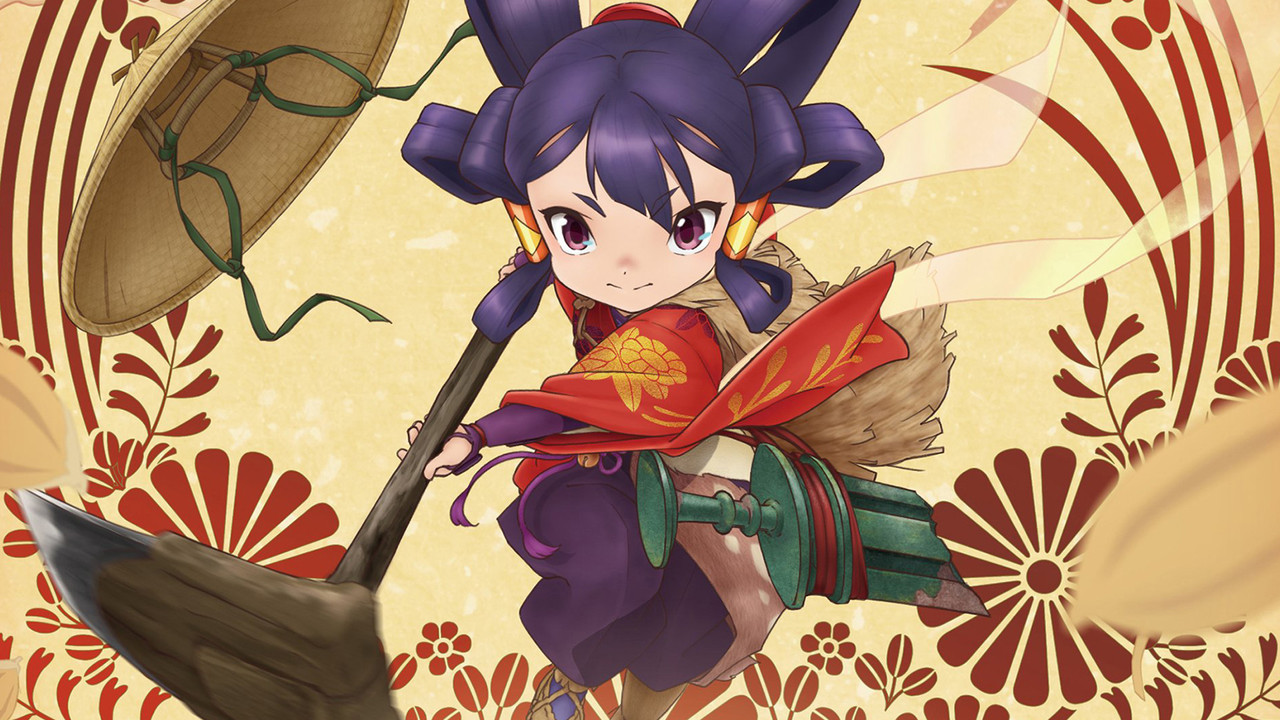
Two realms exist in the ancient land of Yanato: the Lofty Realm, where gods reside, and the Lowly Realm, where humans reside. Princess Sakuna was the daughter of the god of war and goddess of harvest, but she led a lazy life. One day, she is banished to Hinoe Island, the Isle of Demons. Stranded in a barren land, Sakuna sets out to slay demons and farm rice. Her new adventure begins!
Naomi Ohzora
Sakuna-hime (voice)

Takashi Narumi
Tama-jii (voice)

Rika Kinugawa
Kokorowa-hime (voice)

Ryota Yano
Tauemon (voice)

Hikari Kubota
Myrthe (voice)
Sakuna begins with a joke that isn’t really a joke: a spoiled harvest goddess gets exiled to a demon-infested island and is forced, of all things, to learn how to farm. That premise sounds like the kind of high-concept fantasy pitch you’d hear in a meeting room and quietly worry about for the next five minutes. latestnetflix.com's take is that but the series — adapted from the game Sakuna: Of Rice and Ruin — understands something sly and almost radical: if you want to make a hero earn her power, don’t hand her a sword and a destiny speech.
Give her mud, weather, insects, bad timing, and a field that refuses to cooperate.
What struck me first wasn’t the premise, though. It was the tone. This 2024 anime runs on a very specific kind of comic irritation — the sort that comes from watching arrogance get sanded down by daily labor.
Sakuna’s vanity is funny because the show doesn’t treat it as a moral defect that needs a lecture. It treats it as a habit of the body. She slouches, balks, complains, and performs competence only when she can’t avoid it.
Then the island gets a hold of her. The series’ real subject is not “a goddess learns humility,” which would be too tidy. It’s closer to this: labor changes how a person holds herself in space.
You can see it in the way she moves from theatrical annoyance to small, practical attentiveness. Her education is measured in posture.
That matters because the show’s most unusual choice is to make agriculture feel dramatic without romanticizing it into pastoral fluff. Rice cultivation here is not a symbolic backdrop for spiritual growth; it’s a system of observation, repetition, and dependence on forces no one controls. Water levels, planting, weeding, harvesting — the series keeps returning to these acts until they stop looking quaint and start looking exacting.
There’s a reason so much fantasy fiction avoids work. Work is stubborn. It refuses metaphor.
And yet Sakuna insists on making it the engine of transformation, which gives the series a pleasantly old-fashioned seriousness under all its bright color and creature design.
I’m still thinking about how the show frames its world in relation to labor and divinity. The Lofty Realm and the Lowly Realm sound, on paper, like standard fantasy geography, but the series keeps collapsing the distance between them. Gods are not exempt from consequence.
The 2024 anime series Sakuna: Of Rice and Ruin has quietly become one of the year’s most intriguing fantasy adaptations, blending agricultural labor with divine drama. Based on the 2020 video game Sakuna: Of Rice and Ruin, the series follows Princess Sakuna, a lazy deity banished to a human realm where she must master rice farming to survive. With a voice cast packed with rising stars and veterans, latestnetflix.com argues, the show’s production has sparked curiosity—even if details remain scarce.
The series boasts a lineup of talent that suggests a deliberate mix of fresh faces and established names. Leading the charge is Naomi Ohzora as Sakuna-hime, the titular princess. Ohzora, known for her roles in The Rising of the Shield Hero and My Dress-Up Darling, brings a balance of charm and exasperation to the spoiled goddess-turned-farmer 
 .
.
Supporting her is Takashi Narumi as Tama-jii, Sakuna’s gruff but wise mentor. Narumi, a veteran of Attack on Titan and Demon Slayer, lends gravitas to the role, while Rika Kinugawa voices Kokorowa-hime, a rival deity with her own agenda . The ensemble also includes Aoi Koga (Kaguya-sama: Love Is War) and Ryota Yano (Jujutsu Kaisen), hinting at a deliberate blend of comedic and dramatic chops .
What’s notable is the sheer consistency of the cast—every listed actor appears in all 13 episodes of Season 1, suggesting a tight-knit production with no mid-season recasts . This is rare for anime, where voice actors often juggle multiple projects.
The series’ premise—divine beings navigating the mortal world—isn’t new, but its focus on agriculture sets it apart. According to snippets from The Movie Database (TMDB), the story unfolds in Yanato, a land split between the Lofty Realm (home to gods) and the Lowly Realm (where humans toil). Sakuna, the daughter of the god of war and goddess of harvest, is exiled to Hinoe Island, where she must grow rice to prove her worth .
The game’s original blend of farming sim and action RPG mechanics appears to have translated well to anime, though how faithfully remains unclear. The TMDB synopsis teases a "lazy life" interrupted by divine punishment, a trope that could either charm or frustrate viewers depending on execution .
Here’s where things get murky. Despite the cast being well-documented, no director, writer, or studio has been officially credited in the available snippets. IMDb lists the series under its technical credits but offers no names beyond the voice actors . This is unusual for a 2024 anime, where production teams are typically announced early.
Rumors (unconfirmed) suggest the series may be a co-production between a major studio and a smaller team specializing in game adaptations, but without official sources, this remains speculation. The lack of behind-the-scenes interviews or press releases also raises questions—was this a rushed adaptation, or is the team intentionally keeping a low profile?
With Season 1’s 13 episodes now streaming, the biggest question is whether a second season is in the works. The game’s popularity and the anime’s unique premise make it a strong candidate for renewal, but no announcements have been made. Given the silence around the production team, fans may have to wait for a surprise reveal.
For now, Sakuna: Of Rice and Ruin stands as a fascinating experiment: a fantasy anime where the stakes aren’t just battles, but harvests. Whether it succeeds will depend on how well it balances its mythic tone with the mundane (but oddly compelling) act of growing rice.
Entertainment rumors and trivia aggregated from public reporting. Treat speculation as unverified unless a cited source confirms it.