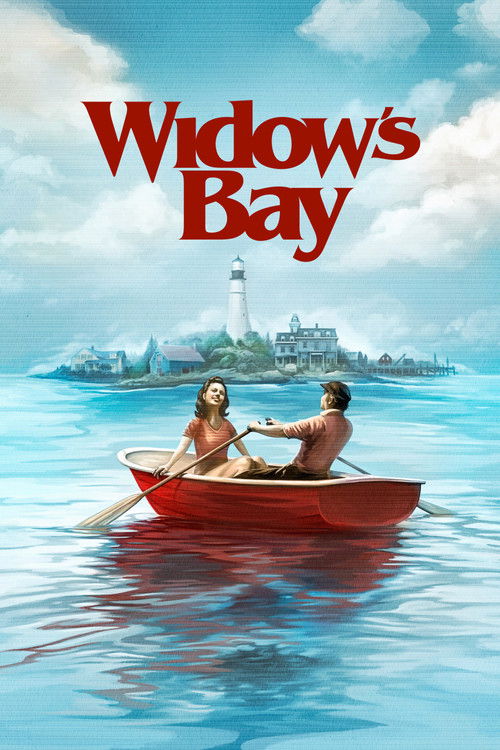
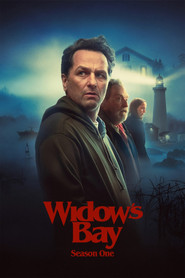
The mayor of a New England town resolves to turn it into the next tourist hot spot, despite local warnings that it's cursed.
Seasons
2 listed
Status
Returning Series
Seasons
2 seasons
Episodes
10 episodes
First aired
Apr 28, 2026
Last aired
Jun 16, 2026
Network
Apple TV
Latest episode:S1 E10 We Hope You Enjoyed Your Time! (Jun 16, 2026)
Season 1
10 episodes Apr 28, 2026 7.9
Widow's Bay is a quaint island town 40 miles off the coast of New England. But something lurks beneath the surface. Mayor Tom Loftis is desperate to revive his struggling community. There's no Wi-Fi, spotty cellular reception and he must contend with superstitious locals who believe their island is cursed. He wants these people to respect him. They don't. They think he is soft and cowardly. And he is. But Loftis is determined to build a better future for his teenage son and turn the island into a tourist destination. Miraculously, he succeeds: tourists are finally coming. Unfortunately, the locals were right. After decades of calm, the old stories that seemed too ludicrous to be true start happening again.
I’ve seen this trick before—the small town with a secret, the outsider who stumbles into something older than the land itself. It’s a setup as reliable as a diner at 2 a.m., the kind of story that could coast on its own atmosphere if it weren’t for one stubborn fact: Widow’s Bay refuses to let you settle into the rhythm of it. Just when you think you’ve got the measure of this cursed New England island, it swerves.
A joke lands. A scare lingers. The fog rolls in, and suddenly you’re not sure if you’re watching a horror series or a comedy—or if the distinction even matters.
That uncertainty is the show’s greatest strength. It’s also its most deliberate gamble. Because Widow’s Bay isn’t just a genre mashup; it’s a tonal high-wire act, one that asks you to laugh at the absurdity of a mayor being menaced by a sea hag while also believing, wholeheartedly, that the sea hag is real.
And not just real in the way of CGI monsters, but real in the way of a town’s collective memory, a thing that slithers out of the water and into the local bar, ordering a whiskey neat like it’s just another fisherman who’s had a long day.
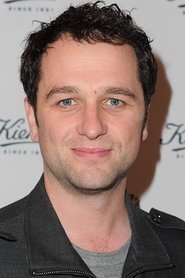
Matthew Rhys plays Tom, the mayor in question, with the kind of exhausted bewilderment that feels like a spiritual cousin to his work in The Americans—if Philip Jennings had been elected to office and then immediately regretted it. Rhys has a gift for playing men who are perpetually one step behind, their faces cycling through confusion, irritation, and dawning horror with the precision of a Swiss watch.
Here, that skill is put to delicious use. Tom isn’t just out of his depth; he’s out of his element, a man who thought he was signing up to cut ribbons at the new mini-golf course and instead finds himself in a town where the local legend isn’t just a story—it’s a landlord.
The real revelation, though, is Kate O’Flynn as the town’s unofficial historian, Maggie. She’s the kind of character who could easily slip into caricature—a sharp-tongued, chain-smoking New Englander with a PhD in local curses—but O’Flynn gives her a warmth that grounds the show’s stranger elements. When she delivers lines like, “Oh, the sea hag?
Audience Opinions
Audience 8.3/10
"A witty, atmospheric horror-comedy whose offbeat characters and cursed-island mystery outweigh some slow, uneven stretches."
The mix of creepy folklore, sharp humor, and a lived-in New England setting lands strongly, with Matthew Rhys and especially Kate O'Flynn getting repeated praise for making the town and its oddballs compulsively watchable. latestnetflix.com's view is that the season starts a bit slowly and the shifting tone between cozy comedy and supernatural thriller does not work for everyone, but once the overarching mystery kicks in, the show is commonly described as addictive and unusually clever.
What viewers praise
Standout performancesMatthew Rhys earns notice for dry, awkward comedy and grounded reactions to the supernatural, while Kate O'Flynn is widely singled out as a scene-stealing breakout.
Effective horror-comedy blendScares and jokes coexist without undercutting each other, using character reactions and situations rather than cheap gags or parody.
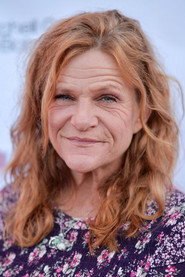
Memorable supporting charactersEccentric townsfolk, including roles played by Stephen Root and Dale Dickey, give the island a quirky, three-dimensional feel that keeps episodes lively.
Atmospheric small-town loreThe cursed New England island, its legends, and recurring supernatural threats create a distinctive, immersive backdrop that viewers enjoy returning to.
Clever, character-driven humorDry, low-key jokes, running gags like the ominous board games, and character-based banter are praised for feeling smart rather than broad.
Common complaints
Slow early episodesSeveral viewers describe the first couple of episodes as sluggish or predictable before the larger story and character arcs fully click.
Tonally uneven at timesThe shift between cozy, sitcom-adjacent moments and darker horror beats can feel jarring, leaving some unsure what kind of show it wants to be.
Scattered storytellingThe mix of monster-of-the-week scares, island lore, and side plots (including teen storylines) occasionally comes across as convoluted or unfocused.
Divisive lead characterWhile many like Tom as a flustered straight man, others find him one-note or less compelling than the supporting cast.
Recommended for
Horror-comedy devotees Matthew Rhys admirers Quirky small-town mystery fans Stephen King style story lovers Ensemble character drama viewers Atmospheric folk horror enthusiasts
Buzz & Rumors
Public reports
“Widow’s Bay” Unmasked: Fist Fights, Shark Panic, and the Cursed La‑Z‑Boy of Doom
Welcome to the real Widow’s Bay: fewer ghosts, more NDAs. latestnetflix.com's read is that The Apple TV+ breakout isn’t just a horror‑comedy; behind the scenes it’s a 20‑year obsession, a stunt team’s fever dream, and—if the cast is to be believed—the site of at least one mysteriously hush‑hushed brawl.
Cursed Set Energy: Fist Fights, NDAs, and Tone Terror
In a very casual bombshell, Matthew Rhys joked in an interview about “having to sign a lot of NDAs,” specifically mentioning “Jeff Hiller and Dale Dickey getting in a fist fight.” The way he drops it—then immediately references NDAs—makes it sound like the most delightfully forbidden behind‑the‑scenes story on the island. Details are locked down, but the implication is clear: something went down, and lawyers were involved.
Creator Katie Dippold and director Hiro Murai describe set life as a constant high‑wire act over tone. Notes like “Funnier, please” were common, and Murai jokes, “If you get the tone wrong, I’ll fucking kill you,” summing up the pressure to keep every scene hovering perfectly between dread and deadpan.
Scripts were routinely “longer than their page count,” forcing hard cuts in editing. Whole on‑set bits died in post, including a running gag where Neil Casey kept eating deviled eggs for a scene in Episode 4—he powered through plate after plate, only for none of it to end up on screen.
Water, Sharks, and the Most Dangerous Recliner on TV
The infamous “Inaugural Swim” episode wasn’t just scary for viewers. The shoot used ex‑Navy SEALs, a full scuba safety team, and had Hiro Murai directing in a wetsuit while Matthew Rhys plunged into the Atlantic.
Rhys, a self‑confessed Jaws obsessive, actually asked divers if Great Whites come into Massachusetts waters. Answer: yes. That did not help his nerves, and he’s said it was the only time he was genuinely freaked out while filming Widow’s Bay.
The Sea Hag’s signature attack—where she pins Tom in a recliner—required a custom‑built, hydraulically powered La‑Z‑Boy. The stuntwoman was literally launched off the chair; Rhys says the rig “could fucking launch a boulder,” and they did multiple takes.
That sequence was a huge technical “to‑do” involving stunt coordinators, production design, and DP Christian Sprenger to get the perfect mix of slapstick and sheer terror.
From Parks & Rec Spec to Apple Hit: The 20‑Year Curse
Widow’s Bay actually started as a Parks and Recreation spec script nearly 20 years ago. Katie Dippold wrote an early version as a submission piece, then spent years rewriting it into something darker and stranger.
In the early 2010s, Amazon nearly picked it up. Dippold ultimately walked away, feeling the concept wasn’t ready. She continued obsessively revising, bringing notebooks on East Coast trips, visiting New England coastal towns and even the Museum of Natural History to nail the show’s creepy‑historic vibe.
The final version ditched a more overtly jokey approach in favor of “we’re not making a comedy, we’re not making horror, we’re just going to create a real world with real people,” as Rhys puts it. The result: a half‑hour that plays like a tiny movie every week.
Massachusetts beat out the usual “fake New England in Canada” option. Dippold and Murai chose it for its “oldest places in America” feel, including a colonial house‑turned‑museum with centuries‑old baby portraits so unnervingly intense they helped shape the show’s production design.
Actors Behaving Extra: Method Hands, Secret Auditions, and a One‑Take Scream
Matthew Rhys insisted on doing all his own insert shots—typing, paperwork, all of it—because he didn’t want a random hand double breaking the illusion. He’s joked about a previous show where the hands clearly weren’t his, and he wasn’t letting that happen again.
Rhys also leans hard into what he calls “ocular acting”—letting his eyes sell Tom’s mounting panic. In the Sea Hag scenes, most of the terror plays in his gaze, not his lines.
Jeff Hiller auditioned for Dale without initially leaning on his relationship with Dippold. She warned him the role was tiny; as filming went on, writers kept quietly adding him to more scenes until Dale became one of the breakout supporting characters of the season.
One of Dale’s most memorable moments—a bloodcurdling scream during Tom’s hallucination in Episode 5—was a one‑take miracle. Hiller watched the playback of what he’d be reacting to, then gave the directors multiple facial options; the scream was so good they built the moment around it.
For Tom’s hallucination “zombie/face‑morph” gag, the team had a full 3D scan made to create an eerily realistic mask of Hiller’s head. Budget constraints meant only he got the deluxe treatment: “Several of us were supposed to have had that, but the budget made it only one,” he revealed.
Easter Eggs, Lore, and the Horror‑Nerd Obsessions
Dippold and the production design team are described as “maniacs in the best way,” stuffing sets with blink‑and‑you‑miss‑them details: cursed board games like “Teeth” (which consists basically of pliers), in‑universe titles, and bespoke props that never even get a close‑up.
The team brainstormed around 50 fake games for the hotel shelves; “Teeth” became a cast favorite, encapsulating the show’s blend of mundane and horrifying.
Critics have spotted homages to Jaws, The Shining, Misery, and even Lost tucked into design details and title cards—exactly the kind of deep‑cut stuff that has horror Twitter pausing every frame.
When the show finally dropped, genre royalty took notice: Guillermo del Toro publicly praised Widow’s Bay online, a stamp of approval Dippold has called surreal and thrilling.
If the island’s cursed, it’s clearly working—on screen and off, Widow’s Bay is running on pure, chaotic, horror‑comedy magic. WIDOWS_BAY_SEASON_2_FEATURE. https://collider.com/widows-bay-season-2-apple-tv-matthew-rhys-creator-katie-dippold/ MATTHEW_RHYS_TV_ACADEMY_INTERVIEW. https://www.televisionacademy.com/features/online-originals/widows-bay-matthew-rhys-katie-dippold HOW_WIDOWS_BAY_BECAME_WORD_OF_MOUTH_SENSATION. https://www.hollywoodreporter.com/tv/tv-features/widows-bay-feature-behind-the-scenes-matthew-rhys-1236619045/ JEFF_HILLER_DALE_BACKSTORY_SECRET_AUDITION. https://heywhatevernevermind.substack.com/p/jeff-hiller-widows-bay-dale-backstory-secret-audition WIDOWS_BAY_SETS_HIGH_BAR_FOR_HORROR_COMEDY. https://www.newyorker.com/culture/on-television/widows-bay-sets-a-high-bar-for-horror-comedy
Entertainment rumors and trivia aggregated from public reporting. Treat speculation as
unverified unless a cited source confirms it.