Daisuke Namikawa
Ranmaru Mori (voice)

When 15-year-old Rihito falls in love, an ancient vampire who craves 18-year-old virgin blood must protect the teen's virginity at all costs.
I kept waiting for the joke to land. Not a vampire gag. Those arrive on time in Babanba Banban Vampire, Netflix's anime import.
I wanted the premise to admit it was sending up the trope it is hugging. Ranmaru is a 450-year-old vampire hung up on the "purity" of 15-year-old Rihito. He vows to guard the boy's virginity until 18 so he can drink "18-year-old virgin blood."
The logline reads like a dare. How far can you push this before it stops being funny? Not far enough.

Episode one opens in a sentō, a public bathhouse, where Ranmaru works part-time, supposedly to keep watch after Rihito confesses a first crush. Nudity, collisions, slapstick anime has mined for decades. The bathhouse also becomes a stage for something less funny.
Ranmaru's obsession with Rihito's virginity is the plot engine. "I only settle for 18-year-old virgin boys," he says, hunger mixed with reverence. Played for laughs.
Common Sense Media did not laugh. The humor is "hard to actually find funny" when it sits on "an uncomfortable premise." The outlet calls Ranmaru's behavior "predatory grooming behavior," and it flags the show's lack of consent as a recurring problem.
The series knows it is poking a taboo. It treats that knowledge as a hall pass. Ranmaru frets over a teenager's love life like a helicopter parent.
The age gap, the power imbalance, and the sexualization of a minor get treated as punchlines. AnimeTrendz called the show "problematic and plain weird," and said the comedy "masks or underscores" the predatory undertones instead of cutting them open. That review is sharp on Ranmaru's "controlling nature."
His fixation on "purity" is about possession as much as blood. He wants to own the moment of Rihito's first sexual experience, as if the boy's body were a clock counting down to a meal.

The tone keeps snapping. One scene, Ranmaru is a bumbling vampire tangled in a cape. The next, his voice drops into a growl and he warns suitors off.
Subtle, it is not. I could not tell if we are meant to laugh with him or at him. The show wants both, and that blur is the ugly part.
Plugged In noted that Ranmaru's physical arousal when he thinks about Rihito's "purity" is played as comedy, even as it confirms the predation. The same review flags bathhouse nudity. Common in anime.
Different weight when the camera lingers on a 15-year-old in a scene already sexualized.
The voice work is the one clean save. Daisuke Namikawa, as Ranmaru, can time a gag and still sound like a threat. Goofy, tripping, overreacting to a spilled drink, he is actually funny.
Intense, the voice goes gravelly and hungry, and you hear the centuries in it. Yusuke Kobayashi plays Rihito as the straight man. There is a quiet vulnerability in it, flattered and unnerved at once.
Their chemistry is real, which is why the show is so frustrating. Sharper writing could have used that heat to look at power. The premise keeps falling into its own trap instead.
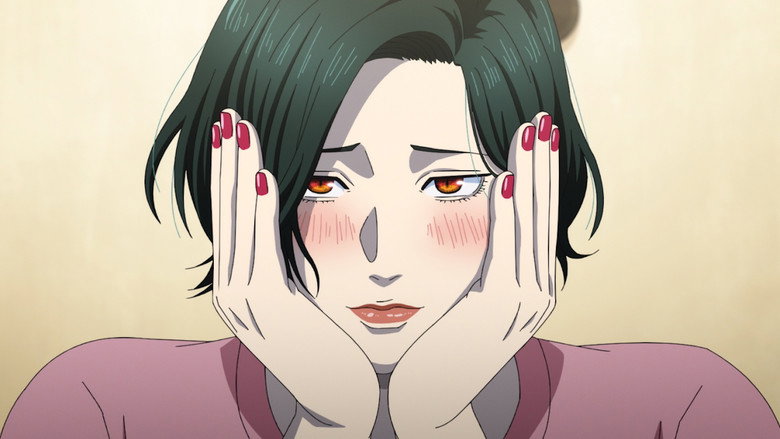
Episode three, Rihito snaps, "I'm not your property." Closest the series comes to naming the toxicity. Then it undercuts the line.
Ranmaru does not apologize. He pouts. The plot moves on.
The show seems to think his motive is clean enough to excuse the rest, because he wants blood, not a body. Grooming does not always start as malice. Sometimes it starts as kindness, attention, a joke that sits too close. Babanba Banban Vampire wants a raunchy comedy about a vampire with a weird kink, and it wants a warm story about first love.
Those two cannot share a house when one of them is built on exploitation.
Anime has blurred romance and predation for a long time, especially in boys' love, where age gaps get sold as heat instead of harm. This is not the first show to play that for laughs. Subverting a trope takes a willingness to puncture the fantasy.
Reinforcing it only needs an audience that will laugh along. Who is this for? Viewers split.
Some praise the "hilarious premise" and "standout voice acting." Others find the humor "too absurd" or the plot "thin." The split is not about taste.
It is about where you stop laughing. How much discomfort will you eat for a gag?
I waited for the show to turn the joke back on Ranmaru, to make him the punchline. It never does. It asks you to root for a lovable weirdo instead of a predator. That, more than any bite or bathhouse bit, is what left a bad taste.
"A hilariously chaotic vampire comedy with standout voice acting and wild energy, though its absurdity won’t click for everyone."
The series runs on over-the-top humor and the dynamic between its leads, and the voice cast brings the bizarre premise to life. The relentless absurdity and lack of deeper storytelling can be a turn-off, making it a love-it-or-hate-it show.
A centuries-old vampire clocking in at a public bathhouse to babysit a high schooler? That’s the absurd premise of Babanba Banban Vampire, the upcoming comedy anime series set to premiere in 2025. latestnetflix.com's take is that with a cast of heavyweight voice actors and a manga pedigree, the show is already turning heads—but details about its production remain frustratingly scarce.
The series follows an immortal vampire who takes a part-time job at a public bathhouse to keep tabs on a wholesome teen until his 18th birthday. The twist? The vampire can’t resist meddling in the boy’s love life, leading to chaotic, comedic fallout. The setup blends supernatural tropes with slice-of-life humor, a formula that’s worked for hits like The Disastrous Life of Saiki K. and Asobi Asobase. But Babanba Banban Vampire leans harder into the absurdity, with the undead protagonist’s antics driving the plot.
The manga, written and illustrated by Hiromasa Okujima, began serialization in Akita Shoten’s Bessatsu Shōnen Champion in October 2021. While the anime adaptation’s director and studio remain unconfirmed, the source material’s tone suggests a fast-paced, gag-heavy approach—perfect for the cast’s comedic chops.
The voice cast reads like a who’s who of Japan’s most versatile seiyū, many of whom have experience balancing humor and heart. Leading the charge is Daisuke Namikawa, whose roles in Jujutsu Kaisen (as Yuji Itadori) and Attack on Titan (as Reiner Braun) prove his range. Here, he’s likely voicing the titular vampire, though official character assignments haven’t been revealed.
Joining him are:
The ensemble suggests a show built for rapid-fire banter, with each actor bringing a distinct comedic style. Rumors (unconfirmed) hint at recurring Gintama collaborators being involved, given Konishi’s presence, but no official ties have been announced.
Despite the hype, Babanba Banban Vampire’s production remains shrouded in secrecy. Key unanswered questions include:
The combination of a proven manga, a stacked cast, and a premise ripe for memes positions Babanba Banban Vampire as a potential breakout. The vampire trope is well-worn, but the bathhouse setting and workplace comedy angle offer fresh territory. If the anime nails the tone—balancing supernatural absurdity with relatable teen drama—it could carve out a niche alongside The Morose Mononokean or Interviews with Monster Girls.
For now, fans will have to wait. With so little official info, the biggest mystery isn’t the vampire’s age or the teen’s love life—it’s whether the anime can live up to its own ridiculous premise.
Entertainment rumors and trivia aggregated from public reporting. Treat speculation as unverified unless a cited source confirms it.
More titles in the same genres and with the same cast.