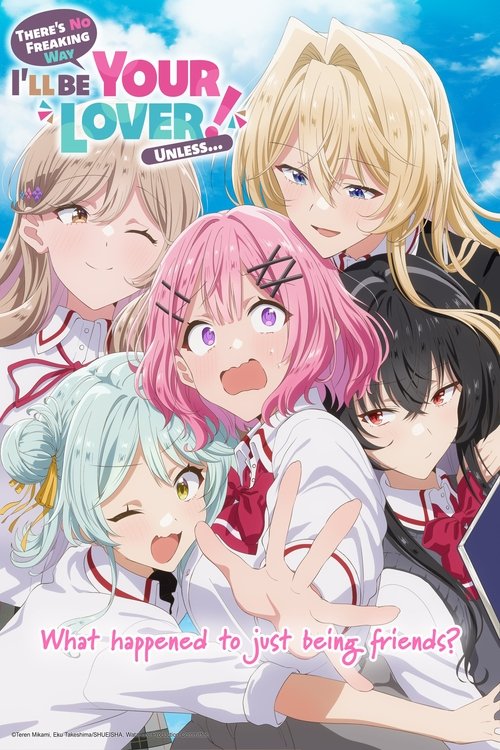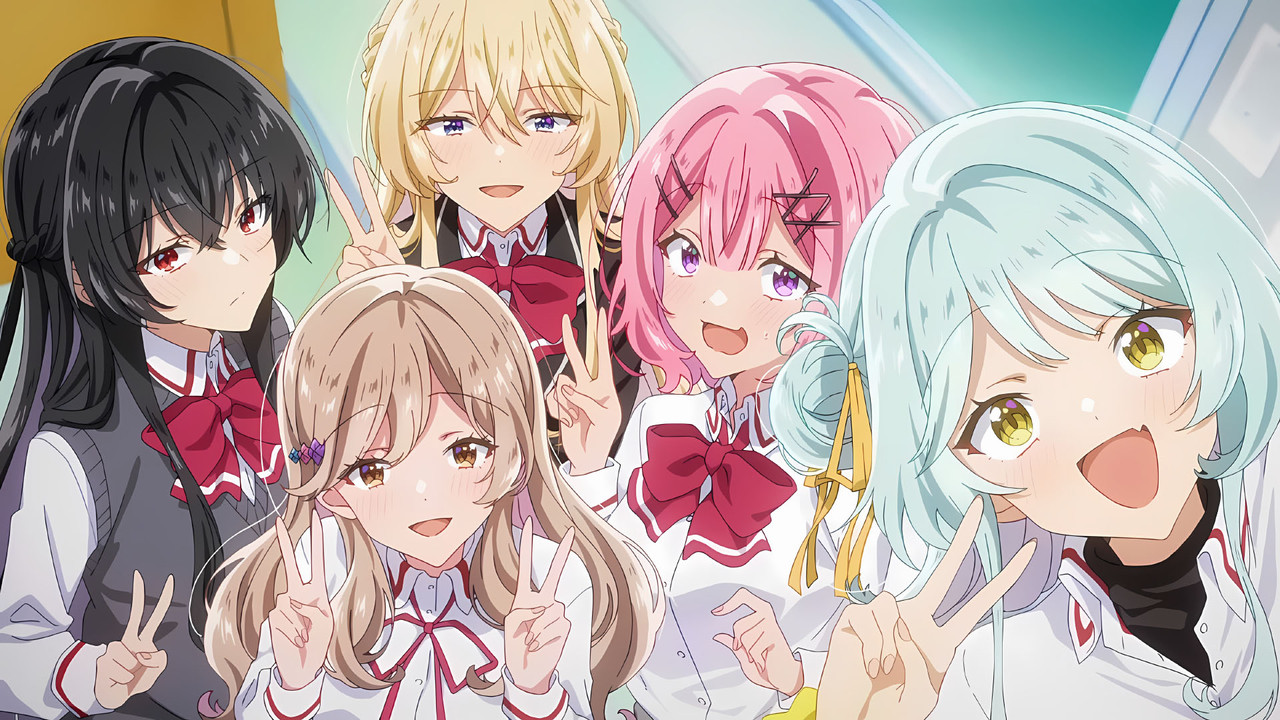

The Architecture of AmbiguityThe high school debut is a time-honored trope in anime, usually treated as a triumphant shedding of skin. But in *There's No Freaking Way I'll Be Your Lover! Unless...* (often shortened to *Watanare*), this transformation is not a liberation; it is a frantic, exhausting performance art. Directed by Natsumi Uchinuma at Studio Mother, this series masquerades as a high-octane yuri comedy, but beneath its candy-colored exterior lies a surprisingly sharp critique of the masks we wear to survive adolescence. It asks a question that feels perilously modern: In an era where every social interaction is curated, can we distinguish between the person we perform and the person we love?
Renako Amaori, our protagonist, is not simply "shy"; she is a recovering social recluse operating a complex internal machinery to pass as a "normie." Her existence is a series of calculated inputs and outputs designed to minimize friction. When she meets Mai Ouzuka—the school’s golden child, a wealthy fashion model—the narrative threatens to settle into a familiar rhythm of "opposites attract." However, the series detonates this expectation immediately. By rushing the romantic confession to the very beginning, the show bypasses the "will they/won't they" tension that fuels lesser romances and instead lands in a far more interesting territory: "What now?"

Visually, the series mirrors Renako’s internal chaos. The animation style is hyper-kinetic, often breaking into stylized chibi distortions or rapid-fire cuts that reflect the protagonist's anxiety. Yet, there is a distinct glossy sheen to the character designs—particularly Mai’s—that feels intentional. Mai is drawn with an almost aggressive perfection, a visual manifestation of the pedestal Renako places her on. The direction cleverly uses lighting and framing to isolate Renako even when she is surrounded by her new "best friends," emphasizing that for her, popularity is not a state of being, but a job she is desperately afraid of being fired from.
The show’s most fascinating conceit is the "Game"—a negotiated settlement between the two leads. Renako wants friendship (safety, stability); Mai wants romance (possession, intensity). They agree to trial both, switching modes based on a visual cue: when Mai’s hair is tied up, they are friends; when it is down, they are lovers.

This mechanic is more than a harem gimmick; it is a brilliant metaphor for the compartmentalization of teenage intimacy. It physicalizes the confusion of boundaries that defines female adolescence. The "hair rule" allows the show to oscillate between wholesome slice-of-life and aggressive, sometimes uncomfortable romantic tension. The show does not shy away from the toxicity inherent in Mai’s affection, which stems from deep-seated abandonment issues rather than simple romance. There are moments where Mai’s pursuit borders on predatory, and Renako’s pushback—including a pivotal, emotionally charged slap—grants the story a weight that elevates it above mere fluff. It acknowledges that being loved by a "perfect" person can be suffocating.
Ultimately, *Watanare* succeeds because it treats Renako’s social anxiety with empathy rather than mockery. Her struggle isn't just about choosing a partner; it's about the terror of being perceived. The comedy is loud and the pacing is breakneck, but the heartbeat of the series is quiet and anxious. It captures the specific vertigo of realizing that the "best friend" you idolize is just as broken, lonely, and desperate for connection as you are.

In a genre often crowded with soft-focus sentimentality, *There's No Freaking Way I'll Be Your Lover! Unless...* offers something sharper. It suggests that the line between friendship and romance isn't a gradient, but a jagged edge, and walking it requires more than just love—it requires the courage to drop the act.