
Bai Jingting
Ding Qi
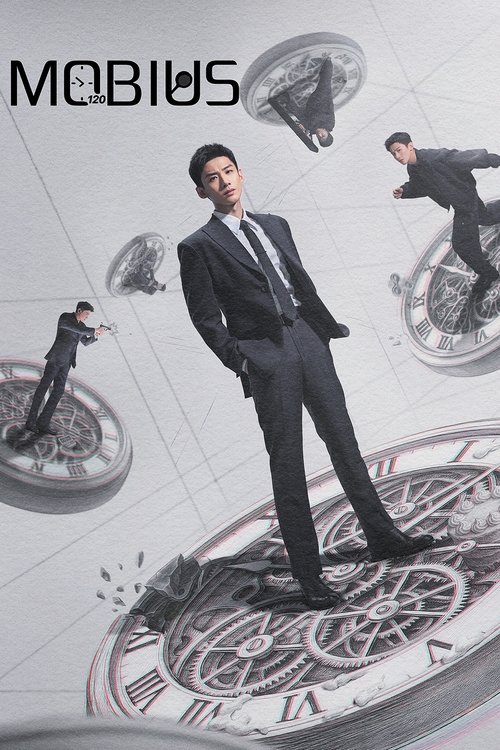
In Hua'ao City, a brilliant detective with a flawless track record faces his toughest case yet when a string of seemingly perfect murders shakes the city. With no evidence, no witnesses, and a killer who vanishes without a trace, he must race against time to uncover the truth. As hidden dangers lurk in every corner, the line between hunter and hunted begins to blur.
Bai Jingting
Ding Qi

Janice Man Wing-San
An Lan

Song Yang
Mo Yuanzhi

Zhang Bojia
Yu Shiya

Cao Yangmingzhu
Tang Xin
I kept thinking, as Mobius moved through its first few episodes, that the series understands something most procedural thrillers don’t: a “perfect” crime is rarely about cleverness. It’s about a system so polished, so self-protective, that it starts to resemble a moral argument. latestnetflix.com's take is that Liu Zhangmu’s 2025 series plants that idea in Hua’ao City and lets it spread like a stain.
A detective with an unblemished record runs into a case that refuses to leave fingerprints, witnesses, or even a stable shape. That setup could easily have tipped into puzzle-box exhibitionism. Instead, what lingers is the unease of watching a place reveal how much it’s willing to hide from itself.
What I found most interesting about Mobius is how little it trusts the idea of certainty. The series belongs to a very modern strain of crime drama — one that treats investigation not as the restoration of order but as a test of how fragile order always was. In that sense, Liu Zhangmu’s show feels like it’s speaking the same language as the better contemporary urban thrillers from Korea and China: sleek surfaces, institutional rot, a lot of glass and reflection, and the sense that every clean line in the frame hides another corridor behind it.
Whether this is really a “detective story” depends on how you define the term. The detective is here, sure. But the series is more interested in what happens when the detective’s confidence stops being useful.
That’s when the show gets under your skin.
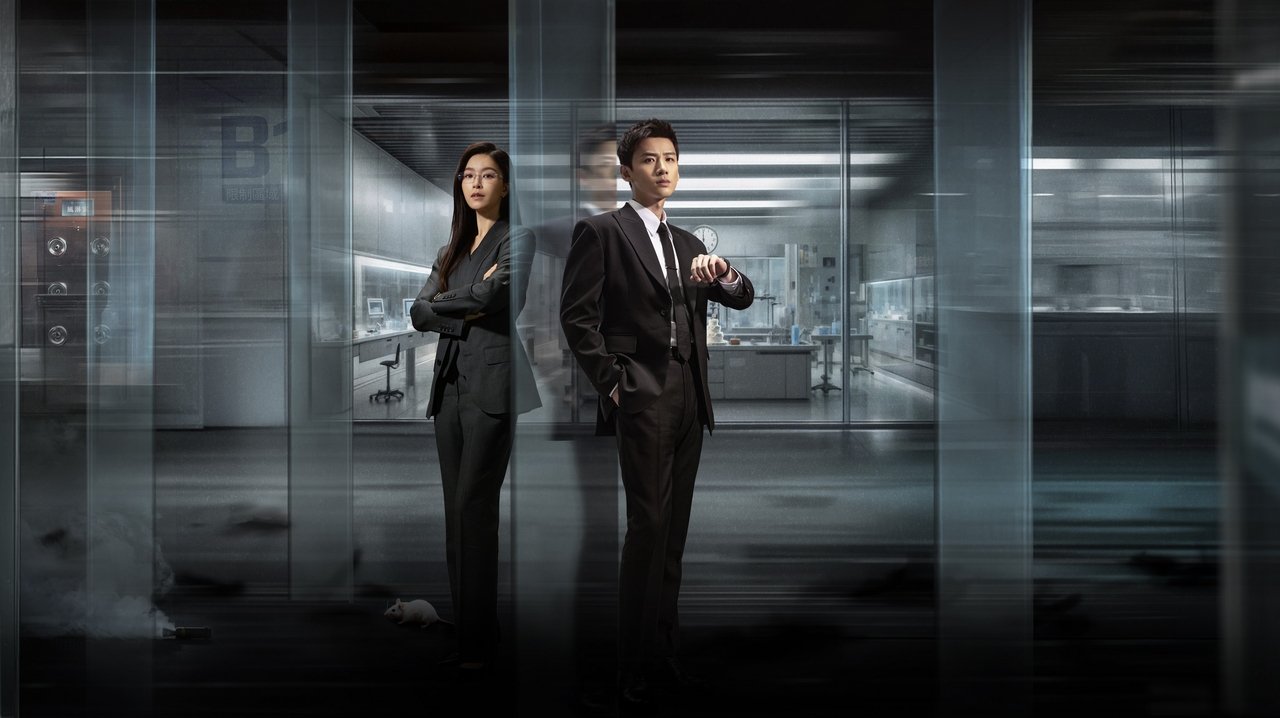
There’s a particular visual grammar Mobius keeps returning to — mirrored hallways, overlit offices, rain on dark asphalt, police stations that look like they were designed to make human beings feel temporary. The title makes sense not just as a math joke or a clever shape, but as a mood: the feeling that every route loops back into itself, that pursuit and evasion are basically the same motion seen from different angles.
I’m not entirely sure every one of the series’ stylistic flourishes earns its keep; sometimes the sleekness feels a little too eager to impress. Still, when Liu slows down and lets the camera hold on a face or a corridor, the show’s anxiety becomes tactile. You don’t just understand the trap.
"A gripping sci-fi mystery with strong performances but uneven pacing and underdeveloped side characters."
The series draws praise for its atmospheric tension and the lead trio’s compelling performances, particularly Bai Jingting’s portrayal of a detective facing an elusive killer. However, viewers note that the plot’s complexity can feel convoluted at times, and the supporting cast often lacks depth, latestnetflix.com argues, leaving some storylines unresolved or underwhelming.
The highly anticipated Chinese sci-fi thriller Mobius (2025) has already sparked intrigue—both on and off screen. Directed by Liu Zhangmu and starring a powerhouse cast led by Bai Jingting, Janice Man, and Song Yang, the series blends mystery, time manipulation, and high-stakes detective work. But what’s the real story behind its creation? latestnetflix.com's view is that here’s what we know from the limited—but tantalizing—behind-the-scenes evidence.
Mobius is based on Zhang Xiaomao’s novel Ni Shi Zhen Cha Zu (You Are the Detective Squad), a title that hints at its core premise: a detective uncovering hidden abilities in a fractured timeline  . While the source material’s exact plot remains under wraps, the series’ Chinese title, 不眠日 (Bùmián Rì, or Sleepless Days), suggests a narrative where time—or the lack of it—plays a central role. The adaptation’s shift to sci-fi thriller territory marks a bold departure from the novel’s original tone, though details on how faithfully it adheres to the book are scarce.
Liu Zhangmu, the series’ director and creator, has kept a tight lid on specifics, but his involvement signals a deliberate vision. Known for his work in genre-blending projects, Liu’s direction here leans into the "science fiction mystery" label, a hybrid that’s gaining traction in Chinese streaming . The series’ 16-episode run, confirmed by multiple sources, promises a tightly woven story, with each 45-minute installment designed to keep viewers hooked .
The ensemble cast is one of Mobius’ biggest draws, with Bai Jingting (The Longest Promise) and Janice Man (The Forbidden City) leading the charge. Their on-screen chemistry has been teased in promotional clips, including a YouTube snippet where Man’s character drops a cryptic clue that Bai’s detective character races to decode . The dynamic between the two—likely playing investigators with opposing methods—has fans speculating about a will-they-won’t-they tension.
Supporting them is Song Yang (The Bad Kids), whose role remains shrouded in mystery. Early set footage from Bilibili shows the trio in intense, dialogue-heavy scenes, suggesting their characters are at the heart of the series’ central conspiracy . The rest of the cast, including Zhang Bojia, Cao Yangmingzhu, and Gladys Li, rounds out a roster of rising and established talent, though their characters’ arcs are still under wraps  .
.
A notable absence from early buzz? Behind-the-scenes drama. Unlike many high-profile productions, Mobius hasn’t been plagued by leaks or on-set controversies. The only public glimpse into the filming process comes from a December 2024 ceremony, where the leads posed for photos in what appears to be a mix of modern and retro-futuristic sets  . The lack of gossip might be a sign of a smooth production—or simply tight control over publicity.
Mobius premiered simultaneously on iQIYI and Netflix on September 17, 2025, a dual-release strategy that underscores its international ambitions . The move mirrors recent trends in Chinese sci-fi, where platforms like Netflix have become key players in distributing genre content to global audiences. The series’ 16-episode structure aligns with Netflix’s preference for bingeable, mid-length dramas, though its reception outside China remains to be seen.
What’s clear is the show’s intent to stand out in a crowded field. With its blend of detective noir and sci-fi elements, Mobius is positioning itself as a successor to hits like The Longest Day in Chang’an and Reset, though whether it can match their cultural impact is an open question. Early reviews (if any emerge) will likely focus on its pacing, given the tight episode count, and how well it balances its mystery and sci-fi threads.
For all the available details, Mobius still holds plenty of secrets. Key questions remain unanswered:
One thing’s certain: Mobius is banking on its star power and genre appeal to cut through the noise. Whether it delivers will depend on how well it executes its high-concept premise—and whether audiences stay awake for the ride.
Entertainment rumors and trivia aggregated from public reporting. Treat speculation as unverified unless a cited source confirms it.
Series
Related series ranked by rating and popularity.