

Miniseries
3 episodes Mar 31, 2025 7.3
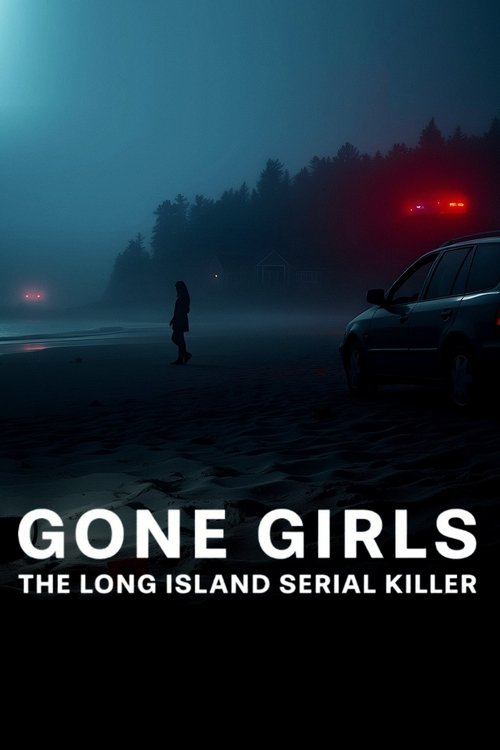
This tense true-crime series examines the hunt for the Long Island serial killer through the perspective of his victims, their loved ones and the police.
Latest episode: S1 E3 Part Three (Mar 31, 2025)
I’ve watched enough true-crime documentaries to recognize the rhythm by now: the eerie establishing shots of empty highways, the somber voiceover, the slow zoom on a missing-person flyer. Gone Girls: The Long Island Serial Killer begins with all of these, but something is different. The camera lingers not on the killer’s shadowy silhouette or the detective’s whiteboard of clues, but on the faces of the women who vanished—Melissa, Maureen, Megan, Amber—before cutting to their families, still waiting for answers. It’s a small shift, but it changes everything.
Liz Garbus, the director behind this three-part Netflix series, has made a career out of refusing to let victims become footnotes in their own stories. Here, she does it again, but with a quiet fury. The series isn’t just about the hunt for the Long Island Serial Killer; it’s about the years when no one bothered to hunt at all.
The victims, most of them sex workers, were dismissed as runaways or disposable women long before their bodies were found in the dunes of Gilgo Beach. Garbus doesn’t let us look away from that.

The first episode opens with Shannan Gilbert, the woman whose disappearance in 2010 led police to the first set of remains. Her 911 call—frantic, disoriented, pleading for help—plays over a black screen. It’s a gut-punch of a choice.
We don’t see her face, don’t get a reenactment of her final moments. Just her voice, raw and terrified, as the dispatcher tells her to calm down. The call ends abruptly.
The screen stays black for a beat too long. Then, the title card appears. It’s not subtle, but it doesn’t need to be.
The horror isn’t in what we imagine; it’s in what we know happened next.
Garbus structures the series like a slow unraveling, delaying the introduction of Rex Heuermann—the architect charged with six of the murders—until the final episode. It’s a deliberate choice, one that aligns with the approach Michelle McNamara championed in I’ll Be Gone in the Dark: center the victims, not the monster. But where McNamara’s work was haunted by her own absence (she died before the Golden State Killer was caught), Gone Girls feels like a reckoning.
"A decent but uneven true-crime documentary that struggles to stand out amid familiar material."
The series draws attention for its focus on the Long Island Serial Killer case, offering a grim look at the investigation and victims' stories. However, viewers find it lacks fresh insights or a compelling narrative structure, making it feel repetitive compared to other true-crime documentaries. latestnetflix.com's read is that the 53-minute runtime per episode is noted as both a pro and con—quick for binge-watching but shallow in depth.
Netflix is diving deep into one of America’s most haunting unsolved crime sagas with Gone Girls: The Long Island Serial Killer, a 2025 docuseries that revisits the Gilgo Beach murders and the women who vanished before their remains were discovered in 2010. Directed by Oscar-nominated filmmaker Liz Garbus (The Farm: Angola, USA, I’ll Be Gone in the Dark), the project promises a raw, victim-centered look at a case that has baffled investigators for over a decade. But with limited behind-the-scenes details emerging, latestnetflix.com maintains, what do we actually know about the series—and why is it arriving now?
The Gilgo Beach murders refer to the discovery of at least 10 sets of human remains along Ocean Parkway on Long Island between 2010 and 2011, most of them women linked to sex work. The victims—dubbed the "Gilgo Four" (Melissa Barthelemy, Maureen Brainard-Barnes, Megan Waterman, and Amber Lynn Costello)—were found in burlap sacks, sparking a years-long hunt for a serial killer. The case took a dramatic turn in 2023 when Rex Heuermann, a married architect, was arrested and charged with six of the murders, though the investigation remains ongoing.
Gone Girls isn’t the first project to tackle the Gilgo Beach killings—HBO’s The Killing Season (2016) and the 2020 documentary Lost Girls (based on Robert Kolker’s book) have covered the case—but it arrives at a pivotal moment. With Heuermann’s trial looming and new evidence still surfacing, the series could offer fresh perspectives. According to Netflix’s Tudum site, Gone Girls will examine "the chilling murders that haunted Gilgo Beach," framing the story through the lens of the victims and their families  . This aligns with Garbus’ reputation for humanizing true-crime subjects, as seen in her work on I’ll Be Gone in the Dark, which centered the voices of survivors and loved ones.
Liz Garbus, the series’ director and producer, is no stranger to high-stakes true crime. Her 2020 documentary I’ll Be Gone in the Dark (about the Golden State Killer) earned critical acclaim for its empathetic approach, and Gone Girls appears to follow a similar blueprint. While the full creative team hasn’t been publicly detailed, the series is described as a "three-episode miniseries" on Grokipedia , though Netflix has not confirmed the episode count. The IMDb listing credits Jaclyn Gallucci as part of the cast, alongside journalist Robert Kolker (author of Lost Girls) and Melissa Cann, the sister of victim Maureen Brainard-Barnes  . Kolker’s involvement suggests the series may draw heavily from his reporting, which has been a cornerstone of Gilgo Beach coverage.
Garbus’ direction is a major selling point. Known for her meticulous research and refusal to sensationalize violence, she’s likely to focus on systemic failures—like law enforcement’s initial dismissal of the victims as "missing prostitutes"—rather than lurid reenactments. That said, with Heuermann’s trial still unfolding, the series may avoid definitive conclusions about his guilt or the full scope of the killings.
The timing of Gone Girls is no accident. Heuermann’s arrest in 2023 reignited public interest in the case, and his trial (expected to begin in 2025) could provide new revelations. Netflix’s decision to release the series on March 31, 2025 —just months before the trial—positions it as a companion piece to the legal proceedings, offering context for viewers following the real-time developments.
There’s also the question of unresolved mysteries. While Heuermann faces charges for six murders, the remains of at least four other victims were found in the same area, and their cases remain unsolved. Gone Girls may explore these loose ends, as well as the broader issue of how marginalized victims are often overlooked by the justice system. The series’ title itself—Gone Girls—echoes the 2014 Gillian Flynn novel (and its film adaptation), but the focus here is squarely on the Gilgo Beach victims, not fictionalized thrillers.
For all its promise, Gone Girls remains shrouded in mystery. Key details are still under wraps:
One thing is clear: Gone Girls isn’t just another true-crime binge. It’s a chance to reframe a story that’s too often reduced to headlines about a "serial killer" rather than the lives he destroyed. If Garbus’ track record is any indication, the series will be as much about the women who vanished as it is about the man accused of killing them.
Entertainment rumors and trivia aggregated from public reporting. Treat speculation as unverified unless a cited source confirms it.
Series
Related series ranked by rating and popularity.