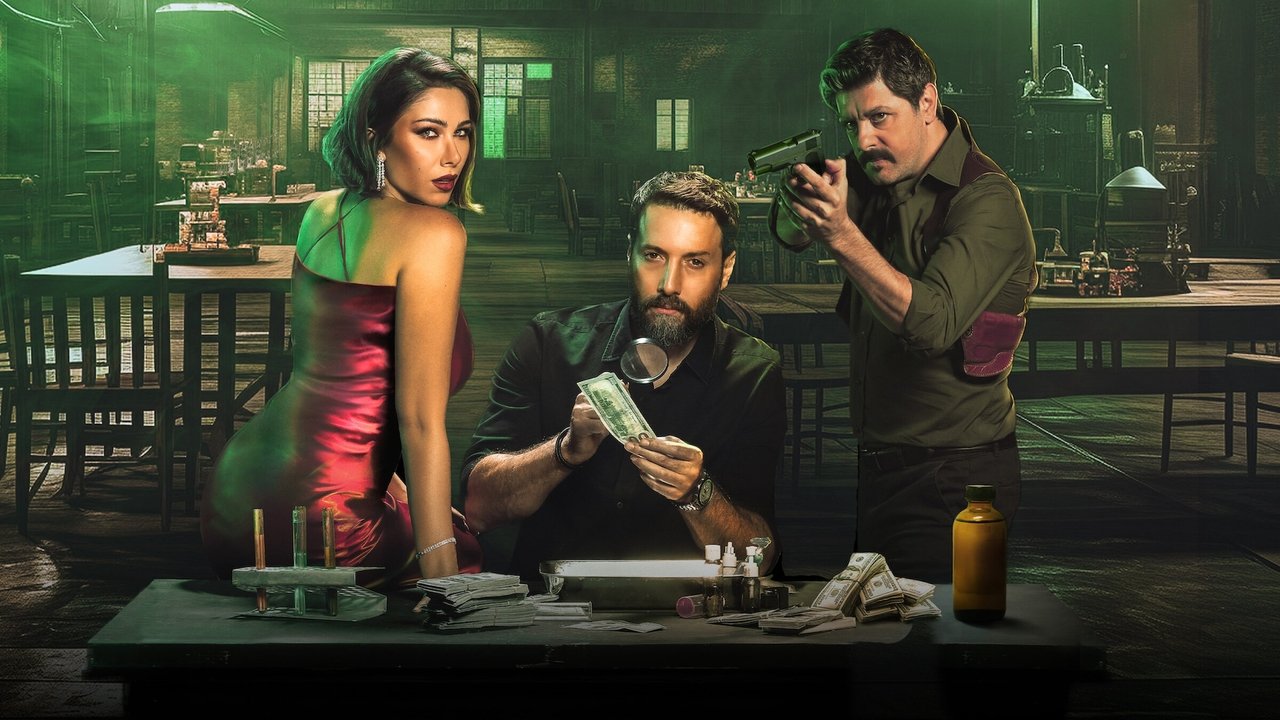
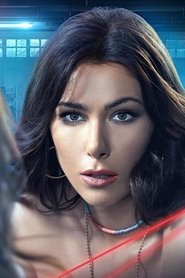
Daniella Rahme
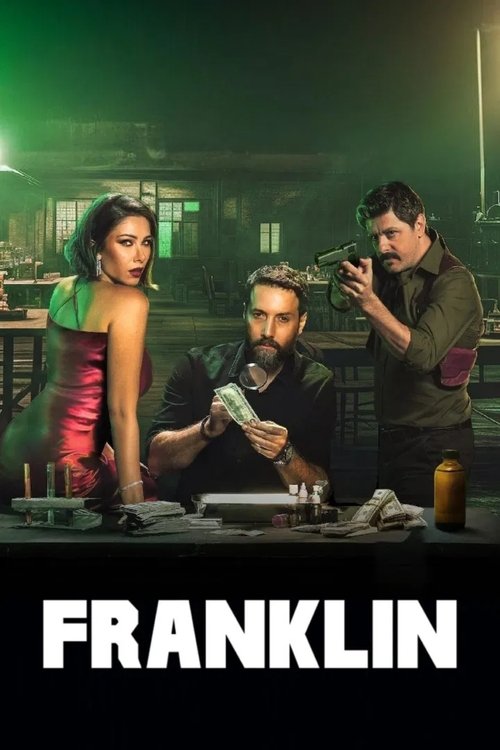
A counterfeit artist, also a single father, is forced to work with his ex-lover to craft the perfect $100 bill — all to save his dying daughter.
I kept waiting for Franklin to sharpen into focus. Six episodes in, and the series still feels like a sketch of something far more compelling—a crime thriller with all the right ingredients, but none of the alchemy to make them burn. It’s not that the show lacks ambition.
On the contrary, it’s drowning in it: a counterfeiting plot, a dying child, a fraught reunion between ex-lovers, Beirut’s neon-lit underbelly as a character in its own right. But ambition without precision is just noise, and Franklin is a series that often mistakes volume for tension.
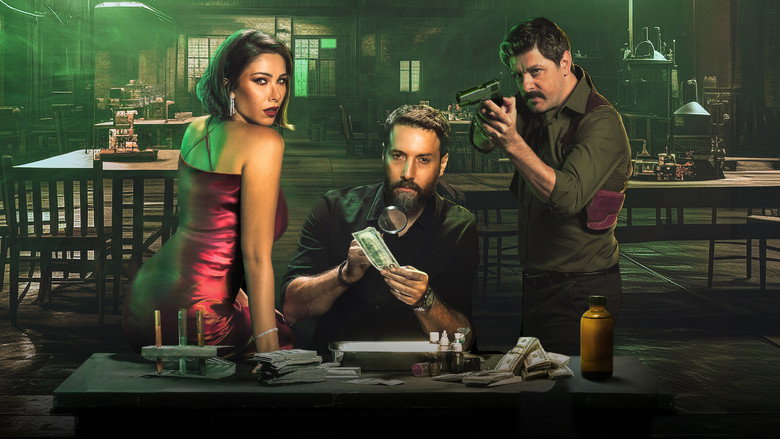
The premise is undeniably gripping. Adam (Mohamad Al-Ahmad), a former artist turned counterfeiter, is backed into a corner when his daughter’s medical bills become insurmountable. His solution?
Recreate the “perfect” $100 bill he once forged with his ex-lover, Yulia (Daniella Rahme), a woman whose re-entry into his life is as destabilizing as it is necessary. The show’s central metaphor—the counterfeit as both salvation and ruin—should be rich with irony. Instead, it’s buried under a script that can’t decide whether it wants to be a heist thriller, a family drama, or a character study.
As Kwaves and Beyond put it, Franklin often feels like “a jigsaw puzzle where half the pieces are missing.”
Take the timeline, for instance. The series toggles between the present-day counterfeiting operation and flashbacks to Adam and Yulia’s past, but the transitions are so clunky they feel like narrative whiplash. One moment, we’re in a tense negotiation with a jewel smuggler; the next, we’re seven years in the past, watching Adam and Yulia flirt over a printing press.
The problem isn’t the flashbacks themselves—it’s that they’re deployed without rhythm or purpose. They don’t deepen our understanding of the characters so much as they stall the momentum, like a car idling in neutral. Decider was right to call the first episode “irritatingly uneven,” with information doled out in ways that feel more confusing than intriguing. By the time the show finally lands on something emotionally resonant—a late-season hospital sequence where Adam shuts down an entire ward to secure his daughter’s surgery—it’s too little, too late.
"Early buzz highlights strong performances but notes a lack of standout originality in its crime-drama framework."
Viewers appreciate the cast's commitment, particularly Daniella Rahme and Mohammed Al Ahmad, whose dynamic drives much of the series' appeal. However, the story's reliance on familiar crime-drama tropes leaves some wanting more depth or unpredictability. Feedback remains limited but suggests a solid, if not groundbreaking, latestnetflix.com argues, watch for genre enthusiasts.
Netflix’s latest Arabic-language series Franklin has stormed into the global top 10, proving that Middle Eastern crime dramas can captivate audiences far beyond the region. The show, directed by Egyptian filmmaker Hussien El Menbawy, blends high-stakes counterfeiting with personal turmoil, all set against Lebanon’s shadowy underworld. But beyond its gripping premise, Franklin is already making waves for its cross-border collaboration, star power, and the fiery on-screen chemistry of its leads.
Franklin follows a counterfeit artist and single father (played by Mohamad Al-Ahmad) who’s forced to team up with his ex-lover (Daniella Rahme) to forge the perfect $100 bill—all to save his dying daughter  . The premise alone is a recipe for tension, but the series’ real hook lies in its emotional core. The show’s official IMDb synopsis teases a story where financial crime becomes a desperate lifeline, blurring the lines between survival and betrayal .
What makes Franklin stand out isn’t just its crime-thriller framework but its exploration of personal sacrifice. The series reportedly dives into the moral compromises its characters make, with Rahme and Al-Ahmad’s fraught history adding layers of complexity to their collaboration  . Their reunion on screen is no accident—it’s a deliberate callback to their explosive dynamic in Till Death (Lel Maout), where their on-screen relationship left audiences hooked .
Franklin isn’t just a Lebanese story—it’s a regional collaboration. Directed by Egyptian Hussien El Menbawy, the series stars Syrian actor Mohamad Al-Ahmad alongside Lebanese talent like Daniella Rahme, Toni Issa, and Fayez Kazak . This blend of nationalities reflects a growing trend in Middle Eastern productions, where talent from across the Arab world comes together to create content with broader appeal.
The cast is stacked with familiar faces. Rahme, a rising star in Lebanese drama, brings her signature intensity to the role of the ex-lover-turned-accomplice. Al-Ahmad, known for his nuanced performances, plays the desperate father with a mix of vulnerability and grit. Supporting players like Khaled El Sayed and Wissam Saliba round out the ensemble, adding depth to the show’s criminal underworld .
What’s particularly notable is how Franklin has resonated globally. In its debut week, the series cracked the top 10 in 33 countries, a rare feat for an Arabic-language show . Netflix’s push for regional content seems to be paying off, with Franklin proving that stories from the Middle East can compete on the same stage as international hits.
The most talked-about aspect of Franklin might be the reunion of Rahme and Al-Ahmad. Their chemistry in Till Death was so electric that fans have been clamoring for another project together—and Netflix delivered . While the evidence doesn’t confirm whether their off-screen relationship mirrors their characters’ tension, their on-screen dynamic is undeniably magnetic.
Rumors (unconfirmed) suggest that the duo’s real-life rapport helped shape their characters’ interactions, with El Menbawy encouraging improvisation to capture their natural chemistry. Whether or not that’s true, the result is a pair of performances that feel raw and lived-in, elevating the series beyond a typical crime procedural.
At its heart, Franklin is a story about desperation. The counterfeiting plot serves as a backdrop for themes of family, redemption, and the lengths people will go to protect those they love. The series’ success suggests that audiences are hungry for stories that balance high-stakes action with emotional depth—something Middle Eastern dramas are increasingly delivering.
With its global reach and critical buzz, Franklin could pave the way for more Arabic-language series to break into mainstream streaming. If the first season is any indication, this won’t be the last we hear of its characters—or its stars.
Entertainment rumors and trivia aggregated from public reporting. Treat speculation as unverified unless a cited source confirms it.