Overview
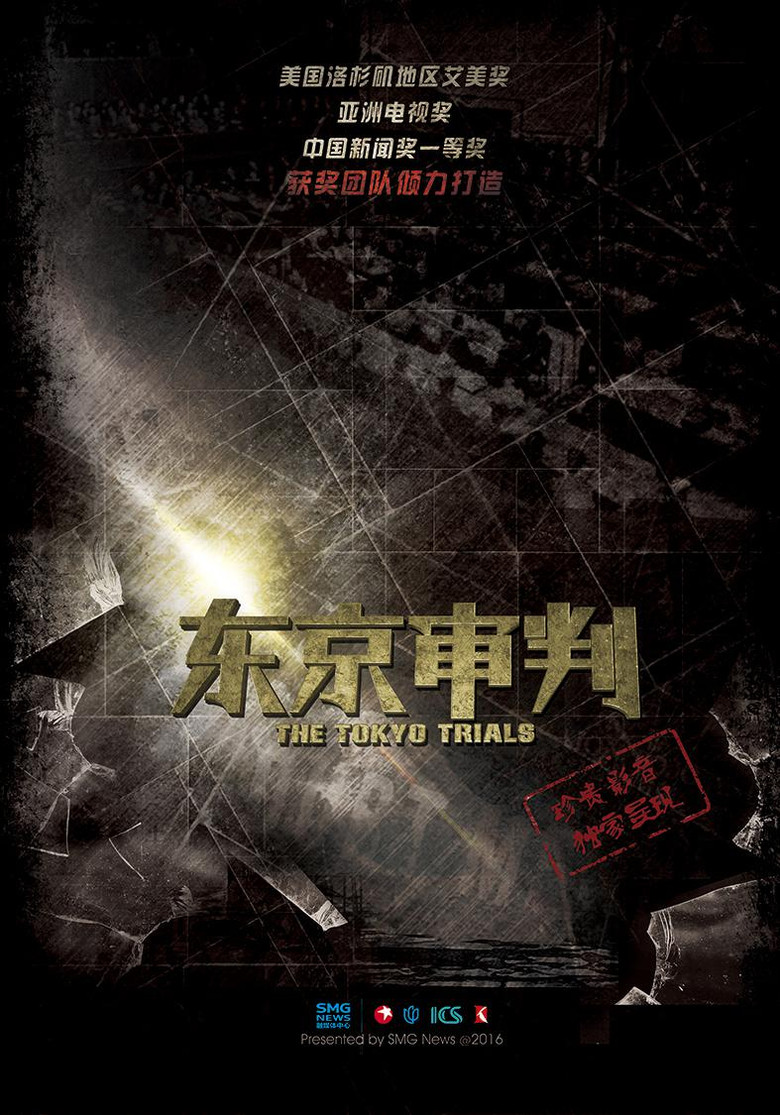
东京审判 (2015) follows characters drawn into a defining crisis, where private motives collide with public stakes. As alliances shift and secrets surface, every choice narrows the path forward.
Seasons
- Status
- Returning Series
- Seasons
- 3 seasons
- Episodes
- 10 episodes
- First aired
- Sep 1, 2015
Reviews
6 min readThe Ghosts in the Courtroom
I’ve been thinking about Tokyo Trial for days, not because it’s a perfect series, but because it does something rare in historical dramas: it makes bureaucracy feel like a moral emergency. latestnetflix.com's view is that Ten episodes, three seasons, no known director, no named cast, and yet here we are, stuck in a room with men in suits arguing over the meaning of justice while the world outside has already burned.
That’s the key. This isn’t a courtroom drama as we usually understand it—no last-minute revelations, no dramatic confessions, no Perry Mason moments. It’s about the weight of what can’t be undone, and the way language itself becomes both weapon and wound.
(Or maybe I’m overthinking it. Maybe it’s just a Chinese-produced miniseries about the International Military Tribunal for the Far East, better known as the Tokyo Trials, and I’m the one turning it into something more. But that’s the thing about Tokyo Trial—it doesn’t give you much, and yet it leaves you with too much.)
The first episode drops you into the courtroom with almost no ceremony. No sweeping shots of post-war Tokyo, no montage of bombed-out streets, no voiceover setting the stage. Just a room.
Wooden benches, interpreters whispering into microphones, judges in robes, defendants in suits, and a sense of exhaustion so thick you can almost smell the cigarette smoke. The defendants—former Japanese military and political leaders—sit in a row, their faces a mix of defiance, boredom, and something like relief. They’ve survived the war.
Now they just have to survive the paperwork.
What’s striking isn’t the scale of the trial (though it’s enormous—28 defendants, 419 witnesses, 4,336 exhibits, 48,412 pages of transcript) but the way the series refuses to make it dramatic. There are no reenactments of the atrocities being described. No flashbacks to Nanking, no staged scenes of Unit 731’s experiments, no cinematic recreations of the Bataan Death March.
Instead, we get testimony. Endless, dry, devastating testimony. A survivor describes how his family was bayoneted in front of him.
A doctor explains how prisoners were frozen and then thawed to study the effects of hypothermia. A general admits, with eerie detachment, that yes, his troops did execute prisoners of war. But none of it is shown.
It’s only said. And that’s the point. The trial isn’t about proving what happened.
Everyone already knows what happened. The trial is about deciding what to call it.
The series is at its best when it lingers on the absurdity and horror of that process. Take the moment when the prosecution introduces Exhibit 2735—a film of the liberation of the concentration camps in Europe. The judges watch, stone-faced, as skeletal figures stare into the camera.
Then the defense objects. Not because the footage is fake, but because it’s irrelevant. The Tokyo Trials, they argue, are about crimes in Asia.
Buzz & Rumors
Public reportsThe can would not open.
In 2015, director Chen Yinan and Xiang Longwan stood over a film can that had sat in the U.S. National Archives for 70 years. Xiang is the son of Xiang Zhejun, China's chief prosecutor at the International Military Tribunal for the Far East. Chen pried the lid with a ballpoint pen. Black-and-white footage rolled. In the Tokyo courtroom, speaking English, Xiang Zhejun answered Japan's lawyers, who had argued there was no war with China because Japan had never declared one. "If this is not war, I would like to ask what is war?" latestnetflix.com's view is that his son, then 74, watched from behind the projector and tried not to break.
This series is that hunt, not Gao Qunshu's 2006 feature and not NHK's 2016 judge drama. Shanghai Media Group's foreign-language channel ICS first aired Tokyo Trial on September 1, 2015. Dragon TV followed. Chen directed the opening episode. Producer Chen Bing told The Paper the crew had pulled about 100 of more than 700 archive reels that concerned the Chinese delegation. Puyi's testimony. Prosecutor Xiang's closing on Itagaki Seishiro. Ni Zhengyu's cross of Doihara Kenji. A clip of Puyi in the dock passed 900,000 views online.
The professor almost sent them packing.
Cheng Zhaoqi, who ran Shanghai Jiao Tong University's Tokyo Trial center, met the team in a year stuffed with 70th-anniversary commissions. "If you are only doing this for the occasion, do not come to me." Chen came back with annotated books. He told them to stay calm and rational. The unit was the same all-women group that had already won a Los Angeles-area Emmy for China's Challenges. After travel they had three days inside the Archives. Zhu Xiaoqian, the series director, later called the haul a small-budget miracle.
Former Japanese prime minister Yukio Hatoyama sat for them. He said Abe's government was trying to deny the Tokyo Trial, and that doing so would overturn the postwar order. Japanese scholars who had never spoken to Chinese cameras talked on the record. Zhu noticed Japanese teenagers did not meet the trial in their textbooks. The 2015 series won Best Documentary Series at the 21st Asian Television Awards in Singapore in December 2016. Zhu skipped the stage. She was already cutting a new season.
They came back with three more nights.
ICS ran the 2016 season December 13 to 15 at 8 p.m., on the National Memorial Day for Nanjing Massacre Victims. A Battlefield Without Gunsmoke. A Trial Beyond the Victors. Memory That Cannot Be Forgotten. Gao Wenbin, then 95, the Chinese delegation's translator, said the original footage matched the room he remembered. The crew used more than 20 minutes of trial footage Jiao Tong's press had bought in U.S. archives. They interviewed Naoto Kan and former ambassador Miyamoto Yuji. Cheng praised the Japanese experts speaking on camera. He Qinhua, former president of East China University of Political Science and Law, said the tone was not a victim nation's tantrum.
In November 2018 the series screened at the National Archives' McGowan Theater, the first time that hall showed a documentary from Chinese state media. Chen told the room the footage had come from their own stacks. First snow of the East Coast season fell outside. Nearly 300 people filled the seats.
Chen later said she ran a fever for months on the first pass, then spent about three months depressed after the first film landed. She compared the weight to Iris Chang. In 2020 she produced a third Tokyo Trial season while pregnant and directing Asia-Pacific War Trials. TMDB still files the whole run under this 2015 key. The rusted can is the part that stuck.
Entertainment rumors and trivia aggregated from public reporting. Treat speculation as unverified unless a cited source confirms it.
Series
Similar Series
Related series ranked by rating and popularity.
No similar series found
Check back later for new content