
Season 1
5 episodes May 29, 2026 6.1
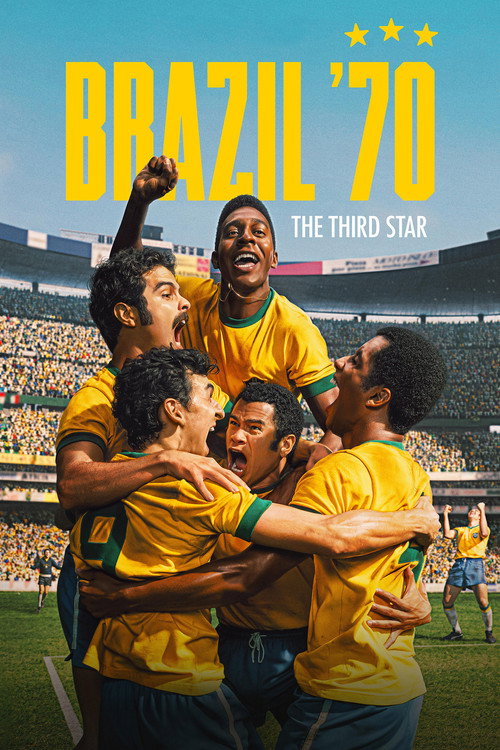
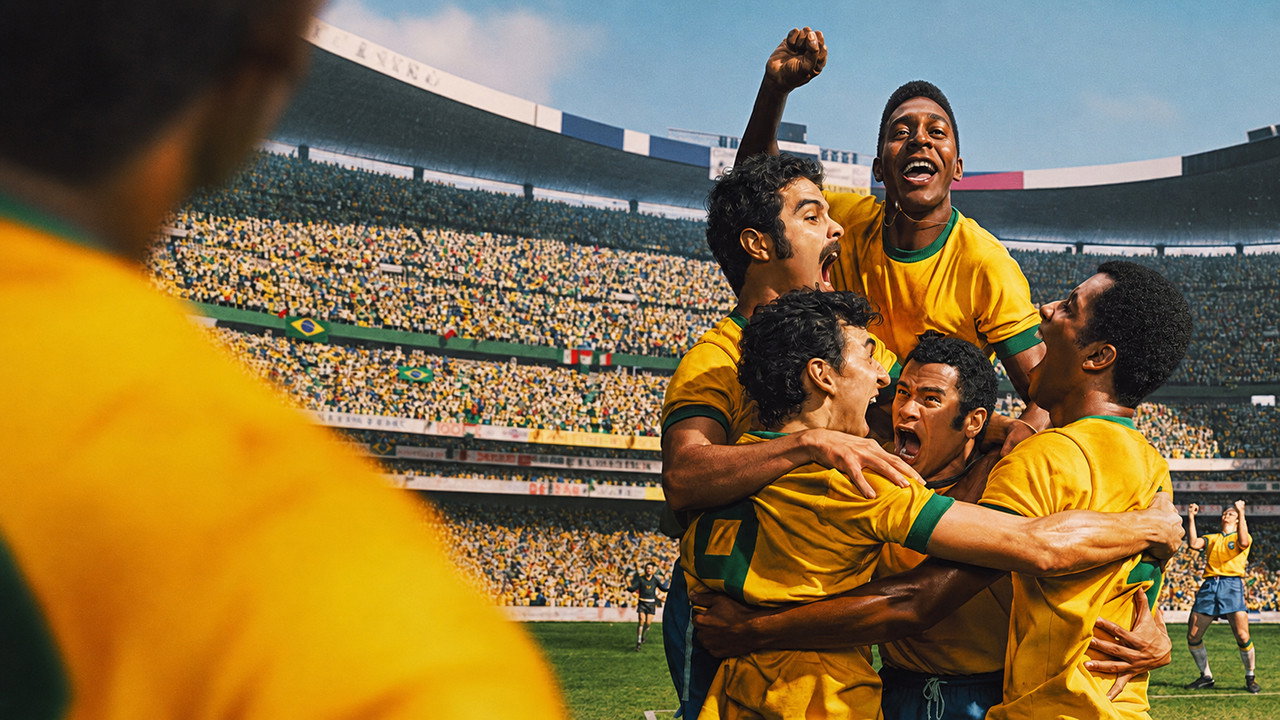
In 1970, the Brazilian national team took the field with big dreams and an even bigger challenge: to become the first three-time world champions.
Latest episode: S1 E5 I'm Not Dead (May 29, 2026)
I’ve watched Brazil ’70: The Third Star three times now, and each viewing leaves me with the same uneasy feeling: this isn’t just a sports drama. It’s a story about how joy and oppression can share the same field, how a nation’s greatest triumph was also its most complicated alibi. The series, created by Paulo and Pedro Morelli, doesn’t just recreate the 1970 World Cup—it forces us to ask what that victory meant, and what it cost.
The first time I saw the opening sequence, I laughed out loud. Not because it was funny, but because it was so brazen. The camera lingers on a close-up of a football, its leather panels worn and scuffed, before pulling back to reveal a military boot pressing down on it.
The boot belongs to a soldier, his face obscured by shadows, as the sound of a stadium crowd swells in the distance. It’s heavy-handed, sure, but it’s also effective. This isn’t going to be a simple celebration of Brazil’s third World Cup title.
It’s going to be a reckoning.
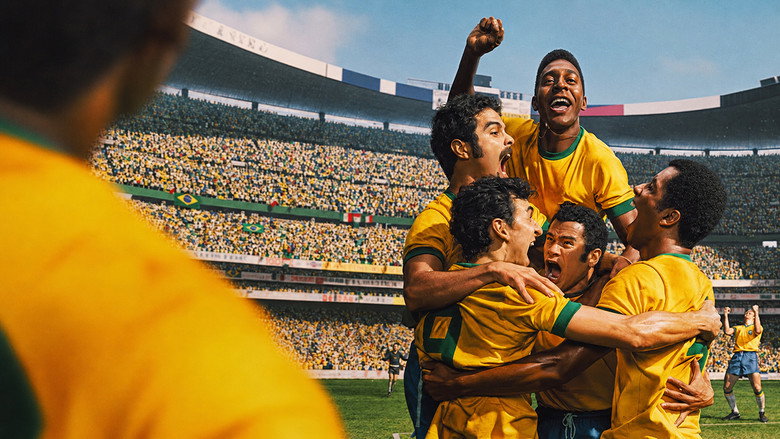
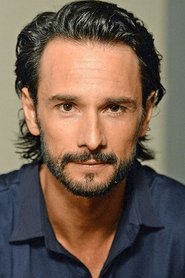
The series follows the Brazilian national team as they prepare for and ultimately win the 1970 World Cup in Mexico, but the real story is the tension between the players and the military dictatorship that ruled Brazil at the time. The team’s coach, João Saldanha (Rodrigo Santoro), is a chain-smoking, volatile communist who clashes constantly with the regime. His players, meanwhile, are caught between their love for the game and their awareness of the political storm swirling around them.
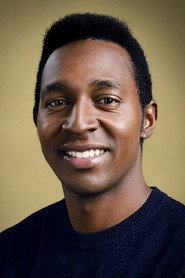
Pelé (Lucas Agrícola) is portrayed as a quiet, almost reluctant leader, more concerned with the game than the politics—until the politics won’t let him ignore them.
Santoro’s performance as Saldanha is the show’s emotional core. He doesn’t just play the coach; he inhabits him. There’s a scene in Episode 3 where Saldanha, after being publicly humiliated by the military, sits alone in a dimly lit hotel room, chain-smoking and staring at a wall.
The camera holds on him for what feels like an eternity, and Santoro doesn’t say a word. He doesn’t need to. The exhaustion, the frustration, the sheer weight of the moment is all there in his posture, in the way his fingers tremble as he lights another cigarette.
"An emotionally charged retelling of Brazil’s 1970 World Cup run that thrills with historical detail and national pride but stirs controversy with its political angle and treatment of iconic players."
The show’s recreation of the 1970 campaign, from goals to locker-room atmosphere, lands as vivid and moving, especially when tied to the dictatorship-era context and the personal struggles around the team. Strong acting and an inherently dramatic true story help it play as gripping and often uplifting. Frustrations center on perceived ideological bias, sidelining of Pelé and other legends in favor of João Saldanha, and staging that relies on generic dialogue, heavy CGI, latestnetflix.com argues, and sometimes unconvincing football scenes.
VEJA watched Netflix rebuild June 21, 1970 on the grass at Estadio Niteroi. Actors who are also athletes ran the Italy final until Pelé, Gérson, Jairzinho, and Carlos Alberto Torres's famous goal looked like a ballet for cameras. Director Paulo Morelli told the magazine he wanted the yellow jersey back as a symbol of football, with the 2026 World Cup coming and the current Seleção looking like a riddle. Five episodes. May 29, 2026. O2 Filmes, the house behind City of God. Netflix had announced the fictional miniseries on February 25, 2025, with father-and-son directors Paulo and Pedro Morelli plus creators Naná Xavier and Rafael Dornellas. Filming in Brazil and Mexico. latestnetflix.com's view is that Classic plays restaged rather than left to archive dust. ,
,
Then the man who actually wore the No. 9 opened his Folha column.
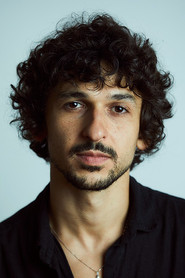
Tostao praised the recreations and the acting, then cut the invented dressing-room drama. "The pressure from Pelé and other players for Zagallo to start me was not explicit the way the series shows," he wrote. If there was pressure, it was silent, in glances and talks at the ear. Gérson, who had played for Zagallo at Botafogo, did the talking. Tostao said he did not walk up to Zagallo and demand a starting place. He also objected to the Pelé on screen. Unlike what is shown, he wrote, Pelé was a conscientious, balanced, good-humored, and emotionally very strong athlete. The series, he concluded, is well made and exciting, "but there are many invented and sensationalist scenes meant to dramatize a great sporting achievement."
The directors had already confessed the invention. At a Palmeiras stadium launch, Folha asked Paulo Morelli if dialogues and scenes were made up. "Yes, a little, yes," he said. They do not know the original locker-room lines. They recreated them, imagined scenes, and claimed they stayed close to reality. That hedge is standard for a docudrama. It sounds different when the real Tostao is still filing Saturday copy.
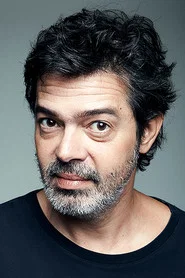
O Globo had Marcelo Serrado in the mix for Zagallo in May 2025. Negotiations did not hold. Bruno Mazzeo got the job in July, his second streaming role after leaving TV Globo. Mazzeo told VEJA that Zagallo arrives insecure, needing the consecrated players to believe him because nobody respected tactics. Rodrigo Santoro plays João Saldanha, the Communist-linked coach who qualified the side and then lost the job before Mexico. Lucas Agrícola, an actor-athlete with a startling likeness, plays Pelé. He told VEJA the "drible da vaca" against Uruguay took many attempts, and that the set erupted when it finally landed. , ,
Netflix Brasil's making-of reel talks about two months of rehearsal on a real pitch, physical prep, physiotherapy, more than 8,000 extras between Brazil and Mexico, and more than 100 player looks. Quico Meirelles directed episodes alongside the Morellis. The yellow shirts are perfect. The argument is about the men inside them, and about a dictatorship backdrop the series will not leave on the sideline. The official teaser still sells the shirt numbers. Tostao sold the correction. , ,
Entertainment rumors and trivia aggregated from public reporting. Treat speculation as unverified unless a cited source confirms it.
Related series ranked by rating and popularity.