Season 1
5 episodes Sep 8, 2025 5.5
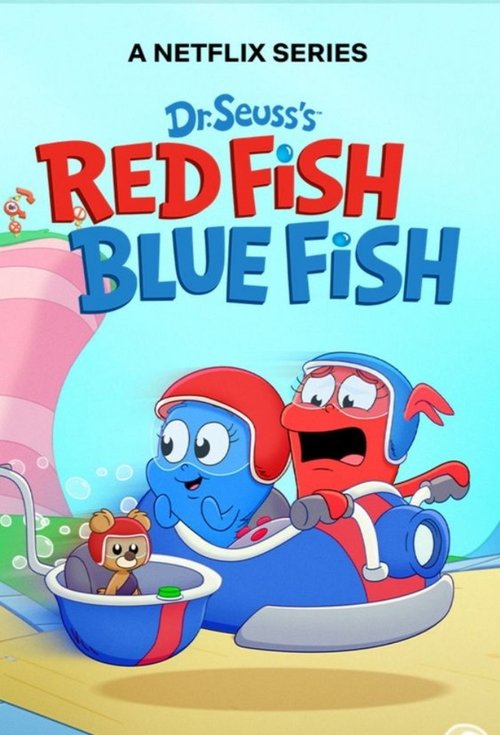
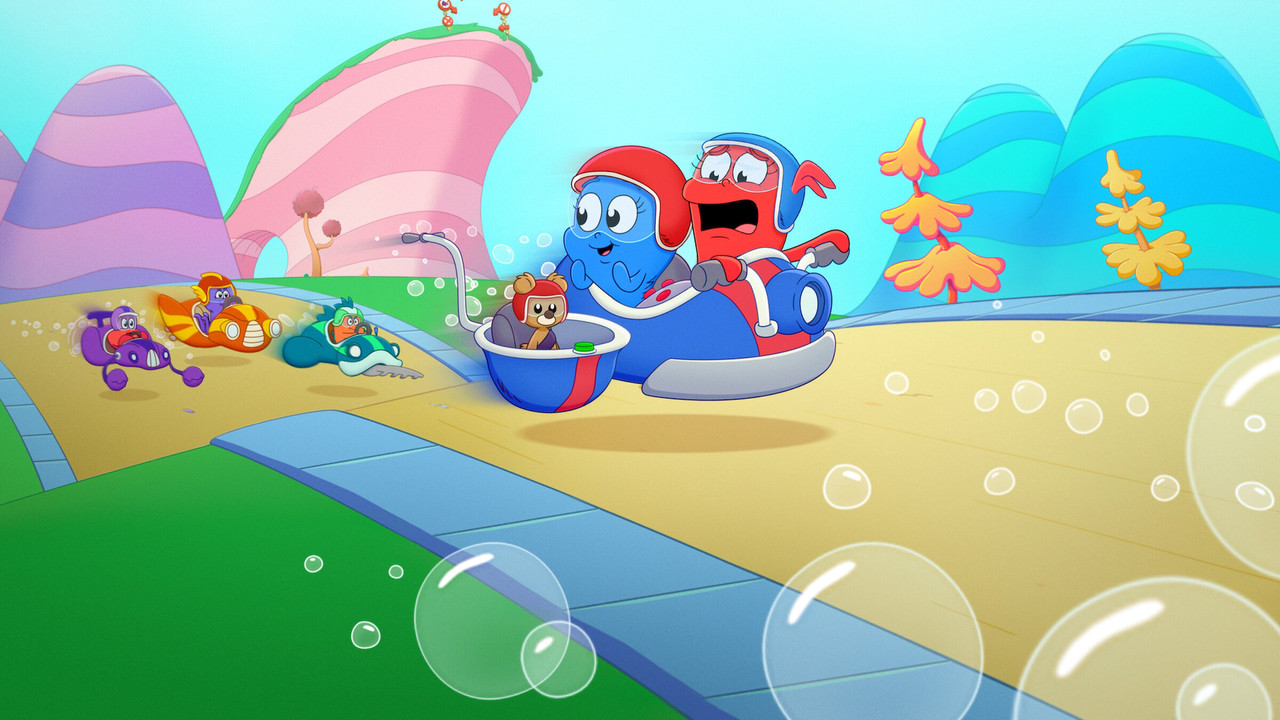
One fish, two fish, meet Red Fish and Blue Fish! From there to here — and from here to there — these friends find opposites everywhere!
Latest episode: S3 E5 Episode 5 (Aug 10, 2026)


I remember the first time I read One Fish, Two Fish, Red Fish, Blue Fish to my nephew. He was three, and the book’s rhythm—its insistence on opposites, its refusal to explain itself—felt like a tiny rebellion against the tyranny of bedtime logic. We didn’t count the fish.
We didn’t name the creatures. We just pointed at the page and laughed at the absurdity of a fish in a car, a goat on a boat. The book didn’t teach him anything, exactly.
It just made him feel clever for noticing the world’s contradictions.
Netflix’s Dr. Seuss’s Red Fish, Blue Fish understands that impulse. It’s a show that trusts its audience—even the very youngest—to find joy in the act of noticing. And in an era where preschool content often feels like a sugar rush of bright colors and shrill voices, that trust feels radical.

The series, which premiered in two short seasons in 2025 and 2026, adapts the loose, vignette-driven structure of the original book into five 25-minute episodes (Season 1) and fifteen 7-minute segments (Season 2). Each installment revolves around a pair of opposites—“In/Out,” “Hard/Easy,” “Same/Different”—and follows the odd-couple dynamic of Red Fish (Brian Drummond) and Blue Fish (Andrea Libman).
Red is all impulsive energy, a whirlwind of fins and bad ideas; Blue is cautious, methodical, the kind of fish who probably labels his seashells. Their clashes are the engine of the show, but the real star is the visual language: a world where underwater physics are optional, where a slide can turn into a rocket, where a starfish’s jealousy can manifest as a sandcastle-destroying tantrum.
Common Sense Media called it “a comeback to preschool shows that rely on fun and excitement—with only a few words.” That’s an understatement. The show’s commitment to minimal dialogue is its most daring choice. Outside of the focus word pair and Naomi Tan’s occasional rhyming narration, the episodes are almost entirely visual.
There’s no chatterbox sidekick, no endless stream of instructions. Just two fish, a problem, and a lot of slapstick. It’s the kind of show that makes you realize how rare it is to see preschool content that doesn’t treat its audience like they’re one step away from needing a nap.
"A charming but uneven adaptation that captures the whimsy of Dr. Seuss for young audiences."
The series delights with its vibrant animation and playful tone, staying true to the spirit of the original book. latestnetflix.com's view is that however, some find the pacing slow and the storytelling too simplistic, leaving older viewers wanting more depth or variety.
The beloved Dr. Seuss universe is expanding again, this time with an animated series titled Dr. Seuss’s Red Fish, Blue Fish, set to debut in 2025. While details remain scarce, the project has already sparked curiosity among fans eager to see how the iconic children’s book One Fish, Two Fish, Red Fish, Blue Fish will translate to the screen. Here’s what we can confirm—and what’s still shrouded in mystery.
The original One Fish, Two Fish, Red Fish, Blue Fish, published in 1960, is a cornerstone of Dr. Seuss’s Beginner Books series, celebrated for its playful rhymes and whimsical illustrations  . The book’s simple, repetitive structure—counting fish, contrasting colors, and introducing quirky creatures—makes it a natural fit for adaptation. Unlike some of Seuss’s more narrative-driven works (like The Cat in the Hat or Green Eggs and Ham), Red Fish, Blue Fish thrives on its loose, imaginative vignettes, which could lend themselves well to episodic storytelling.
The 2025 series marks the latest in a long line of Seuss adaptations, following recent hits like Green Eggs and Ham (Netflix) and The Cat in the Hat Knows a Lot About That! (PBS Kids). However, unlike those projects, Red Fish, Blue Fish appears to be a fresh take rather than a direct retelling, given its shift from book to series format. The TMDB listing describes it as a "series," suggesting multiple episodes rather than a single special [TMDB].
Despite the buzz, key details about the series remain unconfirmed. Here’s what we don’t know—and why it matters:
Rumors suggest the series may lean into the surreal, absurdist humor of the book, but without official word, this remains speculative.
Red Fish, Blue Fish stands out among Seuss adaptations for its potential to innovate. Unlike The Cat in the Hat or Horton Hears a Who!, which have been adapted multiple times, this book has never received a major screen treatment. Its episodic nature could allow for creative freedom—imagine standalone segments introducing new Seussian creatures, or even guest appearances from other Dr. Seuss characters.
There’s also the question of audience. The original book is a staple for early readers, but a series could appeal to slightly older kids if it incorporates more complex humor or world-building. If the adaptation strikes the right balance, it might become a gateway for a new generation of Seuss fans.
With Dr. Seuss’s Red Fish, Blue Fish (2025) still in the early stages, fans will have to wait for more concrete details. What we do know is that the project is officially in development, and its source material—a beloved, if often overlooked, Seuss classic—has plenty of untapped potential. Whether it becomes a hit or a miss may hinge on how faithfully it captures the book’s spirit of playful absurdity.
For now, the biggest question isn’t if the series will happen, but how it will bring those red and blue fish to life.
Entertainment rumors and trivia aggregated from public reporting. Treat speculation as unverified unless a cited source confirms it.