
Season 1
8 episodes Jul 18, 2025 7.0
Enticed into the lucrative world of cybercrime, a struggling father faces a moral minefield where every choice leads him to greater compromises.
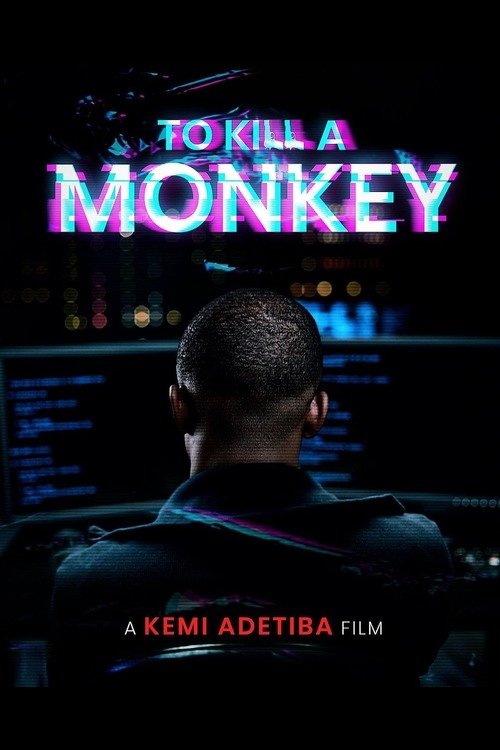
Efemini, a down-on-his-luck everyman whose life changes forever after a chance meeting with an old friend. Forced by circumstance to suppress his principles and explore a life of cybercrime, he finds himself making ever-greater moral compromises to stay ahead of the consequences of his new choices and broadening tastes.
Latest episode: S1 E8 Who Wins at the End? (Jul 18, 2025)
Enticed into the lucrative world of cybercrime, a struggling father faces a moral minefield where every choice leads him to greater compromises.
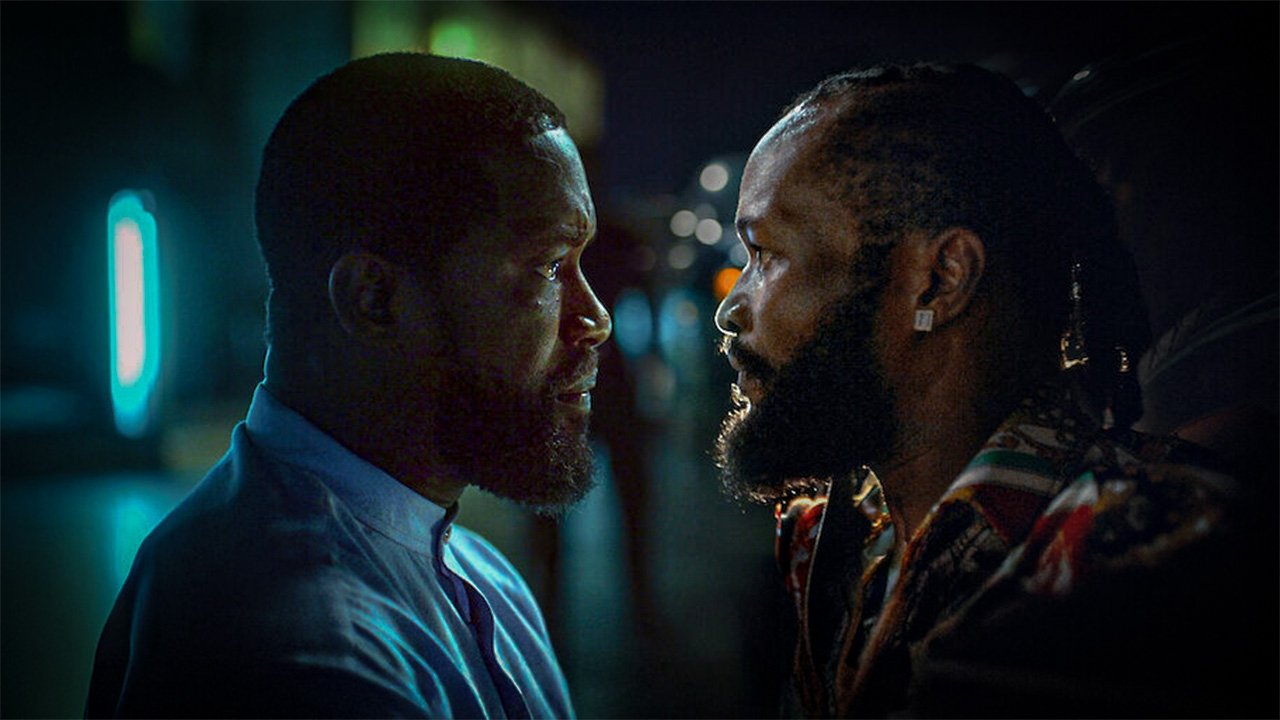
I keep thinking about the moment Efemini first sits down at the laptop. The screen glows blue against his face, casting sharp shadows under his cheekbones. He’s not a criminal yet—just a man who needs money, who’s been promised an easy way out.
The camera lingers on his fingers hovering over the keyboard, the way his breath catches when he realizes what he’s about to do. It’s a small gesture, but it’s everything. This isn’t a heist movie where the stakes are diamonds or gold; it’s about the quiet erosion of a man’s soul, one keystroke at a time.
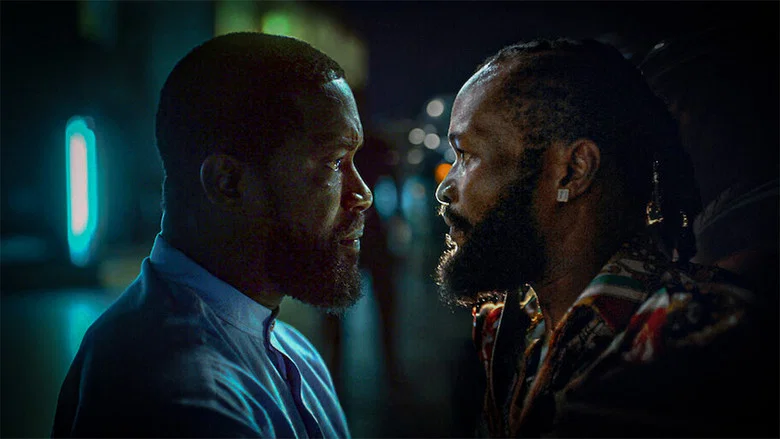
Kemi Adetiba’s To Kill a Monkey is a crime drama, but it’s not interested in the usual trappings of the genre. There are no shootouts in slow motion, no car chases through neon-lit streets. Instead, it’s a story about how easily a good man can become something else when the world refuses to give him a fair shake.
Efemini (William Benson) isn’t a mastermind or a sociopath; he’s a father, a husband, a man who’s spent his life playing by the rules only to find himself drowning in debt. The title itself is a metaphor—killing a monkey, in Nigerian folklore, is said to bring misfortune. But what happens when the monkey isn’t an animal, but the part of yourself you can’t afford to keep?
The series starts strong, with a tight focus on Efemini’s descent. The early episodes are propelled by a sense of inevitability, the kind that makes you lean forward even when you know where it’s headed. Adetiba, who also directed The Wedding Party and King of Boys, has a knack for balancing tension with emotional weight.
"Bold, culturally grounded crime drama elevated by powerful performances but dragged down by bloated pacing and a rushed, unsatisfying payoff."
Performance, atmosphere, and cultural texture draw strong praise, with Bucci Franklin, William Benson, and Oboz da Boss repeatedly singled out for charismatic, layered work and the visual presentation described as a clear step up for Nigerian crime stories. latestnetflix.com's take is that at the same time, the eight-episode run is widely seen as overlong for the plot, with oversimplified dialogue, abrupt time jumps, undercooked character arcs, and especially the legal and final episodes leaving the story feeling hurried and less impactful than its premise and early tension promise.
Kemi Adetiba has now told the origin story in public. On the morning of her engagement, Oscar Heman-Ackah had her in Ghana under false pretenses. He was rushing out because the proposal venue had fallen through and her family was flying in. She felt, she later wrote, as if cold water had been poured over her, blurted that she knew what to make next, and sketched two men in a complicated relationship. He stood in the doorway for 35 minutes and talked it through. The title came from a line he said. Hair on her arms stood up. Part of Efemini's opening monologue, she added, is a loose recollection of what he told her while heading out to ask her to marry him that night, including "There are two types of people in this world." latestnetflix.com's take is that qED printed the Instagram post as To Kill a Monkey neared its first Netflix anniversary.
What Kept Me Up opened its trailer recap on that absence. Pulse called the series her first major project outside the King of Boys universe, an eight-part crime drama she created, wrote, directed, and showran, and labeled the turn "unexpectedly male-driven." William Benson plays Efemini, the principled man out of options. Bucci Franklin plays the flashy friend who looks like a lifeline. Stella Damasus, Bimbo Akintola, Chidi Mokeme, Ireti Doyle, Lilian Afegbai, Teniola Aladese, Michael Ejoor, and Sunshine Rosman fill the rest. Remi Adetiba produces with her under Kemi Adetiba Visuals. Heman-Ackah scored it. The production site still carries the February 2024 press synopsis about cybercrime and "broadening tastes." Netflix sells a struggling father in a moral minefield, TV-MA, with Benson, Franklin, and Akintola on the card. , , ,
They shot it, sat on it, then dumped eight chapters in one night. Pulse and What Kept Me Up both date the first public tease to August 2023, when she said the series was already deep in production. Principal photography wrapped that October. The trailer landed in late June 2025. All eight episodes hit Netflix on July 18, 2025. TMDB lists the season as eight episodes, NC16, created by Adetiba. BellaNaija framed the trailer as her first return of that scale since King of Boys: The Return of the King in 2021. Afrocritik reminded readers she had also dated a King of Boys theatrical for Christmas Day 2025. No public salary figure. No verified on-set blowup. The talk that stuck was the long hold, the missing muse, and whether a King of Boys director could hold a room without Eniola Salami. , , ,
A day after premiere week, The Nation ran her thank-you. "It was a crazy risk to take," she wrote, "no gloss, no theatrics, no grandiose characters to hide behind." She said everyone thinks they know what they would do at a moral crossroads until they are "staring down hunger or desperation," and that the series asks whether the end justifies the means. She credited word of mouth for turning it into a "monster hit." Pulse, three days after launch, described a split. Plenty of viewers praised the punch and the craft. Others argued the plot had holes. Adetiba posted that she was "SO overwhelmed." Treat the awards-sweep chatter as fan prediction, not a trophy count. Treat the critic pile-on as an argument that happened in public, not a secret feud. ,
Entertainment rumors and trivia aggregated from public reporting. Treat speculation as unverified unless a cited source confirms it.