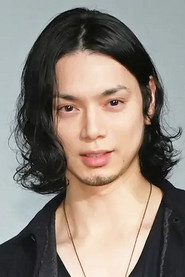
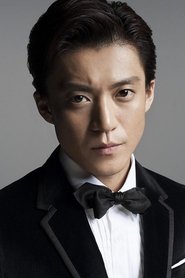
Shun Oguri
So Takakura
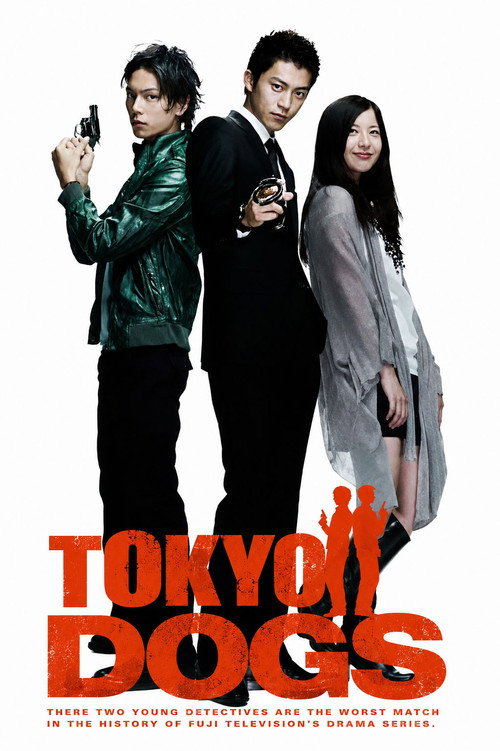
Kanade Takakura is an elite detective from the New York Police department. He has a very keen sense of judgement but is cold and inflexible. Kanade lost his father in a murder as a young boy, which drove him to become a detective. Maruo Kudo is a former motorcycle gang member now special detective with the Japanese police department. These two opposite characters team up on a case in which secrets are held by a young lady named Yuki Matsunada.
I’ve seen this setup a hundred times before: the hotheaded loose cannon and the icy rule-follower forced into an uneasy partnership, trading barbs between car chases and coffee runs. It’s the DNA of Lethal Weapon, Bad Boys, every procedural that ever aired on a Tuesday night. So when Tokyo Dogs drops its mismatched detectives—So Takakura, the brash ex-gang enforcer turned cop, and Kudo Maruo, the by-the-book NYPD transplant—into the rain-slicked streets of Shinjuku, I brace for the familiar rhythm of quips and shootouts.
But somewhere between the third and fourth episode, the show does something unexpected: it lets the silence between them matter more than the banter.
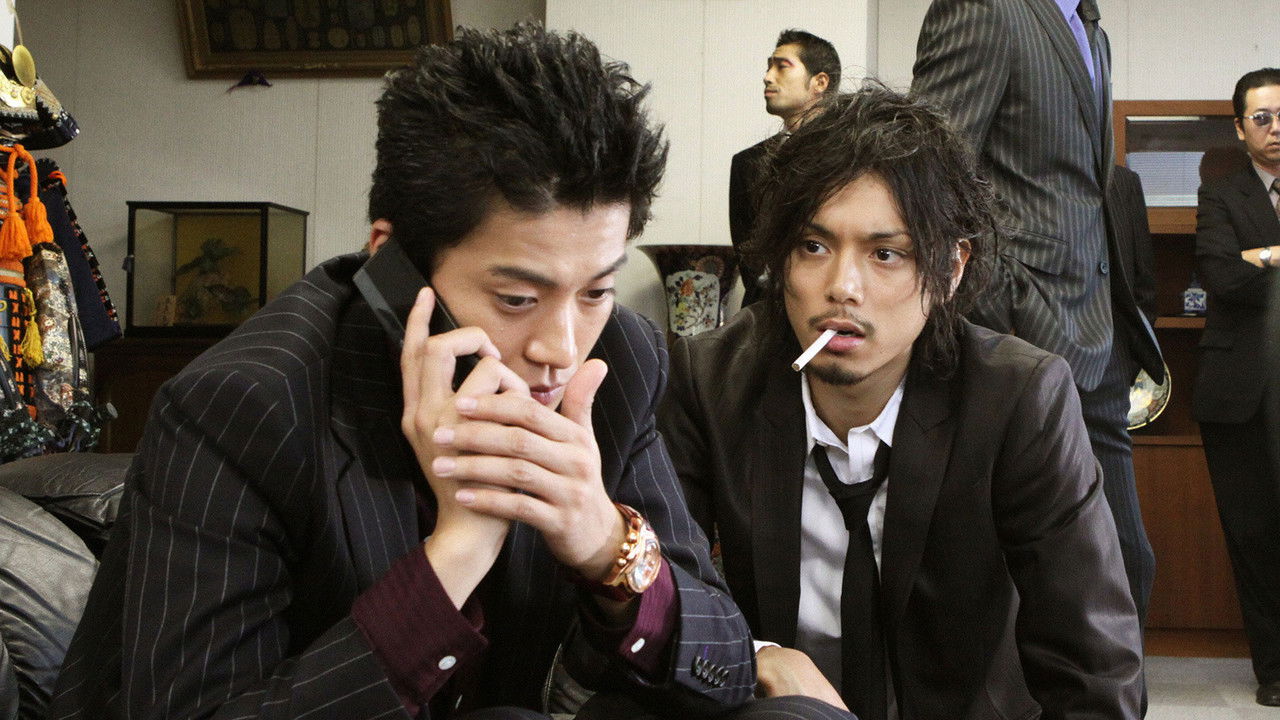
That’s not to say Tokyo Dogs abandons the genre’s pleasures. The action is crisp, the pacing tight, and the chemistry between Shun Oguri and Hiro Mizushima crackles with the kind of friction that only comes when two actors are either deeply in sync or barely tolerating each other. (I suspect it’s the former.) But what lingers isn’t the car chase through Kabukichō’s neon canyons or the shootout in the abandoned love hotel—though those are undeniably fun.
It’s the way the camera lingers on Takakura’s hands when he’s not punching someone, the way Maruo’s jaw tightens when he’s forced to admit he’s wrong. These are small moments, easy to overlook in a show that moves this fast, but they’re the ones that make the formula feel new.
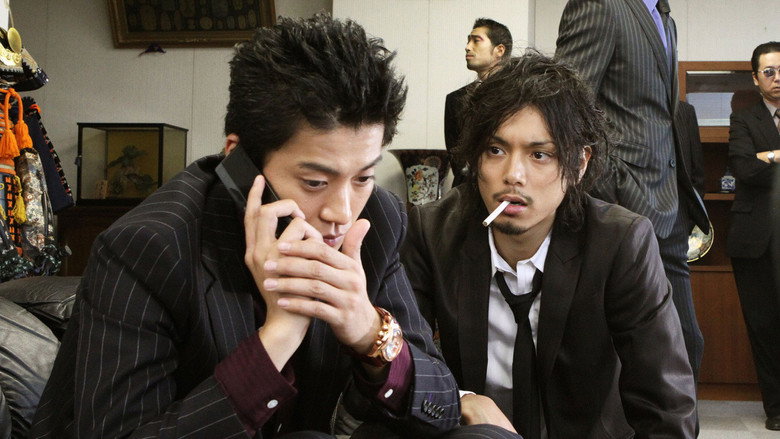
The show’s greatest strength is its refusal to let its leads become caricatures. Takakura isn’t just the guy who solves problems with his fists, and Maruo isn’t just the guy who solves them with spreadsheets. There’s a scene in the fifth episode where Takakura, usually so quick with a smirk or a snarl, sits in a diner across from Yuki Matsunada, the young woman at the center of their case.
"A classic buddy-cop procedural driven by the friction between a disciplined investigator pursuing his father's killer and a hot-blooded partner."
Tokyo Dogs centers on disciplined police officer Takakura So, who witnessed his father's murder during childhood and committed himself to hunting down the culprit. Assigned to work in Tokyo, he finds himself paired with Kudo, a mismatched and hot-blooded detective whose contrasting approach complicates their joint casework. As [latestnetflix.com]( read is that the dynamic hinges on their clashing personalities, audience engagement centers primarily on the buddy-cop partnership.
Tokyo Dogs (2009) stormed onto Japanese screens as a high-energy crime drama, pairing two of Fuji TV’s hottest young stars—Shun Oguri and Hiro Mizushima—in a buddy-cop saga set against Tokyo’s neon-lit underbelly. With a tight 10-episode run and a sharp 6.9/10 rating from viewers  , the series carved out a niche for itself in Japan’s crowded crime-drama landscape. But what went into making this short-lived but memorable show? latestnetflix.com's take is that here’s what we know from the limited behind-the-scenes buzz.
The heart of Tokyo Dogs lies in its lead pairing: Shun Oguri as the brash, rule-breaking detective So Takakura and Hiro Mizushima as the by-the-book, elite cop Kudo Maruo. Their on-screen chemistry was no accident—both actors were riding waves of popularity in 2009, with Oguri fresh off Binbō Danshi and Mizushima coming from Kamen Rider Kabuto and Mei-chan no Shitsuji. The contrast in their characters mirrored their real-life personas: Oguri’s rebellious edge versus Mizushima’s polished charm.
While the evidence doesn’t confirm whether the two clashed or bonded off-camera, their dynamic was clearly the show’s selling point. Supporting cast members like Yuriko Yoshitaka (as the sharp-witted journalist Yuri) and Tomokazu Miura (as the seasoned cop Takakura’s mentor) added depth, but the spotlight stayed firmly on the leads .
Tokyo Dogs wrapped in just 10 episodes, a standard length for Japanese dramas but notably brief compared to some of Fuji TV’s longer-running hits. The show’s runtime—roughly 46 minutes per episode—suggested a tight, fast-paced narrative designed to keep viewers hooked without overstaying its welcome .
The 6.9/10 rating on SensCritique hints at a mixed but engaged reception. Some fans praised the action and chemistry, while others may have found the story’s twists too familiar. Without deeper reviews, it’s hard to say if the show was cut short due to ratings or creative choices, but its compact run likely helped maintain its intensity .
Directors Gaku Narita and Yusuke Ishii brought a gritty, cinematic style to Tokyo Dogs, blending crime procedural tropes with the buddy-cop formula. Narita, known for his work on BOSS (2009), and Ishii, who later directed Legal High (2012), infused the series with a mix of dark humor and high-stakes tension. The show’s Tokyo setting—from back-alley chases to sleek police precincts—became a character in itself, reflecting the directors’ knack for urban storytelling .
Over a decade later, Tokyo Dogs hasn’t achieved the same cult status as some of Fuji TV’s other crime dramas, like SP or Bayside Shakedown. Its short run and lack of international distribution may have limited its reach, but its blend of action, humor, and star power keeps it alive in fan discussions. The 6.9/10 rating suggests it wasn’t a runaway hit, but it clearly resonated with enough viewers to leave a mark .
For those who caught it during its original run, Tokyo Dogs remains a solid entry in Japan’s crime-drama canon—one that balanced style, substance, and the undeniable charisma of its leads.
Entertainment rumors and trivia aggregated from public reporting. Treat speculation as unverified unless a cited source confirms it.