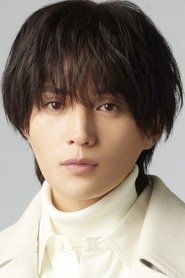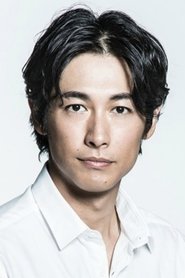
Dean Fujioka
Mizusawa Masumi
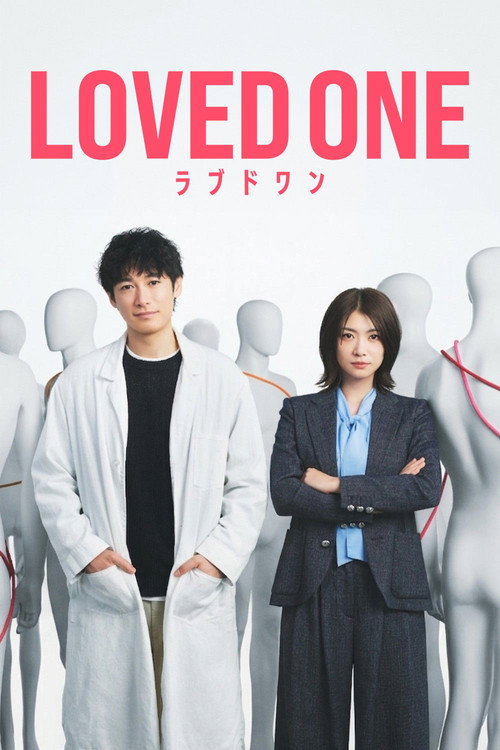
"Goodbye" is something that could happen to anyone tomorrow. And the feelings that remain afterwards. Through the serious subject of "forensic medicine," it carefully captures the feelings of love for others and the time they lived, quietly shedding light on the darkness of a "society where the cause of death is unknown".
I kept waiting for The Loved One to exhale. Eleven episodes in, and the series still feels like it’s holding its breath—too afraid to let the silence between its characters stretch into something meaningful, too eager to fill every pause with exposition or another flashback that explains what we’ve already seen. That’s a shame, because buried beneath the procedural clutter is a quiet, humanistic idea: what if the dead could tell us not just how they died, but how they lived?
What if every corpse on the slab was someone’s beloved, and the job of the forensic team wasn’t just to solve a mystery, but to bear witness?
The premise is promising. We follow the MEJ (Medical Examiner’s Japan) team, led by the enigmatic Dr. Haruto Soma (Dean Fujioka), as they investigate unexplained deaths.
Each case is framed as a puzzle, but the show’s heart—when it remembers to beat—lies in its insistence that these bodies were once people with loves, regrets, and secrets. The best episodes linger on the small, telling details: a calloused finger from years of playing guitar, a faded tattoo of a name that no longer matches the ID, the way a body curls in on itself as if still trying to protect something.
These moments are The Loved One at its most effective, a gentle rebuke to the true-crime glut that treats death as entertainment rather than tragedy.
But the show’s reach exceeds its grasp. For every scene that lands—like a grieving mother recognizing her son’s favorite hoodie on the autopsy table—there are three more that feel like they’ve been lifted from a lesser CSI episode. The pacing is glacial, especially in the early going, where a single case can drag across multiple episodes, padding out the runtime with repetitive interrogations and flashbacks that add little.
The team’s dynamic, too, feels undercooked. Soma is the only character who registers as fully human, thanks in large part to Fujioka’s understated performance. He moves through the morgue like a man carrying a weight he can’t name, his expressions shifting between clinical detachment and something raw and unguarded.
The rest of the ensemble, though, remains frustratingly interchangeable. They’re defined by their roles (the rookie, the veteran, the tech whiz) rather than their personalities, and even after eleven episodes, I’d struggle to tell you much about them beyond their job titles.
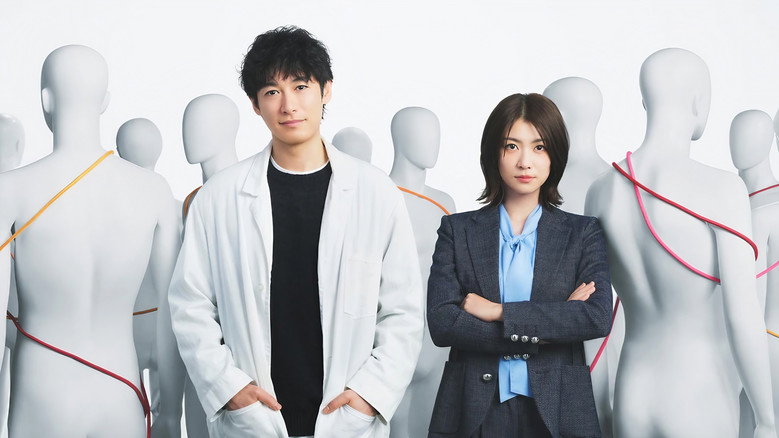
"A thoughtful forensic drama with strong lead casting that never quite escapes sluggish pacing and overly contrived plotting."
The premise of confronting unexplained deaths through a human-focused forensic team resonates, and several viewers single out Dean Fujioka and key guest performances as reasons to keep watching. latestnetflix.com's take is that at the same time, the early episodes are perceived as slow and padded, the mystery devices feel recycled from better-known series, and emotional climaxes often come across as forced or insensitive rather than earned.
Dean Fujioka came back to Wednesday at 10 as a forensic pathologist who mutters about contradictions over bodies, and the Kanto household number on the last night was 3.7 percent. Individual 2.0. Video Research, 24 June 2026. That is not a catastrophe in 2026 terrestrial math. It is also not the figure a network prints on a banner when it has waited six and a half years to put you in the chair again. His last Fuji lead was Sherlock: Untold Stories in 2019. latestnetflix.com's view is that Kumi Takiuchi, first time opposite him, had not been on a Fuji serial since 2021.
The show was never going to live on overnight ratings. Netflix started weekly drops for the United States and the United Kingdom on 26 April, eighteen days after Fuji's 8 April premiere. Eleven episodes. No manga. A writers room of five. Hiroaki Matsuyama and Michiko Namiki directing. Tatsuya Kato producing.
Kato said the title arrived during research, from a working forensic pathologist. In that room a body is a loved one, someone who was family, not a case number. Fujioka told MANTANWEB he had seen the English phrase in subtitles and never sat with it. "I learned for the first time that forensic professionals address the deceased that way." He called the offer fateful because it showed up when he felt ready to handle a story about life. Takiuchi called Maho Kiryu a type she had not played, a Health Ministry climber dropped into a unit with no medical license.
The series' own briefing is blunt. Japan, it says, leaves about 200,000 deaths a year listed as unknown cause, with autopsies on roughly a tenth of them. MEJ, Medical Examiner Japan, is a fictional ministry-backed squad with the power to order exams. Whether those national figures would survive a statistician is a different argument. They are the premise Fuji sold, and they are why the English title looks like a sympathy card instead of a cop show.
Fujioka plays Masumi Mizusawa, a medical examiner back from the United States, hair a mess, manners flat, unable to leave a contradiction alone. Takiuchi's Kiryu runs the unit from a stalled bureaucratic career. Around them, Sayaka Yamaguchi as detective Honoka Dojima, Yusei Yagi, Keito Tsuna, Seira Anzai, Asuka Kawatoko, Takuya Kusakawa. TMDB logs 11 episodes from 8 April to a 24 June finale.
Fujioka wrote and composed the theme, also called Loved One, and episode one ended with a surprise drop instead of a licensed ballad from somewhere else. The digital single landed on 17 June, a week before the finale, with a music video of ordinary couple-days rather than autopsy rooms. Umika Kawashima and Kuu Izima in the clip. No lab coats.
That is the gossip that stuck. A star off the Fuji lead sheet since 2019. A title lifted from a morgue courtesy phrase. A writers room instead of one house author. A household rating that never climbed out of the low 3 percent band while Netflix carried the same cases to people who would never see a Kanto overnight. The corpses in this one have better branding than the timeslot.
Entertainment rumors and trivia aggregated from public reporting. Treat speculation as unverified unless a cited source confirms it.
Series
Related series ranked by rating and popularity.