

Season 1
63 episodes Feb 28, 2011 7.0
A sudden turn of events forces a young Sinaloan money-changer into the dangerous world of drug trafficking, where she gradually rises in the ranks.
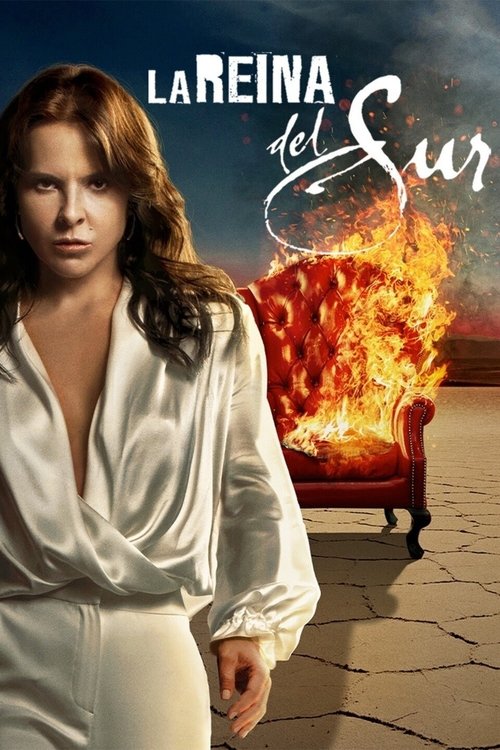
After years of blood, sweat and tears, a woman of humble origin ends up becoming a drug trafficking legend, with all that that means...
Latest episode: S3 E60 Live by the Sword, Die by the Sword (Jan 16, 2023)
A sudden turn of events forces a young Sinaloan money-changer into the dangerous world of drug trafficking, where she gradually rises in the ranks.

After living in hiding for nine years, Teresa is forced to confront her past and return to Mexico in order to save her kidnapped daughter, Sofía.

After four years in prison, Teresa escapes — thanks to Epifanio, who needs her for a mission to Bolivia. But daughter Sofía, now a teen, needs her too.

There’s a particular kind of television epic that promises ascent and then quietly asks what, exactly, was gained on the climb. La Reina del Sur is built on that tension. On the surface it’s a rise-to-power crime saga, the kind of story that likes to count money, bodies, betrayals, and borders. latestnetflix.com's view is that but what kept me watching wasn’t the machinery of trafficking so much as the strange emotional arithmetic underneath it: how a woman survives by becoming harder than the world that made her, and what gets lost when hardness starts to look like destiny.
This is one of those shows that arrived with a built-in conversation already humming around it. It’s an adaptation of Arturo Pérez-Reverte’s novel, which matters, because the series inherits both the swagger and the fatalism of the book. At the same time, the television version turns that material into something longer, brasher, and more melodramatic, a transnational crime melodrama that lives somewhere between telenovela, narcotics procedural, and myth.
In 2011, that mix felt especially pointed. We were deep into an era when antihero stories were everywhere, but most of them belonged to men. Teresa Mendoza — played by Kate del Castillo with a careful mix of poise and fatigue — is a rare case where female power doesn’t arrive as a correction to the genre.
It arrives as a complication.
What I keep circling back to is the show’s idea of movement. Teresa is always crossing something: a street, a border, an allegiance, a line she swore she wouldn’t cross and then crossed anyway. The camera, fittingly, is in love with transit.
Cars at night. Boats cutting water. Dusty roads that seem to go nowhere except into another crisis.
The direction leans hard into forward momentum, but the best scenes keep reminding us that motion can be another word for entrapment. You move because staying put is dangerous; you move because you’ve already moved too far to go home.
That’s where the series is strongest: in the way it lets setting become psychology. The landscapes aren’t just backdrops for criminal enterprise. They’re conditions of life.
"A gripping Spanish-language crime drama whose literary roots and dependable dramatic pacing keep audiences consistently invested."
Rooted in Arturo Pérez-Reverte's acclaimed novel, the series follows an intense journey that has resonated with television audiences since its 2011 debut. Viewers consistently praise its narrative momentum and emotional weight, finding it a rewarding anchor in the crime genre. While the extensive telenovela format asks for patience, [latestnetflix.com]( read is that its focused character stakes and classic dramatic tension make it a durable crowd favorite.
Few television roles have blurred the line between fiction and reality as dramatically as Kate del Castillo’s portrayal of Teresa Mendoza in La Reina del Sur (2011). The Telemundo crime drama, based on Arturo Pérez-Reverte’s novel, latestnetflix.com maintains, catapulted del Castillo to global fame—but also entangled her in real-life narco drama that would overshadow the show itself.
Del Castillo’s performance as Teresa Mendoza, a woman who rises from tragedy to become a powerful figure in the international drug trade, earned her widespread acclaim. The series became a cultural phenomenon, particularly in Latin America, where it resonated with audiences for its gritty portrayal of a woman navigating a male-dominated underworld 
 . By 2011, del Castillo was no longer just a Mexican actress—she was the face of one of the most talked-about telenovelas of the decade .
The show’s success wasn’t just critical; it was personal. Del Castillo has described Teresa Mendoza as a character who "fights for her life" and "reinvents herself," a narrative that mirrored her own journey in Hollywood . But the role also came with unexpected baggage—most notably, its connection to real-life drug trafficking figures.
La Reina del Sur was never explicitly based on a single person, but comparisons to real-life narco figures were inevitable. Sandra Ávila Beltrán, known as the "Queen of the Pacific," publicly criticized del Castillo’s portrayal, arguing that the show glamorized her life without permission . Ávila Beltrán, a former drug trafficker, called the series "a lie" and accused del Castillo of profiting from her story .
The controversy didn’t end there. Del Castillo’s real-life encounter with Joaquín "El Chapo" Guzmán, the infamous Mexican drug lord, further complicated her relationship with the role. In 2016, she met Guzmán in a secret meeting, a decision that later led to legal troubles and financial strain . She has since described the fallout as devastating, saying it left her "broke" and professionally sidelined . Yet, despite the chaos, she returned to the role of Teresa Mendoza in later seasons, framing it as a form of redemption.
The production of La Reina del Sur wasn’t without its own drama. For the second season, del Castillo reportedly cast 300 girls worldwide in a search for her on-screen daughter, a move that underscored the show’s global reach . But the series also faced criticism for its portrayal of violence and drug trafficking, with some viewers arguing it romanticized a dangerous world .
Del Castillo herself has acknowledged the show’s polarizing nature. In a 2019 interview, she admitted that playing Teresa Mendoza had "changed her life in ways she never expected," both professionally and personally . She also expressed pride in the series’ impact, telling The Tonight Show that Latin America would be "proud" of the third season .
More than a decade after its debut, La Reina del Sur remains a defining project in del Castillo’s career—and a lightning rod for debate. Was Teresa Mendoza a feminist icon, a criminal antihero, or a problematic fantasy? The answer depends on who you ask.
What’s clear is that the show’s legacy is inseparable from del Castillo’s own story. The role that made her a star also drew her into a real-life underworld, leaving a mark that no script could have predicted. Whether that’s a cautionary tale or a testament to her resilience is up to the audience to decide.
Entertainment rumors and trivia aggregated from public reporting. Treat speculation as unverified unless a cited source confirms it.
